

Seeking the Next Henry Schein: Oral Healthcare Chains Expand to Tier-3/4 Cities with Up to 1,000 Clinics | 2019 Year-End Review
A summary of the development trends in the dental industry in 2019 reveals key terms such as “chairside digitalization,” “the spark of ‘Created in China,’” “midstream consolidation,” “cooling of chain expansion,” “DSO implementation,” and “market penetration into lower-tier cities.”
From an investment perspective, the broader healthcare investment sector has been influenced by the overarching environment of medical insurance cost containment, making the dental industry—with its consumer-oriented attributes—a hot investment track once again in 2019.
From the perspective of the industrial chain,A Highly Fragmented Upstream and Downstream Landscape Is a Prominent Feature of the Dental Industry, the entire industryThe opportunities for M&A integration far exceed those for financial investment.。
In 2019,Downstream Dental Chains See the Fastest Cooling in InvestmentUpstream investment has concentrated in digital-related fields, such as clear aligners, 3D printing, and hardware and software for digital denture processing, creating a certain degree of bubble. In the midstream, industry M&A consolidation led by giants such as Sinopharm Dental, Hanruixiang, and Songbo Investment has further intensified. These market and investment characteristics are expected to persist for at least three years.
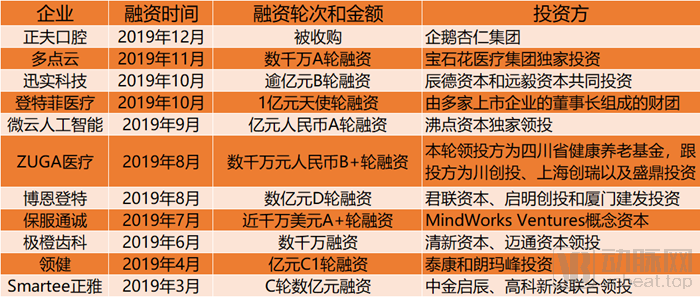
Companies That Publicly Announced the Completion of Financing in 2019
Sun Dazhao, Investment Director at Sinopharm Capital and Sinopharm Dental, first shared with VCBeat the investment opportunities in the dental care capital market:
First, in the upstream industrial sector, the prices of digital hardware will decline rapidly; therefore, enterprises with overseas sales capabilities and integration capabilities are worth attention.Meanwhile, on the industrial front, China is also home to some traditional enterprises with global competitiveness in niche sectors, which represent attractive investment and consolidation opportunities when valued reasonably.
Second, midstream services: integration in the dental midstream sector will continue.Expanding from the provincial level to prefecture-level cities, the scale effects of supply chains and services are becoming increasingly pronounced. In the midstream sector, key focus should be placed on M&A consolidation opportunities and enterprises capable of providing one-stop solutions for dental clinics.
Third, at the downstream end, the coexistence of a large number of dental clinics and numerous public hospitals gives China’s dental care terminal a distinctly Chinese character.Over the next two years, a relatively weak economic environment coupled with the gradual adoption of Diagnosis-Related Groups (DRGs) may drive many patients in first- and second-tier cities back to public hospitals. Clinics that rely on high-cost customer acquisition strategies, such as advertising and prime locations, will face industry consolidation. However, in fourth- and fifth-tier cities, there are significant opportunities for newly established and upgraded dental clinics. The business model combining regional specialized hospitals with dental outpatient services warrants close attention.
From a market perspective, we focus on the most practical and challenging pain points in the industry. For instance, why has digital promotion, despite being advocated for a long time, proven so difficult to implement effectively? How can the U.S. DSO (Dental Support Organization) model be adapted to the Chinese context? Amidst the consolidation of midstream dental services, which business model will ultimately prevail? These are just a few of the questions addressed. In response, VCBeat interviewed industry companies and experts to provide a phased review of 2019 and to identify emerging trends for 2020.
Next, based on the industry hotspots across the upstream, midstream, and downstream sectors, you will learn about:
1. The Challenges of Digital Implementation and the Eve of the Intraoral Scanning Boom: How to Seize Chairside Digital Opportunities?
Second, in which areas are dental medical devices developed in China mainly concentrated?
Third, how can the popular remote orthodontics model in the United States be localized and implemented?
Fourth, which companies are pursuing midstream consolidation, and will China’s market give rise to the next Henry Schein?
5. How to Build a Standardized Pediatric Dental Clinic and Facial Management Center?
Sixth, Potential Hot Investment Subsectors and Trends in the Oral Care Industry.
The Return Path of Digitalization and Innovation in Dental Instruments
The most notable keyword in the development of the upstream dental industry in recent years is “digitalization,” which has been made possible by the technological maturity of key equipment such as CT (CBCT) and intraoral scanners, with future efforts focused on achieving chairside digitalization.
Oral impression techniques have a century-long history, but digital intraoral scanning is gradually replacing traditional impression-taking methods and changing clinicians' practices.
In 2019, digital intraoral scanning technology had already become widespread in high-end and mid-tier dental clinics across China, where it was applied to procedures such as orthodontics, dental implantation, and prosthodontic restoration. This trend is poised for disruptive growth over the next five to eight years.
On the Eve of the Intraoral Scanner Boom: What Are the Challenges in Implementing Digitalization?
VCBeat has obtained a set of data showing that, in terms of installed base in China, the number of CT scanners exceeded 12,000 units and intraoral scanners reached approximately 4,000 units by the end of 2018. It is projected that by the end of 2019, the number of CT scanners will exceed 16,000 units, while intraoral scanners will reach 8,000–10,000 units.
However, more important than the absolute figures is the trend they reflect; for instance, the natural growth rate of the CT industry is gradually declining from over 50% to the 25%-30% range.
Meanwhile, compared with imported brands such as KaVo, NewTom, Planmeca, Dentsply, Carestream, Morita, and E-woo, the market share of domestically produced CT scanners is rising significantly. Chinese manufacturers—including Meiya Optoelectronic, LargeV, Fussen, Born Dental, and U-Medical—are steadily capturing market share previously held by imports. Furthermore, unlike intraoral scanners, the total installed base of dental CT units is not as large, accounting for only 30%–40% of all dental clinics. Consequently, this market is gradually returning to a state of natural, stable growth.
In contrast, reporters have learned that intraoral scanning will usher inExplosive Growth, with shipments reaching 2,500 units in 2018. Prior to 2017, the cumulative total was only slightly over 1,000 units. This year has witnessed another surge in growth, soIntraoral scanning will have a higher ceiling in the future.
In China, intraoral scanners mainly rely on imports, with domestic brands holding a relatively low market share. International well-known brands such as Sirona, 3Shape, Align iTero, Carestream, Planmeca, and 3M ESPE occupy the majority of the market.
For example, following the introduction of the iTero Element in 2018, the all-new iTero Element 2 intraoral scanner was officially launched for sales and commercial use in China in September 2019. Compared with the previous-generation iTero Element, the iTero Element 2 reduces scan processing time by 25%. The iTero Element 2 intraoral scanner enables intuitive visualization of clinical diagnosis and treatment, providing digital solutions for a range of procedures including general dentistry, prosthodontics, and orthodontics.
Several domestic companies have also entered the intraoral scanner market, such as Langcheng and Fussen, which made early strategic moves in this field, as well as Meyer Optoelectronic, which announced in January 2019 that its intraoral scanner was in the clinical validation stage.
Furthermore, the number of Chinese enterprises and projects applying for patents on intraoral scanners has increased in the past two years. Overall, domestically produced intraoral scanners are gradually breaking the monopoly held by foreign brands, which is expected to lead to lower product prices. However, as domestic products entered the market later and have a shorter presence, continued market development is still required.
Beijing Weikai Digital began developing solutions in the field of dental digitization as early as 2008. General Manager Liu Jin stated that over the past decade, digital advancements have primarily focused on static three-dimensional technologies. From a cutting-edge perspective, we now view the precision and holistic development of dental healthcare. Static digitization alone is far from meeting future requirements; therefore, over the past two years, we have been promoting 4D digitization, which integrates “static and dynamic fitting for diagnosis and treatment.”
We believe that the primary reason for the difficulties in implementing digitalization is, on one hand, the entireIn the digital dentistry workflow, the process is overly long and fraught with numerous pain points., such as consumables manufacturers, dental laboratories, distributors, clinics, doctors, and patients, the current pain points have not been thoroughly resolved. On the other hand, the resistance to digitalization also lies within the industry'sExtremely Scarce Talent in Medical-Engineering Integration。
Adhering to evidence-based medicine,# China's Innovation Requires Time to Mature
Beyond digitalization, at a macro level, China’s traditional dental industry demonstrates stronger manufacturing capabilities than design capabilities, with greater proficiency in processing and assembly than in original research and development.
Over the past two years, a number of companies have emerged,Achieving Technological Breakthroughs in Traditionally Underserved Areas, significant achievements have been made in dental materials such as clear aligners (membrane design), 3D-printed materials (light-cured resins), restorative materials (cements), novel brackets, and regenerative medicine materials.
When competing against strong imported brands such as Dentsply Sirona, these domestic companies are not necessarily targeting only the Chinese market; their target markets even include Europe and the United States.
Smartee is a leading enterprise in China’s clear aligner industry. After securing hundreds of millions in Series C financing in early 2019, Smartee significantly increased its investments in academic research, marketing, materials, software, and intelligent manufacturing. It launched the MACLIN chairside system for clear aligners, which condenses production processes such as 3D printing, vacuum forming, and laser cutting into a single chairside device no larger than two double-door refrigerators, enabling patients to receive their clear aligners on the day of their initial visit. Additionally, in collaboration with Professor Shen Gang’s team, Smartee co-developed the S8 and S9 jaw repositioning clear aligner technologies. Furthermore, its proprietary AI-driven tooth arrangement software has achieved breakthroughs in big data algorithms, and its independently developed PETG and TPU clear aligner films have been widely applied in clinical practice.
We can see that global dental industry giants and China’s capital market remain bullish on the clear aligner industry in China, with major dental companies successively launching their own proprietary clear aligner brands, which means that in 2020,Competition in the Field of Clear Aligner Orthodontics Will Intensify, the industry is facing a reshuffle.
The aligner film is the core technology of clear orthodontic aligners. For a long time, Chinese manufacturers of clear aligners have relied on imported films. Smartee initiated basic research and domestication projects for aligner film materials as early as 2015, achieving 100% domestic production of Smartee clear aligner films by 2019. Extensive clinical applications have demonstrated that their performance is in no way inferior to that of imported films.
A wave of imitation of the U.S. teledentistry company Smile Direct Club’s business model has swept across China. Yao Junfeng, founder and chairman of Smartee, told reporters that the essence of clear aligner therapy remains medical care, and no business model should cross regulatory red lines.
O.O. Medical is a representative brand of innovation in China’s orthodontic bracket manufacturing industry. Its founder, Dr. Ji Li, developed the industry’s first patient-friendly spherical brackets, drawing on insights from clinical practice, patient needs, and treatment outcomes. Mass production of the standard version of these spherical brackets was achieved in 2019. Currently, O.O. Medical holds more than 100 patents, including U.S. patents, PCT patents, and Chinese invention patents, with its total intellectual property portfolio exceeding 200 items.
Regarding its 2020 corporate strategy, Geely Doctor stated that it would focus on digital orthodontics, continue to launch more patented products that benefit consumers, upgrade its standard spherical brackets by introducing a spherical bracket digital navigation system, and develop personalized treatment plans for patients.
Certainly, for companies in the materials sector or those that are truly innovative, we believe theirThe precipitation process requires a considerable amount of time., and also within the dental industrySeeking Evidence from Evidence-Based Medicine. However, from the perspective of the capital market, investors can pay attention to such innovative companies that are truly committed to building world-class products and possess fundamental technologies capable of competing with imported brands in the Chinese market.
Midstream: Will China Produce a Henry Schein?
The midstream supply chain will continue to undergo consolidation.
Market participants should share a consistent vision for the future, or more precisely, align on their ultimate strategic objectives. However, each company leverages its unique advantages and available resources to enter the market from different angles.
This vision is based on the premise that Kouqiang Zhongyou possesses strong service-oriented attributes for dental clinics and dentists. The core of integration lies in enhancing the management and operational efficiency of acquired enterprises, as well as exporting corporate culture and service capabilities; otherwise, the organization would remain fragmented.
Two Types of Market Entrants
Broadly speaking, market entrants fall into two categories: one comprises traditional large-scale distributors such as Sinopharm Dental (focused on physical operations) and Songbo Investment (focused on industry empowerment); the other includes new-type service providers represented by LinkCare (SaaS and medical devices/consumables), Fussen (SaaS and medical devices/consumables), Yabang (e-commerce), and Qiezi Dental Cloud (SaaS and training).
Specifically, Sinopharm Dental’s strategy is to first invest in heavy assets by acquiring the highest-quality offline networks and teams. Once a certain scale is achieved, it becomes relatively easy to add asset-light services such as supply chain finance, insurance, education, and SaaS. Similarly, in the U.S. market, traditional service providers also integrate SaaS platforms only after reaching a certain scale.
In contrast, Linkcare and Qiezi Oral Cloud adopt different strategies. Wu Zhijia, founder and CEO of Linkcare, disclosed to VCBeat the platform’s operational priorities and key metrics: its dental SaaS business has achieved steady growth, currently serving over 20,000 mid-to-high-end clients; collaborations with internet traffic platforms such as Ali Health and Meituan-Dianping have yielded favorable results. Meanwhile, its dental consumables supply chain has exceeded expectations in four cities in terms of coverage, conversion, repeat purchase rates, and market penetration, with performance quadrupling compared to 2018 and SKU count reaching 10,000.
In 2020, LinkCare will build an integrated clinic management solution from three aspects: open source, cost reduction, and efficiency improvement. It will strengthen cooperation with traffic platforms such as Meituan-Dianping and Ali Health, enhance product capabilities, launch a multilingual version of its dental SaaS, and deepen its expertise in vertical industry SaaS. Finally, it will focus on strengthening core competencies by expanding the construction of a dental consumables supply chain platform to help clinics achieve efficient, transparent, and cost-effective procurement.
Cui Wei, founder of Qiezi Oral Cloud, stated that SaaS was a powerful tool for rapid market expansion in its early stages.At a later stage, with a certain scale achieved, it becomes the business—serving as the connector and carrier for supply chain services, value-added clinic services, physician services, and more.. At the core of the business lies the ability to aggregate a sufficient number of licensed healthcare professionals. Whether it involves providing services to them, leveraging this aggregated workforce to promote products, or ultimately delivering professional direct-to-consumer (ToC) services to end users, everything hinges on this capability.
Regarding the two types of dental platforms mentioned above, we believe that whether one adopts an offline-first, SaaS-later approach or a SaaS-first, offline-later strategy,Different Paths, Similar Endgames。
Integration Is More Than Just a Financial Game
Through our observations, whether it is Sinopharm Dental’s aggressive strategy of entering the market by acquiring and consolidating capital to target large midstream service providers, or Shuangbai Investment’s approach of relying on upstream and downstream industrial synergy for gradual expansion, as well as LinkCare’s method of converting customers through extensive SaaS system installations to deepen and broaden its service scope,The subsequent development and integration in the oral care sector are no longer merely a financial game.。
To some extent, the benchmark these companies are referencing is Henry Schein, the largest medical product and service provider in the United States. Henry Schein operates through a centralized automated distribution network, with inventory comprising more than 120,000 branded and private-label products.
Hanruixiang’s approach is to target large-scale entities, which are characterized by greater volume, a wider product portfolio, and stronger distribution rights. However, this comes with weaker control over the end market and less direct access to frontline physicians.
Some companies prefer to target small and medium-sized distributors as M&A targets, adopting a completely opposite strategy. These distributors have relatively weak brand premium capabilities and narrower channels, but they possess stronger control over end-users.
In short, companies differ in their strategic thinking regarding which distributors to acquire, the methods of acquisition, and the equity or financial considerations involved. On one hand, they assess capital efficiency; on the other, their understanding of the consumables industry shapes their selection of targets. Furthermore, effective management is essential after a target has been chosen.
This is no simple matter. Countless enterprises have previously attempted mergers and acquisitions in the distribution sector with limited success, yet the trend toward consolidation in the distribution industry remains unchanged.
How to Sustain the Momentum in Pediatric Dentistry and Facial Management?
Since 2016, pediatric dentistry has gradually come into the public eye. A growing number of people believe that it may become a key strategic focus for future dental clinics and are preparing to capitalize on this emerging opportunity in the pediatric dental market.
However, many people are unclear about how pediatric dentistry should be practiced. As a result, numerous small and medium-sized pediatric dental clinics continue to provide only the most basic dental treatments. This has led to the “time-consuming, labor-intensive, and unprofitable” curse plaguing pediatric dentistry, compounded by the broader context of low public awareness of oral health, particularly among parents who often neglect their children’s dental care.
Three Minor Trends
Banlan Hui is a new platform in the dental industry, launched at the end of 2019, specializing in marketing and operations for pediatric dentistry. Its founder, Ge Qiang, spent four years starting from 2016 studying industry transformations in pediatric dentistry, predicting that the field would flourish with diverse developments in 2020.
Regarding the development status of the pediatric dentistry industry in 2019, in addition to favorable policies, Ge Qiang also summarized several key points:
First, focusing on both internal and external development, the expansion in frontline tracks has been paused.Looking at the full year of 2019, the pace of new clinic openings among pediatric dental chains has gradually slowed. Following the rapid expansion and aggressive market capture seen in the previous two years, many pediatric dental chain clinics are now focusing on strengthening their internal operations. Although market demand remains substantial, delivering satisfactory financial performance is the foundation for continued expansion.
Second, consumption is trickling down, with third- and fourth-tier cities beginning to gain momentum.According to Ge Qiang’s 2019 nationwide training sessions, market enthusiasm for pediatric dentistry in many third- and fourth-tier cities, and even fifth-tier cities, has not waned but rather increased. Moreover, many of these cities have developed well-conceived plans and strategic approaches for pediatric dental clinics. This is a heartening and encouraging development.
Third, shifting focus from specialized technical expertise to marketing and operations.The mindset and perspectives of enterprises operating pediatric dental clinics have begun to shift, moving from an initial exclusive focus on purely technical aspects to a greater emphasis on marketing and operational management. This transition marks the beginning of mature operational practices for many pediatric dental providers.
Leading Enterprises Focus on New Models
Specifically, how do leading pediatric dental companies in the market continuously optimize their products, technologies, operations, and business models amid intense competition?
Taer Gai, founder of Jicheng Dental, a leading enterprise in pediatric dentistry, revealed to reporters that in 2019, the company primarily focused on two initiatives: cultural development and the establishment of standardization, encompassing medical, service, and management standards.
Taiergai stated, “This is only the beginning; there is still a long road ahead. The broader market environment for chain clinics is challenging, while consumers are becoming increasingly knowledgeable and have more means to hold clinics accountable. As a result, resources and patients will continue to concentrate around leading brands. During this difficult period, survival of the fittest will become more pronounced, making the entire industry more rational and healthier. The chain model can still create tremendous value, and our confidence in this approach has grown even stronger after observing the development trends of some of our internal projects.”
“Internal projects” include the standardized medical processes that Jicheng is currently developing. “First, implementation is highly challenging, as we are just getting started. Second, it holds significant value, being extremely useful for medical quality management. Third, such investment and research are impossible without a certain scale. Jicheng also has similar projects in operations and management.”
Ensuring quality, reducing waste, and improving efficiency are difficult to achieve without a certain scale; in first- and second-tier cities, it is possible to spread out costs or achieve maximum efficiency.Store scale of at least 5 locations. While opening new clinics, we learned from interviews and site visits that many pediatric dental companies are pursuing profitable growth by continuing to strengthen internal capabilities and execution.
Rui Lei Dental is a leading chain brand in children's oral health management. Founder Xie Fei revealed to reporters that Rui Lei Dental focused on three key initiatives in 2019: first, the expansion of new clinics; second, the recruitment and development of core medical team talent; and third, the refinement of a standardized corporate governance structure.
Currently, Ruilei Dental has expanded from two to six clinics, basically covering the target core business districts designated in Beijing. Meanwhile, while maintaining a consistent business model, it has delegated operational authority to individual clinics to fully boost their initiative.
The Yanjiao market in Beijing is a typical closed, sub-tier-1 market with a population of 1.2 million. Through a year of dedicated efforts, Zidingxiang has fully penetrated the high-end private kindergartens and schools in Yanjiao, as well as early childhood education and training institutions represented by My Gym, Baby Garden, Leap English, and Rise English. The offline-to-online-to-in-store conversion pathway has been successfully established, and the parent-child themed store achieved break-even within three months of opening.
In 2020, Zidingxiang will continue to explore a new chain model in the Yanjiao market, including the opening of new Zidingxiang Dental Facial Aesthetics Management Centers and Zidingxiang Dental Geriatric Dentistry Clinics, ultimately establishing a chain model featuring single-store locations under the same brand but with different thematic focuses.
Regarding the market forecast for 2020, we anticipate intensified competition. The “catfish effect” will spur many small and medium-sized dental clinics to upgrade their capabilities across multiple dimensions—including technology, marketing, service, and operations—to address growing challenges.
At present, VCBeat has learned that many pediatric dental clinics have established Pediatric Facial Management Centers. This means that children will not simply receive dental care; instead, clinicians will communicate with parents and children from the perspective of facial development management, focusing on how to enhance children’s facial aesthetics. This trend is poised to become a key hallmark of the next stage in the development of the pediatric dentistry industry.
Pediatric dentistry, as a specialized category in single-category operations, primarily offers routine treatment services with an average transaction value of RMB 200–500. Given the relatively low per-customer spending, the fundamental principle is to first deliver high-quality services to a small core group, thereby creating opportunities to expand into new service offerings and extend care from children to their entire six-member family units.
The Largest Dental Chain in the U.S. Has 1,000 Locations, Yet the Chain Penetration Rate Remains Below 20%
The expansion strategy of downstream dental clinic chains has also shifted from the previously aggressive approach. The rise of Dental Service Organizations (DSOs) in the United States has offered a viable pathway for achieving scaled chain operations, improving efficiency, and reducing costs at the provider level.
DSO Clinic Acquisitions Continue
In early 2019, VCBeat reported on the two largest DSO companies in the United States—Heartland Dental and Aspen Dental—and analyzed their development models as well as the industry pain points they addressed.
In summary, unlike traditional chain models, DSOs aim to adopt a merger strategy. This approach allows platform clinics to acquire the clinical assets of many smaller practices, while enabling DSOs to obtain the non-clinical assets of these smaller targets. Such an acquisition strategy empowers DSOs to build larger-scale enterprises, thereby leveraging more efficient cost structures to implement specialized business management arrangements.
In early 2019, Heartland Dental had fewer than 900 locations, whereas as of December 10, 2019, across 37 U.S. states, itsThe clinic network has reached a scale of 1,000 locations., serving 1,600 physicians. In 2019, the number of clinics grew to 125, while Aspen Dental’s clinic network expanded from 750 to nearly 800 locations across 42 U.S. states. Moreover, DSOs continue to offer attractive opportunities for private equity investment and expansion.
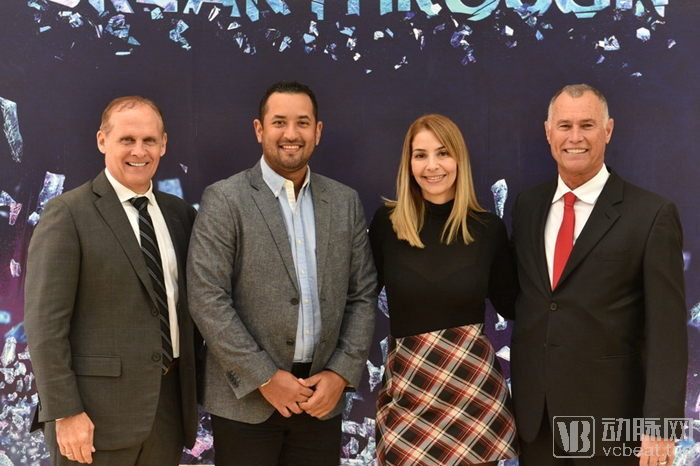
Heartland Dental President and CEO Patrick Bauer (far left) and Founder and Executive Director Rick Workman (far right) pose for a photo with Peralta Lee (second from left), owner of the 1,000th acquired practice.
In the United States, there are at least dozens of well-capitalized, private equity-backed consolidators in the DSO sector. Traditional private equity structures leverage expertise in equity and debt management, along with a combination of growth and efficiency strategies, to achieve greater investment returns. For this model to succeed, the ability to scale effectively is often critical.
Reaching 1,000 clinics marks a milestone for Heartland Dental; by comparison, Taikang Bybo Dental, China’s largest dental chain, operates just over 200 locations, with few other chains exceeding 100.
In response, Patrick Bauer, CEO and President of Heartland Dental, stated: “Twenty-two years ago, Heartland Dental served a small number of dental practices in a single state. Today, with our supported practice network reaching 1,000 locations, this demonstrates that our physician-focused culture will ensure continued corporate growth and significantly enhance dentists’ ability to focus on patient care.”
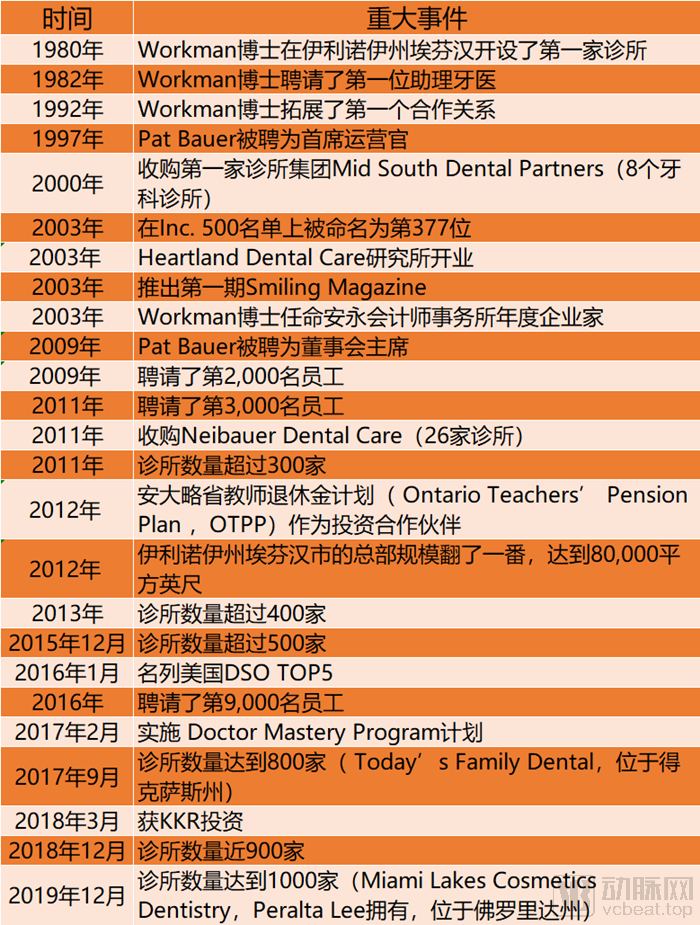
Heartland Dental Milestones
However, according to projections by Dental Economics,80% of Private Dental Practices in the U.S. Remain Unaffiliated with DSOs, which means there is still a long way to go before industry consolidation.
Key Focus Areas of the New Chain Model
Although the U.S. dental market differs significantly from the Chinese market in terms of scale, maturity, the balance between public and private sectors, public trust in private healthcare, dental insurance penetration, financing channels for individual dentists, and the difficulty of obtaining licenses—with both markets being at different stages of development—there is no doubt that the U.S. model, characterized by its rapid expansion and a path of relatively light differentiation, offers valuable insights and lessons for leading domestic enterprises.
VCBeat has learned that China’s private dental medical institutions are continuously expanding, with nearly 100,000 such facilities currently on the market. In 2018, the number of private dental medical institutions registered with the State Administration for Industry and Commerce reached 56,730, a year-on-year increase of 19.17%. Taking into account unregistered entities, the total number of dental institutions in China exceeded 80,000 by the end of 2018.
Currently, dental chains in China are continually grappling with challenges such as a scarcity of dentists, high labor costs, fragmented clinic operations, and elevated customer acquisition costs, creating an urgent need for refined and differentiated operational strategies. In response, their chain expansion and business models are quietly undergoing transformation.
In 2019, Bybo Dental, the dental chain with the largest number of clinics in China, underwent a comprehensive upgrade and entered a new brand era as Taikang Bybo Dental. It achieved a transformative rebirth across four key dimensions: medical quality, expert talent, service, and insurance coverage. This evolution aims to ensure that customers can experience consistent medical quality, high-quality service, and affordable insurance payment options at any of its 200 clinics and hospitals nationwide.
IDSO Dental Business School officially entered the dental industry’s spotlight in 2019. Faced with the proliferation of various “DSO” models in the market, each with distinct philosophies, Sun Yan, founder of IDSO Dental Business School, has led core team members to attend the annual U.S. DSO conference every year to facilitate effective implementation of the system and gain a deeper understanding of the essence of DSOs. Given the differences between China and the United States in terms of policies, market environment, and institutional frameworks, Sun Yan believes that the U.S. model cannot be adopted wholesale; therefore, the development of this model in China remains an exploratory journey.
Over the past year, Happy Dentistry has integrated the introduced DSO concept with local R&D and practical validation to develop a systematic curriculum tailored to the development of China’s dental market. This curriculum has been implemented in multiple clinics, enabling these member clinics to realize the benefits of IDSO, such as an increase in average clinic revenue, improved organizational structure, and standardized service processes.
One set of data shows that, without any external advertising, the Dazhu Clinic under Grady Dental completed credit approvals for nearly 100 families in its first month, generating revenue of RMB 400,000–500,000. By the fourth month, the clinic’s monthly transaction volume exceeded RMB 1.2 million.
We can observe that the key to the successful implementation of Dental Service Organizations (DSOs) in China lies in refining this model in alignment with future trends in outpatient dental care. By providing service support to a broader range of clinics, enhancing patient management efficiency, facilitating the transition from external marketing to internal marketing service systems, optimizing the competitive market structure, and improving the overall quality of services within the dental industry.
Another leading enterprise, Malo Dental, focused on two key initiatives in 2019: completing its clinic strategic layout and implementing refined operations and management. It achieved a strategic presence in 13 cities across China with 24 clinics, while prioritizing refined operational and managerial practices. By actively embracing digitalization, the company leveraged management system platforms to establish more precise standards and oversight for critical functions, including customer relationship management, clinical quality control, and financial support.
Next year, Malo Clinic will proactively break away from its traditional development mindset to identify new growth models for the enterprise. In 2020, two innovative initiatives will be launched: Malo Clinic DSO (Dental Service Organization Alliance) and Malo Life+. Through economies of scale and joint brand empowerment, Malo DSO aims to unlock new development opportunities by striving to achieve cross-brand and cross-regional sharing of high-quality resources in healthcare, management, operations, and customer services.
Meiwei Dental Care currently operates 140 clinics. Regarding the core principles of Meiwei’s DSO model, CEO Zhu Liya emphasized “depth” and “purity.” For instance, Meiwei has independently developed its IT systems, integrating operational thinking into its Hospital Information System (HIS). The key components of Meiwei’s DSO strategy include integrating the HIS with IT systems for human resources, finance, and procurement; enhancing the management framework of the labor and procurement cost control center; strengthening the training system; improving professional and managerial training for teams; and refining internal audit and legal compliance systems.
After years of rapid expansion, leading chain enterprises are now focusing on strengthening their core competencies by enhancing efficiency through digital diagnostics and treatment, and further refining their DSO systems. This likely reflects the current state of most top-tier chain operators.
We believe that although the DSO model has gained significant momentum and its chain-based approach has proven viable, offering certain insights for China’s booming dental market, there is still no publicly listed company within the DSO sector.
Recently, Taikang Bybo Dental, Happy Dental, Malo Clinic, and Jinsong Dental Hospital have jointly established the CDSO Dental Chain Alliance. The alliance aims to refocus the dental industry on medical quality by strengthening efforts in quality control, material procurement, equipment supply, cost reduction, and chain management, thereby enhancing corporate capabilities in training, operations, management, and insurance payment.
Pioneers have already drawn on the DSO model to explore development pathways suited to China’s dental chain practices.
Capital Dynamics Outlook
Finally, looking ahead to 2020, Zhu Tianji, Vice President of Chende Capital, revealed the following points to VCBeat regarding potential investment opportunities in specific segments of the dental industry, which can be summarized as:
First, the model variables brought about by the continuous consolidation and strengthening of the digital foundation.Infrastructure in China's dental market, particularly data-related infrastructure, is currently being progressively improved.
Over the past three years, cone-beam computed tomography (CBCT) has experienced rapid growth, achieving a substantial installed base. Intraoral scanners are on the verge of an explosive surge, and it is anticipated that they will undergo exponential growth over the next three years. Currently, a significant number of dental laboratories and orthodontic manufacturers are substantially shifting their data sources from traditional physical bite impressions to digital models derived from intraoral scanning.
These developments will give rise to a series of transformative changes across the industry in the coming years, driven by the improvement of digital infrastructure.
Second, the chairside business model creates opportunities, enabling dentists to improve efficiency and reduce costs.Over the next three to five years, significant opportunities will arise from digitalization-driven changes in products, technologies, business models, and doctor-patient relationships.
Driven by the comprehensive data acquisition enabled by digitalization, along with enhanced design and manufacturing capabilities, more distributed and agile business models are likely to emerge in the future. These models will facilitate the design and production of a range of products that are delivered more efficiently, offer superior quality, and provide greater personalization. This may give rise to flexible, closed-loop systems integrating data, design, manufacturing, and delivery at the city level or even smaller scales. The core change lies in placing greater emphasis on the role of dentists, thereby making dental care more agile.
Third, supply chain integration through mergers and acquisitions.Since 2017, China’s dental midstream sector has undergone intensive consolidation, characterized by frequent acquisitions and mergers among leading enterprises. Regardless of whether market entrants are traditional distributors, new capital-driven distributors, or traditional data or system service providers, they have gradually begun to penetrate the distribution segment. Integration is taking place across general consumables, high-value consumables, and equipment within the distribution channel, with companies increasingly adopting business models akin to that of Henry Schein.
This integration is expected to ultimately have a positive impact on the industry, such as more unified management, more advantageous procurement prices, and better service to end-users.
The fragmented nature of China’s dental distribution and service sectors may mean that, in this consolidation, control over end-points and the quality of “last-mile” services will become the decisive factors for success.
Fourth, Chinese manufacturing in fields such as biomaterials, regenerative medicine, and high-value consumables has ignited a spark.China’s dental industry has not yet accumulated deep expertise in materials science, regenerative medicine, and precision manufacturing, but this gap is expected to present future opportunities. It is highly encouraging that “Made in China” and “Created in China” initiatives are already emerging in the dental sector.
China has traditionally had a relatively weak industrial base in these fields. However, over the past two years, we have observed extensive exploration by both industry and academia, aiming to develop products that are truly “Made in China” and “Created in China.” Companies are now emerging in the fields of orthodontics, regenerative medicine, and restorative materials, and these enterprises are highly commendable.
Of course, whether this trend is directly linked to current investment opportunities remains uncertain; however, it is a trend worth monitoring in the future.
Fifth, explore the implementation of viable business models with Chinese characteristics that balance medical quality, service accessibility, and commercial profitability.SmileDirectClub, which went public this year, adopts a B2C model in the United States, and many enterprises in China are making similar attempts. However, it seems challenging to directly “copy and paste” this approach. What may be more important is to explore a viable path for implementing a new business model tailored to the unique characteristics of the Chinese market.
There are significant differences between China’s dental market and that of the United States. The dynamics surrounding patient-provider expectations, distribution structures, decision-making factors, payment systems, regulatory environments, and customer acquisition channels all operate under distinct logics in China. Therefore, when evaluating projects based on these new models, the team’s understanding of the Chinese market is critically important.
This requires not only an understanding of the micro-level dental market but also a grasp of the relatively macro consumer market and financial instruments. We believe and anticipate that these new models will give rise to new opportunities.
In late 2018, we projected that the dental industry would remain challenging in 2019, with no significant fluctuations expected in the broader macroeconomic environment in 2020. Companies should focus on strengthening their core competencies and proactively pursuing innovation.
References and Related Reading:
900 Clinics, Heavy Investment from KKR: Has the Dental Chain Model Succeeded in the US?