

Opportunities in the Medical Robotics Market in 2020: Landscape, Innovations, and IPO Prospects
2015In [year], a video of the da Vinci surgical robot peeling grapes was released onYouTubepublished, stunning the audience. By2019Year,The da Vinci Surgical System is distributed across 66 countries worldwide, providing technological innovation services in specialties including cardiac, thoracic, urologic, gynecologic, colorectal, pediatric, and general surgery. Every 30 seconds, a da Vinci surgeon performs a da Vinci procedure. More than 5,000 da Vinci Surgical Systems are installed in hospitals around the globe. According to data from Intuitive Rejuvenation,To date, more than 6 million surgeries have been performed worldwide, with 1 million procedures conducted in 2018 alone. In mainland China, 102 da Vinci Surgical Systems have been installed across 84 hospitals, while an additional 8 systems are in operation in the Hong Kong Special Administrative Region, bringing the cumulative number of surgeries performed in these regions to 120,000.
The remarkable success of Intuitive Surgical, the parent company of the da Vinci Surgical System, has highlighted the immense potential of surgical robots. In recent years, surgical robots have become a hot target for acquisitions and mergers in the medical device sector, with many companies eager to capture a share of the market dominated by Intuitive Surgical. However, due to the long capital investment cycles, slow returns, and high entry barriers associated with surgical robots, no domestic company in China has yet achieved scaled revenue.
Capital interest in surgical robots is gradually returning to rationality. In 2019, the surgical robotics sector was dominated by competition among industry giants such as Medtronic and Stryker. The road ahead remains long and challenging; before domestic startups can aspire to become the next Intuitive Surgical, they must directly confront significant hurdles, including difficulties in technological commercialization, substantial capital requirements, and prolonged regulatory review cycles.
Where Might China’s “Intuitive Surgical” Emerge? Many Are Betting on the Four Leading Research Hubs for Medical Robotics in China: Beihang University, Shanghai Jiao Tong University, Tianjin University, and Harbin Institute of Technology.
On December 12, the 2019 Shanghai Jiao Tong University Medical Robot Innovation Industry Forum was held in Shanghai. Hosted by the Shanghai Jiao Tong University Medical Robot Industrial Park, the Shanghai Jiao Tong University Medical Robot Research Institute, and the Minhang Campus of Shanghai Jiao Tong University State University Science Park, the forum aimed to explore the development of an industry-academia-research ecosystem for medical robots and to examine future trends in surgical robotics. The event took place at the Shanghai Jiao Tong University Medical Robot Industrial Park, one of the four major highlands in this field.
At the forum, industry leaders in medical robotics, regulatory review and approval experts, and academic luminaries convened to engage in in-depth discussions on the development trends of surgical robots, investment directions, and regulatory review practices, thereby deconstructing the landscape and future pathways of China’s medical robotics industry.
Within the family of medical robots, in addition to minimally invasive soft-tissue surgical robots represented by the da Vinci Surgical System, other categories—including orthopedic robots, neurosurgical robots, interventional robots, needle-puncture navigation robots, rehabilitation robots, and assistive robots—are also garnering significant attention.
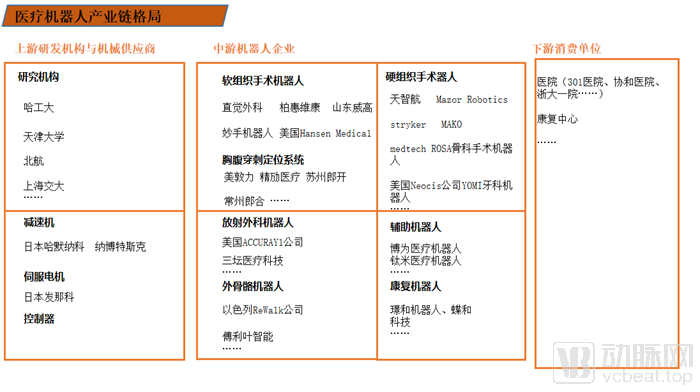
At the current stage, domestic medical robot R&D teams are confronted with internal challenges, including limited industrialization experience and weak engineering capabilities. Externally, they face issues such as reforms in healthcare system procurement models, insufficient domestic capabilities in precision control and machining, and patent barriers.
Beyond these common challenges, different types of medical robots face distinct difficulties, as they are designed to address different problems.
The barrier to entry for rehabilitation robots is relatively low, and the market demand for rehabilitation services is well-defined, offering potential for rapid short-term growth. The key challenge lies in the high requirements for product portfolios and distribution channels. The fragmented nature of the industry fails to meet supply chain demands, necessitating policy-driven development.
Furthermore, the market size for individual rehabilitation robot products is limited, necessitating a diverse product portfolio; moreover, as rehabilitation robots typically do not involve consumables, a sustainable profitability model is currently lacking.
In contrast, the product landscape for assistive robots is relatively fragmented, primarily comprising transport robots, medication dispensing robots, patient guidance robots, and nursing care robots. Demand for these products varies significantly across scenarios, resulting in weaker synergy among them.
Surgical robots will account for the largest share of the medical robotics market. According to estimates by Boston Consulting Group, the global medical robotics market was projected to reach $11.4 billion in 2020, with surgical robots comprising approximately 60% of this market share.
For surgical robots, the overall market prospect is enormous, but there are currently no companies that have achieved scaled revenue, indicating that the industry is in its early stages of development. Whether it is neurointerventional robots or minimally invasive surgical robots, they are currently expensive and require highly skilled operators, making widespread adoption difficult. Taking neurointerventional robots as an example, doctors and hospitals capable of performing complex brain surgeries are already rare.
In addition to enduring a lengthy R&D journey, surgical robots must also undergo gradual market education; explosive growth remains some distance away.
Gu Lixu, Professor of Biomedical Engineering and Doctoral Supervisor at Shanghai Jiao Tong University, Assistant Dean of the Medical Robotics Institute, and Founder of Jingmai Robotics, stated, “Medical robots represent a tool-based upgrade in the healthcare sector. Compared with other industries, the application of engineering technologies related to diagnosis and treatment in the medical field is more cautious.”
Zhao Ruilin, Partner at Chende Capital, stated, “Although the da Vinci Surgical System is currently experiencing strong momentum, it took nearly two decades to gain physicians’ acceptance during its early development. Therefore, medical robots in China still have a long way to go, and subsequent market entry barriers should not be overlooked.”
It is understandable that the commercial value of any revolutionary technology or system is difficult to measure at the outset. We should first evaluate the true future value of surgical robots from three perspectives: patients, physicians, and hospitals, with particular emphasis on patients. As a disruptive technology, surgical robots offer significant benefits in improving surgical quality, precision, and safety. Although the path forward may be tortuous, the prospects for surgical robots are bright.
In the current landscape, single-purpose medical robots that are affordable, single-function, easy to operate, and address specific clinical pain points will see wider adoption.
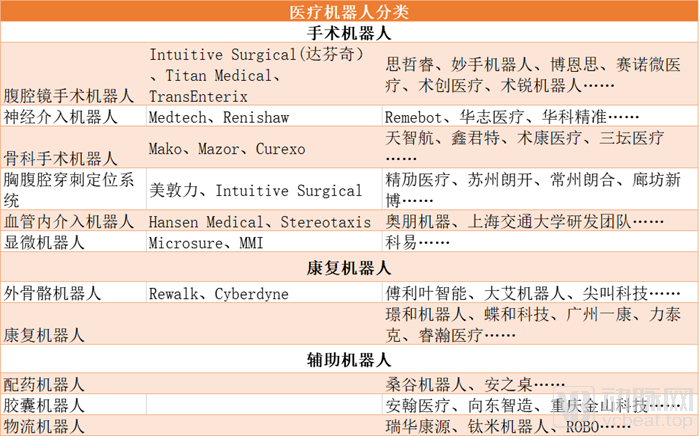
Currently, the most mature surgical robot products in China are neurointerventional surgical robots, with offerings from HuaKe Precision, HuaZhi Minimally Invasive, and BaiHui WeiKang having already received regulatory approval. Meanwhile, a significant number of companies are focusing on orthopedic surgical robots and thoracoabdominal puncture localization systems.
For orthopedic surgical robots, systems that integrate intelligent preoperative planning with precise automated operation can assist surgeons in surgical planning, reduce intraoperative radiation exposure, and enhance the accuracy and stability of screw placement.
Global orthopedic giants, including Johnson & Johnson, Stryker, Zimmer Biomet, Medtronic, and Smith & Nephew, have been actively expanding into the field of orthopedic surgical robots through acquisitions. With over one million spinal and joint replacement surgeries performed annually in China, the market continues to offer double-digit growth potential. Orthopedic surgical robot systems such as Mazor, MAKO, and Medtech are also beginning to enter the Chinese market.
For thoracic and abdominal puncture-assist robots, most current commercial products are focused on pulmonary applications. In February of this year, Johnson & Johnson acquired Auris Health, a company specializing in robotic surgery for lung cancer, for $3.4 billion; the FDA also approved Intuitive Surgical’s robotic system for lung biopsies; and Medtronic launched its own SuperDimension GPS navigation system for the lungs.
VCBeat has previously covered Medtronic’s and Intuitive Surgical’s bronchial localization and navigation systems, as well as Intuitive Surgical’s lung biopsy robot. Medtronic’s SuperDimension system can reach subpleural regions by navigating to 12th–14th generation bronchi using pre-shaped catheters. In addition to enabling biopsies, the SuperDimension system also facilitates minimally invasive therapies.
Among startups, product concepts differ little, with all focusing on precise localization and navigation as well as early diagnosis and staging for lung cancer, a major disease. However, their implementation pathways vary slightly. Suzhou Langhe Medical and Langkai Medical offer solutions similar to Medtronic’s SuperDimension, primarily conducting transbronchial lung biopsies. Jingmai Medical integrates electromagnetic positioning technology with AI (with technical support from SenseTime), image guidance, and VR to minimize localization errors caused by respiratory motion and enable precise navigation for percutaneous needle biopsy.
Vascular interventional robots are in the early stages of development. By leveraging imaging and navigation systems, they enable three-dimensional visualization and precision in cardiovascular, cerebrovascular, and peripheral vascular interventional procedures, while allowing interventionalists to operate away from X-ray exposure. They are suitable for minimally invasive surgeries in cardiac intervention, peripheral vascular intervention, and neurovascular intervention.
An analysis of the strategic layouts of domestic surgical robot companies reveals that most startups in China are targeting sectors aligned with those of industry giants. In terms of specific R&D pathways, innovation in China’s surgical robot sector can follow two distinct routes.First, innovate within the product ecosystems of large corporations. Looking at the more mature U.S. market, most innovative companies are eventually acquired by larger firms and become part of publicly traded entities—a well-established and widely recognized path. Second, develop proprietary systemic products to grow into a unicorn in a niche sector and pursue an independent IPO.
Different paths have been chosen, and the market and capital hold different expectations for them.
For the former category of companies, the key to surgical robots still lies in addressing clinical pain points and ensuring feasibility. First, certain products address clinical pain points that are more about creating demand; however, some of these demands offer limited practical benefit to clinicians in real-world practice.
An investor stated bluntly, “Surgical robots still need to make substantial improvements in usability and quality; the quality and usability of some products remain questionable.”
Based on the 2019 funding landscape for surgical robots, companies securing investment this year are predominantly more mature players in orthopedic, neurosurgical, and laparoscopic surgical robotics.
For original innovation-driven enterprises, which are currently scarce in China, VCBeat has found that investors hold greater expectations and patience for such companies.
Zhang Yuhao, Investment Manager at BV Baidu Venture Capital, stated, “The future of surgical robots lies in making surgical procedures more minimally invasive, precise, and intelligent. However, the achievements realized at this stage fall far short of their maximum potential. From a longer-term perspective, even the most advanced da Vinci Surgical System currently available represents merely version 1.0 of surgical robotics. We hope to identify entrepreneurial talents with strong capabilities in technology development and engineering iteration, as well as forward-looking vision, who can develop next-generation intelligent minimally invasive surgical robotic systems based on a thorough understanding of clinical pain points and needs. Just as a discerning eye must precede the recognition of exceptional talent, BV has already begun preparations to provide high-quality access to clinical and expert resources for outstanding individuals, establishing an incubation platform centered on innovation in next-generation intelligent surgical systems.”
For surgical robots to achieve a breakthrough, they must first clear the regulatory approval hurdle; for innovative products, approval serves as a litmus test.
Currently, multiple domestically developed and independently innovated surgical robots listed in China have entered the market through the innovative review and approval channel. It is foreseeable that more surgical robot products will be launched via this pathway in the future. However, at the forum, Liu Bin, Director of Department IV and Research Fellow at the Center for Medical Device Evaluation of the National Medical Products Administration (NMPA), revealed that from the implementation of the Special Approval Procedure for Innovative Medical Devices (Trial) until November 2018, Department IV received a total of 63 applications for special approval of innovative medical devices, with approximately 8.5 approvals granted, resulting in an approval rate of 13.5%, which is not particularly high.
Minister Chen Bin stated on-site: To obtain approval for innovative products, the following four requirements must first be met:
I. Legally holding the invention patent right for the core technology of the product in China, or legally obtaining such patent right or its usage rights through assignment; or the examination and approval of the core technology patent has been published by the patent administration department under the State Council;
II. The product’s main working principle and mechanism of action are the first of their kind in China, with fundamental improvements in performance or safety compared to similar products;
III. Technologically at the international leading level, with significant clinical application value (significantly improved efficacy, superior safety compared to marketed products, and cost reduction as a basic principle);
IV. Possession of basically finalized products, authentic and controlled research processes, complete and traceable research data (research validation completed, key processes validated, and animal studies providing supporting evidence).
Minister Chen Bin stated that a common issue encountered during the approval process is determining whether a product is a domestic first-of-its-kind. For some products, the working principles are unclear, making it impossible to verify their status as domestic firsts. Other products exhibit a certain degree of innovation, but since similar research exists both domestically and internationally, or their fundamental mechanisms resemble those of existing products, they do not qualify as domestic firsts. Furthermore, some products lack analysis and comparative data on the application of similar products already marketed abroad, thereby failing to demonstrate that they are at an international leading level.
In addition, insufficient clinical application value of the product, as well as inadequate preliminary research and research on basically finalized products, are also common issues.
Regarding insufficient clinical application value, the issues mainly manifest in three aspects: 1. Compared with existing products, the performance or safety of the product under review has not been fundamentally improved over similar products; 2. There is a lack of sufficient scientific basis in product design and selection of clinical indications; 3. Animal studies, clinical data, and literature fail to demonstrate that the product under review can address current clinical challenges or effectively improve clinical practice.
Issues observed in preliminary research and basic product finalization are mainly manifested as follows: 1. Insufficient preliminary research, including inadequate studies on mechanical properties, product safety, and in vivo metabolism. 2. Lack of performance indicators and testing method data for the product, failing to demonstrate that the product has reached basic finalization. 3. The product’s variety and structure require further clarification.
In the development of medical robots, mitigating risks and achieving deeper integration of technology with clinical practice to facilitate hospital adoption requires not only strengthening internal capabilities but also gaining broader industry perspectives and addressing diverse patient needs.
Most domestic medical robot startups boast strong engineering backgrounds, a rare advantage. However, without the support of professional clinical experience, working in isolation will only prevent their products from moving beyond the laboratory.
An industry expert in China’s surgical robotics sector once stated that in medical-engineering collaboration, medicine must take the lead. Whether it involves surgical robotic technology or systems, development must be centered on specific clinical departments and should not be generalized.When collaborating with hospital departments on product development, it is essential to engage the department chair. This is because medical-engineering integration is a long-term partnership, and the department chair possesses the resources necessary to sustain this effort over time. A productive collaborative cycle should be driven backward from clinical pain points; if scientists approach the process solely from a technological perspective, the outcomes are often counterproductive.
The second point is to conduct a classified assessment of the advancement, applicability, and maturity of technologies in interdisciplinary medical-engineering research. This includes fields such as bio-intelligent materials, 3D printing, microactuators, medical robot structures, positioning sensors, surgical planning and navigation, augmented reality technology, AI-based diagnostic recognition and precision, and clinical trials. Such an assessment enables accurate positioning of research conducted by scientists and medical experts within the pre-research phase, the critical breakthrough phase, or the clinical application exploration phase. Consequently, it allows for the determination of the innovation stage, required resources, key innovators, expectations, and validation objectives. This, in turn, provides effective support for the subsequent regulatory review of the safety, efficacy, and adaptability of high-end medical device and system prototype product development.
The United States is the country with the fastest development of surgical robots worldwide. Although the European Union, Japan, and other regions started earlier, their industrial applications lag behind the United States. If we explore the underlying reasons, we find that the U.S. Food and Drug Administration (FDA) adopts a regulatory approach characterized by lenient entry but strict post-market oversight. The FDA has consistently maintained an encouraging attitude toward innovation, while imposing stringent regulations during subsequent clinical use. Should issues arise, they are either resolved through commercial insurance or result in severe penalties. This approach facilitates the faster implementation of new technologies. It is well known that accidents have occurred with the da Vinci Surgical System in various parts of the world. However, these incidents have not hindered its global promotion.
In addition to regulatory encouragement of innovation, commercial insurance in the United States provides a safety net for the deployment of surgical robots, leading to higher adoption rates of innovative products due to this financial backing. In contrast, the development of medical robots in China requires coordinated efforts and promotion from manufacturers, clinical experts, and the government to gradually build industry consensus and secure substantive support, thereby achieving large-scale application of medical robots. The Shanghai Jiao Tong University Medical Robot Innovation Industrial Park was established precisely to bridge the resource gap between R&D and industry, enabling university-led research, local incubation, and organized technology transfer, with the aim of building a complete medical robot industrial ecosystem. We look forward to seeing them achieve even greater results in this area.