

Kailian Medical Develops Next-Gen Hypophysial Hormone Pump to Treat Kallmann Syndrome, Files IPO Prospectus

Kailian Medical
High-end Medical Device R&D, Production, and Sales Company
“As a man, I have no Adam’s apple, my voice never deepened, and I even lack secondary sexual characteristics. Walking down the street, some people call me sissy, while others refer to me as ‘little sister.’” Before the age of 23, such remarks stemming from gender misperception felt like a net tightening around him, leaving Pan Longfei struggling to breathe and even plunging him into periods of low self-esteem.
“What’s wrong with him?” People around him often asked. In an interview with VCBeat, 31-year-old Pan Longfei told the reporter that he had a rare disease called Kallmann syndrome.
Kallmann syndrome is hypogonadotropic hypogonadism accompanied by anosmia or hyposmia, and it is a disease with clinical and genetic heterogeneity.In layman's terms, patients with Kallmann syndrome "cannot smell, have no libido, and are infertile." Statistical data indicate that the incidence of Kallmann syndrome is approximately 1 in 8,000 in males and 1 in 40,000 in females.
On May 11, 2018, the National Health Commission and four other departments jointly formulated the “First Batch of Rare Diseases Catalog,” which includes Kallmann syndrome.
What exactly causes Kallmann syndrome? What specific challenges do patients currently face? Are there any innovative therapies that can help them... With these questions in mind, VCBeat conducted an exclusive interview with a patient suffering from Kallmann syndrome.Pan Longfeiand companies dedicated to developing innovative therapies for Kallmann syndrome—Kailian Medical, attempting to provide some answers from it.
Globally, there are as many as 7,000 types of rare diseases. However, fewer than 10% of these rare diseases have effective pharmacological treatments, while the remaining 90% still await advancements in pharmaceutical technology and innovation.
These data imply that, in terms of treatment, the vast majority of patients with rare diseases are left to “resign themselves to fate.”
Pan Longfei, a patient with the rare disease Kallmann syndrome and the founder of “Home of Old K,” a public welfare organization for patient mutual aid. Established in 2012, “Home of Old K” has registered more than 3,000 patients over the past seven years.
“Many of the patients I have encountered suffer from profound low self-esteem and lead repressed lives. They struggle to accept themselves, and some are even unaware that they have Kallmann syndrome,” said Pan Longfei.
Pan Longfei introduced,In China, there are 200,000 patients with Kallmann syndrome.。Males with Kallmann syndrome present with absent pubic, axillary, and facial hair; lack of an Adam's apple; failure of voice deepening; and infantile external genitalia. Females with Kallmann syndrome present with primary amenorrhea; absent pubic and axillary hair; lack of breast development; and hypoplastic internal genitalia, including the ovaries and uterus.
Clinically, Kallmann syndrome follows a treatment pathway similar to that of the vast majority of rare diseases: it is incurable and can only be managed through conservative pharmacological therapy. Currently, there are three mainstream treatment regimens:
I. Androgen replacement therapy: For patients without fertility requirements, treatment can be initiated after the age of 14, with the goal of promoting the development of male secondary sexual characteristics;
II. Subcutaneous injection of gonadotropins, with the goal of restoring fertility;
III. GnRH pulse pump: Simulates physiological GnRH secretion to promote the release of gonadotropins from the anterior pituitary, thereby facilitating testicular and ovarian development and restoring fertility.
In 2014, due to the discontinuation of human chorionic gonadotropin for injection—a medication used in the treatment of Kallmann syndrome—the Lao K Home initiated the campaign “I am Lao K; I Need Human Chorionic Gonadotropin for Injection.” This effort ultimately garnered attention from government authorities and the public, effectively resolving their medication access issues.
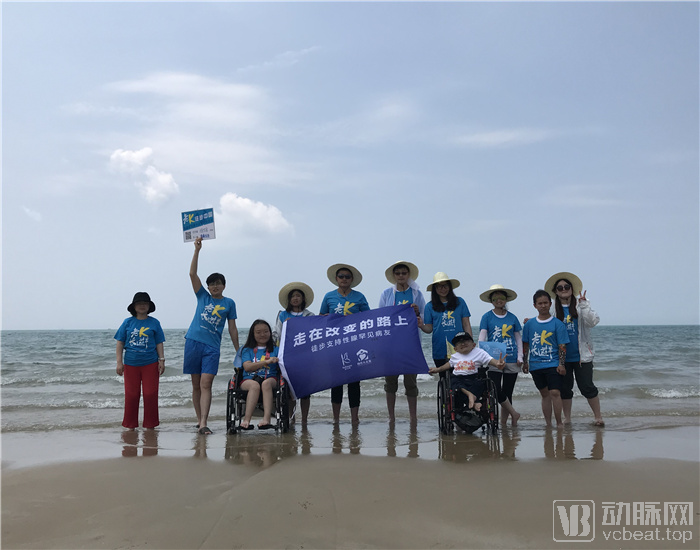
(Image provided by the interviewee: Old K’s hiking trip)
“For those of us who are marginalized, in addition to the immense psychological burden, we are facing multiple dilemmas that are difficult to overcome: drug shortages, difficulty in achieving a cure, and minimal health insurance coverage,” introduced Pan Longfei.
Due to the rarity of Kallmann syndrome and its limited profit margins, very few pharmaceutical manufacturers produce medications for this condition. Furthermore, its low incidence rate and unique clinical presentation have resulted in scarce medical resources. The vast majority of patients face the dilemma of being unable to obtain a definitive diagnosis despite seeking care across multiple regions, or receiving inappropriate treatment even after diagnosis. Timely and accurate treatment is typically available only at hospitals in major metropolitan areas such as Beijing, Shanghai, and Guangzhou. However, the substantial financial burden associated with seeking medical care away from home deters many patients from pursuing these options.
Diagnosing and treating these conditions undoubtedly presents a formidable obstacle for young patients. As time goes on, “marriage” and “childbearing” will emerge as new life challenges.
Is there a way to help this group of people? In the view of Huang Xiaomin, founder of Kailian Medical, the original intention behind launching the new generation pituitary hormone pump was to effectively address these issues and bring hope to patients with Kallmann syndrome.
Some say that rare diseases are a history of struggle centered around a small group of people.
Kailian Medical, established in 2014, is a company dedicated to the research, development, and production of innovative micro-drug infusion devices.The product portfolio covers innovative products such as next-generation insulin pumps, hormone pumps, electric insulin pens, and patch pumps. Among these, its independently developed new-generation pituitary hormone pump holds a leading position in China.
What is the pituitary hormone pump developed by Kailian Medical?
“In fact, the essence of Kallmann syndrome is hypogonadotropic hypogonadism (IHH). And the problem with the gonads is closely related to the hypothalamic-pituitary-gonadal axis of the human endocrine system,” said Huang Xiaomin.
He introduced that Kailian Medical’s independently developed second-generation pituitary hormone pump utilizes an AI-controlled micro-infusion device to simulate the physiological pulsatile secretion pattern of the hypothalamus by delivering subcutaneous pulse injections of gonadotropin-releasing hormone (GnRH) analogs. This approach effectively stimulates the pituitary gland to secrete gonadotropins, thereby promoting gonadal development, sex hormone secretion, and spermatogenesis or folliculogenesis, ultimately restoring fertility in patients.

(The image shows the Kailian pituitary hormone pump)
According to the 2017 Expert Consensus on Gonadotropin-Releasing Hormone (GnRH) Pulse Therapy, this treatment is indicated for all patients with abnormal GnRH pulsatile secretion, intact pituitary-gonadal reserve function, and a desire for fertility. Examples of such conditions include pituitary stalk interruption syndrome, Kallmann syndrome, idiopathic hypogonadotropic hypogonadism (IHH), idiopathic central amenorrhea, and non-obese polycystic ovary syndrome (PCOS).
Huang Xiaomin stated that the Kailian pituitary hormone pump is feature-rich. It features a clear OLED color display, an easy-to-use capacitive touch screen, and a safe rechargeable battery. Its segmented dose adjustment accommodates various personalized treatment regimens. Additionally, it supports Bluetooth transmission of treatment information to mobile phones and uploading to cloud servers, enabling the sharing and storage of treatment data. For patients, the device is highly convenient to use and fully facilitates personalized therapy.
Why Venture into Rare Diseases and Develop Pituitary Hormone Pumps?Huang Xiaomin recounted, in a gentle and engaging manner, the story of how he became connected with rare diseases and the “Old K” community.
In 2009, he, with a medical background, served as Vice President at MicroPort Scientific Corporation, overseeing the development of therapeutic products for endocrine and metabolic diseases.
“At that time, we collaborated with Shanghai Ruijin Hospital. During our clinical survey, we found that many men in their twenties, despite being tall and delicate in appearance, lacked secondary sexual characteristics and were infertile,” said Huang Xiaomin.
“Later, I learned from experts at Ruijin Hospital that these individuals were patients with Kallmann syndrome. Their quality of life was generally poor, and they represented an underserved population. At that time, I began to consider whether an innovative therapy could be developed to help them,” Huang Xiaomin told VCBeat.
After continuous research, development, and testing in collaboration with clinical experts at Ruijin Hospital, the first-generation pituitary hormone pump was finally developed. At that time, a 22-year-old male patient approached the clinical trial team, expressing his willingness to try this newly developed product.
“This patient came to us saying that if he couldn’t have children, his wife might divorce him, leading to the breakdown of his family. Regardless of the outcome, he wanted to try our treatment plan,” said Huang Xiaomin.
“After less than a year of treatment, this male patient showed significant improvement in symptoms related to his secondary sexual characteristics. ‘He is the first patient to successfully father a child. He even sent us an email expressing his gratitude, along with a photo of his baby. Our product helped him regain family happiness, which brings us immense joy as well,’ said Huang Xiaomin.”
In 2014, Huang Xiaomin co-founded Kailian Medical with Legend Capital, establishing an incubation platform for innovative medical devices. Two years later, Kailian Medical pivoted to focus on the management of chronic and rare diseases, with a deep specialization in the field of endocrinology.
From 2009 to 2019, a decade had passed. Huang Xiaomin redefined and upgraded the pituitary hormone pump product based on the R&D foundation of the first generation.
He stated that both the first-generation product and the upgraded next-generation pituitary hormone pump currently hold a leading position in China. The newly launched next-generation pituitary hormone pump features three key characteristics:
I. Technological Breakthroughs. The first-generation product was developed by adapting conventional insulin pumps, whereas the new-generation pituitary hormone pump features a specially engineered pulsatile infusion mechanism that truly replicates the function of the artificial hypothalamus, offering outstanding efficacy with no side effects.
II. Better User Experience.Compared to the first-generation product, the new generation of pituitary hormone pumps has been further optimized, featuring a color LCD screen, Bluetooth connectivity, and a disease diagnosis and treatment software platform that enables real-time monitoring of patient status, thereby facilitating physician follow-up.
III. Price Reduction.For patients with Kallmann syndrome, the treatment course is prolonged and requires continuous therapy. Compared with first-generation products, efforts will be made to lower product pricing and reduce treatment costs, thereby better serving patients.

Currently, the new generation of pituitary hormone pumps has been approved by the CFDA.and has established collaborations with multiple renowned hospitals,For example, Peking Union Medical College Hospital, Chinese PLA General Hospital, Shandong Provincial Hospital, and Beijing Chaoyang Hospital. Many patients have reported favorable outcomes, with significant improvement in their symptoms.
As rare diseases require long-term treatment, effective treatment management is crucial for both physicians and patients. Since its inception, Kailian Medical has strategically invested in product intelligence and cloud-based data exchange. In collaboration with partners, the company has developed a mobile app platform and a cloud-based data interaction platform specifically for rare diseases. These initiatives aim to provide long-term services to patients with chronic and rare diseases, establish communication channels between doctors and patients, create a comprehensive care network, and ensure that patients’ treatment receives continuous medical attention.
In the future, Kailian Medical will integrate with all drug infusion devices to provide more comprehensive integrated solutions for rare disease drug therapy, offering greater choice for patients and physicians while contributing valuable data to rare disease treatment research.
“We cannot change the disease, but we can change patients’ lives.“Huang Xiaomin said. He stated that, leveraging Kailian Medical’s strong technical team, the company will further expand its layout in rare diseases in the future, develop more practical products, and help patients with rare diseases rebuild their confidence in life.”