

Raycome Health: Successor to Mercury Sphygmomanometers, Pulse Wave Blood Pressure Monitors Deployed in Nearly 10,000 Medical Institutions
How to accurately measure blood pressure has always been a focus of attention in academic and medical circles. The current gold standard for non-invasive blood pressure measurement is KorotkoffAuscultatory method, i.e., mercury sphygmomanometer.
Mercury, scientifically known as elemental mercury, is a toxic substance. In 2013, representatives from 87 countries and regions, including China, signed an international convention aimed at controlling and reducing mercury emissions—the Minamata Convention. The Convention officially entered into force for its Parties on August 16, 2017. According to the joint announcement issued by the Ministry of Environmental Protection, the Ministry of Foreign Affairs, and other departments, the mining of new primary mercury mines has been prohibited since the effective date. Furthermore, the Convention requires Parties to prohibit the production, import, and export of mercury-added products starting from 2020. The provision that significantly impacts mercury sphygmomanometers is:2026As of January 1, the production of mercury-containing sphygmomanometers is prohibited.
The mercury sphygmomanometer, long considered the gold standard for non-invasive blood pressure measurement, is destined to exit the stage of history. So, who will lead the future of non-invasive blood pressure measurement? Let’s first take a look at the currently popular electronic blood pressure monitors.
Most electronic blood pressure monitors utilize highly sensitive sensors within the cuff and employ the oscillometric method for blood pressure measurement. They can automatically record arterial blood flow status and convert it into digital format, eliminating the need for a stethoscope during measurement, which offers great convenience.
However, the oscillometric method employed by electronic blood pressure monitors has certain limitations. As a statistical measurement technique, it is not suitable for the following populations: individuals with severe obesity; those with arrhythmia; patients with extremely weak pulses, severe dyspnea, or hypothermia; patients with heart rates below 40 beats per minute or above 240 beats per minute; patients experiencing acute blood pressure fluctuations due to massive hemorrhage, hypovolemia, or shock; and patients with Parkinson’s disease. Furthermore, national metrological technical regulations and unified textbooks explicitly state that wrist-type and finger-cuff electronic blood pressure monitors are not applicable to patients with diabetes, hypertension, or the elderly.
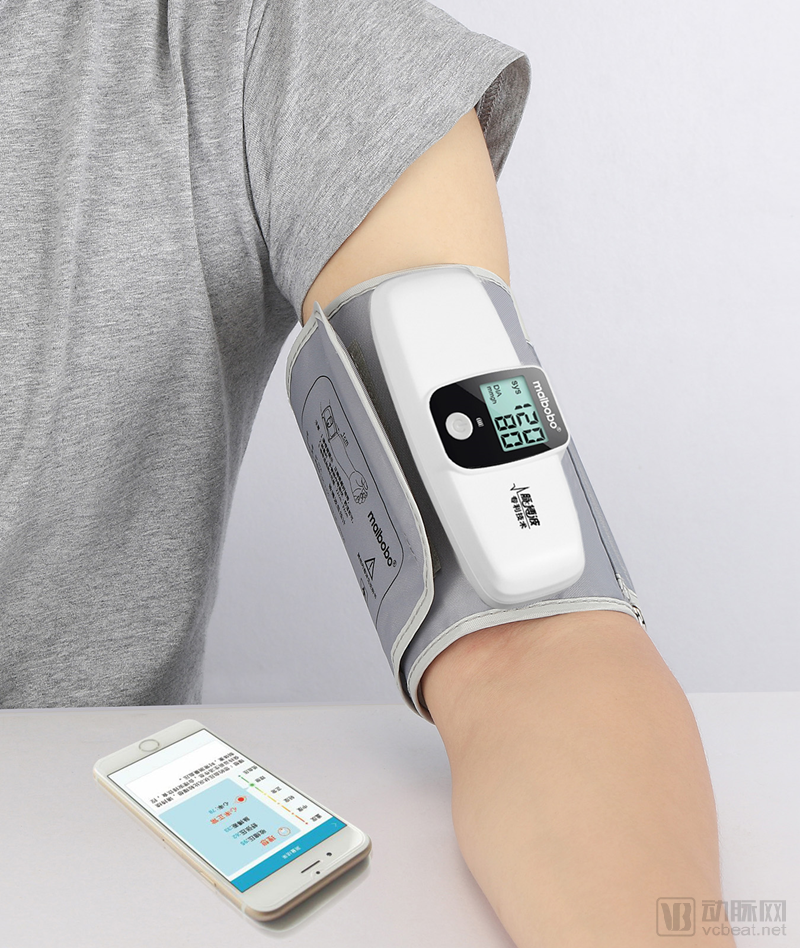
The limited target population for electronic blood pressure monitors restricts their potential to become the gold standard. Fortunately, innovative non-invasive blood pressure measurement methods have already emerged in China, namely pulse wave blood pressure measurement. This method is a new generation of precise blood pressure measurement technology developed by Dr. Wu Xiaoguang and his research team at Tsinghua University, and it has obtained both international and domestic invention patents. Shenzhen Raycome Health Technology Co., Ltd. has developed a pulse wave blood pressure monitor based on this method for non-invasive and precise blood pressure measurement.
Pulse wave blood pressure monitors employ an upstream cuff combined with downstream pulse wave detection, replacing the Korotkoff sound method. Pulse waves accurately reflect the status of blood flow. This approach utilizes multi-point measurements instead of single-point measurements, leveraging the intrinsic correlations and variation patterns among data points near the systolic and diastolic pressures. By applying approximation and fitting algorithms, it calculates true systolic and diastolic blood pressure values, enabling continuous measurement of discontinuous events—that is, determining blood pressure values between two consecutive heartbeats.
(Photo provided by the company)
The entire measurement process requires no manual intervention, thereby avoiding errors introduced by subjective factors. The calculation of blood pressure values relies on the intrinsic correlations and variation patterns among data points near the systolic and diastolic pressure points, rather than on empirical statistical data, thus preventing measurement errors caused by individual differences.
Currently,Pulse wave sphygmomanometers have been endorsed by authoritative academic institutions, including the National Center for Cardiovascular Diseases, the Chinese Hypertension League, and the National Joint Laboratory of Big Data on Hypertension.
Experts stated: “The non-invasive precision pulse wave blood pressure monitor innovatively employs pulse wave detection technology, resolving the century-old challenge of accurate non-invasive blood pressure measurement that has persisted since the invention of the Korotkoff sound sphygmomanometer over 100 years ago. It fills a gap in the international field of non-invasive precision blood pressure measurement and represents a new generation of blood pressure monitors designed to replace mercury sphygmomanometers.”
Compared with other non-invasive blood pressure measurement methods, pulse wave blood pressure monitors offer advantages such as high measurement accuracy, unrestricted applicability across populations, and environmental friendliness due to being mercury-free, holding significant potential for the future.
According to the “Healthy China Action (2019–2030)” released on July 9, 2019, there are currently 270 million hypertensive patients in China, posing a serious threat to public health. To ensure the successful achievement of the Healthy China objectives, the Healthy China Action Promotion Committee has issued recommendations on blood pressure monitoring, blood lipid testing, self-health management, dietary habits, and physical activity.
For patients with hypertension, blood pressure monitoring is crucial. It enables real-time assessment of the patient’s condition and facilitates health management. In China, while the awareness rate of hypertension approaches 50%, the control rate remains below 17%. This low control rate is primarily attributed to the limited dissemination of monitoring technologies and the insufficient adoption of new hypertension management techniques at the primary care level.
With the accelerating pace of population aging and changes in lifestyle, the incidence of hypertension in China is rising rapidly, making blood pressure health management for hypertensive patients an urgent priority. The Cardiovascular Disease Prevention and Control Action within the "Healthy China Action (2019–2030)" explicitly states that by 2022 and 2030, the awareness rate of hypertension among residents aged 30 and above shall reach no less than 55% and 65%, respectively; the standardized management rate for hypertensive patients shall reach no less than 60% and 70%, respectively; and the treatment and control rates for hypertension shall continue to improve. At the societal and governmental levels, the system of measuring blood pressure during the initial consultation for individuals aged 35 and above has been fully implemented, and strategies for the joint management of hypertension, hyperglycemia, and hyperlipidemia are being advanced.
The primary concern in blood pressure management is blood pressure monitoring. Mercury sphygmomanometers are being phased out, and oscillometric electronic blood pressure monitors are not suitable for everyone. In contrast, pulse wave blood pressure monitors are trusted by authoritative academic institutions such as the National Center for Cardiovascular Diseases, the Chinese Hypertension League, and the National Big Data Laboratory for Hypertension. These devices pose no environmental concerns, provide accurate measurements, and are currently used in nearly 10,000 medical institutions across China. Shenzhen Raycome Health Technology Co., Ltd., established in 2008, is the developer and manufacturer of these pulse wave blood pressure monitors.
Shenzhen Raycome Health Technology Co., Ltd. is a high-tech enterprise specializing in precise blood pressure measurement technologies, and its pulse wave blood pressure monitors hold significant influence in the market. Zhou Wei, General Manager of Raycome Health, stated, “In niche segments such as all-in-one health kiosks, smart healthcare, and hemodialysis, our pulse wave blood pressure monitors command a leading market share.”
The decision to focus on blood pressure monitoring stems from the Raycome Health team’s recognition of the vast market potential in hypertension management, as well as their aspiration to achieve domestic production in the blood pressure sector and replace imported products. To this end, Raycome Health has established a comprehensive, integrated blood pressure service ecosystem.
Zhou Wei explained, “Our integrated blood pressure management service encompasses two key aspects. First, our blood pressure monitoring services cover a comprehensive range of scenarios, including outpatient screening, 24-hour ambulatory blood pressure monitoring, inpatient measurements, and home monitoring. Second, we offer a complete portfolio of devices, including pulse wave-based medical-grade automatic blood pressure monitors, ambulatory blood pressure monitors, and pulse wave-based home blood pressure monitors suitable for remote home monitoring.”
In addition, Raycome Health has established a presence in blood pressure management. As hypertension is difficult to cure, out-of-hospital chronic disease management is of paramount importance. Yike Network, a wholly-owned subsidiary of Raycome Health, oversees its blood pressure management operations and has already formed strategic partnerships with several major enterprises, including iFlytek, Sinocare, and United Imaging.
“Control blood pressure, starting with ‘accurate’ measurement!” Zhou Wei told reporters. The fact that electronic blood pressure monitors have been on the market for many years but have yet to be adopted by hospitals and other professional institutions clearly demonstrates how highly these institutions value the accuracy of blood pressure measurement.
Based on this, Shenzhen Raycome Health Technology Co., Ltd. (Raycome) first penetrated the hospital channel by leveraging the high accuracy of its pulse wave measurement method. Currently, Raycome enjoys a price advantage in its products, an accuracy advantage in measurement technology, and the benefit of holding invention patents. Furthermore, national policies prioritize the procurement of domestically produced equipment by hospitals. Against the backdrop of import substitution, Raycome is rapidly increasing its market share. Zhou Wei stated, “It is evident that we are replacing imports, both in terms of technology and product portfolio.”
To date, Raycome Health’s blood pressure monitors have been deployed in nearly 10,000 medical institutions, achieving extensive coverage across many provinces. Numerous specialized cardiac and cardiovascular hospitals have adopted Raycome Health’s devices. Zhou Wei stated, “The recognition from professional institutions stems from their need for highly accurate measurement equipment, a requirement that pulse wave blood pressure monitors fully meet.”
In addition to the hospital sector, Raycome Health has also expanded into the consumer market. Shenzhen Raycome Health Technology Co., Ltd. has established a presence on e-commerce platforms such as Tmall and JD.com, selling directly to consumers. Zhou Wei stated, “During the 2019 Double 11 Shopping Festival, sales of the Pulse Wave Blood Pressure Monitor ranked fourth in its category on Tmall. In the future, when hospital channels begin to influence the consumer market, leveraging higher-dimensional advantages to compete in lower-dimensional markets will make things much easier, and the Pulse Wave Blood Pressure Monitor may experience explosive growth.”
Zhou Wei further revealed, “Raycome Health has currently signed distribution agreements with agents in more than ten countries, with its products sold worldwide to capture a larger share of the international market. Additionally, Raycome Health will intensify its expansion into the global market next year.”
Currently, the Chinese government is promoting a policy requiring blood pressure measurement at the initial consultation for individuals aged 35 and above, thereby encouraging medical institutions at all levels to measure patients’ blood pressure. Zhou Wei stated, “This effectively makes blood pressure measurement a standard component of clinical care. Just as temperature measurement was previously mandatory for hospital visits, blood pressure measurement is now required alongside it. Blood pressure monitors will become standard equipment in medical institutions at all levels, much like thermometers.”
This has brought not only a vast market for blood pressure measurement but also an increase in the awareness rate of hypertension. As hypertension receives growing attention, blood pressure monitors are becoming essential household items. Therefore, Shenzhen Raycome Health Technology Co., Ltd. (Raycome) continues to prioritize hospital channels in its market education efforts. When Raycome’s products establish strategic brand influence through hospital channels, patients are more likely to choose them. After all, patients place greater trust in physicians and, by extension, in the products used by them. Zhou Wei stated, “Once a product gains recognition in hospitals, its promotion in the consumer market becomes a natural progression and is significantly easier.”
Raycome Health’s products have reached nearly 10,000 medical institutions across China. What are the company’s future plans? Zhou Wei stated, “We will remain focused on the hypertension sector, with our product strategy evolving along two lines. First, we will pursue premiumization by manufacturing high-end medical devices to replace imported products and solidify our position in the hospital market. Second, we will enhance portability, such as through wearable devices and Internet of Things (IoT) integration. Currently, we have already made strategic investments in both areas.”
In addition, Shenzhen Raycome Health Technology Co., Ltd. plans to focus on the hypertension sector and expand its development across the upstream and downstream value chain, such as in blood pressure management. Zhou Wei stated, “The healthcare industry is vast and profound, and the field of hypertension requires companies like Raycome Health to dedicate themselves to focused research.”
Finally, Zhou Wei stated, “We currently plan to launch a new round of financing around the Spring Festival. The funds will be used to expand our market presence and increase our market share.”