

AndAll Genetics Releases Multiple White Papers on Maternal and Child Gene Big Data, Files IPO Prospectus
On December 17, the Anwo Genetics Media Briefing and White Paper Launch, themed “Genes & Data & Maternal and Child Health,” was held in Shanghai. Attendees included Wu Jian, Founder and CEO of Anwo Genetics; Dr. Li Xinlei, Chief Geneticist of Anwo Genetics; Wen Deliang, CTO of Anwo Genetics; Zou Lei, Partner at iResearch; Li Zhi, Vice President of Analysys International; Mi Jie, Director of the Center for Chronic Disease Management in Children at the National Center for Children’s Health (Beijing); Liu Yanping, Chief Physician in the Department of Clinical Nutrition at Peking Union Medical College Hospital, Chinese Academy of Medical Sciences; Qiu Zilong, Senior Researcher at the Institute of Neuroscience, Chinese Academy of Sciences; and Ma Lin, Member of the Professional Committee on Child Nutrition under the China Association for Birth Science and Population Health.
At the press conference, Anwo Genetics officially released three white papers: "White Paper on Genetic Testing for Childhood Allergies 2019," "White Paper on the Consumer Genetic Testing Industry 2019," and "Anwo Genetics Big Data Technology White Paper."
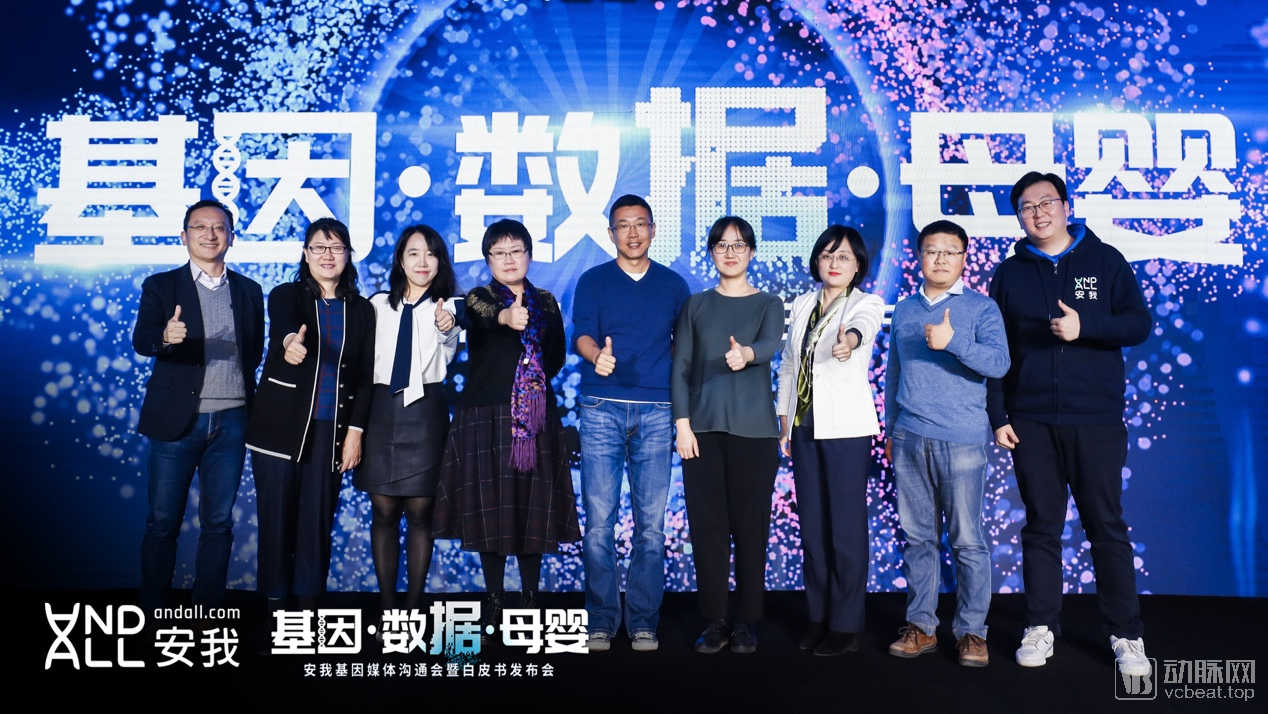
Wu Jian stated on-site, “As costs continue to decline and user awareness and attention increase, China’s consumer-grade genetic testing market will experience in 2020 a growth surge equivalent to that seen in the United States in 2016. The business model for consumer-grade genetic testing products has also evolved through iterations in recent years, moving away from ‘broad and comprehensive’’has become “small and beautiful”’. Anchored in the maternal and child health sector, Anwo Gene focuses on professional scenarios related to infant and maternal feeding. It not only provides new mothers, modern women, and new families with multidimensional genetic testing products and services covering areas such as infant allergies, infant nutrition, children’s height development, learning motivation, and perinatal health, but also offers them a comprehensive suite of scientific and professional solutions.”

An WoGeneX Founder and CEO Wu Jian
Furthermore, by leveraging deep insights into user genetic data, Anwo Gene constructs a comprehensive and precise set of over 2,000 GenoPB™ tags per user. It has established the Tiangang™ Data Middle Platform to aggregate and store vast amounts of user analytical data. Through its proprietary Tiangang™ rule-based analysis and recommendation algorithms, the platform enables big data analysis and application across multiple industries and scenarios, achieving precise connections between users, products, and contexts, thereby empowering partners with technology.
Regarding the future plans for Anwo Gene, Wu Jian stated that Anwo Gene will work with its partners to deeply explore precision medicine, including clinical testing, screening, identification of susceptibility genes, patient recruitment, and new drug development.
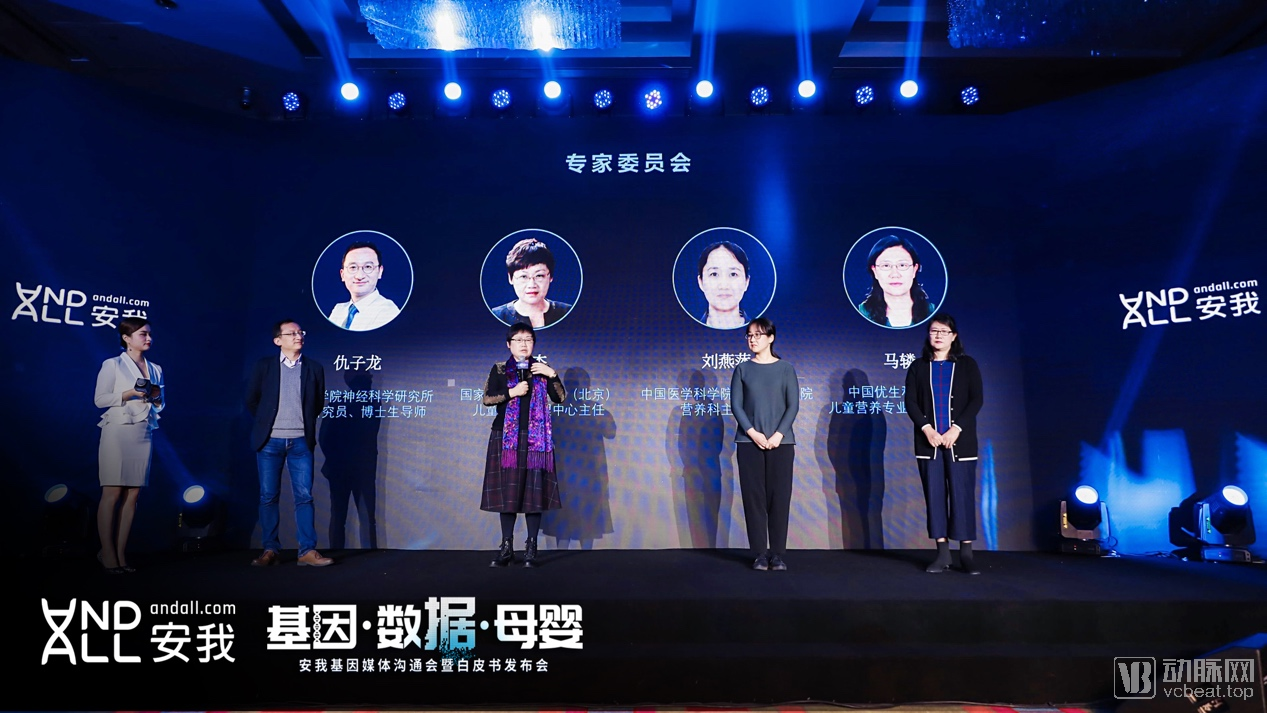
Anwo Genetics Expert Committee
At the event, Anwo Gene established an “Expert Committee,” inviting Mi Jie, Director of the Center for Chronic Disease Management in Children at the National Children’s Medical Center (Beijing); Liu Yanping, Chief Physician in the Department of Clinical Nutrition at Peking Union Medical College Hospital, Chinese Academy of Medical Sciences; Qiu Zilong, Senior Researcher at the Institute of Neuroscience, Chinese Academy of Sciences; and Ma Lin, Member of the Pediatric Nutrition Professional Committee of the China Association for Maternal and Child Health Studies. These experts expressed their strong anticipation for further collaboration with Anwo Gene on research projects, aiming to jointly deliver valuable research outcomes for the industry.
According to the "White Paper on Genetic Testing for Childhood Allergies 2019" (hereinafter referred to as the "Childhood Allergy White Paper"), jointly released by Anwo Gene, Analysys, and JD.com, it is estimated that based on the proportion of allergic reactions in children in recent years, there are over 6 million new allergic newborns annually. Based on estimates using the incidence of allergic diseases in children aged 3–7 years, the total number of allergic children in China (under 7 years old) remains above 21 million.
Furthermore, the year-on-year increase in search indices for childhood allergies indicates growing public attention to this issue. Additionally, e-commerce search data provided by JD.com shows that a range of products related to childhood allergic reactions—including genetic testing, probiotics, partially hydrolyzed infant formula, amino acid-based infant formula, infant face masks, hypoallergenic personal care products, dust mite removers, and silicone baby bottles—constitute the main categories in the childhood allergy consumer market.
The rising prevalence of allergic diseases in children and heightened parental awareness have turned the neonatal allergy market into a blue ocean. According to the White Paper on Childhood Allergies, the annual consumption scale of the neonatal allergy market exceeds RMB 20 billion, while the total size of the pediatric allergy consumer market surpasses RMB 50 billion, with genetic testing emerging as the key driver of future growth.
According to the White Paper on Childhood Allergies, both external factors (parenting styles, environmental changes, and the rising prevalence of pet ownership) and internal factors (genetic predisposition) jointly influence the severity of allergic symptoms in children. Genetic testing can aid in diagnostic assessment, enhance the clinical management of pediatric allergies, and facilitate scientifically grounded prevention and treatment strategies.
Moreover, earlier intervention can effectively reduce caregiving costs. According to the White Paper, as of the end of October 2019, an analysis of 351,436 test results from Anwo Gene’s pediatric allergy genetic testing product revealed that 76.59% of users were children under two years of age. Meanwhile, joint research conducted by Anwo Gene and its partner Nestlé found that 11% of parents reported that the financial burden of raising children with allergies had a significant impact on their lifestyle.
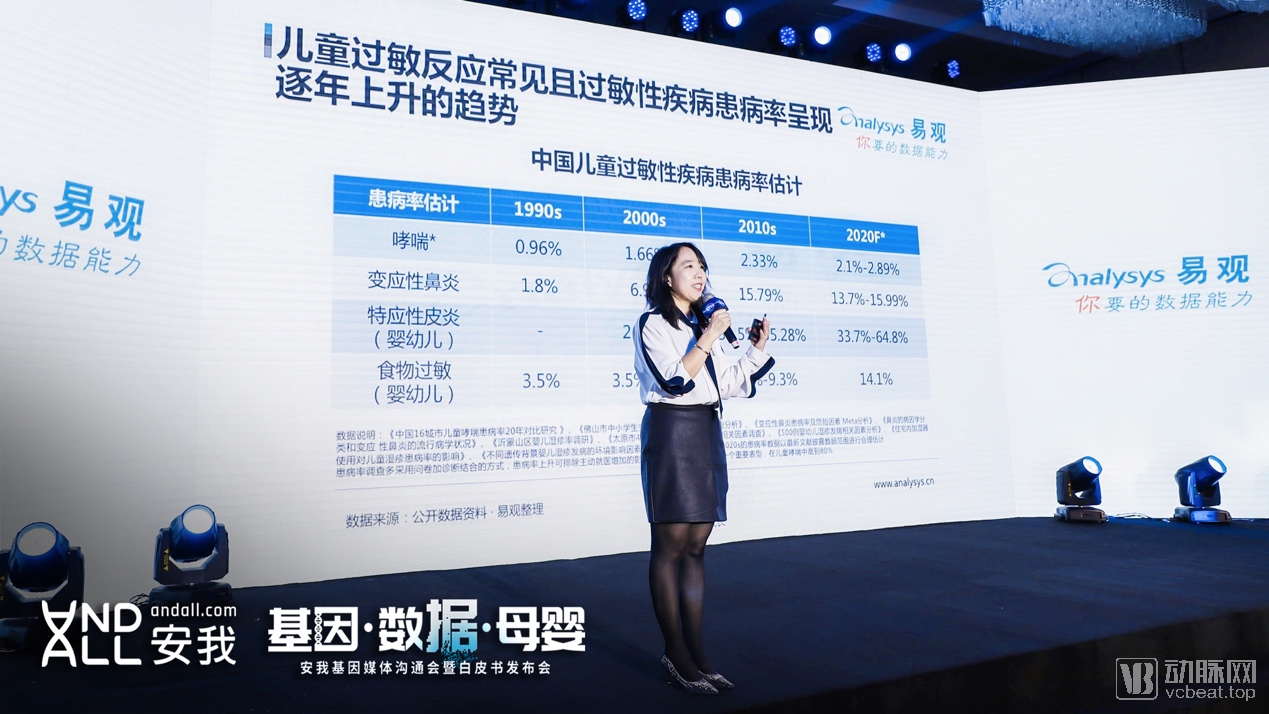
Li Zhi, Vice President of Analysys
Li Zhi, Vice President of Analysys, stated, “Only slightly over 100 hospitals across China have established departments dedicated to pediatric allergies, indicating a severe shortage in diagnostic and treatment capabilities for childhood allergies. Consumer-grade genetic testing can help bridge this gap in medical resources and effectively assist clinical diagnosis. Furthermore, parents’ accurate understanding of pediatric allergies remains low, and there is a lack of scientific, effective, and personalized health management guidance to bridge the gap between awareness and purchasing behavior. Anwo Genomics possesses deep insights into its users, enabling it not only to provide personalized health management plans for parents of allergic children but also to precisely aggregate target populations. By leveraging data algorithms to accurately connect users, products, and scenarios, it effectively empowers maternal and infant brands.”
The “White Paper on Childhood Allergies” also presents, from multiple dimensions, the in-depth and valuable insights and data provided by Anwo Gene in the field of childhood allergies.
The White Paper on Childhood Allergies shows that as of October 2019, an analysis of 351,436 test results from the Anwo Childhood Allergy Genetic Testing product revealed that 65.53% of children carried genetic markers indicating a high risk of allergies, and the proportion of children with an IgE-mediated allergic constitution reached 32%.
From the perspective of allergic conditions, 25.81% of children with allergies are at high risk for pollen allergy. Regionally, Guangdong Province has the highest detection rate of allergic constitution in children, accounting for 36.42%. Genetic data can effectively reflect regional differences, fundamentally revealing the varying needs for specific allergy solutions across different regions, while providing strong support for regional operational and promotional strategies of maternal and infant brands.
Furthermore, childhood allergies exacerbate the challenges of parenting. Over 24% of children with cow’s milk allergy have heightened calcium requirements, necessitating greater parental effort and more meticulous care. Genetic testing data can also provide strong support for maternal and infant brands in developing products tailored to special needs.
Regarding the future development of the pediatric allergy genetic testing market, the White Paper on Pediatric Allergies indicates that consumer-grade genetic testing is shifting from entertainment-oriented to practical applications. Large-scale genetic samples can facilitate new drug development and help uncover the theoretical foundations for gene therapy, ultimately enabling precision medicine.
According to the “2019 White Paper on the Consumer Genetic Testing Industry” (hereinafter referred to as the “Industry White Paper”) jointly released by WeGene and iResearch, China’s consumer genetic testing services are expected to first experience a surge in first-tier and new first-tier cities, benchmarked against U.S. levels of consumption and awareness.
In 2019, the cumulative number of users of consumer genetic testing services in China is projected to reach 2.207 million. Among them, the penetration rate in first-tier and new first-tier cities is approximately 1.1%, accounting for 95% of the total user base. With increasing market penetration, the total number of users in China is expected to exceed 20 million over the next two years. Achieving an annual user base of one million will be one of the key indicators marking the value realization stage of consumer genetic databases.
Regarding the application of genetic testing, the Industry White Paper indicates that the application pathway of consumer genomics in scientific research and drug development in China is long and arduous. Only by leveraging massive databases can the acceleration of R&D become feasible. Consumer genomics companies can collaborate with academic institutions or pharmaceutical enterprises at the database level to enhance the efficiency of scientific research and development.
Anwo Gene has commenced exploratory research initiatives. Previously, Anwo Gene collaborated with institutions such as Peking Union Medical College Hospital and the China Health Promotion and Education Association to investigate the underlying mechanisms of nutrient absorption in pregnant women and children, with the aim of delivering valuable research outcomes to the industry.
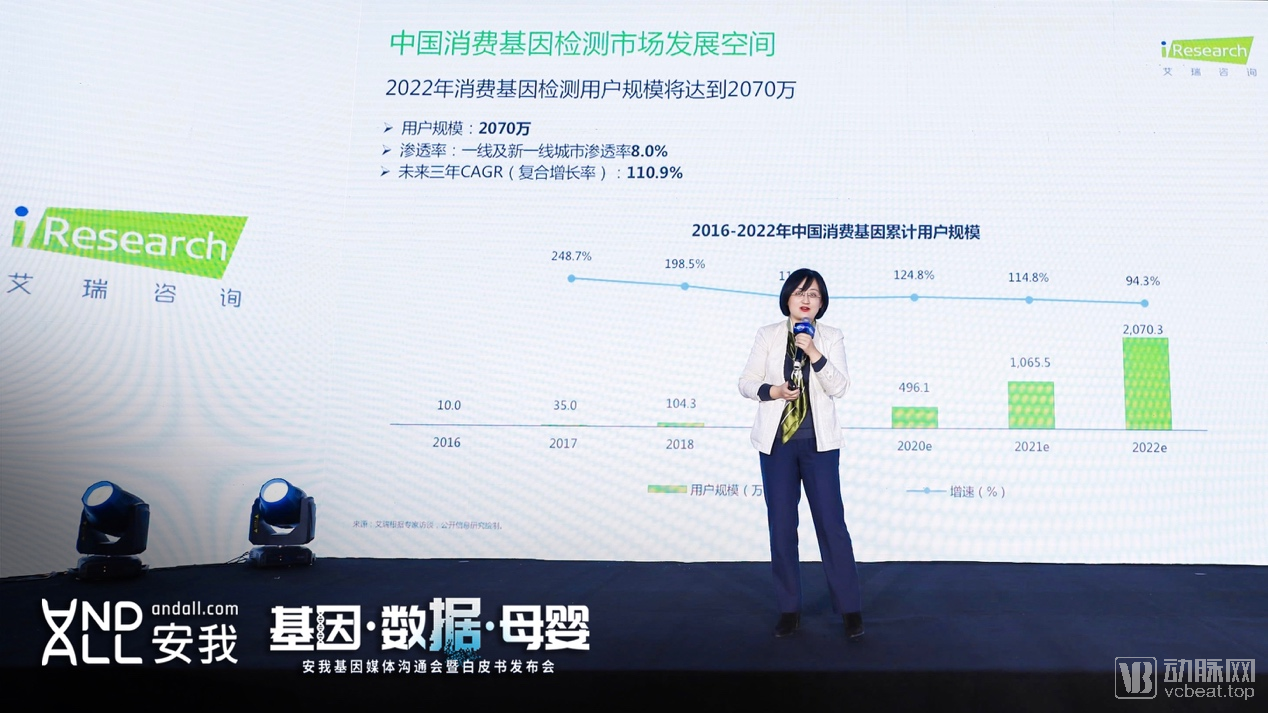
Zou Lei, Partner at iResearch
Zou Lei, a partner at iResearch, stated, “Unlike the application pathways for research institutions and pharmaceutical companies, collaborations with enterprises in the nutrition, beauty, and fitness sectors are largely based on data symmetry between consumer genetic testing companies and these businesses. However, such scenarios impose higher demands on the user scale of consumer genetic testing companies, as well as their capabilities in building multidimensional data models and algorithms. From its inception, Anwo Gene has strategically laid out its data infrastructure. Through its proprietary GenoPB™ platform, which leverages big data as the core of its algorithms, Anwo Gene establishes GenoPB™ tags for each user. Currently, nearly 2,000 GenoPB™ tags can be generated per user. These tags enable Anwo Gene to more efficiently understand user needs and precisely match them with subsequent products and services, thereby enhancing user retention.”
At the event, Wen Deliang, CTO of Anwo Gene, released the *Anwo Gene Big Data Technology White Paper*. The Anwo Gene big data platform has established a comprehensive technical architecture, including offline computing, real-time computing, and machine learning platforms, capable of handling computational tasks across diverse and complex application scenarios. A full suite of data operations tools has been developed, encompassing data quality management, task scheduling, data development, and process centers. Anwo Gene has achieved Level 3 Classified Protection of Cybersecurity certification, ensuring the highest level of security for data assets.
Anwo Genomics’ GenoPB™ and Tiangang™ big data platforms have played a pivotal role in driving business growth, enhancing operational efficiency, and delivering personalized, high-quality products and services to customers. By leveraging Anwo Genomics’ advanced big data analytics and mining capabilities, we provide comprehensive content, product offerings, and solutions that effectively address the diverse challenges encountered in users’ daily lives.
Meanwhile, Anwo Gene’s exclusive “thousand-person, thousand-faces” intelligent recommendation system and its intelligent business decision-making system both adopt a data-automation-driven operational model to deliver user-centric solutions that enable deep understanding of customers, products, and scenarios. The application of Anwo Gene’s GenoPB™ and Tiangang™ big data technologies has permeated every aspect of its business operations.
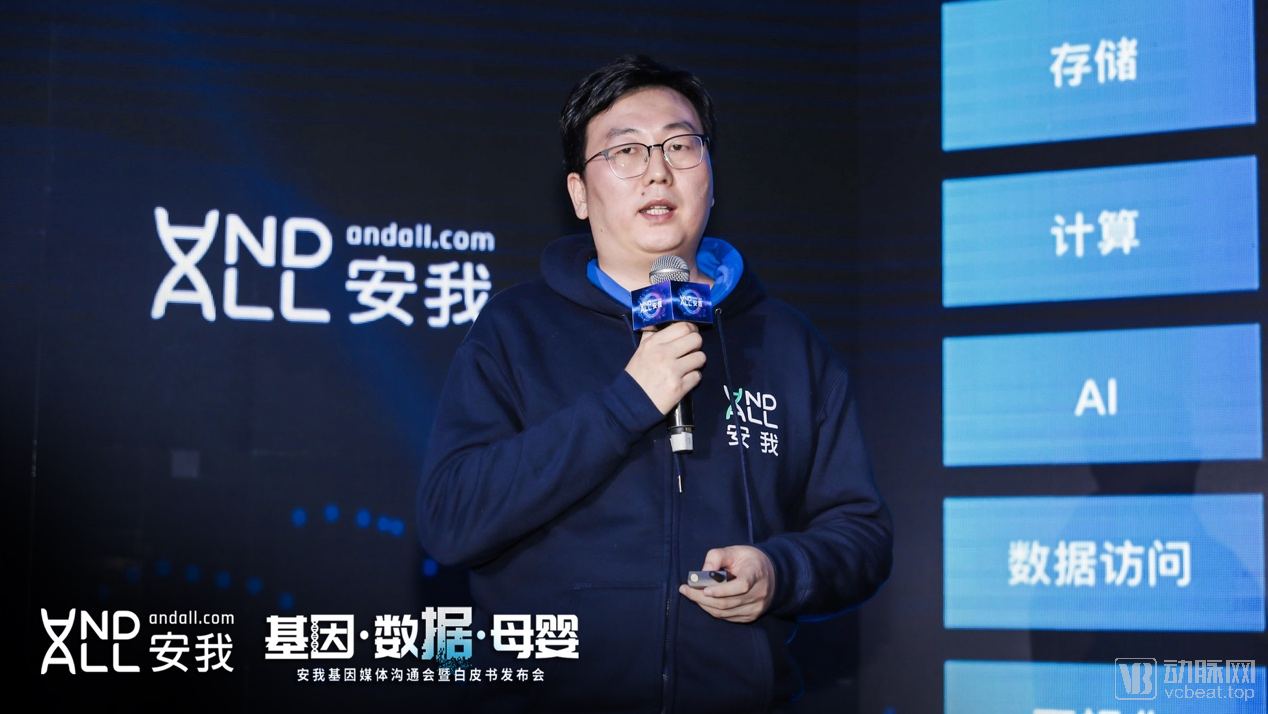
Wen Deliang, CTO of Anwo Gene
At the conference, Wen Deliang, CTO of Anwo Gene, stated, “With the gradual implementation of the national big data strategy, we aim to leverage Anwo Gene’s big data technological capabilities to build a technical platform and create greater social value through technology and data. Through the release of this white paper, we hope to share our practical experiences in big data technology, providing a reference for the industry. We also welcome more partners to join us in deepening exploration and exchange in the field of big data, contributing to the development of the entire industry.”
Big data capabilities have become the future of the consumer-grade genetic testing industry. Leveraging its own big data service capabilities, Anwo Gene deeply analyzes the maternal and infant industry and user pain points to meet partners’ needs for precision marketing, empowering enterprises through technology. Meanwhile, Anwo Gene will actively explore precision medicine solutions to accelerate industry upgrading and transformation, thereby driving the future development of the sector.