

Novartis Exits Solid Tumor CAR-T Research, Opening Door for Biotech Startups
Recently, foreign media reported that Novartis has abandoned its internal research program on CAR-T therapy for solid tumors. The specific reasons for Novartis’s withdrawal from the solid tumor space remain unclear. It is reported that the company will continue to monitor further developments in this therapeutic area, while temporarily focusing its internal efforts on addressing issues related to its hematologic malignancy products.
The announcement sent shockwaves through the industry. As is well known, Novartis was the first company globally to secure regulatory approval for CAR-T therapy in the treatment of hematologic malignancies, achieving success in both clinical application and regulatory pathways for blood cancers. Now, its withdrawal inevitably raises the question: Are solid tumors truly an insurmountable barrier for CAR-T therapy? What implications does this hold for startups worldwide, particularly those in China that are striving to overcome the challenges of treating solid tumors?
First, let us briefly analyze the reasons behind Novartis’s decision to abandon its solid tumor product pipeline. Novartis initiated research into CAR-T therapy for solid tumors several years ago.
In April 2015, Novartis and the University of Pennsylvania provided preliminary evidence of the safety and efficacy of CAR-T therapy in solid tumors. In this Phase I clinical study, although five enrolled patients experienced adverse effects such as sepsis, shortness of breath, and elevated white blood cell counts during treatment, researchers did not observe any life-threatening severe toxicities. Furthermore, modified T cells remained detectable in patients’ bodies on Day 28 after T-cell infusion, with indications that these T cells had begun to accumulate at tumor sites.
Professor Janos Tanyi, who led the study, stated that these results demonstrate the safety of CAR-T therapy for solid tumors. Furthermore, imaging data revealed tumor shrinkage in one patient, while another patient with lung cancer showed signs of a reduction in malignant cells in the lungs.
However, this result failed to win over market investors. The trial involved 19 patients treated with mesothelin-targeted CAR-T cells (MESO-CART), but only four achieved stable disease. The T cells recognize a protein called mesothelin, which is highly expressed in various solid tumors. Investors believe that the response rate not only pales in comparison to CTL019, but the blood concentration of MESO-CART is merely 1% of that of CTL019. Analysts suggest that the safety profile observed in this trial is likely related to the low in vivo concentration of MESO-CART; it is precisely because of this low concentration that side effects were not severe.
On the day the news was released, Novartis’ stock began to fall. Moreover, CAR-T companies such as Juno, Kite, and Bluebird were also dragged down. Novartis’ foray into CAR-T therapy for solid tumors got off to a poor start.
Subsequently, in July 2017, Novartis and the University of Pennsylvania disclosed the results of another clinical trial of CAR-T therapy targeting EGFRvIII in solid tumors, which likewise failed to demonstrate positive clinical outcomes.
So, is Novartis’s abandonment of solid tumor CAR-T research due to internal factors or technical feasibility? Although Novartis was the first company globally to obtain approval for a CAR-T product, this does not necessarily mean that it is the institution with the strongest research capabilities in the CAR-T field. Let us review the development history of Novartis’s CAR-T programs.
As is well known, Novartis’ CAR-T therapy product Kymriah originated from the University of Pennsylvania, where it was developed by Professor Carl June’s team and successfully translated into clinical practice. The early research conducted by Professor June’s team was primarily funded by the National Institutes of Health (NIH); however, given the substantial investment required for cell therapy development, the NIH was unable to adequately support studies during the clinical translation phase. It was at this juncture that Novartis stepped in. In 2012, Novartis and the University of Pennsylvania entered into an exclusive global collaboration to jointly develop and advance the commercialization of CAR-T therapy. The two parties also established a new joint research institute at the University of Pennsylvania—the Center for Advanced Cell Therapy (CACT).
Novartis’s involvement provided essential funding for Professor Carl June’s team during the critical clinical translation phase, while Professor June’s team became Novartis’s key technological asset in the CAR-T arena. Following its alliance with the University of Pennsylvania, Novartis established its own CAR-T R&D team, which grew to 400 members. However, in 2016, Novartis announced the dissolution of its cell and gene therapy R&D unit; most employees were “redeployed” to new roles, but 120 were laid off.
“The risk of venturing into a new, uncharted territory is that things do not always go as smoothly as envisioned,” wrote Usman Azam, Global Head of Cell and Gene Therapy at Novartis, in an internal email. At the time, Novartis’s move puzzled the industry, particularly given the substantial resources the company had already invested in immunotherapies for hematologic malignancies. Through its collaboration with the University of Pennsylvania, Novartis had established a leading position in CAR-T research and development, on par with KITE and JUNO. Moreover, Novartis’s CTL019 program was already in Phase II clinical trials, and its CAR-T therapy, Kymriah, received regulatory approval and launched the following year. This strategic decision left many baffled.
To a certain extent, it can be argued that Novartis’s Kymriah is essentially an acquired product. Moreover, Novartis’s acquisition was limited to the relevant patents, akin to in-licensing assets into a pharmaceutical company’s pipeline, which is fundamentally different from Gilead’s full acquisition of KITE Pharma.
According to Novartis’ 2018 annual report, the revenue generated from Kymriah was negligible, with its primary income still derived from innovative drugs and generic pharmaceutical products.
In 2018, Novartis achieved annual revenue of $51.9 billion, a 6% increase compared to 2017. This included $34.892 billion from its Innovative Medicines division, $9.859 billion from Sandoz (its generics business), and $7.149 billion from Alcon’s eye care segment. Among its 27 core products, Gilenya recorded annual sales of $3.341 billion, up 5%; Cosentyx posted annual sales of $2.837 billion, up 37%. In contrast, Kymriah, which attracted significant attention, generated only $76 million in annual sales—less than a fraction of the total sales of the Innovative Medicines division.
Novartis’s innovative medicines business delivered strong results in 2018, and these revenues continue to grow. Therefore, it is not feasible for Novartis to shift its strategic focus.
So, what does Novartis’s exit mean for startups? To answer this question, we must first address the feasibility of the technology.
A major obstacle for CAR-T therapy in overcoming solid tumors is that the tumor microenvironment suppresses CAR-T cell function, thereby impairing their ability to kill tumor cells. To overcome this barrier, research and process improvements must be grounded in the fundamental theories of the tumor microenvironment.
Regarding the tumor microenvironment, in 2017, Professor Anjana Rao’s team at the La Jolla Institute for Immunology discovered that a family of transcription factors promotes the expression of Nr4a proteins in T cells infiltrating tumor tissues. Anjana Rao, together with Patrick Hogan’s team at the same institute, examined “exhaustion markers” of T cells in a mouse model of melanoma. The results showed that NFAT and Nr4a proteins drive T cells toward exhaustion (compromising their anti-cancer activity). Moreover, Nr4a levels rise when T cells face chronic viral infection. Over time (with prolonged exposure to viral antigens), T cells become “exhausted” and eventually cease to function.
At a seminar in Shanghai, Dr. Avery D. Posey, from Professor Carl H. June’s team, discussed strategies for “identifying optimal tumor targets, maintaining T-cell persistence in vivo, and resisting immunosuppression within the tumor microenvironment,” which he considered the three most critical factors in the treatment of solid tumors. He and his team, in collaboration with other researchers, developed a novel type of CAR-T cells expressing the 5E5 monoclonal antibody, capable of specifically recognizing glycan-modified epitopes, namely the Tn glycans on the mucin 1 (MUC1) protein.
In mouse studies, these CAR-T cells slowed tumor growth and extended survival in mice with leukemia and pancreatic cancer. Although human trials have not yet begun, Avery stated that these CAR-T cells can recognize pancreatic cancer, breast cancer, other types of leukemia, as well as prostate cancer and lung cancer. Therefore, he believes this CAR-T therapy could become a universal treatment for many solid tumors.
Dr. Wang Enxiu, also from Professor Carl H. June’s team, argues that the breakthrough for solid tumors does not lie in the choice of targets or scFvs. Although Novartis’ second-generation CAR has demonstrated highly favorable efficacy in hematologic malignancies, this structure encounters fatal challenges within the tumor microenvironment, which is the primary reason for the lack of breakthroughs in solid tumors. Dr. Wang believes that merely patching or adding modules to second-generation CARs cannot address the root cause; failing to resolve the issue of T-cell activation means that switching monoclonal antibodies only expands the R&D pipeline without achieving a true breakthrough. With its extensive antibody development pipeline, Novartis has, without doubt, chosen antibody selection and optimization as its strategic direction for solid tumors from the outset.
Drawing on his research and understanding of CAR-T during his tenure at the University of Pennsylvania, Dr. Wang Enxiu founded Nanjing Kati Medical Technology, which has developed a novel CAR structure distinct from second-generation CARs. This innovation is built upon the physiological basis of T cell-based signal activation networks, effectively establishing a new architecture for T cell activation.
Dr. Wang Chen, R&D Director at Karti Medical, told VCBeat that the tumor cell microenvironment essentially serves as a fortress for solid tumors. This microenvironment is characterized by hypoxia and an abundance of T-cell inhibitory factors, causing T cells to “surrender” before they even reach the tumor surface. Furthermore, extensive studies involving patients and cell lines have revealed that extracellular vesicles within the tumor microenvironment secrete large amounts of arginase. The expression level of arginase correlates positively with pathological grade; higher grades are associated with higher arginase expression. These arginases deplete arginine, thereby reducing the activity and function of T cells.
“These represent the current bottlenecks encountered in second-generation CAR-T cell research,” stated Dr. Wang Chen. Building on these findings, they attempted to replace CD3δ with DAP12 and combine it with certain natural immune receptors, thereby developing a novel CAR activation signaling platform. Cytological studies and animal models demonstrated that DAP12-based CAR-T cells possess the ability to survive and function within the tumor microenvironment. Furthermore, compared with conventional second-generation CAR-T cells, this innovative CAR-T cell design exhibits a milder profile while maintaining comparable tumor-killing efficacy. In one clinical validation case involving a patient with ovarian cancer who was refractory to multiple rounds of chemotherapy, a significant expansion of CAR-T cells was observed in the peripheral blood, which positively correlated with a decline in tumor markers.
These findings underscore the potential of DAP12 CAR cells in the treatment of solid tumors. Wang Chen disclosed that the patient is still under follow-up, and the final outcomes will be assessed using imaging modalities.
Although CAR-T therapy for solid tumors has not yet achieved complete success, there is no evidence from either basic or clinical research to suggest that this approach is unfeasible. On the contrary, both industry and academia are making step-by-step breakthroughs. Therefore, to some extent, Novartis’s decision to abandon its solid tumor program was driven more by commercial considerations than by questions of technical feasibility.
“Novartis is an expert in industrialization,” said Dr. Wang Enxiu. In 2012, Novartis formed an alliance with the University of Pennsylvania, and Dr. Wang was invited to participate in meetings of the alliance’s leadership group. Research and development for solid tumors requires substantial investment; the collaboration between Novartis and the University of Pennsylvania ended in September 2019. Rebuilding a CAR-T R&D team would entail significant investment and operational costs. In 2017, Novartis also acquired a non-exclusive license from Celyad for its allogeneic CAR-T technology for $96 million. Reflecting on prior commercialization experience with CAR-T therapies for hematologic malignancies, directly licensing products from external sources may be a faster and more cost-effective approach.
“Large enterprises are not necessarily the source of innovation, but they possess strong resources for commercialization,” stated Dr. Lin Yi from Yuansheng Venture Capital. From the perspective of the U.S. market, innovative technologies are shifting toward small and medium-sized enterprises (SMEs). “In the past, large companies had powerful R&D teams, but they are now actually downsizing them while expanding their business development (BD) teams.” Seeking out new technologies through BD activities and acquiring them, then leveraging industrial application resources to commercialize these technologies, appears to be becoming a strategic choice for large corporations. In his view, Novartis’s move has instead created more opportunities for innovative enterprises to seek investment from the capital markets and industrialize their innovative technologies.
“Under such a trend, more and more investment institutions will be willing to invest in innovative companies, and startups will usher in more opportunities,” he added.
Beyond cost and bottlenecks in treating solid tumors, another challenge facing CAR-T therapy in clinical practice is the high rate of tumor recurrence. Dr. Zhi Min Zhai, Director at the Second Affiliated Hospital of Anhui Medical University, noted that patients as fortunate as Emily are rare; among the pediatric hematologic malignancy cases she has managed, most patients achieve only a three-year extension in survival. While we do not deny the monumental significance of CAR-T therapy’s advent in oncology, from the patient’s perspective, extending life from age 5 to 8 or from 7 to 10 represents a gain that is far too brief for children.
Not only that, Director Zhai Zhimin also told us that there are many cases of children patients transitioning from hematologic malignancies to solid tumors. "CAR-T cells expand very well in the body, and the tumor cannot survive within the bone marrow, so it metastasizes outside the bone marrow."
Furthermore, in terms of market size, hematologic malignancies account for less than 7% of new cancer cases globally. Among the ten most prevalent and deadliest cancers in China, all are solid tumors. Therefore, for research institutions and companies of all sizes worldwide, relying solely on hematologic malignancies makes it difficult to recoup R&D costs.
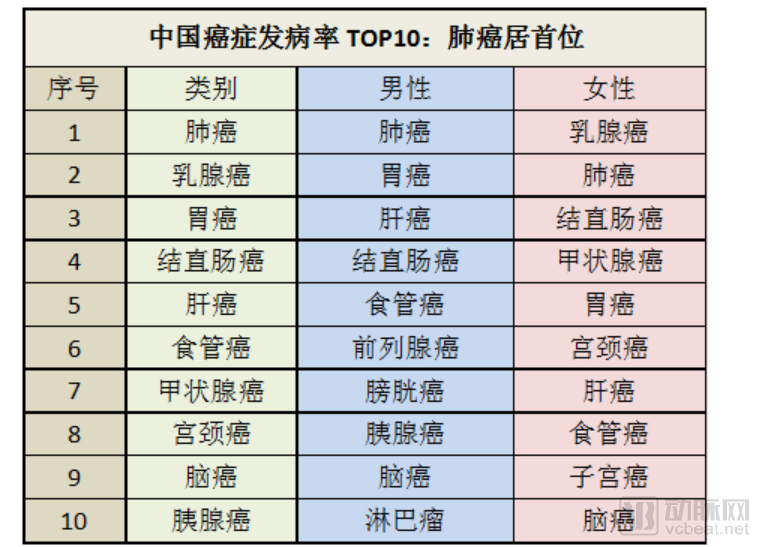
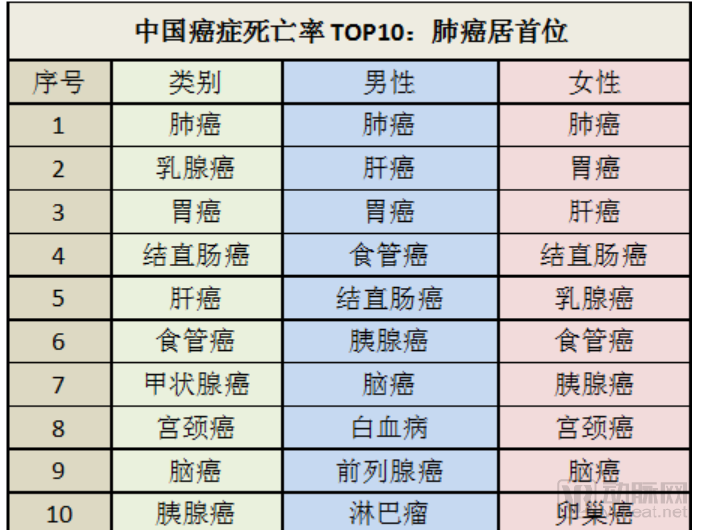
Image from People's Daily
Reducing the recurrence rate of hematologic malignancies is a critical barrier that must be overcome to achieve breakthroughs in solid tumors. For patients and clinicians, it matters less whether Novartis, Gilead, or other startups secure the first approval; what truly counts is the rapid market entry of reliable, cost-effective therapies. However, for industry players, being the first to enter the market confers a first-mover advantage. With Novartis’s exit, its once-formidable rival has transformed into a potential investor, presenting an even greater opportunity for startups.
Special Acknowledgments: We extend our sincere gratitude to Dr. Zhi Min Zhai, Director at the Second Affiliated Hospital of Anhui Medical University; Dr. Yi Lin from Yuansheng Venture Capital; and the medical team at Nanjing Kati Medicine. We thank all the aforementioned individuals for their strong support of this article!