2019 Future Healthcare 100 List Released: Data-Driven Insights into Enterprise Growth Trajectories
On December 20, 2019, the 2019 Top 100 Future Healthcare Companies Conference, themed “New Growth in Life,” kicked off at the Jiuhua Resort in Beijing. The conference comprehensively analyzed development trends in the future healthcare industry by examining multiple factors—including the policy environment, technological landscape, and demand potential—with the aim of driving innovation and transformation in the healthcare sector.
The conference is hosted by VCBeat and Eggshell Research Institute, and co-hosted by KPMG China, Legend Capital, BV Baidu Ventures, Weilai Capital, Puhua Capital, Tsinghua Nomura China Research Center, Changling Capital, Legend Star, Yuanjing Capital, the Internet Hospital Branch of the Chinese Association of Research Medical Schools, Aimida, Zero2IPO Capital, and Yanzhi.
More than 5,000 participants registered for this conference, which featured 15 forums: Future Healthcare Summit, Top 100 Summit, Leadership Summit, Health and Medical Fund Partners Summit, China-Japan Health Industry Development Forum, Innovative Drugs Forum, Innovative Health Insurance Forum, Digital Pathology and Precision Diagnostics Forum, Health Management Forum, Medical Devices Forum, Internet Hospital Forum, Smart Hospital Construction Forum, Pharmaceutical Digital Marketing Forum, Biotechnology Forum, and Medical AI Forum, covering the 11 hottest sectors of 2019.
At the forum, VCBeat released the “2019 Top 100 Future Healthcare Companies List,” while VBInsight published the “2019 Growth Report on the Top 100 Future Healthcare Companies: A Data-Driven Perspective on Growth Trajectories.” This article is an excerpt from that report; instructions for accessing the full report are provided at the end.
The Future Healthcare Top 100 List (abbreviated as VB100), launched in 2015 by VCBeat and Eggshell Research Institute, is China’s first ranking dedicated to innovative healthcare companies that are not publicly listed. It aims to select Chinese innovators that truly represent the future of healthcare, identify the core forces driving the nation’s future healthcare industry, and promote innovation and transformation within the healthcare sector.
The 2019 Top 100 Future Healthcare Companies list optimized and upgraded its structure and content based on insights gained from previous editions. The 2019 list comprises five main rankings and eighteen sub-rankings, covering four major sectors—healthcare services, innovative medical devices, digital health, and innovative pharmaceuticals—as well as dozens of niche segments, including third-party medical imaging centers, mental health, electronic medical records (EMR), surgical robots, and rehabilitation equipment.
The ranking is primarily based on companies' most recent valuation rounds, with additional criteria including patent portfolios, product development, core teams, partnerships, industry landscape, and corporate reputation.
The "Top 100 Future Healthcare Companies" list is compiled in three phases:
The first phase is the preliminary selection, during which the VB100 Preliminary Selection Team compiles the shortlist through registration channels, expert recommendations, and collection of publicly available information.
The second phase is the review process, in which the VB100 Review Panel—composed of senior researchers from VCBeat and senior journalists from the VCBeat Content Center—independently verifies the data and information on the preliminary shortlist to finalize the VB100 Recommended List.
The third stage is the review process, in which VCBeat’s founding team, together with industry investors, experts from various fields, and policy researchers, jointly reviews key information on the recommended list through anonymous voting to finalize the VB100 list.
The entire process took three months to finalize and was publicly released at the 2019 Future Healthcare Top 100 Conference.
2019 Future Healthcare Top 100 · China Medical Services Top 100

2019 Future Healthcare 100 · China's Top 100 Innovative Medical Devices List

2019 Future Healthcare 100 · China Digital Healthcare Top 100

2019 Future Healthcare 100 · China Innovative Pharma Top 100

2019 Future Healthcare 100 · Sub-sector Rankings
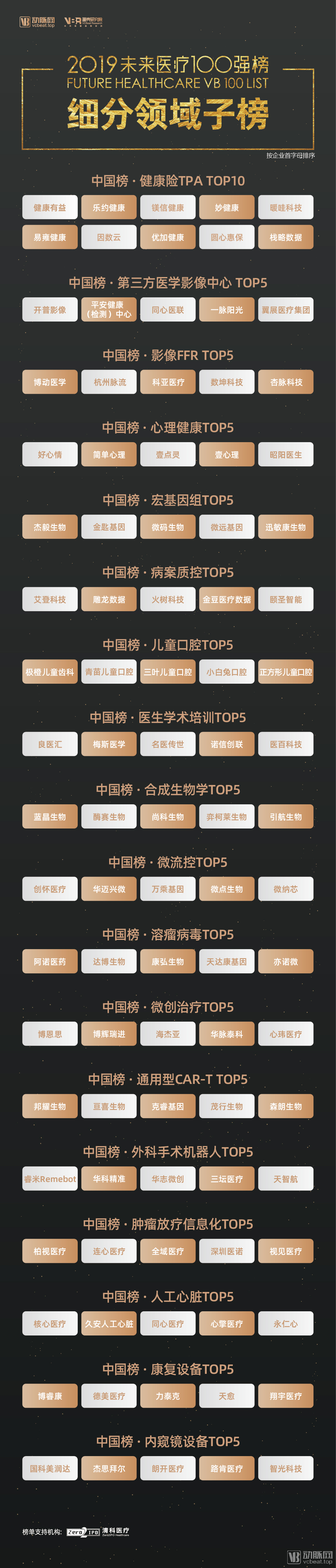
This report provides a comprehensive analysis of the 2019 Top 100 Future Healthcare List, including an overview, an analysis of unicorn companies on the list, and separate analyses of its four main sub-lists: the China Healthcare Services List, the China Innovative Medical Devices List, the China Digital Health List, and the China Innovative Pharmaceuticals List.
Top 10 Insights
1. Traditional healthcare is receding, consumer healthcare is on the rise, and pet healthcare has become a new favorite;
2. The overall valuation of the healthcare industry has declined, with capital becoming more rational; companies possessing core resources are more likely to secure high valuations;
3. Medical innovation is transitioning from process optimization to disease diagnosis and treatment, with assisted diagnosis and precision medicine emerging as key areas of innovation;
4. The medical and healthcare industry cluster demonstrates a significant agglomeration effect, giving rise to over 70% of the listed companies;
5. Twenty unicorns are valued at over RMB 330 billion; the medical services sector is a hotbed for unicorns, with Beijing emerging as a major hub.
6. The medical services sector ranked highest in total valuation, reaching nearly RMB 310 billion, with 40% of the listed companies having been established within the past five years;
7. Digital health companies require the shortest time to make the list, achieving high valuations even during their growth stage;
8. Jiangsu has become the third major incubation hub for medical devices, following Beijing and Shanghai, with in vitro diagnostic (IVD) instruments entering a period of rapid development;
9. Import substitution of high-end medical devices has become a trend, with the core competitive factor for medical device companies shifting from relationship-based channels to product strength;
10. Innovative small-molecule drugs and antibody therapeutics are neck and neck, driving strong demand for contract research organizations (CROs).
Overall Analysis of the Ranking
Based on the four main lists of the 2019 Top 100 Future Healthcare Companies previously announced, we will conduct a comprehensive analysis of data for 400 companies, including their valuations, geographic locations, most recent funding rounds, key business sectors, and founding dates.
1. The medical services sector ranks highest in total valuation and has the most unicorns
Valuation Status of Each List in the 2019 Future Healthcare Top 100 Rankings
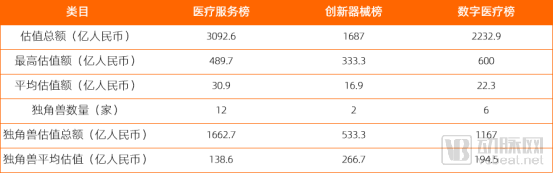
Note: Companies on the Innovative Pharmaceutical List are excluded from the statistics as their valuations have not been disclosed.
Data source: 2019 Top 100 Future Healthcare Companies List
By conducting a comparative analysis of the valuations across three rankings—Healthcare Services, Innovative Medical Devices, and Digital Health—we find that the combined total valuation exceeds RMB 700 billion. Among these, the Healthcare Services ranking holds the highest total valuation. Companies in this category primarily include integrated online healthcare service platforms, as well as consumer healthcare providers specializing in dentistry, medical aesthetics, maternal and child care, and assisted reproductive technologies.
Internet-based comprehensive medical service platforms align with national policy directives and have become a key industry prioritized for state support. Meanwhile, the expansion of China’s middle-income population has driven up demand for consumer-oriented and personalized healthcare, fueling growth in sectors such as dentistry, medical aesthetics, and maternal and child health. Consequently, these healthcare service companies enjoy strong recognition in the capital markets and command high valuations.
The total valuation of companies on the Digital Healthcare List exceeded RMB 200 billion, with Ping An Health Insurance Technology, the highest-valued enterprise, also included. Digital healthcare companies mainly originate from fields such as artificial intelligence, medical big data, healthcare informatization, cloud computing, and wearable technology. These sectors have high technical requirements, allowing firms to build competitive barriers through technological advantages and capture niche market segments.
Meanwhile, the digital economy has been elevated to a national strategy. The government has proposed deep integration of digital technologies—such as the internet, big data, and artificial intelligence—with the real economy, aiming to develop the digital economy and build a Digital China. Consequently, technological barriers and policy-driven support have enabled these sectors to command relatively high valuations.
The trend of import substitution for medical devices, particularly high-end ones, is intensifying, necessitating enhanced independent R&D capabilities. The key competitive factor in the medical device industry is shifting from relationship-based channels to product strength, requiring companies to place greater emphasis on product design and brand influence. Meanwhile, the increasing frequency of mergers and acquisitions in the sector is compelling enterprises to proactively pursue innovation. Consequently, companies possessing core technologies, talent resources, and capital advantages will command higher valuations. Currently, there are relatively few unicorns in the medical device industry; however, as the pace of corporate innovation accelerates, a significant number of unicorns are expected to emerge in this field in the future.
2. Jiangsu Becomes the Third Incubation Base, Leading the Development of the Pharmaceutical and Medical Device Industry
Top 3 Regions by Geographic Distribution of Companies Listed in the 2019 Future Healthcare 100 Rankings

Data source: 2019 Future Healthcare Top 100 List
Overall, Beijing and Shanghai remain the premier incubation hubs for healthcare enterprises, offering multifaceted advantages in technology, talent, and capital that provide fertile ground for corporate growth. However, in the fields of medical devices and pharmaceuticals, Jiangsu has emerged as the third major incubation hub after Beijing and Shanghai.
Jiangsu Province is home to large-scale medical device industrial parks, such as the Jiangsu Medical Device Technology Industrial Park, Changzhou International Medical Device City, and Wuxi Life Science and Technology Industrial Park, which have driven innovation in the medical device sector. Furthermore, located within the Yangtze River Delta medical industry cluster, Jiangsu hosts biotechnology industrial parks including the Nanjing Bio-Medicine Valley and Suzhou BioBAY, providing technological, talent, and infrastructural support for the research and development of innovative drugs in the province.
3. Digital health companies can achieve high valuations during their growth stage
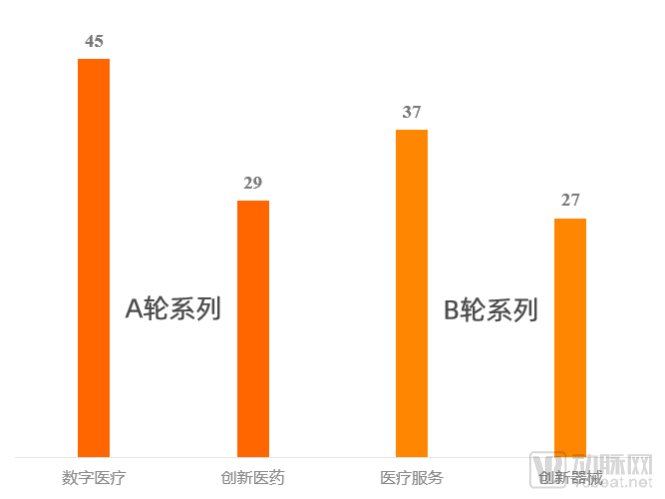
Maximum Number of Financing Rounds for Companies Listed on the 2019 Future Healthcare Top 100 Lists
Data source: 2019 Top 100 Future Healthcare Companies List
Financing rounds are closely tied to a company’s development stage. Typically, companies that have secured Series A financing have just launched their products or services in the market, with their business systems still requiring further refinement, placing them in the growth phase. In contrast, companies that have obtained Series B financing possess more mature business systems, have validated their business models in the market, and have entered the expansion stage.
An analysis of the highest number of financing rounds achieved by listed companies in the aforementioned four sectors reveals that digital health companies can secure favorable valuations during their growth stage. This is because most digital health firms are technology-driven; their proprietary technologies are protected by patents and are difficult to replicate in the short term. These companies can establish competitive advantages early on and design their business systems around core technologies. With more predictable market prospects, capital markets are willing to assign them higher valuations.
4. Digital health companies required the shortest time to make the list, while innovative medical device companies took the longest.
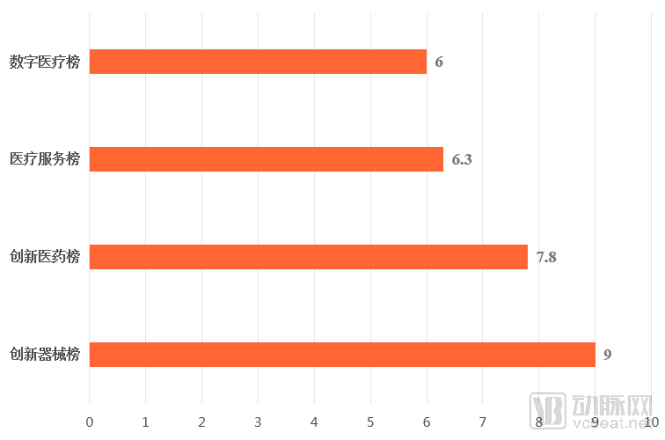
Time Required to Qualify for the 2019 Top 100 Future Healthcare Companies List Across Various Sectors
Source: 2019 Future Healthcare Top 100 List
From the perspective of establishment date, enterprises take an average of 7.3 years to be listed on the 2019 Future Healthcare 100 List. Among them, digital healthcare companies require the shortest time, needing only 6 years. Furthermore, according to the 2019 Future Healthcare 100 · China Digital Healthcare List, 67% of the listed companies were established within 6 years. This indicates that digital healthcare is a hot sector within the medical and health industry, capable of commanding higher valuations.
It takes the longest time for innovative medical device companies to make the list, with an average of 9 years. This is primarily because the companies on the innovative medical device list were established relatively early, a characteristic closely related to the high entry barriers and the need for substantial technological accumulation in the medical device industry.
5. Valuation of the Healthcare Industry Declines as Capital Becomes More Rational
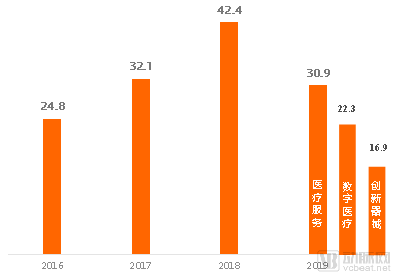
Average Valuation Change (in RMB 100 Million) of Companies Listed on the Future Healthcare Top 100 List from 2016 to 2019
Note: As valuations were not disclosed for the Innovative Pharmaceutical List, they are excluded from the statistics.
Data source: 2016–2019 Top 100 Future Healthcare Companies List
From 2016 to 2018, the average valuation of companies listed on the Future Healthcare Top 100 showed a gradual upward trend, indicating that the healthcare industry continued to attract attention from the capital market, with valuations of related enterprises increasing year by year. The peak was reached in 2018, when the average valuation of companies on the Future Healthcare Top 100 list hit RMB 4.24 billion.
Over the past three years, internet healthcare has emerged and grown rapidly. Meanwhile, technologies such as artificial intelligence (AI), big data, cloud computing, and the Internet of Things (IoT) have entered the phase of practical application in the healthcare sector. Innovative companies have continuously emerged in related fields, including AI-driven new drug R&D, AI-powered medical imaging, AI-assisted diagnosis, electronic medical records (EMR), and internet hospitals. These developments have driven innovation and transformation in the healthcare industry, attracting significant interest from capital markets and giving rise to a cohort of highly valued enterprises.
In 2019, the overall macroeconomic growth rate began to decline. The healthcare industry was also affected by the broader macroeconomic environment, as capital markets grew more cautious, imposing stricter criteria for company selection and limiting valuation upside. This led to a decrease in the average valuation of companies listed on the 2019 Future Healthcare Top 100 Ranking.
A unicorn refers to a startup that has been operating for less than 10 years and has a valuation exceeding $1 billion. Among these, companies of exceptional quality with valuations surpassing $10 billion are separately classified as super unicorns. According to relevant definitions, there are a total of 20 healthcare unicorns across the following four rankings: Top 100 Chinese Medical Services, Top 100 Chinese Innovative Medical Devices, Top 100 Chinese Digital Health, and Top 100 Chinese Innovative Pharmaceuticals.
1. 60% originate from the healthcare services sector, with Beijing being the most prolific hub for healthcare unicorns
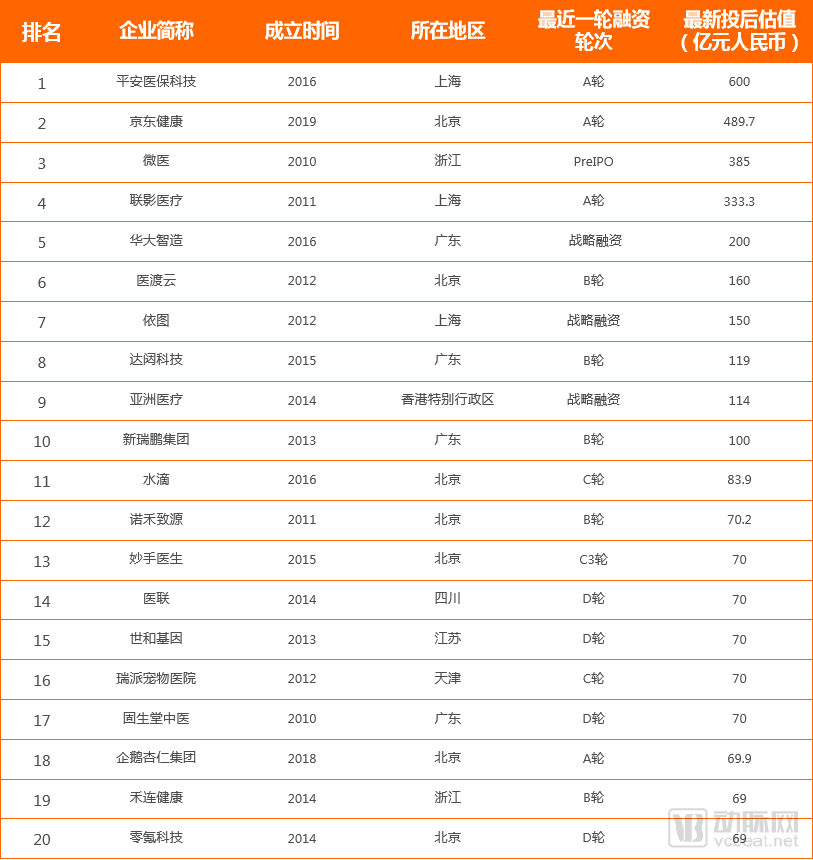
2019 Healthcare Unicorns List
Data Source: 2019 Future Healthcare Top 100 List
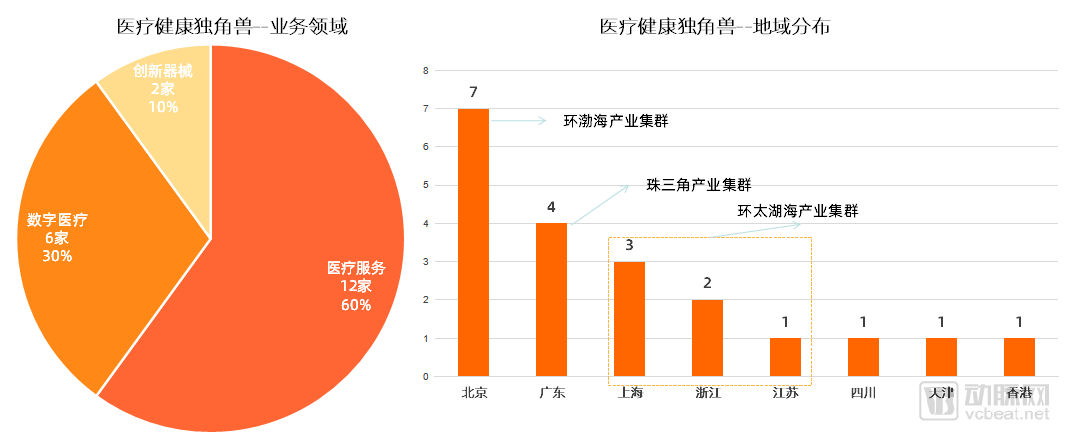
Among these 20 healthcare unicorns, 60% (12 companies) are primarily engaged in medical services, 30% (6 companies) focus on digital health, and the remaining 10% specialize in innovative medical devices. No companies from the innovative pharmaceuticals sector met the screening criteria (due to insufficient valuation or having been established for more than 10 years). The emergence of unicorns in the medical services sector is mainly driven by three core factors: demographic shifts, economic changes, and evolving disease patterns.
Relevant data show that among the 12 companies whose core business is medical services, the largest number—five, including JD Health and WeDoctor—are consumer-focused enterprises deploying comprehensive internet-based medical services.
From a regional perspective, unicorns are highly concentrated. Beijing demonstrates the strongest incubation capability for healthcare unicorns, with Beijing, Guangdong, and Shanghai collectively accounting for 70% (14 companies) of all healthcare unicorns. The top five companies by valuation are, in descending order: Ping An Health Insurance Technology (Shanghai), JD Health (Beijing), WeDoctor (Zhejiang), United Imaging Healthcare (Shanghai), and MGI Tech (Guangdong).
Business Sectors and Geographic Distribution of Healthcare Unicorns
Data Source: 2019 Top 100 Future Healthcare Companies List
The primary reason why regions such as Beijing, Guangdong, and Shanghai are fertile grounds for incubating unicorns is their location within national-level industrial clusters. The carrier platforms formed by these clusters offer numerous advantages that facilitate rapid corporate growth, including a talent advantage, industrial resource strengths, a strong entrepreneurial culture, a well-developed financial system, and policy pilot benefits. Meanwhile, the development of the medical industry resonates with the regional development of these carrier platforms, thereby accelerating enterprise incubation.
Of the identified unicorns, 85% originate from the Bohai Rim, Pearl River Delta, and Taihu Lake industrial clusters. For instance, Beijing, which belongs to the Bohai Rim industrial cluster, has established core platforms centered on the Haidian Park Pharmaceutical Industry Base, Zhongguancun Life Science Park, and Daxing Biomedical Industry Base. Leveraging abundant advantages such as university and talent resources, biotechnology assets, financial support, and policy incentives, the region has developed dominant industries in biologics, implantable materials, medical AI, innovative drugs, CROs, healthcare services, modern traditional Chinese medicine, and medical devices, thereby incubating a large number of healthcare unicorns.
2. 80% of companies with core resources achieve unicorn status before Series D and are more likely to secure substantial early-stage financing
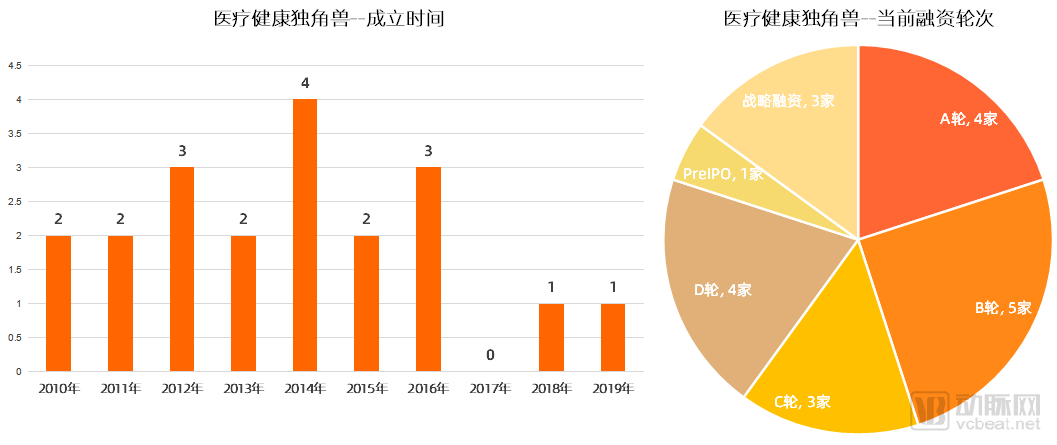
Among these 20 healthcare unicorns, 90% (18 companies) were founded before 2016. Two of these unicorns were established and achieved unicorn status within two years: JD Health and Penguin Almond Group. Their growth was driven by internal incubation and mergers.
From the perspective of funding rounds, 80% of the companies (16 firms) reached unicorn status before their Series D round, having secured three to four rounds of cumulative financing. Moreover, a significant portion of high-quality enterprises (45%) attracted substantial capital investments at an early stage (before Series B), reflecting strong investor confidence and indicating greater growth potential. For instance, Ping An Good Doctor Technology, incubated by Ping An Group, raised $1.15 billion in its Series A round.
Establishment Date and Current Funding Round of Healthcare Unicorns
Source: 2019 Top 100 Future Healthcare Companies List
It is worth noting that, in addition to three companies securing strategic financing, several others—such as Ping An Health Insurance Technology, JD Health, MGI Tech, and Penguin Almond Group—were formed through incubation within their parent companies or via mergers. These enterprises benefit from substantial resource accumulation and platform support, attracting significant market attention from inception and achieving unicorn status within a relatively short period.
3. Total valuation of RMB 336.3 billion, with innovative medical devices having the highest average valuation
The total valuation of these 20 unicorns stands at RMB 336.3 billion, with the healthcare services sector accounting for the largest number of unicorns and reaching an aggregate valuation of RMB 166.27 billion. In terms of average valuation, innovative medical devices rank highest at RMB 26.67 billion, followed by digital health at RMB 19.45 billion, while healthcare services have an average valuation of RMB 13.86 billion.
Valuation of Healthcare Unicorns

Source: 2019 Future Healthcare Top 100 List
We believe that the significant disparity in average valuations is primarily attributable to varying barriers to entry across different subsectors:
(1) Key Barriers for Innovative Medical Devices: Technical Patents, Product Pipeline, and Sales Channels;
(2) Major barriers in digital healthcare: data accumulation, data quality, and core algorithms;
(3) Major Barriers in Medical Services: Accumulation of medical resources (patients, physicians, etc.), model innovation, and first-mover advantage.
Among these, innovative medical devices command the highest average valuation, driven by factors such as high entry barriers and significant development challenges.
4. The growth cycle is concentrated within 4–6 years, with the shortest cycle being only 1 year.
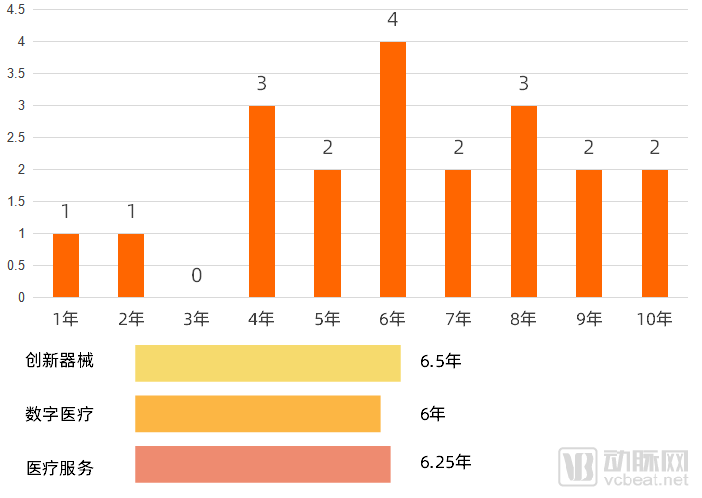
From their establishment (commencement of formal operations) to 2019, the growth cycles of most of these 20 healthcare unicorns ranged between 4 and 6 years, accounting for 40% of the total. Among them, companies in the innovative medical devices segment had the longest growth cycle, reaching up to 6.5 years. This extended timeline for innovative medical device companies is primarily attributable to intrinsic development factors, such as research and development (R&D) and regulatory registration processes. In recent years, some high-quality enterprises have garnered significant investor interest, achieving unicorn status within just one to two years of establishment. Looking ahead, the time required for high-quality enterprises to reach unicorn valuation is expected to shorten further.
Growth Cycle of Healthcare Unicorns
Data source: 2019 Future Healthcare Top 100 List
5. Innovative pharmaceutical unicorns are taking shape, offering the greatest investment value
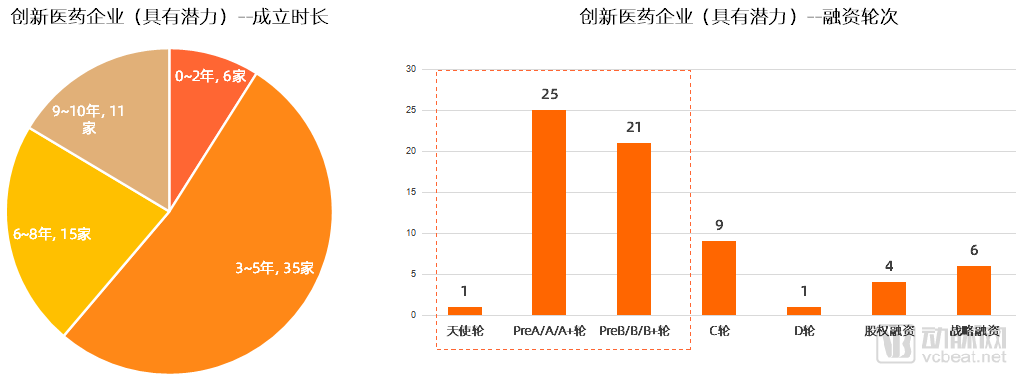
We have identified all enterprises established (and operating normally) after 2010 that were not included in the current unicorn selection across the four rankings, defining them as “unicorn-potential enterprises.” Currently, there are no unicorns in the innovative pharmaceuticals sector; however, we find that companies in this sector possess greater potential to become unicorns compared to those in the other three sectors.
Current Status of Potential Unicorn Enterprises

Source: 2019 Future Healthcare Top 100 List
Data shows that there are currently a total of 67 unicorn-potential enterprises in the innovative pharmaceutical sector. Among them, 35 companies were founded within the past 3–5 years, accounting for over 50%, while 15 were established within 6–8 years. Given that the R&D cycle for innovative drugs—from clinical target screening to final market launch—averages 13.5 years, most of the innovative pharmaceutical companies on the list are still in their “adolescent” stage.
Meanwhile, we have found that CROs, as a critical link in the innovative pharmaceutical industry chain (capable of effectively shortening the drug R&D cycle by 20%–30%), will maintain a market growth rate of approximately 20% over the next three years. The rapid penetration of CROs into the innovative pharmaceutical industry chain will further shorten the development cycle for innovative drugs.
In terms of financing rounds, 70.1% (47 companies) of the high-potential unicorn candidates in the innovative pharmaceutical sector are in early-stage financing (pre-Series B). Among them, a total of 46 companies are at the Pre-A/A/A+ or Pre-B/B/B+ stages. Overall, as the innovative pharmaceutical companies on the list complete their next round of financing, some high-quality enterprises will stand out and emerge as new unicorns.
From the perspective of average valuation, unicorn-potential companies in the innovative pharmaceutical sector have the highest average valuation, reaching RMB 1.87 billion, which is higher than that of the other three sub-sectors. This is closely related to factors such as the long R&D cycle, high costs, and high technical barriers associated with innovative drug development. Therefore, although no unicorn companies in the innovative pharmaceutical category were identified in this screening, once a unicorn-potential company in this field achieves unicorn status, its valuation will exceed those in the other three sub-sectors.
Therefore, in the niche sector of innovative pharmaceuticals, although no companies currently meet the criteria for inclusion on the list, we believe that innovative pharmaceutical unicorns will evolve into multiple high-valuation, high-quality unicorn enterprises within a short cycle.
The above is an excerpt from the “2019 Top 100 Future Healthcare Enterprises Growth Report: A Data-Driven Perspective on Growth Trajectories.” The report is structured as follows:
I. List Description
II. List Release
1. 2019 Future Healthcare Top 100 · China's Top 100 Medical Services List
2. 2019 Future Healthcare 100 · Top 100 Chinese Innovative Medical Devices List
3. 2019 Future Healthcare 100 · China Digital Health Top 100
4. 2019 Future Healthcare 100 · Top 100 Chinese Innovative Pharmaceuticals List
III. Overall Analysis of the Rankings
1. Healthcare Services Sector Ranks Highest in Total Valuation and Has the Most Unicorns
2. Jiangsu Becomes the Third Incubation Base, Leading the Development of the Pharmaceutical and Medical Device Industry
3. Digital health companies can achieve high valuations during their growth stage
4. Digital health companies had the shortest time to make the list, while innovative medical device companies had the longest.
5. Declining Valuations in the Healthcare Industry, with More Rational Capital
IV. Analysis of Healthcare Unicorns
1. 60% originate from the medical services sector; Beijing is the leading hub for healthcare unicorns in China
2. 80% of companies with core resources reach unicorn status before Series D, making them more likely to secure substantial early-stage financing.
3. Total valuation reached RMB 336.3 billion, with innovative medical devices commanding the highest average valuation
4. The growth cycle is concentrated within 4–6 years, with the shortest cycle being only 1 year.
5. Innovative Pharmaceutical Unicorns on the Verge of Emergence, Offering the Highest Investment Value
V. Data Analysis of the Four Major Leaderboards
1. China Healthcare Services Ranking
(1) Overview of the 2019 Future Healthcare Top 100 · China Medical Services Ranking
(2) Geographic Distribution: Beijing has the strongest incubation capacity, accounting for over 30%
(3) Sector Distribution: Consumer Healthcare Is on the Rise
(4) Distribution by Funding Round: The Highest Number of Listed Companies Are in the Growth Stage
(5) Year of establishment: 40% of the listed companies were established no more than 5 years ago
(6) Top 10 Listed Companies: A Uniform Lineup of Unicorns
2. China’s List of Innovative Medical Devices
(1) Overview of the 2019 Future Healthcare Top 100 · China Innovative Medical Devices List
(2) Geographic Distribution: Beijing and Shanghai Are the Top Choices, with Jiangsu Close Behind
(3) Sector Distribution: The In Vitro Diagnostics Market Enters a Phase of Rapid Growth
(4) Distribution of Financing Rounds: The Highest Number of Listed Companies Are in Series B
(5) Distribution by Founding Year: Significant Polarization
(6) Top 10 Listed Companies: Two Unicorns Valued at Over RMB 50 Billion
3. China Digital Healthcare Rankings
(1) Overview of the 2019 Future Healthcare Top 100 · China Digital Healthcare List
(2) Geographic Distribution: Beijing Emerges as a Hotspot, Sichuan Leads the Western Region
(3) Domain Distribution: AI-Assisted Diagnosis Becomes the Focus of Corporate Innovation
(4) Distribution by Funding Round: Series A and B Companies Account for the Largest Number on the List
(5) Year of establishment: 32% of the listed companies were established 3–5 years ago
(6) Top 10 Listed Companies: Six Unicorns with Valuations Approaching RMB 120 Billion
4. China Innovative Pharmaceuticals Ranking
(1) Overview of the 2019 Future Healthcare Top 100 · China Innovative Pharmaceuticals List
(2) Regional Distribution: The agglomeration effect of the two major industrial clusters is significant, with the Yangtze River Delta region accounting for half of the market share.
(3) Sub-sectors: Innovative chemical drugs and antibody drugs are equally competitive, while the contract research outsourcing industry is highly sought after
(4) Distribution by Funding Round: Nearly 60% of companies are between Series A and Series B.
(5) Time of establishment: It takes a considerable amount of time for pharmaceutical companies to make the list.
VI. Analysis of the Growth Trajectories of Top 100 Enterprises
1. Ping An Health Insurance Technology: Building an Integrated Smart Health Insurance Service Platform
2. Yitu Healthcare: A Global Leader in AI-Powered Medical Solutions
3. Xinyi International: A Professional Provider of Intelligent Medical Cloud Services in China
4. Deepwise Medical: Building a Comprehensive AI+Healthcare Ecosystem Centered on Dr. Wise®
5. Quanyu Medical: Focused on World-Leading Precision Cloud Radiotherapy Technology
6. Sinotest Biotech: An integrated provider of R&D, manufacturing, sales, and services in the field of tumor pathological diagnosis
The above is an excerpt from the “2019 Top 100 Future Healthcare Enterprises Growth Report: Data-Driven Insights into Growth Trajectories.” For the full report, please scan the mini-program QR code below.