

Zicheng Zhibao: A Didi-Style Children's Health Management Platform Reaches Tens of Thousands of Users Within Six Months
In May this year, Liu Yan, sitting in her office, smiled at the release of the “Guiding Opinions of the General Office of the State Council on Promoting the Development of Care Services for Infants and Toddlers Under Three Years of Age.” The policy states: “Strengthen guidance on early childhood development for families by providing services through home visits, parent-child activities, parenting classes, and other means, leveraging information technologies such as the internet to offer early childhood development guidance to parents and caregivers, thereby enhancing families’ capacity for scientific child-rearing.”
"My memories take me back a few years. 'As a mother of two, during my first pregnancy, I experienced the same physical discomforts that most expectant mothers endure, alongside the anticipation of welcoming new life. I naively believed that once the baby was born, this ordeal would be over. However, after giving birth, I encountered even more severe challenges: physiological breast engorgement, insufficient milk supply, cracked nipples, my baby’s preference for the bottle over breastfeeding, and mammary duct adhesions. These persistent issues caused me immense pain and frustration. When I had my second child, these problems continued to plague me...'"
Data shows that there are approximately 15 million newborns and mothers in China each year. Among these mothers, over 80% experience symptoms such as insufficient milk supply and blocked milk ducts. Twenty percent of mothers face surgery due to mammary gland adhesions, and more than 70% of them require 3–5 lactation care sessions, equivalent to an annual demand of 36 million service visits.
In contrast, China’s existing lactation services market features a large number of practitioners, but the quality of service personnel is uneven. There are currently only 1.2 million qualified professionals, leaving a shortfall of 1.1 million. In medium-sized cities, the number of such professionals is fewer than 500, and in more than 95% of county-level regions, the number of qualified professionals is even in the single digits.
Against this backdrop, in 2019, Liu Yan founded Shenzhen Zicheng Zhibao Health Technology Co., Ltd. (hereinafter referred to as “Zicheng Zhibao”). The company established the Sanhao Medical and Nursing Group, dedicated to providing one-touch access home care services for mothers and children aged 0–6 years. Furthermore, through its big data system for dynamic child health management, Zicheng Zhibao offers growth and development monitoring, vision screening, congenital heart disease screening and early warning, as well as personalized big data analytics on children’s growth and development, thereby comprehensively safeguarding maternal and infant health.
It is reported that Sanhao Medical and Nursing Group has established an International Lactation Team and a Neonatal Family Care Team, with members comprising International Board Certified Lactation Consultants (IBCLCs) and professional medical personnel. To date, the group has served tens of thousands of clients in Xi’an and Chongqing, achieving a service radius of 5 kilometers.
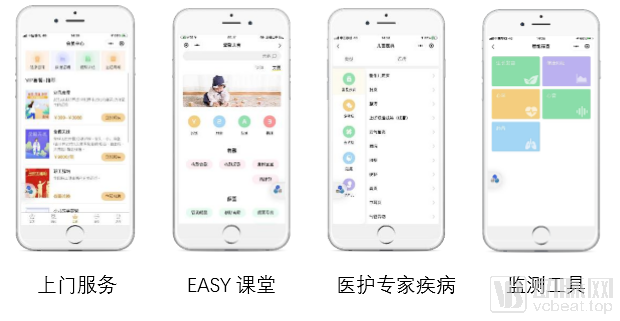
According to VCBeat, since its launch in June this year, Zicheng Zhibao has attracted more than 3,000 professional healthcare providers and over 30,000 mothers and children as users. Among them, approximately 1,200 mothers and 1,600 children are paying users (requiring actual treatment). The platform has already established its presence in Xi’an and selected areas of Chongqing.
So, what kind of company is Zicheng Zhibao, and how did it manage to acquire such a large user base in just a few short months? To find out, VCBeat conducted an exclusive interview with Liu Yan, Founder and CEO of Zicheng Zhibao.
The May 2012 "Born Too Soon: The Global Action Report on Preterm Birth" indicated that the global preterm birth rate exceeded 10%, with 15 million new cases annually, accounting for 11.1% of all live births worldwide. Each year, 1.1 million preterm infants die, representing 36% of all neonatal deaths.
According to the survey and statistical results released by the National Health and Family Planning Commission of China in 2017, the incidence rate of preterm birth in China was approximately 9.0%, meaning that one in every ten infants is born preterm. Preterm birth has become the leading cause of infant mortality in China. The perinatal mortality rate among preterm infants is 4–6 times higher than that of full-term infants. Furthermore, if effective comprehensive interventions are not implemented promptly after birth, preterm infants will exhibit significant delays in growth, development, and nutritional status compared to their full-term counterparts.
Liu Yan stated that infants born before 37 weeks of gestation are considered premature. These children require catch-up growth based on their corrected age after discharge; however, most mothers are unaware of this and continue to follow standard feeding practices. As a result, some children under our care still cannot speak normally by the age of three, exhibiting delays in language and motor development that necessitate professional speech therapy. By this point, the optimal window for intervention has already been missed.
Meanwhile, 145 million children worldwide continue to face varying degrees of developmental delays, many of which are caused by improper feeding and education.
So why do parents often fail to detect these issues in real life? Liu Yan stated that, on the one hand, parents lack this specialized knowledge; on the other hand, there are no scientifically validated and effective early screening tools.
Therefore, Zicheng Zhibao has established a child growth and development screening system and a pediatric care group to help mothers create growth and development records for their babies and provide home care services from an early stage. By introducing the Test of Infant Motor Performance (TIMP) to assess early posture and core movements in infants, it enables early detection and prediction of infant motor development, evaluates the effectiveness of interventions, and provides a scientific basis for early identification and early intervention.
As children grow, Zicheng Zhibao has also introduced the Griffiths Mental Development Scales to assess children aged 0–8 years across six key domains: locomotor, personal-social, hearing and language, eye-hand coordination, performance, and practical reasoning. This enables an evaluation of a child’s actual developmental level in these areas, facilitating early identification of potential issues and providing professional recommendations.
In addition, Zicheng Zhibao also provides second-generation genetic testing for children. In fact, many diseases are closely related to genetics. For example, some children suffer from congenital hearing impairment; however, late diagnosis often causes them to miss the critical window for auditory development and optimal treatment, resulting in a near-total loss of language function. In contrast, with genetic screening enabling early detection and intervention, such as timely cochlear implantation, the extent of hearing and language impairment can be significantly reduced, leading to much better rehabilitation outcomes.
In 2018, pediatric outpatient visits reached 888 million. Due to issues related to the environment, diet, scientific feeding practices, and education, the health status of children in China has shown a declining trend. Liu Yan stated, “In recent years, the myopia rate among children has reached as high as 65.8%, the dental caries rate stands at 34.5%, and the obesity rate is 8%. Additionally, 9% of children suffer from malnutrition, and 7% are affected by developmental disorders.”
“There are only 117,000 pediatricians in China, with the highest attrition rate among clinical physicians,” said Liu Yan. In fact, most children can avoid the need for medical visits if problems are detected early through screening and treated promptly, coupled with scientific feeding and care at home.
In this context, leveraging her previously accumulated network of over 2,000 hospitals, Liu Yan has partnered with pediatricians and nurses to provide in-home medical nursing services within a 5-kilometer radius. It is understood that Zicheng Zhibao, through its self-developed intelligent equipment for child growth, can continuously collect children’s growth and health data as well as physical measurement data at home. By integrating behavioral data and genetic data obtained through its services, the company generates child growth curves and standardized charts, thereby establishing a more comprehensive and dynamic health database.
Zicheng Zhibao leverages its big data system to analyze continuous monitoring data on children’s growth and development, as well as data on healthcare professionals’ areas of expertise. By fully integrating high-quality pediatrician and nursing resources, it provides in-home care services to individual consumers.
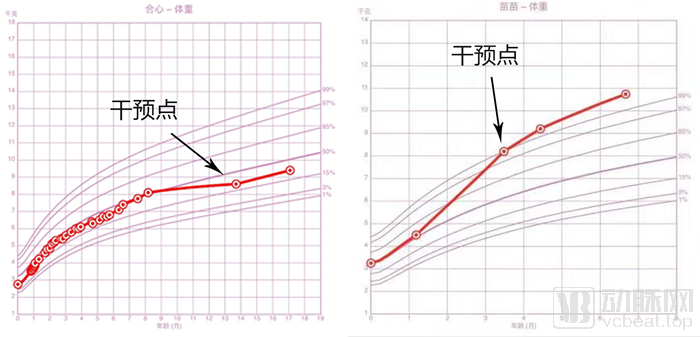
If a child’s physical condition triggers an alert, the platform will immediately facilitate communication between the physician and the parents to conduct an initial assessment, and then arrange for the patient to be referred to an appropriate medical institution for timely treatment.
Zicheng Zhibao focuses on home-based monitoring and care for newborns, with an emphasis on comprehensive home lactation care services throughout the entire breastfeeding cycle. It provides medical-grade home healthcare and nursing services for mothers and newborns. The company offers a one-stop health management solution that begins with lactation support before pregnancy, followed by growth alerts, developmental assessment and decision-making, scientific guidance, and in-home services after birth, effectively addressing the needs of both mothers and babies.
Currently, Zicheng Zhibao primarily serves children aged 0 to 3 years, as well as expectant and postpartum mothers. In terms of customer acquisition, the company leverages partnerships with contracted obstetric hospitals and clinics on one hand, and collaborates with postpartum care centers on the other to help extend their service offerings. Thus, Zicheng Zhibao has established a home-based nursing service system encompassing predictive alerts for pre-disease conditions, scientific management of diagnosed illnesses, and at-home healthy feeding guidance.
Regarding the team, Zicheng Zhibo’s team represents a cross-disciplinary integration, possessing over 10 years of operational experience in the internet, healthcare, and physician group sectors. Founder Liu Yan has strong resources and business implementation expertise in the medical field, having established collaborations with more than 2,000 medical institutions.
Regarding future plans, we will collaborate with more hospitals to address mothers’ practical issues at the source, ranging from health education to services, and establish a standardized service system. In the pediatric sector, we aim to serve tens of millions of users through congenital heart disease and vision screening services, extending our reach to screening for children aged 3 to 6 and providing home care guidance. We expect to achieve break-even within approximately six months.