

Nanovision Completes Series B Funding Round of RMB 160 Million Led by Sherpa Healthcare Partners
Nanovision
X-ray Detector and Static CT Product R&D Provider
VCBeat has learned that Beijing Nanovision Technology Co., Ltd. (hereinafter referred to as “Nanovision”) has completed a B-round financing of RMB 160 million. Li Yunxiang, CEO of Nanovision, stated, “This round of financing was led by Sherpa Capital, and the funds are planned to be used for the commercialization of our products.”
Nanovision, established in 2014, is a high-tech enterprise dedicated to high-speed, high-precision radiation imaging. Its business primarily covers static CT, X-ray detectors, and X-ray imaging software. Its core product, static CT, is widely applicable in medical, industrial, and security inspection fields. According to reports, Nanovision’s medically oriented “Compound Eye 24” has already produced images, with plans to develop the “Compound Eye 108” in the future.
“By the end of 2017, China had only 14.3 CT scanners per million people, compared with 92.6 per million in Japan and 32.2 per million in the United States. Clearly, there is substantial room for growth in the Chinese market.” Li Yunxiang believes that the replacement and upgrading of CT equipment at large hospitals also represents a significant market opportunity. Approximately 12% of the CT scanners currently in use in hospitals are more than 10 years old, most of which are single-slice or dual-slice systems and require replacement. Based on comprehensive estimates, the market size for CT scanner sales in China will be at least RMB 20 billion.
At the recently concluded 105th Scientific Assembly and Annual Meeting of the Radiological Society of North America (RSNA), the Nanovision team unveiled its static CT concept and prototype model. This presentation drew significant attention from prominent institutions and figures, including Mayo Clinic, Cleveland Clinic, Massachusetts General Hospital of Harvard University, Washington University School of Medicine, MD Anderson Cancer Center, and the inventor of fourth-generation CT technology. Furthermore, several of these institutions expressed interest in collaboration.
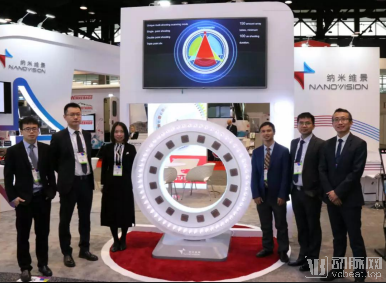
Nanovision’s Presentation at the Radiological Society of North America, Photo Provided by the Company
According to Li Yunxiang, static CT is the sixth-generation slip-ring-free CT, which adopts an electronic scanning X-ray source and a 288-row detector to form a dual-ring structure. Compared with traditional CT, it can achieve a 10-fold increase in scanning speed without motion artifacts and a 64-fold increase in three-dimensional spatial resolution, and has multi-spectral imaging capabilities.
Nanovision spent three years successfully validating the principles of static CT, and another three years successfully developing the first engineering test prototype of a static CT scanner. This prototype demonstrated a significant improvement in image clarity during scanning.
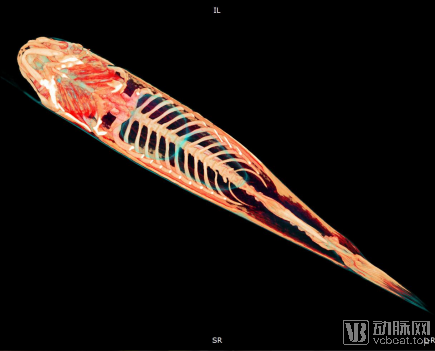
Prototype image display; photo provided by the company
Mr. Cai Daqing, founding partner of Sherpa Capital, once stated in public: “There is a CT company whose machines can increase spatial resolution by fourfold and temporal resolution by tenfold. This represents a significant market selling point. In the future, cardiac imaging may resemble high-speed photography, clearly presenting to cardiologists which myocardial segments exhibit weakened contraction due to vascular occlusion.” That CT company is Nanovision.
To strengthen its competitive moat, Nanovision has applied for or obtained 86 intellectual property rights. As a capital- and technology-intensive enterprise, Nanovision’s financial backing also serves as a barrier to entry; in terms of core technologies, the company adheres to original innovation, focusing on the independent development of key components, thereby establishing a high technological barrier.
Since its establishment, Nanovision has not only advanced its research and development but also attracted significant capital interest. From angel funding to Series B, it has secured cumulative investments of nearly RMB 300 million from investors including Legend Capital, Sherpa Capital, and Hillhouse Capital.
“Currently, Nanovision has just completed its financing round and secured sufficient funds to drive the commercialization of its products. In 2021, we plan to launch a new round of financing to prepare for market expansion,” concluded Li Yunxiang.
About Sherpa
Sherpa Investment was founded in 2018, focusing on healthcare and medical projects in China or closely related to local Chinese applications with rapid growth potential, including but not limited to pharmaceuticals, medical devices, services, and internet and technology solutions related to healthcare. Sherpa Investment is a professional healthcare investment fund whose core team members have worked together for many years, boasting extensive investment experience and an outstanding track record in China’s healthcare industry. The team is committed to being the climbers behind the climbers, helping entrepreneurs reach the pinnacle of their careers.