

Former General Manager of Tmall Health Drives Billion-Yuan Growth, Quits to Found Xiyou Health as a Pioneer in New Retail
Undoubtedly, the pharmaceutical retail sector is undergoing a period of intense consolidation, where only the strongest survive. How can pharmaceutical retail innovate? This may well be a challenging new question facing the industry today.
As the co-founder of Jinxiang.com, former Vice President of Yihaodian, former COO of Haoyaoshi, and former General Manager of Tmall Medicine & Health, Kang Kai also single-handedly founded No. 1 Pharmacy and 111.com (Yiyaowang). As a “legendary figure” in the pharmaceutical and healthcare industry, every move Kang Kai makes attracts significant attention from the sector.
Three months ago, Kang Kai single-handedly founded a new retail enterprise in the pharmaceutical and healthcare sector—Beijing Xiyou Tiantian Health Technology Co., Ltd. (hereinafter referred to as “Xiyou Health”)—stating that it aims to create a modern-era “model” for China’s new retail landscape in pharmaceuticals and healthcare.
Will Kang Kai emerge as the “problem-solver”? What disruptions and innovations will Xiyou Health bring to the pharmaceutical retail sector? Recently, VCBeat conducted an exclusive interview with Kang Kai, Founder and CEO of Xiyou Health, to provide insights into these questions.
Pharmaceutical retail can be broadly divided into two segments: traditional brick-and-mortar pharmacies and online e-commerce platforms.
According to the National Medical Products Administration, the total number of pharmacies across China reached 489,000 by the end of November 2018. Although this figure set a new historical high, the growth rate has raised concerns. Data show that in 2018, consumer spending at pharmaceutical retail terminals nationwide amounted to RMB 384.2 billion, with the growth rate of pharmaceutical retail terminals falling below 5%, marking a 20-year low.
Industry insiders say that pharmaceutical retail has entered a "winter."
Kang Kai pointed out,Pain points of traditional brick-and-mortar pharmacies are manifested in the following aspects:1. Significant fluctuations driven by policy changes. In 2015, the national government issued 351 pharmaceutical-related policies; this number rose to 1,613 in 2016 and 1,562 in 2017. Additionally, policy reforms such as the “4+7” volume-based procurement, the National Essential Medicines List, and DRG pilot programs have exerted substantial influence.
“Under volume-based procurement, a significant price disparity has emerged between hospital and pharmacy drug prices. This has, to some extent, led to a loss of customer traffic for pharmacies. Furthermore, following the separation of prescribing from dispensing, the sales of a large volume of hospital-prescribed drugs have not remained in community pharmacies as ideally expected,” said Kang Kai.
II. Growth in the pharmacy sector is slowing, with some even experiencing negative growth, forcing a transformation. “Although some listed chain pharmacies have continuously expanded their footprint through acquisitions, their operational quality has not significantly improved alongside their increased scale, resulting in sluggish growth,” said Kang Kai.
In addition to the influence of external factors, traditional pharmacies themselves face numerous challenges.
III. Changes in the consumer landscape and evolving customer needs, while traditional pharmacy business models remain stuck in the past.
“From the perspective of consumer demographics, the purchasing habits of middle-aged and elderly individuals have already shifted; their health needs are expanding, and their acceptance of the internet has improved significantly compared to the past. When this group has higher demands, the supply side of the industry has failed to keep pace,” said Kang Kai. Furthermore, from the perspective of younger consumers, this group’s attention to health far exceeds expectations, with demand rising year by year. On online shopping rankings, their purchasing power for health-related products is very high.
Amidst such changes, pharmacy business models remain stuck in traditional sales practices, with few pharmacies achieving breakthroughs.
From the perspective of online e-commerce, the pain points are as follows:First, with the development of the aging trend and enhanced health awareness among people, there is significant room for growth in health expenditures. However, there is a gap in the supply side of the market regarding "personalized customization."
Secondly, the existing e-commerce model for pharmaceutical sales is still largely based on the fast-moving consumer goods (FMCG) approach, which has its limitations. “Obviously, the characteristics of health-related products determine that they cannot drive consumption through price promotions in the same way as FMCGs,” said Kang Kai.
Finally, there is a lack of professional systems to help young people choose reliable medications and avoid common purchasing pitfalls.
With the rapid advancement of technology, emerging innovations such as artificial intelligence, the Internet of Things (IoT), and 5G have spurred the widespread adoption of wearable devices and home-use medical equipment, thereby transforming consumer habits. Meanwhile, new channels like social media and video platforms have diversified marketing models.
“A great change has arrived,” said Kang Kai.
From 2014 to 2018, Kang Kai, who served as a Director of Alibaba Health and General Manager of Tmall Medical & Health, scaled Tmall’s medical business from hundreds of millions to tens of billions in GMV, capturing more than half of China’s pharmaceutical e-commerce market.
With 20 years of market experience, Kang Kai has not only identified the pain points in the pharmaceutical and healthcare market but also recognized the tremendous opportunities presented by “New Retail.”
 Kang Kai, Founder of Xiyou Health
Kang Kai told us,The Inevitable Trend in the Future Development of New Retail in Pharmaceuticals: Integration of Online and Offline Channels.
In 2018, he left Alibaba and joined Kangfu Zhijia Group, China’s leading omnichannel service provider for home medical devices, as a partner and Group CEO. He aims to leverage medical devices as a strategic entry point to tap into the trillion-yuan general health market, with the goal of establishing Kangfu Zhijia as the king of new retail in China’s pharmaceutical and healthcare sector.
Leveraging the resource support from its parent group, Kangjiazhijia, Kang Kai founded Beijing Xiyou Tiantian Health Technology Co., Ltd. in September 2019, a new retail enterprise in the pharmaceutical and health sector focused on the retail of home-use medical devices.
Why Choose the Home Medical Device Sector?
Kang Kai pointed out that the low sales proportion of home-use medical devices indicates significant growth potential. Furthermore, new home-use medical devices driven by emerging technologies will become a critical entry point for health data, presenting substantial opportunities.
Furthermore, the industry’s pain points are particularly pronounced. Health management and chronic disease management models based purely on the internet face three major bottlenecks: poor data compliance, a lack of behavioral intervention methods, and insufficient service scenarios and user experience. On the user side, consumer demand is largely met by counterfeit and substandard products, leaving users without trustworthy channels that deliver high-quality services and experiences.
“In fact, the aforementioned pain points all indicate that the market demands professional channels. Xiyou Health is precisely such a professional channel builder; we will reengineer and reconstruct high-quality supply chain relationships centered around user needs,” said Kang Kai.

Photo provided by the company: Shop-in-Shop Model – Home Medical Devices
He introduced that the ecosystem development of Xiyu is structured around three concentric rings. The first ring focuses on offline stores, enhancing their operational capabilities through in-store experiences, community management, and health assistant services. The second ring aims to boost store service capabilities by extending product offerings, linking with internet hospitals, and forming health advisory teams. The third ring centers on optimizing the supply chain through big data, enhancing professional service capabilities with AI, and focusing on technological research and development.
How to implement? Kang Kai shared that Xiyou Health mainly makes breakthroughs in these four aspects: 1. Using home medical devices + store-in-store model as a lever to achieve low-cost rapid coverage; 2. Using health solutions + extended shelves as a lever to increase sales revenue. Enhancing profitability through economies of scale + category optimization;
3. Leverage community-based face-to-face engagement combined with online professional services to enhance user stickiness and increase the penetration rate of household health consumption; 4. Utilize user health demand data to connect with high-quality health products and service resources, thereby achieving a platform-based ecosystem.
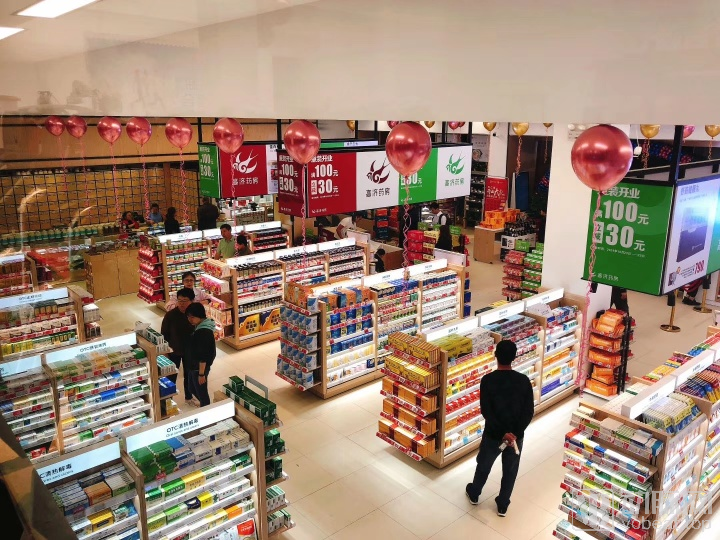
Image provided by the company:Revitalizing Pharmacy Medical Devices
Furthermore, in terms of its operational model, Xiyou Health adopts a community-based approach that combines offline face-to-face community engagement with online professional services.
Kang Kai introduced that the offline community will provide face-to-face, community-based operations, build solutions around specific scenarios, achieve in-depth user engagement and retention, enhance user stickiness and loyalty, and cultivate “private domain traffic.” Meanwhile, the online platform will break through the limitations of sales per square meter, offer extended product shelves, and leverage digital and internet technologies to construct a “data closed loop,” thereby establishing professional data-driven operational capabilities to comprehensively serve users.
“In this regard, we actually have a win-win cooperative relationship with pharmacies. We help pharmacies address their shortcomings in medical device supply chains and operational capabilities,” said Kang Kai. He revealed that six pharmacies are currently participating in pilot collaborations, with coverage expected to expand to 30 stores by the end of the year. Notably, Xiyou Health offers a highly diverse portfolio of home-use medical devices, comprising over 1,000 products.
“Grapefruit Health’s strong performance in both B2B and B2C sectors will provide in-depth support to pharmacies. Our future goal is to cover more than 10,000 pharmacies across China.“Kang Kai said firmly.”