

Baidu Super Chain and Huayi Kangdao Host Blockchain Symposium: Empowering Smart Healthcare Through Blockchain Technology
According to data from the National Bureau of Statistics, in 2018, there were 997,433 medical and health institutions nationwide, including approximately 33,000 hospitals, accounting for about 3.3% of the total number of medical institutions. The total number of patient visits to medical and health institutions reached 8.308 billion, with hospital visits totaling 3.577 billion, representing approximately 43% of the total.
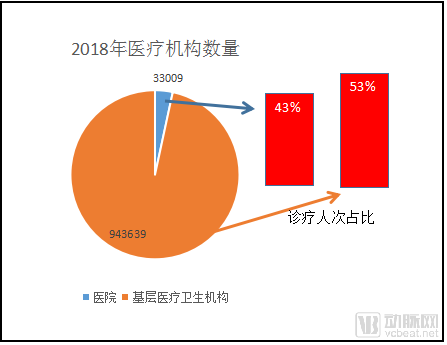
(Compiled from data of the National Bureau of Statistics)
It is evident that patients continue to prefer hospitals over primary care institutions when seeking medical attention. This highlights tiered diagnosis and treatment as a solution to address the imbalance between the supply and demand of medical resources. However, this system faces a challenge: patients desire higher-quality medical services, while there remains a gap between the current diagnostic and treatment capabilities of primary care institutions and patient expectations.
With the development of big data and internet technologies, it has become possible for primary healthcare institutions to access services provided by central hospitals. However, experts from certain hospitals have stated, “Hospital data is of critical importance. Telemedicine, tiered diagnosis and treatment, and medical consortia all rely on the transmission and sharing of data. Yet, who will ensure data security? Who will safeguard data privacy?” This appears to be an intractable problem. The advancement of blockchain technology has offered hope for resolving data security concerns.
To ensure data security, privacy, and immutability, blockchain employs technologies such as asymmetric encryption and hash algorithms; to establish data ownership and traceability, it leverages features like timestamps; and to facilitate data sharing across medical institutions, it utilizes consensus algorithms, smart contracts, and peer-to-peer (P2P) networks.
Zhong Hong, Dean of the Qingteng Chain Alliance Research Institute at Tsinghua x-lab, stated, “When we first saw the emergence of blockchain technology, we already foresaw the convenience it would bring to national governance and healthcare governance.”
On December 17, the Baidu Superchain Academy Lecture Series (Chongqing Stop) and the Huayi Kangdao Blockchain Medical Scenario Application Seminar were held at the International Medical Service Industry Base in Yuzhong District, Chongqing. Blockchain experts, entrepreneurs, and other stakeholders gathered to discuss the application of blockchain technology. This article focuses on how blockchain technology is applied in medical scenarios.
Baidu: Electronic Prescription Circulation Platform and DRG-Based Medical Insurance Cost Control System
At the seminar, Yu Yanan, Head of Baidu’s Blockchain Products, introduced Baidu’s strategic layout in blockchain technology and showcased some of its applications. She stated, “Baidu is a leader in the field of artificial intelligence. Today, we have established our presence in the independent research and development of underlying blockchain technologies as well as application development. We are integrating these two technologies in emerging technical fields and applying them to smart cities.”
During implementation, Baidu identified significant challenges in data circulation and application when faced with data silos or highly centralized data. To address this, Baidu’s solution leverages blockchain technology to establish a shared ownership verification pathway for underlying big data circulation, integrates other information technologies to mitigate the drawbacks of AI-driven cities, and optimizes the overall mechanism.
Specifically, Baidu has implemented its blockchain network across four sectors—smart government services, smart judicial systems, smart public livelihoods, and smart finance—leveraging its independently developed blockchain technology.
Taking smart public welfare as an example, Baidu partnered with Chongqing Huayi Kangdao Technology Co., Ltd. to launch a blockchain-based prescription circulation platform in Yuzhong District. In light of the characteristics of prescription circulation, Baidu and Huayi Kangdao achieved comprehensive data traceability across all stages, including electronic prescribing, electronic prescription review, and electronic dispensing. The platform also integrates with regulatory systems overseen by the Health Commission, the Healthcare Security Administration, and the Drug Administration, ensuring that data remains subject to government supervision throughout the circulation process.
In the circulation of electronic prescriptions, which involves the security of diagnostic and treatment information as well as medication safety, blockchain technology ensures data durability through distributed storage. It enables data traceability via timestamping and chain-based structures, while consensus mechanisms facilitate collaborative data recording and maintenance to prevent unilateral modification or deletion by any single participant. This guarantees the immutability of diagnostic and drug information on the blockchain, thereby ensuring the authenticity of electronic prescriptions and the uniqueness of drugs throughout the entire process from production to sales.
Li Jianfeng, CTO of Huayi Kangdao, added, “This blockchain network allows for customizable circulation pathways and features multiple node types. Each node can accommodate multiple participants, with distinct participation rules configured for each. For instance, regulatory authorities can intervene at any stage to oversee operations and tailor regulatory requirements.”
With blockchain technology ensuring the security of data circulation, opportunities arise for data to generate value, such as in telemedicine and referral mechanisms.
Another project implemented by Baidu in the healthcare sector is the DRG-based Health Insurance Cost Control System: By integrating blockchain technology, big data analytics, and Diagnosis-Related Groups (DRGs), it achieves intelligent management of health insurance cost containment. Specifically, Baidu employs blockchain encryption and trusted computing technologies to safeguard user privacy, address incentives for hospital information sharing, and enable secure sharing of privacy-sensitive data. Leveraging the sharing and aggregation of medical big data along with computational models, the system provides scientific decision-support tools for the allocation and utilization of health insurance funds, thereby improving the efficiency of cost containment. Furthermore, the seamless on-chain integration of medical big data minimizes moral hazard risks and enhances governmental oversight of healthcare services.
For example, blockchain systems can automate most billing and payment processes, thereby eliminating intermediaries, reducing administrative costs, and saving time for both patients and healthcare institutions. Furthermore, this series of financial and procedural data can provide a valid basis for subsequent insurance claims and bill management. On one hand, it can reduce gray expenditures in the healthcare sector, such as insurance fraud and false billing; on the other hand, it can improve the efficiency of verification.
Yu Yanan concluded, “Baidu’s strength lies in our ability to provide a comprehensive, closed-loop service for blockchain application scenarios by integrating blockchain with artificial intelligence, big data, and cloud computing. Furthermore, by leveraging Baidu’s content-driven traffic and industrial resources, we offer all-around technical collaboration and empowerment to developers and partners.”
Huayi Kangdao: Blockchain Technology Empowers Integrated Medical Services
Promoting Traditional Chinese Medicine and Spreading the Way to Health: The Origin of the Name Huayi Kangdao. In response to challenges in the healthcare industry, such as information asymmetry, supply-demand imbalance, and uneven resource utilization, founder Chen Haoyang proposed a solution leveraging blockchain technology to empower smart healthcare.
First, it is essential to ensure trustworthiness in healthcare. Huayi Kangdao proposes four blockchain-based solutions: a full-process traceability chain for pharmaceuticals and medical devices, a full-process evidence preservation chain for diagnosis and treatment, a public chain for credential verification, and an authorized privacy data chain. The full-process traceability chain for pharmaceuticals and medical devices, built by Huayi Kangdao using blockchain technology, enables information traceability across all stages of the distribution of drugs and medical devices. Each participant controls nodes on the network, tracking and recording every link from production, quality inspection, warehousing, outbound logistics, circulation, to clinical use, thereby safeguarding the quality of pharmaceuticals and medical devices and ensuring medication safety for patients. Meanwhile, Huayi Kangdao employs blockchain to preserve evidence throughout the entire diagnosis and treatment process, which serves as an endorsement of medical quality and can effectively reduce doctor-patient disputes.
In addition, Huayi Kangdao has built a public blockchain for credential verification, recording the qualification information of medical institutions and healthcare professionals—including the entire process of obtaining such credentials—on the chain. This enables patients to seek medical care with confidence. Finally, in terms of protecting patient privacy, Huayi Kangdao leverages blockchain technology to facilitate authorized sharing of patient data, effectively ensuring trustworthy, reliable, and confidential data circulation. By integrating these four blockchains, a trusted medical data platform is formed.
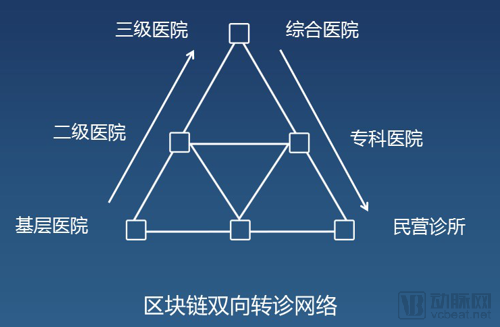
In the application scenario of tiered diagnosis and treatment, blockchain networks ensure data security and facilitate data circulation, thereby strengthening referrals between hospitals. Chen Haoyang explained, “The implementation of the tiered diagnosis and treatment system often involves close collaboration among multiple medical institutions. In this context, ‘blockchain + smart contracts’ can enable an efficient collaborative network. We encode referral rules into smart contracts and deploy them on the blockchain network, where each node holds a copy of the ‘contract’ and executes according to the same rules. This ensures high efficiency in the referral process as well as secure, reliable, and rapid data transmission.”
(Images provided by the company)
Addressing the issue of unbalanced medical resources, Huayi Kangdao leverages blockchain technology to facilitate the sharing of healthcare resources. The most frequently cited feature of blockchain is decentralization; its decentralized structure enables hospitals at all levels, community health service centers, physical examination institutions, and pharmaceutical research organizations to participate equally on the blockchain platform. Meanwhile, the blockchain network ensures reliable information transmission and maintains transparent transactions on the platform, thereby facilitating the circulation of medical resources, reducing idle capacity, and improving the utilization rate of healthcare resources.
For example, when patients seek medical care, doctors no longer need to repeat relevant tests that have already been performed; they can directly access historical data, which significantly saves human and material resources and reduces the cost of medical care.
The circulation and application of data are inseparable from regulatory authorities; therefore, providing regulatory channels for government departments has become the most essential prerequisite for the circulation of hospital data. Chongqing Huayi Kangdao Technology Co., Ltd. has made preparations in this regard by establishing a traceability system based on blockchain technology, using product code management as a means to create an information chain that ensures sources are verifiable, destinations are traceable, and responsibilities are accountable. Regulatory authorities can review relevant medical data through a unified system, achieving one-click traceability. This also helps improve the efficiency of pharmaceutical administration and regulation.
Chen Haoyang stated, “Huayi Kangdao has currently signed contracts with over 500 hospitals across 26 provinces and municipalities, including the Chongqing Emergency Medical Center, the Second Affiliated Hospital of Sun Yat-sen University, and Yongzhou No. 4 People’s Hospital, implementing projects such as smart wards, internet hospitals, and medical consortia.”
In the future, CHONGQING HUAYI KANGDAO TECHNOLOGY CO.,LTD. plans to build a blockchain-based medical and health service platform to achieve interconnectivity of medical data within the region and provide residents with high-quality, full-lifecycle health management. The platform is scheduled to launch initially in Yuzhong District, Chongqing, and will gradually be promoted across China.
The application of blockchain technology in healthcare scenarios holds great promise for the future.