

WeDoctor's Cheng Yi: Digitalization Empowers China's Healthcare Reform Through Three Key Stages
On December 20, the 2019 Future Healthcare 100 Conference, themed “New Growth in Life” and hosted by VCBeat, grandly opened at the Jiuhua Mountain Resort in Beijing.
At the conference, Cheng Yi, Senior Vice President of WeDoctor Group, delivered a speech titled “Digital-Driven New Healthcare Reform in China.” This article presents a curated compilation of the highlights from his presentation.
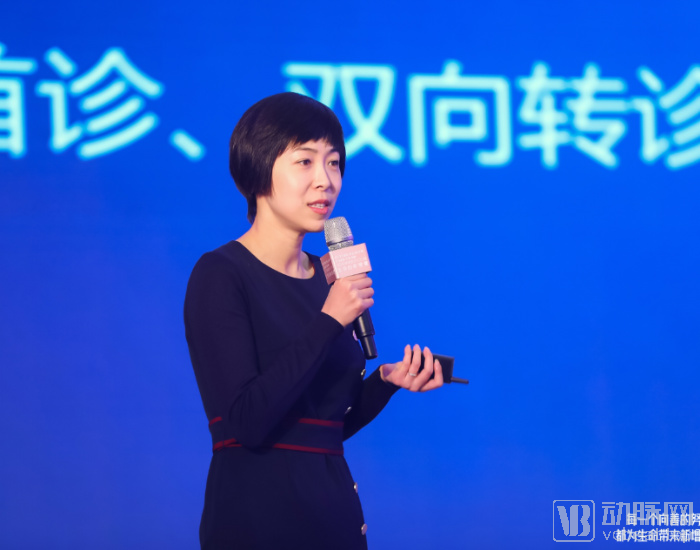
Below is the transcript of the speech (abridged):
The previous speaker’s presentation offered us a glimpse into the future. At this moment, I would like to take a step back with you to examine the current difficulties, pain points, dilemmas, and challenges facing our nation’s healthcare reform efforts.
I. Healthcare Challenges: Uneven Distribution of Medical Resources. Major Hospitals Are Overcrowded, While Primary Care Facilities Remain Largely Unused.
II. Challenges in the Pharmaceutical Industry: Opacity. Distribution costs account for more than 50%–70% of pharmaceutical companies’ expenditures, while R&D spending represents only 5%–7%. Drug prices are severely inflated, and innovation within pharmaceutical enterprises is markedly insufficient.
III. Challenges to Medical Insurance: Unsustainability. Leakage and waste of medical insurance funds have placed long-term pressure on medical insurance funds in some regions, even risking insolvency.
The consequences of the aforementioned pain points are public dissatisfaction, physician dissatisfaction, and the unsustainable financial burden on medical insurance. Healthcare reform has reached a critical juncture where change is imperative.
What Is the Path of Exploration for Digital-Driven New Healthcare Reform?
Phase I: Centralized Drug Procurement. By squeezing out inefficiencies in distribution channels through centralized procurement, drug prices are reduced, thereby freeing up resources for strategic reallocation.
A box of medication goes through numerous distribution channels from the factory to the patient. By leveraging a digital platform to connect pharmaceutical companies, manufacturers, hospitals, doctors, patients, and medical insurance providers, the entire transaction and settlement process is made fully transparent.
For example, Sanming City in Fujian Province took the lead nationwide in launching centralized volume-based procurement of pharmaceuticals and medical consumables. Prior to the reform, Sanming’s annual medical insurance fund operated at a deficit of over RMB 200 million; following the healthcare reform, it achieved a surplus of more than RMB 150 million.
The General Secretary has affirmed the “Sanming Experience” at three central meetings, most recently at the ninth meeting of the Central Leading Group for Comprehensive Deepening Reforms, where he once again emphasized that the entire country should learn from and promote the “Sanming Experience.” On March 18, WeDoctor’s digital platform also supported the implementation of the first order under China’s “4+7” centralized drug procurement program in Xiamen. The average price reduction across 25 drug categories was 52%, with a maximum reduction of 96%. What does this mean? For example, entecavir produced by Chia Tai Tianqing, a medication for chronic hepatitis B, dropped from an original price of RMB 14.1 to RMB 0.62, representing a 90% price reduction.
From Sanming to Fujian, to the “Sanming Alliance,” and then to the nationwide expansion of the “4+7” volume-based procurement program, Weiyi’s digital platform has continuously iterated and innovated, consistently serving healthcare reform.
In April this year, commissioned by the National Healthcare Security Administration, we began constructing a national centralized procurement platform for pharmaceuticals and medical consumables. It is expected that after the Spring Festival next year, RMB 2.2 trillion worth of pharmaceutical and medical consumable procurement across China will be migrated to this platform for transaction processing. This initiative is projected to save RMB 600 billion in fiscal expenditures.
Phase II: Tiered Diagnosis and Treatment – Achieving tiered diagnosis and treatment through medical consortia and medical communities.
Primary healthcare institutions exhibit significant lag and deficiencies in diagnostic and treatment capabilities, laboratory testing capacities, and the supply of pharmaceuticals and medical consumables. Our original intent in designing medical consortia was to leverage large central hospitals to drive the development of primary healthcare institutions within their regions, thereby establishing an effective and orderly tiered diagnosis and treatment system.
To achieve such an efficient regional collaboration mechanism, a digital platform would serve as the core engine.
In 2015, WeDoctor established China’s first internet hospital—the Wuzhen Internet Hospital. Currently, more than 310,000 doctors practice online, with over 90,000 daily consultations, equivalent to the capacity of three Grade A tertiary hospitals. It has truly become the “largest hospital where you never see a doctor.”
Through internet hospitals, our most valuable contribution to the industry has been “replicating top-tier physicians.” For instance, we have used AI to “replicate” the proprietary treatment protocols for infertility developed by Master Yu Jin, a renowned expert in Traditional Chinese Medicine. This AI system is currently training gynecologists in hospitals across multiple counties and cities, enabling them to diagnose and treat patients with the same expertise as Master Yu Jin.
How to Implement Tiered Diagnosis and Treatment?
In the Village, WeDoctor and Harvard T.H. Chan School of Public Health jointly released the “21st-Century Barefoot Doctors” initiative, upgrading the village doctors’ traditional “three old tools” to a “new three.” The upgraded “new three” are: 1. An intelligent auxiliary diagnosis system providing standardized diagnosis and treatment for 50 common diseases; 2. Mobile clinic hardware kits to enhance village doctors’ examination and testing capabilities; 3. Empowerment of grassroots physicians through online and offline medical training to improve the professional competence of village doctors.
In townships, the “Mobile Hospital” brings healthcare to residents’ doorsteps, enabling standardized diagnosis and treatment for 100 common conditions. Township health centers can initiate remote consultations with higher-level hospitals, making Weiyi’s “Mobile Hospital” a “secondary hospital” at people’s doorsteps.
At the district and county level, enabling data interoperability and standardized diagnosis and treatment for 300 common diseases. The local Hospital Information System (HIS) is upgraded to a cloud-based system, while remote ECG centers, imaging centers, medical record centers, and consultation centers are established to promote efficient hierarchical collaboration between upper- and lower-level institutions within the medical consortium.
In the City, and established its own general practice centers. Just this week, WeDoctor’s General Practice Center in Tianhe, Guangzhou, officially opened. To date, six such centers have been launched across China, including in Beijing, Nanjing, Hangzhou, and Chengdu. These general practice centers provide users with integrated online-and-offline medical and health services that are holistic, continuous, and family-oriented.
Through digital and intelligent means, we believe that in the near future, 50% of common diseases can be managed at home and within communities, 35% can be treated at primary healthcare institutions, and only 15%—major, severe, and complex cases—will require diagnosis and treatment at large tertiary A hospitals.
Furthermore, our digital exploration of tiered diagnosis and treatment was first piloted in Pingdingshan, Henan Province. After sustained efforts, the “Pingdingshan Model” has been promoted through a special report issued by the State Council’s Leading Group for Deepening Healthcare Reform, and is now being implemented in additional cities.
Phase III: Digital Health Community—Shifting from a Disease-Centric to a Health-Centric Model.
Shifting from a disease-centered approach to a health-centered one is the ultimate goal of healthcare reform proposed by the General Secretary. But what are the levers and pathways? We believe that substantive reforms must be implemented on three fronts—the healthcare supply side, the user side, and the government side—supported by digital tools and platforms, in order to drive the realization of this goal.
The first step on the healthcare supply side is to prevent major diseases and manage chronic conditions. In recent years, the incidence of major diseases has been continuously rising, with a trend toward affecting younger populations. Taking the two major cancers in women as an example, prevention and control of cervical cancer and breast cancer are most critical for women aged 35 to 65, and the most effective approach is early screening and detection.
During last year’s Spring Festival, Mr. Liao returned to his hometown in Longyan. A standing committee member overseeing healthcare told him, “Your mobile cloud clinic vehicles screened and identified three cases of breast cancer in the village this morning. Early detection allowed these cases to be managed at a cost of only a few thousand yuan. Had they gone undetected and progressed, treatment costs could have escalated to hundreds of thousands of yuan, becoming unmanageable.” Of course, this is not merely a financial issue; delayed diagnosis and late-stage disease would constitute a catastrophic blow to both the individual and their family.
Currently, the total number of people with chronic diseases in China has exceeded 300 million. Chronic diseases account for 30% of the total medical insurance expenditure, amounting to nearly RMB 700 billion. Among the over 100 million diabetic patients, treatment costs for complications constitute 80% of the total expenses, while early-stage blood glucose management accounts for only 20%. Therefore, we propose establishing a specialized chronic disease prevention and control system reliant on digital platforms. Our practice in Tai’an achieved a 10% reduction in chronic disease-related medical insurance expenditures within just 14 months.
From the user’s perspective, the core principle is simple: individuals are the best custodians of their own health. Each person should understand and proactively manage their well-being. Through a unified health portal, we integrate health and clinical data from various periods and medical institutions, creating a proactive, comprehensive, continuous, and dynamic digital health profile for each individual.
From the government’s perspective, the most critical task is to design policy mechanisms; without effective incentive mechanisms, no initiative can be sustained.
Currently, we are implementing Digital Health Communities in more than ten cities across China, assisting local governments in building “Healthy Cities.” Through digital platforms, we are effectively enhancing the efficiency and quality of medical services and establishing a people-centric health maintenance system.
Not long ago, the World Health Organization released its global strategy on digital health, upgrading the concepts and terminology of the past 50 years—such as mobile health, healthcare informatization, and telemedicine—into the unified term “digital health.” We believe that digital health is undoubtedly the broadest track within the industrial internet.
The theme of today's conference is "Future Healthcare," soWhat Is Future Healthcare? We believe that future healthcare will undoubtedly be digital-driven; it will be people-centric, placing greater emphasis on and advocating for equity and shared access; and it will be health-oriented.