

20 Industry Leaders Elucidate New Growth Drivers: Release of the '2019 China Future Healthcare Industry Tree' Report
On December 21, 2019, the second day of the “Top 100 Future Healthcare Companies 2019” Forum was held at Jiuhua Resort in Beijing.
From the inaugural “Eye of the Storm” in 2016, through the 2017 “Cambrian Explosion” and the 2018 “Towards ING,” to the 2019 theme “New Growth in Life Sciences,” the annual conference themes have evolved while consistently focusing on core shifts within the industry. Meanwhile, we have witnessed the continuous restructuring of the healthcare innovation landscape, gradually forming distinct sectors such as internet hospitals, third-party medical services, pharmaceutical and medical device innovation, and insurance payment solutions.
How Should We Interpret “New Growth”? It signifies that the foundational base of the new healthcare industry is taking shape, a consensus on transformation has been established, and novel business models have been validated. Meanwhile, “new growth” also heralds a growing conviction among practitioners that the interplay and integration of technological and model-driven growth will propel the healthcare industry toward new forms. All these new increments are redefining and enriching life in entirely new ways.
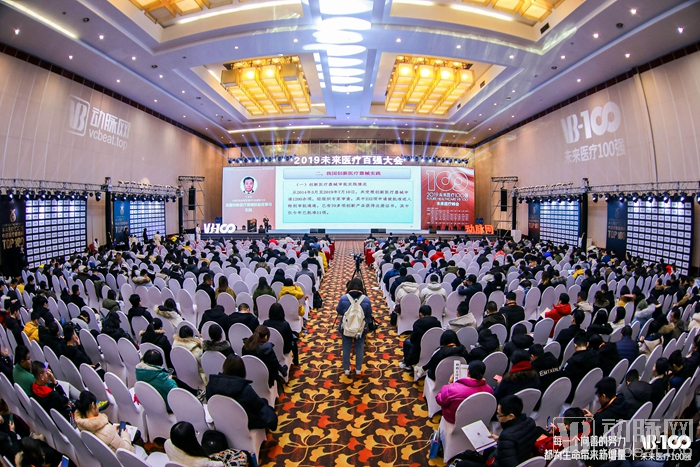
At the main forum on the second day, the “VB100 Future Healthcare Summit,” distinguished representatives from enterprises, hospitals, regulatory bodies, and investment firms convened to comprehensively interpret the development trends of the future healthcare industry. They examined variables in policy, products, technology, and business models through a fresh perspective.
Release of the “2019 China Future Healthcare Industry Tree,” with Multi-Party Discussions on New Growth Drivers
Since 2016, at the annual “Top 100 Future Healthcare” Forum, VCBeat has released a landmark industry report, which represents the team’s insights and summary of industrial transformation over the past year.
Over the past five years, VCBeat and Eggshell Research Institute have continuously tracked and studied emerging healthcare technologies and models, summarizing frameworks such as the “Impossible Trinity of Healthcare” and the “Healthcare Big Data Bowtie.” However, during this research process, it was found that innovation struggles to find its proper place and a coherent logical framework, constrained by the traditional structural system of the healthcare industry, which is centered on an upstream-downstream architecture.
Therefore, this year we adopt the “Industry Tree” as an interpretive framework for the future ecosystem of the healthcare industry. Driven by technology, demand creates scenarios and becomes deeply integrated with specialized sectors. Under the influence of policy-driven factors, a new market operation model will emerge, necessitating a re-explanation of the industrial structure through different logical lenses. The Industry Tree serves as a new tool and key for systematically thinking about the transformations in the healthcare industry.
“The 2019 China Future Healthcare Industry Tree” presents several insights: following the core shift in demand, it analyzes the demand trends of healthcare service institutions from four perspectives—social, economic, policy, and ecological; compiles a map of the healthcare innovation industry; explores solutions in niche sectors, examining their required settings, as well as tools and corporate case studies driven by technological and business model innovations.
Meanwhile, Li Datao, founder of VCBeat, interpreted and elaborated on the report from four perspectives and dimensions: data technology, system growth, policy expansion, and payment innovation.
From the perspective of VCBeat, the logic of “new growth” in life sciences can be summarized as follows: a shift from experience-based governance to data-driven governance; the spillover of certainty from technology and policy, with the industry’s endgame beginning to take shape and edge cases emerging as the new mainstream; a transition from industrial-era organizational structures and philosophies to hybrid, ecosystem-oriented organizations characterized by “industry platformization and platform consolidation”; a shift in focus from populations to individuals; and the gradual formation of a new social consensus on the direction and pathway of transformation.
How can healthcare industry professionals leverage their strengths to deepen market penetration, build competitive moats, and identify new growth drivers? Below are the key insights from our guest speakers:
Li Datao, Founder of VCBeat: "The New Growth in Life"
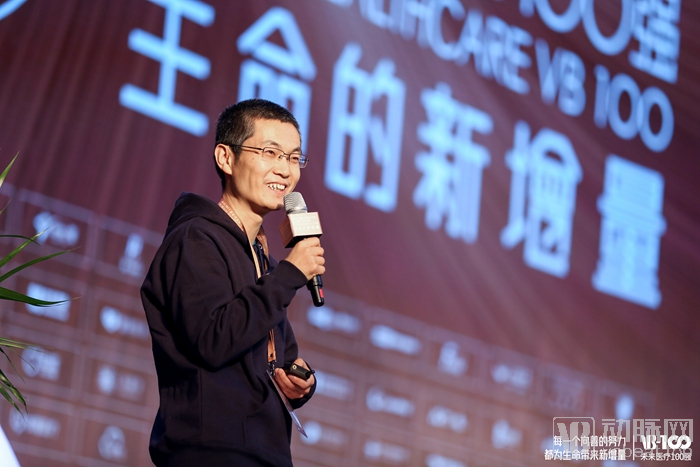
User-centric data infrastructure is gradually being built. In the future, healthcare providers will integrate more deeply with software engineers. Regarding the challenges faced by AI and big data companies in their commercialization processes, we believe this stems from the lag between technological emergence and the full realization of its potential. It takes time to identify the optimal ways to leverage innovation and for society to adapt to it. We must have sufficient patience to allow it to mature.
Professor Sun Jie, Deputy Dean of the School of Insurance at the University of International Business and Economics: “Building a Medical Data Sharing Platform to Leverage the Role of Commercial Health Insurance”
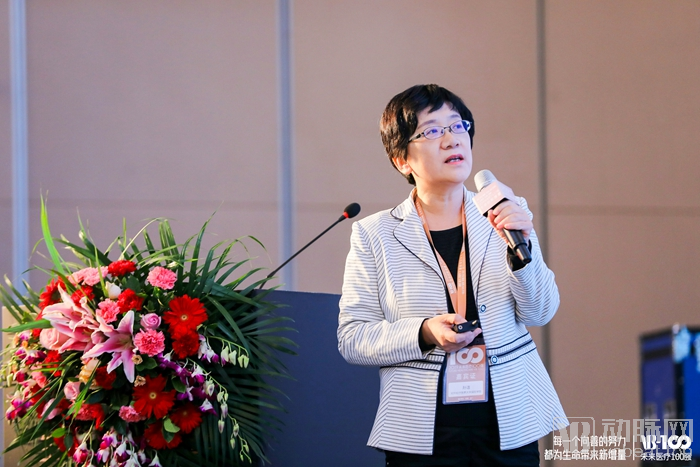
By partnering with hospitals, insurance companies can access extensive patient data, effectively addressing a major pain point in the insurance industry. Controlling the operational costs of health insurance will significantly alleviate the longstanding challenge of cost containment, particularly for reimbursement-based medical insurance products. Meanwhile, technologies such as big data, cloud computing, the Internet of Things (IoT), artificial intelligence (AI), virtual reality (VR), and 5G will see further application in health insurance, driving health management services toward comprehensive personalization and presenting broader prospects for development.
Wang Baoting, Deputy Secretary-General of the China Association for Drug Administration Research: “Incentive Policies and Practices for Innovative Medical Devices in China”
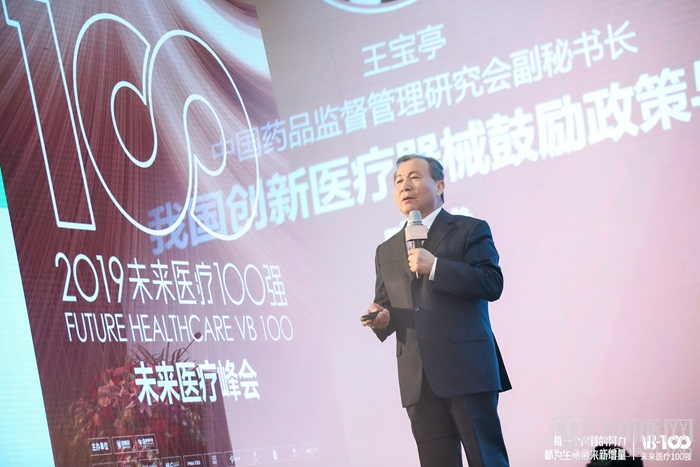
Supported by a series of national policies encouraging innovation, innovative medical devices in China will emerge at an accelerated pace. In 10 to 15 years, Chinese medical devices are likely to become bestsellers worldwide, much like Haier home appliances are today. It is highly probable that China’s equivalents of “Medtronic” and “Philips” will emerge from the Pearl River Delta, the Yangtze River Delta, or the Bohai Rim region.
Zhou Shaohua, Researcher at the Institute of Computing Technology, Chinese Academy of Sciences, Fellow of IEEE and AIMBE, and Member of the MICCAI Board: Characteristics, Technologies, and Trends in Medical Imaging + Artificial Intelligence
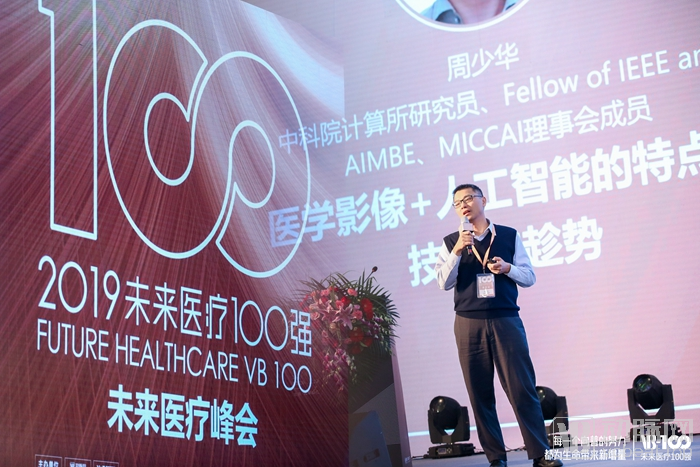
The current trend in imaging equipment development is toward miniaturization, specialization, and integrated hardware-software solutions. On one hand, as devices become more compact and tailored to specific use cases, their prices will drop significantly. On the other hand, the integration of software and hardware in application scenarios will effectively combine artificial intelligence software with imaging equipment to maximize value and enhance intelligence.
IEEE Fellow, ACM Distinguished Scientist, Former Tenured Professor at UIUC, and Chief Scientist at Deepwise Medical: Yizhou Yu on New Health Technologies that Aggregate and Inherit Human Wisdom
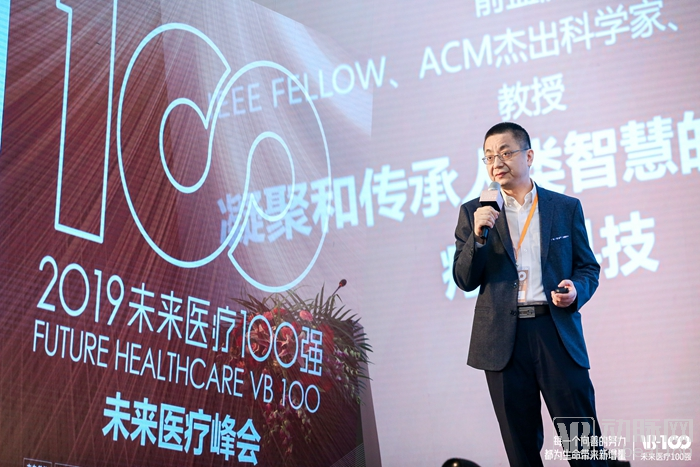
Smart healthcare relies on artificial intelligence technologies, such as neural networks and knowledge graphs, to achieve digitalization. Neural networks are well-suited for tasks involving perception, recognition, and judgment, while knowledge graphs are ideal for addressing cognitive, associative, and reasoning tasks. Deep learning-based AI models have accumulated vast amounts of knowledge and experience from human medical experts. If artificial intelligence were to surpass humans one day, it would not signify AI defeating humanity, but rather the triumph of collective human intelligence over individual intelligence.
Xu Liqun, Chief Scientist at China Mobile Research Institute: “A New Paradigm of Digital Healthcare and Health Services Empowered by the Convergence of AI and 5G”
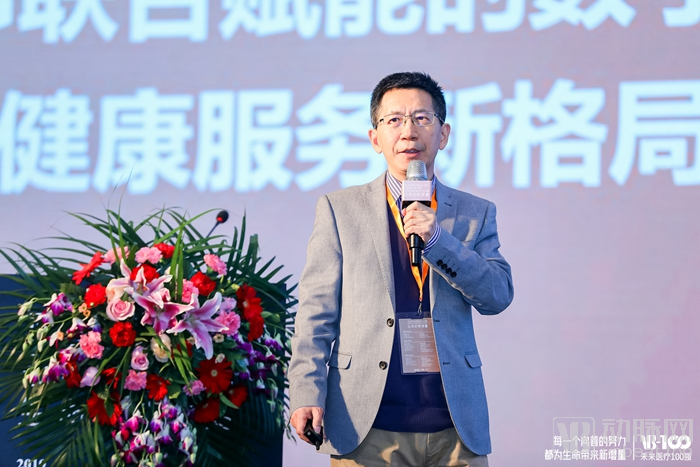
5G will inevitably integrate with cloud computing, big data, artificial intelligence, VR/AR, biological and multimodal sensors, the Internet of Things (IoT), blockchain, and edge computing, thereby amplifying the comprehensive utility of 5G technology. In the transformation of the healthcare sector, basic telecommunications operators will play an indispensable role: not merely by providing 5G connectivity, but by acting as enablers and creators of new services—specifically, as system integrators and developers of applications and services.
Li Rui, Senior Vice President of Medlinker: “Innovation Empowers Specialty Chronic Disease Management”
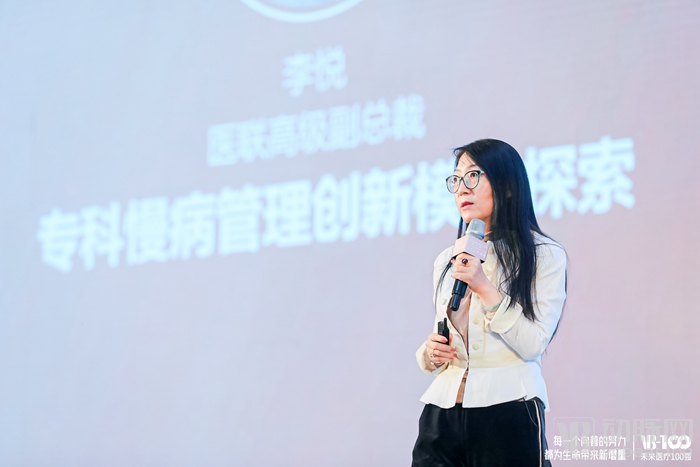
Medlinker has set an industry benchmark for patient management in the field of liver disease. In the area of hepatitis B management, over 6,000 physicians on the Medlinker platform are engaged in caring for approximately 80,000 patients with hepatitis B. Leveraging multi-channel touchpoints—including WeChat official accounts, a mobile app, and telephone support—combined with intelligent AI, Medlinker’s operations team provides comprehensive, end-to-end patient management, achieving an 85% active retention rate at 10 months.
Chi Jianxin, Producer of the Documentary “Two Hundred Years of Surgery”: “The IP Value of Medical Humanities in ‘Two Hundred Years of Surgery’”
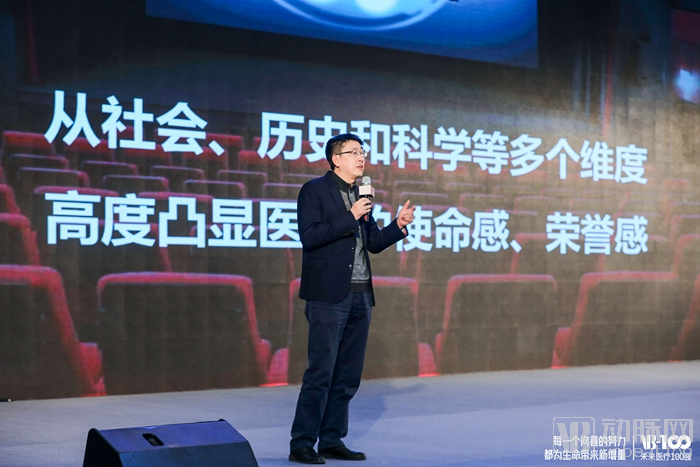
In the documentary *Two Hundred Years of Surgery*, medical luminaries have come together for the first time to comprehensively recount the 200-year history of surgical development. The core values of *Two Hundred Years of Surgery* lie in highlighting, from multiple dimensions including society, history, and science, the sense of mission and honor inherent in the medical profession, which also constitutes the IP value of medical humanities.
Hospital Directors, Enterprises, and Investors: A Dialogue on the Past, Present, and Future of Healthcare
On the afternoon of the event, representatives from hospitals, enterprises, and capital firms engaged in dialogues and roundtable discussions on the transformation trends of Chinese hospitals, the development of internal and external capabilities for enterprises, and emerging investment hotspots.
Trends in the Transformation of Chinese Hospitals
Comprehensive Reform of Public Hospitals: The Top Priority and Most Challenging Aspect of Deepening Healthcare Reform
A Decade of New Healthcare Reform: Policies Have Established New Operational Mechanisms, Decision-Making Frameworks, and Implementation Strategies for Public Hospitals at the Macro Level. Meanwhile, a governance mechanism featuring mutual coordination, checks and balances, and synergistic promotion among supervisory bodies has also been established. However, how should external governance mechanisms and internal management systems be effectively implemented? To address this question, Xu Hong, Vice President of Cleer Medical, moderated a discussion with Lv Jinhan, President of Ningxia Hui Autonomous Region People’s Hospital, and Li Qingfeng, Vice President of Guangzhou Women and Children’s Medical Center, to jointly explore their visions on the trends transforming Chinese hospitals.
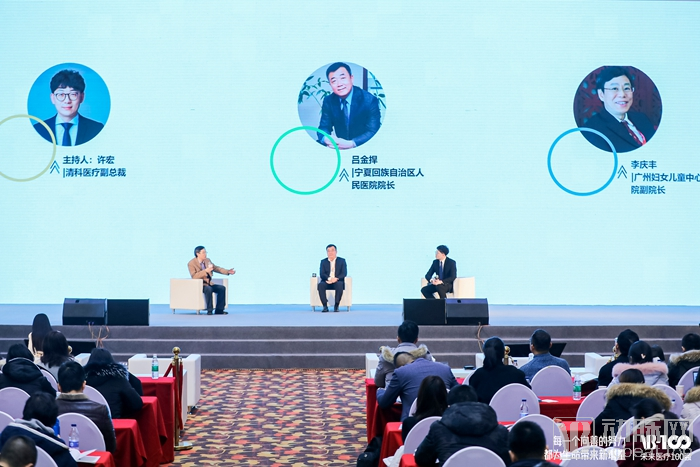
Let doctors return to their roots, and let drugs and consumables fulfill their value in medical care.Lu Jinhan, President of the People’s Hospital of Ningxia Hui Autonomous Region, stated that the hospital has used its position-based compensation system as an entry point to reform the income distribution for medical personnel, shifting from a bonus-driven incentive model to one that emphasizes the value of positions.
The hospital has restructured its compensation system to align with the roles of medical staff, increasing their income and motivating them, thereby enabling doctors to return to their core professional duties. Meanwhile, the hospital focuses on controlling expenditures on pharmaceuticals and consumables, ensuring that these items deliver value in patient care, thus fostering a virtuous cycle of hospital reform.
Elevate hospital informatization to a strategic level.Li Qingfeng, Vice President of Guangzhou Women and Children’s Medical Center, stated that the hospital has prioritized informatization as a key initiative and elevated it to a strategic level. Over the past decade of informatization development, Guangzhou Women and Children’s Medical Center has consistently emphasized interoperability among information systems. Aiming for high-quality safety standards, the hospital has leveraged new technologies such as artificial intelligence to optimize management and service workflows, reduce administrative costs and time consumption, enhance healthcare professionals’ efficiency, and improve the quality of care.
Building External and Internal Capabilities for Enterprises
Reviewing the development of China’s innovative healthcare industry in recent years, since 2014 we have witnessed a surge of internet healthcare companies entering the medical sector. This was followed by national policies encouraging physicians to practice at multiple sites, the emergence of various new types of offline clinics, and the establishment of internet hospitals. In addition, the past two years have seen significant transformations in innovative healthcare payment models and biopharmaceutical innovation.
In 2019, companies across numerous sectors began to face a new round of challenges, making it an urgent priority to identify sustainable profit models and enhance competitiveness. The discussion was moderated by Xiong Yun, Investment Director of the Equity Investment Department at Kunyuan Asset Management Co., Ltd., featuring Li Sirui, General Manager of the Strategic Development Department at Tasly Holding Group, and the Founder and Chairman of HealthPower Medical.
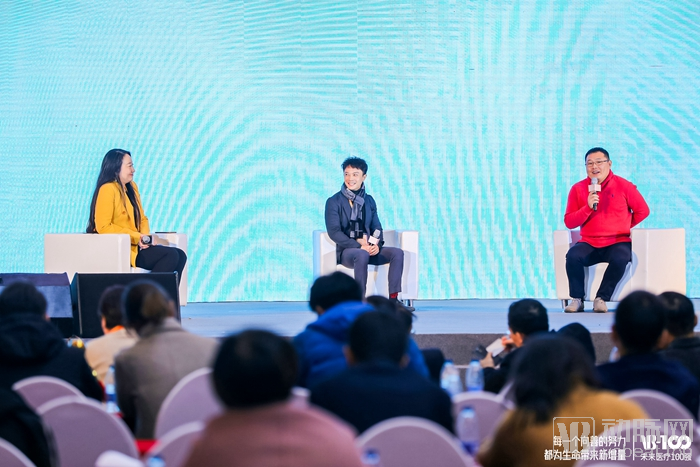
Investment institutions should adapt to changing circumstances by going with the flow and focusing on strengthening their internal capabilities.Li Sirui, General Manager of the Strategic Development Department at Tasly Holding Group, stated that in 2020, investment institutions should adapt to changing circumstances by adjusting their asset allocation strategies and valuation criteria. They should seize opportunities amidst the industry’s structural restructuring—often described as “replacing old industries with new ones”—focus on strengthening internal capabilities, pursue precise and value-driven investments, and maximize the value of post-investment management.
HealthLi assigns a unique “ID card” to each medical device for systematic management.Wang Tongwei, Founder and Chairman of HealthPower Medical, stated that HealthPower primarily focuses on helping hospitals manage their medical equipment effectively, with an emphasis on strengthening both internal capabilities and external performance.
To strengthen its internal capabilities, Jiankangli focuses on building talent pipelines and fostering professional development, while prioritizing R&D innovation to continuously explore more intelligent and informatized approaches to equipment management. In terms of external competencies, Jiankangli tailors solutions to the specific needs of hospitals by assigning a unique “ID card” to each piece of equipment, thereby providing customized solutions that help hospitals enhance their overall operational efficiency in medical asset management. Today, this management model has become an industry benchmark.
New Investment Hotspots
Amidst the surging tide, investment heat in niche sectors during industrial transition deserves the most attention.
Based on 2019 data, innovative drugs, medical devices, high-end healthcare, and consumer retail were typical hot sectors. Which industries or trends deserve attention in 2020? Yao Feng’e, Head of Healthcare at KPMG China, moderated a roundtable discussion with Yan Jingran, Executive Director at Honghui Capital; Qi Fei, Managing Director at Legend Capital; Liu Ying, Partner at SoftBank China; Zhang Minglong, Partner at Aplus Capital; and Guo Qiushan, Executive President of Blue Rainbow and Managing Partner of Miracle Light Venture Capital Fund.
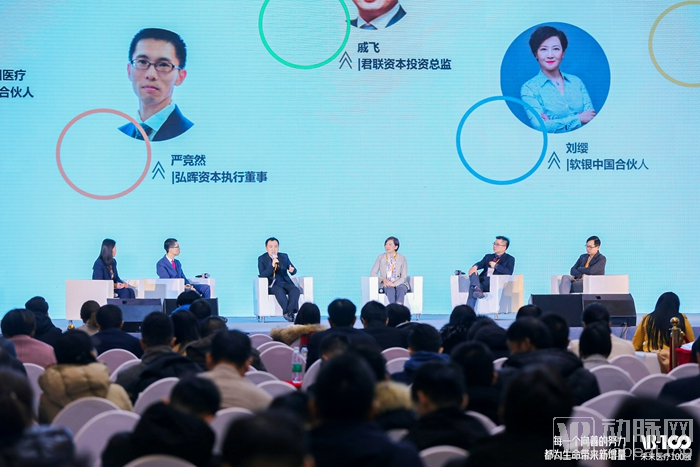
Corporate innovation must genuinely meet market demands and identify paying customers.Yan Jingran, Executive Director at Honghui Capital, stated that the transformation of the healthcare industry has actually created numerous opportunities for enterprises. Although some perceive the sector as sluggish, from the perspective of investment institutions, companies whose products or services align with the policy environment and market demand remain attractive investment targets.
Enterprises need to have their own vision and blueprint for future development, maintain an accurate positioning or self-awareness, ensure that their innovations genuinely meet market demands, and identify clear paying customers.
Now may be the best era for entrepreneurship and investment in China's healthcare industry.Qi Fei, Investment Director at Legend Capital, stated that we are facing opportunities on two fronts. The first involves structural adjustments to existing resources driven by healthcare reform, including the outflow of prescriptions, import substitution, and commercial health insurance. The rise of internet healthcare a few years ago served as a pioneer for these reforms; the true transformation is only just beginning. The second opportunity lies in incremental growth driven by technological innovations stemming from breakthroughs in fundamental life sciences, such as tumor immunology, cell therapy, gene therapy, and RNA technologies. Two decades ago, when we were students, it was often said that the 21st century would be the century of life sciences. Now, this trend appears to be truly materializing.
SoftBank China’s innovative understanding of healthcare enterprises lies in their ability to enhance efficiency, address needs, and enable payment.Liu Ying, Partner at SoftBank China, stated, “Our current understanding of innovation in investment targets is how enterprises leverage their proprietary technologies, specific resources, and forward-looking insights into healthcare policies to identify ways to improve healthcare efficiency that others cannot achieve, or to uncover unmet needs. Furthermore, such efficiency gains and addressed needs must be backed by clear payment capacity.”
The key to corporate development lies in delivering high-quality products and services.Zhang Minglong, a partner at Chuangrui Investment, stated that the rigorous nature of healthcare means there will not be many truly disruptive innovative technologies or products in the medical field. Therefore, the key for enterprises lies in delivering high-quality products and services, rather than merely spinning narratives. Whether for doctors, hospitals, health insurance providers, or patients, products must deliver tangible value to these stakeholders. Additionally, medical products must have market viability and face competition. Achieving a leading position in such competitive landscapes is, of course, the optimal outcome.
Have confidence in the scientific research capabilities of China's innovative enterprises.Guo Qiushan, CEO of Blue Rainbow and Managing Partner of Miracle Light Venture Capital Fund, stated that as a newly established incubation and angel investment institution, the firm focuses primarily on projects in their early stages. Research conducted by China’s top scientific research institutes and scientists has already achieved considerable international perspective and standards; therefore, there should be confidence in pursuing forward-looking industrial incubation.
Investors should prioritize addressing efficiency bottlenecks within the industry chain, identifying which technological advancements can accelerate the development of the entire sector, and focusing on breakthrough technologies that enable new diagnostic and therapeutic possibilities. Throughout the long cycle of translating promising scientific discoveries into commercial products, it is essential to optimize the alignment and integration of key professional elements, including industrial talent, tech capital, and clinical and R&D services.
On December 22, a series of thematic forums will be held, including the Future Healthcare Leaders Summit, Internet Hospital Forum, Smart Hospital Construction Forum, Pharmaceutical Digital Marketing Forum, Biotechnology Forum, and Medical AI Forum. These sessions will foster intellectual exchange, address pressing questions, and offer compelling content not to be missed.

Scan to Learn About the "2019 China Future Healthcare Industry Tree"