

Beijing's First Internet-Based Diagnosis Center Shines with Multidisciplinary Teleconsultations as a Lifeline for Complex Cases
On December 30, 2019, a cross-provincial multidisciplinary teleconsultation was conducted at the WeDoctor General Practice Center in Beijing, located in the Xidan International Building. Upon hearing the definitive diagnosis from the ophthalmology experts in Beijing, Mr. Jiang, who was in Changsha, Hunan Province, felt a great sense of relief. Having long been severely troubled by eye disease, he had finally identified the cause of his condition, and his vision was expected to improve soon.
It is reported that Mr. Jiang experienced a sudden decline in vision early last year, with his visual acuity dropping from 1.5 to 0.1 within just six months. Symptoms such as tinnitus, dizziness, and chest pain left him sleepless throughout the night. As his vision continued to deteriorate, Mr. Jiang visited multiple hospitals in Guangdong and Hunan provinces but remained unable to identify the underlying cause.
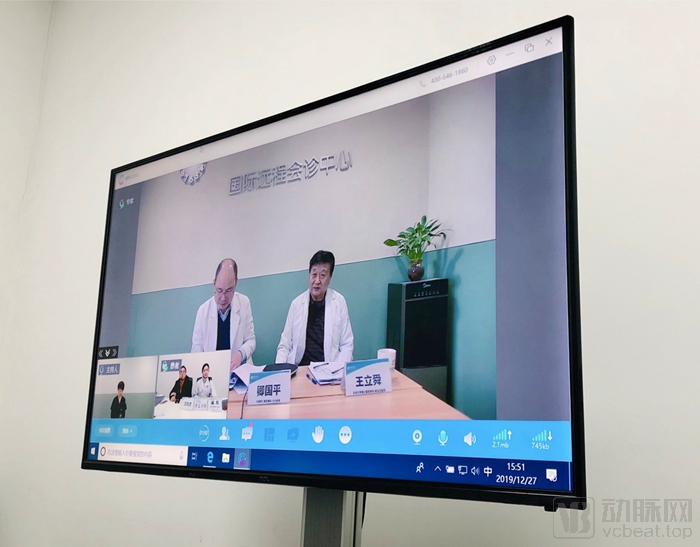
After learning about Mr. Jiang’s condition, Hu Rong, an attending ophthalmologist at Hunan Provincial People’s Hospital, initiated a request for a remote multidisciplinary team (MDT) consultation with the Beijing WeDoctor General Practice Center. This online session connected ophthalmology expert Qing Guoping from Beijing Tongren Hospital, orthopedics expert Wang Lishun from Peking University Third Hospital, and general practice specialists from WeDoctor. Following thorough discussion, the experts identified the most likely cause of the patient’s vision loss and formulated corresponding plans for auxiliary examinations, treatment, and rehabilitation. The patient expressed agreement with the proposed consultation plan.
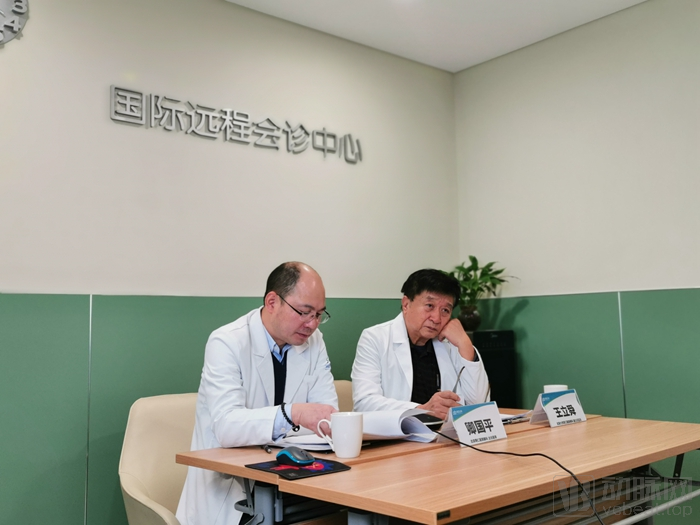
Such remote multidisciplinary consultation scenarios are not uncommon at the Beijing WeDoctor General Practice Center. Since obtaining the first internet diagnosis and treatment license issued by the Xicheng District Health Commission in August 2019 and launching its internet-based diagnosis and treatment base, the center has conducted numerous remote consultations, providing a “convenient channel” for patients who have sought medical care repeatedly without receiving a definitive diagnosis.
It is understood that such multidisciplinary consultations are also part of the “Famous Doctors’ Consultation for 100 Difficult Cases” public welfare campaign series, jointly launched by People’s Daily’s Health Times and WeDoctor.
In recent years, the rapid growth in the number of patient visits in China has placed greater demands on limited medical resources. For leading specialists, it has also become more challenging to identify patients with complex and difficult-to-diagnose conditions who are in genuine need of their expertise.
Following the launch of Beijing’s first internet diagnosis and treatment base, the clinical expertise of top specialists from Beijing’s Grade 3A hospitals can be seamlessly connected via digital networks. Experts from major hospitals are now able to practice “online” at the WeDoctor General Practice Center in Beijing, leveraging an “online + offline” model to decentralize high-quality medical resources and provide diagnosis and treatment for complex and refractory diseases to patients across China.
As a robust support for internet-based diagnosis and treatment bases, the digital healthcare platform WeDoctor has 200 million real-name registered users, connecting more than 3,200 hospitals across 30 provinces in China and over 300,000 doctors. Leveraging physical medical institutions, internet hospitals, and extensive expert resources in multiple cities nationwide, it can precisely match multidisciplinary experts within a short time frame, providing users with professional, efficient, and comprehensive healthcare services.
After participating in two remote multidisciplinary consultations organized by the Beijing WeDoctor General Practice Center, Qing Guoping stated that the Internet has narrowed the distance between doctors and patients, and facilitating online consultations for patients is an initiative worthy of promotion. During the previous consultation, Qing Guoping encountered a very rare case; only after repeated discussions with another chief physician in neurology did he cautiously finalize his consultation opinion.
For young physicians, remote multidisciplinary consultations offer invaluable learning opportunities. Hu Rong stated that discussing each case with experts from different regions via internet connectivity constitutes a process of research and re-learning, which helps enhance their understanding and capabilities in disease diagnosis and treatment.