

JunLian Healthcare New Drug Bulletin Issue 36 Highlights Key Advances in Oncology, Autoimmune Diseases, Vaccines, and Neurology
Dec 23, 2019 18:00
CST Updated
18:00

This week, there were 8 new drug data entries, including 4 for oncology, 2 for rheumatology and immunology, 1 for vaccines, and 1 for neurology.
❖Seattle Genetics’ HER2-targeting TKI, tucatinib, has received Breakthrough Therapy Designation for use in combination therapy for patients with advanced or metastatic breast cancer. In the Phase 3 HER2CLIMB trial, the experimental group demonstrated a significant improvement in overall survival (OS) (21.9 months vs. 17.4 months). Notably, the subgroup of patients with brain metastases (47% of participants) showed favorable progression-free survival (PFS), with a 52% reduction in the risk of disease progression or death. In the small-molecule segment for HER2-positive breast cancer, many companies have attempted to make breakthroughs in treating brain metastases—an area where small molecules hold advantages over large-molecule agents such as Herceptin. However, due to the blood-brain barrier, no blockbuster products have emerged to date, leaving substantial unmet clinical needs in this field. PUMA’s neratinib was once highly anticipated, but its commercial adoption has been somewhat limited by the occurrence of severe diarrhea (Grade 3 or higher) in nearly 40% of patients. Currently, numerous Chinese companies are investing in this therapeutic area, hoping to achieve superior outcomes.
❖ Gilead has submitted a New Drug Application to the FDA for the oral JAK1 inhibitor filgotinib for the treatment of moderate-to-severe rheumatoid arthritis (RA). Gilead also utilized a Priority Review Voucher, which is expected to shorten the review timeline. Filgotinib is a highly selective JAK1 inhibitor discovered and developed by Galapagos; Gilead entered into an agreement with Galapagos in late December 2015 valued at up to $2 billion. In the field of JAK inhibitors, Pfizer’s Xeljanz and Eli Lilly’s Olumiant are already on the market as pan-JAK inhibitors. However, AbbVie’s upadacitinib, a highly selective JAK1 inhibitor, serves as a direct head-to-head competitor to filgotinib. AbbVie used a Priority Review Voucher (purchased for $350 million) to accelerate the approval of upadacitinib, which has now successfully received marketing approval in both the United States and the European Union. JAK and BTK have been blockbuster targets in the small-molecule domain over the past three years, continuously expanding their indications in solid tumors and hematologic malignancies, respectively. While BTK inhibitors have already seen domestic production in China, it is anticipated that locally developed highly selective JAK inhibitors will soon emerge in the Chinese market.
AstraZeneca/Daiichi Sankyo’s Breast Cancer ADC Receives FDA Accelerated Approval
The FDA announced the accelerated approval of Enhertu (fam-trastuzumab deruxtecan-nxki, formerly known as DS-8201), a HER2-targeting antibody-drug conjugate (ADC) co-developed by Daiichi Sankyo and AstraZeneca, for the treatment of patients with unresectable or metastatic HER2-positive breast cancer.
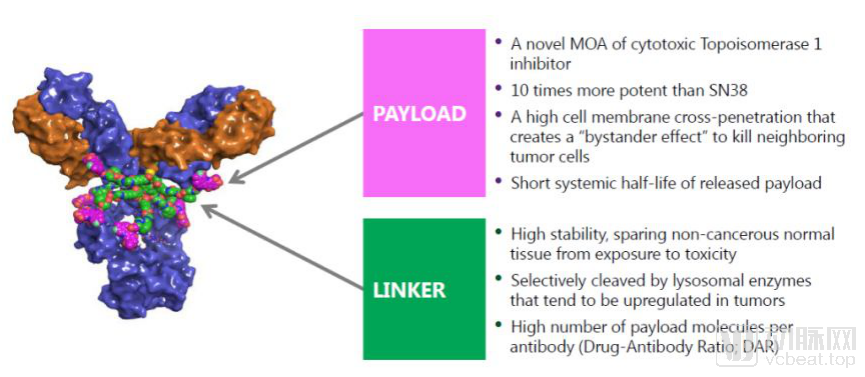
Enhertu is an antibody-drug conjugate (ADC) that utilizes Daiichi Sankyo’s DXd ADC technology platform, incorporating multiple technological innovations in the cytotoxic payload and linker components of the ADC.
Phase 2 clinical study: The 184 patients enrolled in this trial had received a median of 6 prior lines of therapy, including ado-trastuzumab emtansine (T-DM1), trastuzumab, and pertuzumab.
Patients treated with DS-8201 achieved an objective response rate (ORR) of 60.9% and a disease control rate (DCR) of 97.3%. The median duration of response (DOR) was 14.8 months, and the median progression-free survival (PFS) was 16.4 months.
DXd ADC Technology Platform
Data source: Daiichi Sankyo
Bristol Myers Squibb Submits Regulatory Application for CAR-T Therapy to Treat Large B-Cell Lymphoma
Bristol Myers Squibb (BMS) Submits Biologics License Application (BLA) to the U.S. FDA for Lisocabtagene Maraleucel (liso-cel), a CD19-Targeted CAR-T Therapy, for the Treatment of Relapsed/Refractory (R/R) Large B-Cell Lymphoma (LBCL)
Liso-cel is an autologous CAR-T therapy targeting the CD19 antigen. Its uniqueness lies in the controlled ratio of CD8-positive to CD4-positive T cells within the CAR-T product, thereby enabling better management of the therapy’s adverse effects.
Enrollment of patients with refractory/relapsed large B-cell lymphoma, with primary endpoints of ORR and CR
The overall response rate reached 73%, with 53% of patients achieving complete response.
UroGen Pharma’s Bladder Cancer Breakthrough Therapy Granted Priority Review
UroGen Pharma announced that the FDA has accepted its New Drug Application (NDA) for UGN-101, a gel-based therapy for the treatment of patients with low-grade upper tract urothelial carcinoma (LG-UTUC), and has granted the drug Priority Review, with a target action date of April 18 next year.
UGN-101 is a gel-based medication with mitomycin as its active ingredient. It can be instilled via a standard intravesical catheter directly to the patient’s lesion site. The formulation is liquid at room temperature and transitions to a semi-solid state at body temperature. This property enables sustained drug release at the lesion site, allowing prolonged exposure of urothelial tissue to mitomycin, thereby facilitating non-surgical tumor ablation.
A Phase III clinical trial enrolling 71 patients, 34 of whom had tumors deemed unresectable.
In the overall intent-to-treat (ITT) population, 59% of patients treated with UGN-101 achieved complete response (CR); the duration of response (DOR) reached 6 months in 89% of patients and 12 months in 84% of patients. In the subgroup of patients with tumors unresectable by surgery, the rates of CR and DOR at 12 months were consistent with those observed in the overall ITT population.
Gilead Submits New Drug Application for JAK1 Inhibitor Using Priority Review Voucher
Gilead Sciences announced that it has submitted a New Drug Application (NDA) to the U.S. FDA for the JAK1 inhibitor filgotinib, intended for the treatment of adult patients with moderate-to-severe rheumatoid arthritis, utilizing its Priority Review Voucher.
Filgotinib is a selective JAK1 inhibitor jointly developed by Gilead Sciences and Galapagos. JAK kinase-dependent cytokines are associated with the pathogenesis of many inflammatory and autoimmune diseases.
In a randomized, double-blind study with placebo and active controls, patients who had previously received methotrexate (MTX) but exhibited an inadequate response were treated with filgotinib, placebo, or adalimumab. All patients continued concurrent MTX therapy.
After 12 weeks, the proportion of patients treated with filgotinib who achieved an ACR20 response (one of the American College of Rheumatology assessment criteria) was significantly higher than that in the placebo group, thereby meeting the primary endpoint of the trial.
FDA Approves First Ebola Vaccine for Market Launch
The U.S. FDA Approves Merck’s Ervebo Vaccine for the Prevention of Ebola Virus Disease Caused by Zaire Ebolavirus Infection in Individuals Aged 18 Years and Older, Marking the First Preventive Vaccine Against Ebola Virus Disease Approved by the FDA
Ervebo is a genetically engineered, live-attenuated vaccine composed of a modified vesicular stomatitis virus (VSV) and the key glycoprotein from the surface of the Ebola virus.
A study conducted during the 2014–2016 Ebola virus disease (EVD) outbreak in Guinea was a randomized, controlled vaccination trial in which 3,537 individuals exposed to Ebola virus and contacts of laboratory-confirmed EVD cases received either “immediate” or “delayed” (21-day) vaccination with Ervebo.
In a comparison of EVD cases between 2,108 individuals in the “immediate” vaccination group and 1,429 individuals in the “delayed” vaccination group, Ervebo was confirmed to be 100% effective: no cases of EVD symptom onset were observed in the “immediate” vaccination group, with no recorded Ebola cases occurring from 10 days post-vaccination onward. In contrast, 10 EVD cases were observed in the 21-day “delayed” group.
ADC Co-Developed by Seattle Genetics and Astellas Pharma Hits the Market
U.S. FDA Approves Padcev (enfortumab vedotin-ejfv), Jointly Developed by Seattle Genetics and Astellas, for the Treatment of Patients with Locally Advanced or Metastatic Urothelial Carcinoma
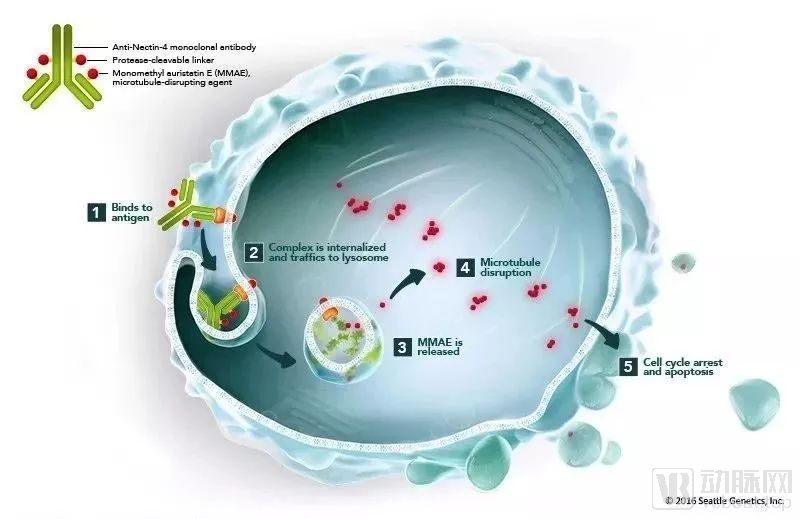
Padcev is an antibody-drug conjugate that links an anti-Nectin-4 monoclonal antibody to a microtubule inhibitor. Nectin-4 protein is a cell adhesion molecule highly expressed in urothelial carcinoma.
Enrolled patients with urothelial carcinoma were treated with Padcev, having previously received platinum-based chemotherapy and PD-1/PD-L1 inhibitors.
The overall response rate was 44%, with a complete response rate of 12% and a partial response rate of 32%. The median duration of response was 7.6 months.
Mechanism of Action of Padcev
Data Source: Seattle Genetics
GSK Lupus Therapy Meets Phase 3 Endpoint
GSK announced that its intravenous infusion therapy, Benlysta (belimumab), met the primary and all secondary endpoints in the Phase 3 BLISS-LN trial for patients with lupus nephritis (LN). GlaxoSmithKline plans to submit regulatory applications for this indication in the first half of 2020.
Benlysta is a humanized monoclonal antibody that specifically binds to B-lymphocyte stimulator (BLyS), inhibiting B-cell survival. It effectively suppresses autoreactive B cells and prevents their differentiation into immunoglobulin-producing plasma cells.
A randomized, double-blind, placebo-controlled Phase 3 clinical trial. The primary endpoint of the trial was the proportion of patients achieving primary early renal response (PERR) criteria.
After two years of treatment, 43% of patients receiving Benlysta in combination with standard therapy achieved PERR, a rate significantly higher than that observed in patients treated with placebo plus standard therapy (32%, p=0.0311).
Axsome Therapeutics’ New Depression Drug Meets Primary Endpoint in Phase 3 Trial
Axsome Therapeutics Announces That Its Oral Innovative NMDA Receptor Antagonist AXS-05 Achieved the Primary Endpoint in the Phase 3 GEMINI Trial, Demonstrating Rapid and Sustained Significant Improvement in Depressive Symptoms in Patients with Major Depressive Disorder (MDD)
AXS-05 is a novel oral NMDA receptor antagonist. It consists of dextromethorphan and bupropion, utilizing Axsome Therapeutics’ metabolic inhibition technology.
A randomized, double-blind, placebo-controlled Phase 3 clinical trial involving 327 adult patients with moderate-to-severe major depressive disorder (MDD). The primary endpoint was depressive symptoms, while secondary endpoints included disease severity, functional impairment, and quality of life.
The trial used the Montgomery-Åsberg Depression Rating Scale (MADRS) to assess patients. The MADRS score in the AXS-05 group decreased by 16.6 points from baseline after 6 weeks of treatment, compared with a decrease of 11.9 points in the placebo group.
❖ Boehringer Ingelheim and Pharmaxis Announce Discontinuation of BI 1467335, an SSAO/VAP-1 Inhibitor, for the Treatment of NASH Due to Drug-Drug Interactions, Despite No Direct Failure in Latest Clinical Study
❖Biohaven Pharmaceutical announced that its CGRP receptor antagonist, vazegepant, met the primary endpoint in pivotal Phase 2/3 clinical trials for the treatment of patients with acute migraine. Vazegepant is the first and only small-molecule CGRP receptor antagonist administered intranasally for the treatment of migraine patients.
❖Latest results from the pivotal global Phase III LUSTER-1 and LUSTER-2 trials of Novartis’ investigational asthma drug fevipiprant show that, over the 52-week treatment period, neither dose of fevipiprant met the clinically relevant threshold for reducing the rate of moderate-to-severe exacerbations compared with placebo.
❖Data from the Phase III ASPEN clinical trial comparing BeiGene’s BTK inhibitor zanubrutinib with ibrutinib for the treatment of patients with Waldenström macroglobulinemia showed that zanubrutinib did not achieve statistically significant superiority over ibrutinib in the primary endpoint of complete response and very good partial response rates.