

Digital Transformation as a Solution to Japan's Healthcare Industry Challenges — Insights from Takumi Ohmoto, Nomura Research Institute [2019VB100]
From December 20 to 22, the “2019 Top 100 Future Healthcare” forum, hosted by VCBeat and co-organized by KPMG China, Legend Capital, BV Baidu Ventures, Weilai Capital, Puhua Capital, Tsinghua Nomura China Research Center, Changling Capital, Legend Star, Yuanjing Capital, the Internet Hospital Branch of the Chinese Association of Research Hospitals, Aimeda, Zero2IPO Capital, and Yanzhi, kicked off at Jiuhua Villa in Beijing.
This year’s conference attracted over 5,000 registrants and featured 15 forums, namely: Future Healthcare Summit, Top 100 Enterprises Summit, Leadership Summit, Health and Medical Fund Partners Summit, China-Japan Health Industry Development Forum, Innovative Drugs Forum, Innovative Health Insurance Forum, Digital Pathology and Precision Diagnosis Forum, Health Management Forum, Medical Devices Forum, Internet Hospital Forum, Smart Hospital Construction Forum, Pharmaceutical Company Digital Marketing Forum, Biotechnology Forum, and Medical Artificial Intelligence Forum, covering 11 major hot topics of 2019.
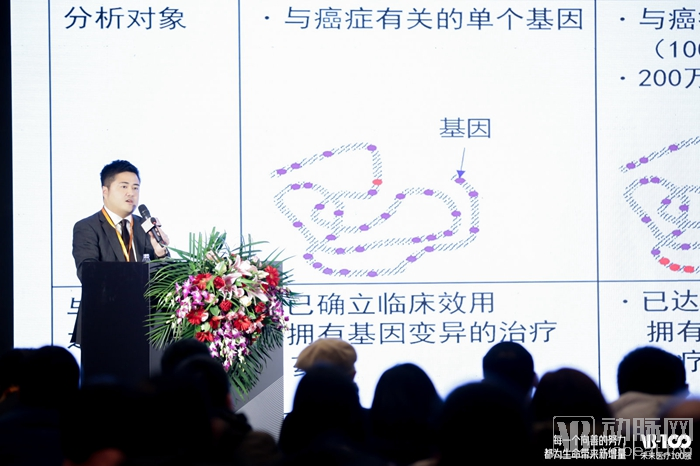
At the China-Japan Health Industry Development Forum held on the afternoon of December 21, Takumi Omoto, from the Consulting Division of Nomura Research Institute, Ltd., delivered a keynote speech titled “The Current State of Digitalization in Japan’s Health Industry.” This article presents an edited compilation of his insightful remarks.
The following is a transcript of the speech (abridged):
From a national perspective, the QCA framework is indispensable in the healthcare industry. Q stands for Quality, referring to service quality; A stands for Accessibility, indicating the convenience of accessing medical care; and C stands for Cost, referring to expenses. Japan holds advantages in both Quality and Accessibility, but still faces challenges in Cost: the proportion of healthcare expenditure to GDP is high, and the aging population makes it difficult to control medical costs.
Under Japan’s current healthcare and long-term care systems, the funding required for the universal social insurance system—covering 100% of the population—is derived entirely from social insurance premiums and taxation. For medical expenses, patients generally bear 30% of the costs (subject to age and income; in certain cases, the patient share is reduced to 10% or 20%). For long-term care expenses, patients typically pay 10% (depending on income; in some cases, 20%). However, the Japanese government sets caps on out-of-pocket expenses. Moreover, prices for medical and long-term care services are largely determined by the government, while patients retain the freedom to choose their physicians, clinics, and hospitals.
As population aging intensifies, the old-age dependency ratio is projected to rise from 1:3.6 in 2000 to 1:1.4 by 2040. Consequently, medical and long-term care costs are expected to continue increasing in the coming years.
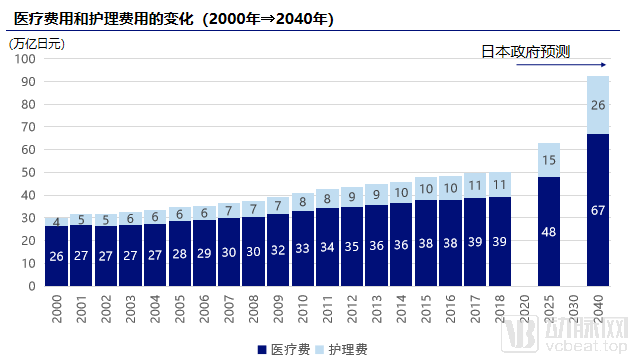
Source: Data from the Ministry of Health, Labour and Welfare
Against this backdrop, there is a growing expectation to leverage digital technologies to enhance efficiency (reducing costs) and optimize service content (improving quality assurance). Accordingly, the Japanese government has set 2040 as its target year to establish a society in which citizens can maintain their long-term health while continuing to play active roles. To achieve this goal, the government has formulated three types of initiatives aimed at ensuring the sustainability of social security through measures such as reassessing public funding and individual out-of-pocket expenses.
Diverse Forms of Employment and Social Participation: Ensuring employment opportunities that enable individuals to work until age 70; expanding the scale of hiring for non-fresh graduates; promoting side businesses and part-time work; and advancing pension system reforms in response to the era of 100-year lifespans.
Extending Healthy Life Expectancy: By 2040, the healthy life expectancy for both men and women will be extended by more than three years, reaching over 75 years. This will be achieved by encouraging healthy lifestyle habits, preventing diseases, preventing disease progression to severe stages, advancing care prevention services, and promoting the prevention and management of frailty and dementia.
Reform of Healthcare and Welfare Services: By 2040, achieve an increase of more than 5% (7% for physicians) in the volume of services delivered per unit of time. Promote the practical application of robotics, AI, and ICT; advance health and medical data reform; implement organizational and management reforms; expand operational scale; and strengthen collaboration.
In terms of digital healthcare service reform, the Japanese government has set four key priority areas:
1. Advance the application of genomic medicine and AI
In the field of genomics, China is leveraging whole-genome sequencing data and other resources nationwide to identify the etiologies of diseases such as cancer, advance the development of diagnostic and therapeutic approaches, and promote the realization of personalized medicine.
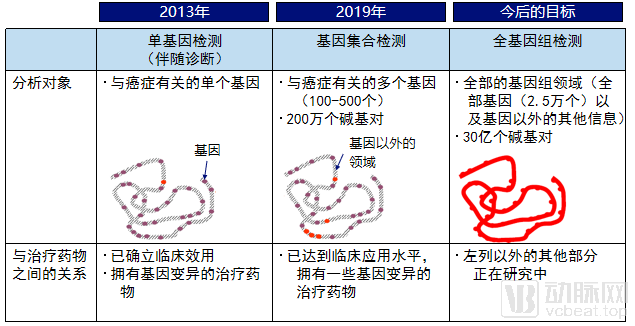
Source: Prepared by NRI based on materials such as the Ministry of Health, Labour and Welfare’s “Approach to Promoting Future Healthcare Data Reform.”
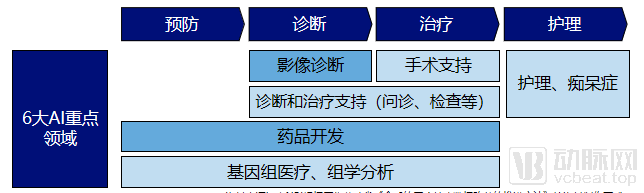
In the field of AI, efforts are being made to develop new diagnostic and therapeutic methods in the future, improve the healthcare environment so that cutting-edge medical services can be accessed anywhere across China, and reduce the burden on medical and nursing professionals, allowing them to focus more on patient care. Six key AI priority areas have been identified for resource allocation:
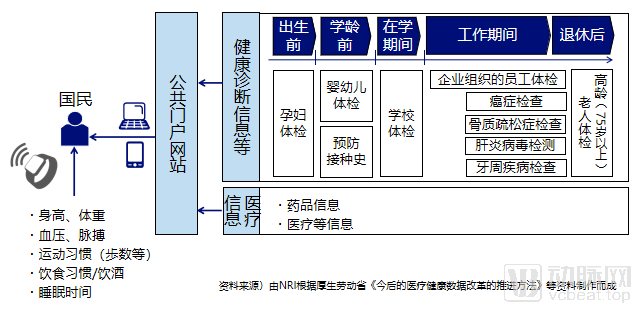
Second, advance PHR (Personal Health Records)
By providing individuals with feedback on their Personal Health Records (PHR) held by government and healthcare institutions, this approach helps them modify personal lifestyle habits and improve their health status.
Third, promote the application of clinical information in healthcare and nursing
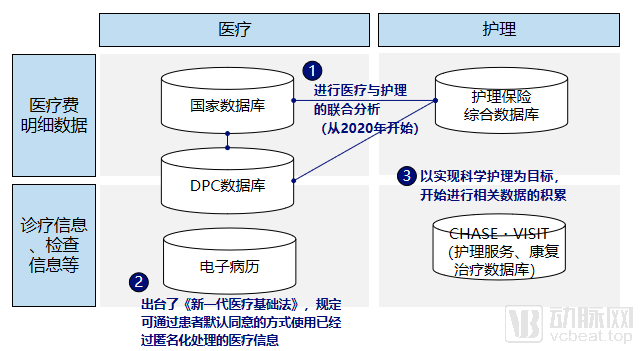
Japan aims to establish a nationwide system for accessing patients’ medical information, enabling healthcare providers anywhere in the country to retrieve and reference historical diagnosis and treatment records, thereby delivering the most appropriate medical care and high-quality nursing services. Furthermore, the initiative seeks to reduce issues such as duplicate prescribing. It also aims to alleviate the workload of nursing staff by promoting the adoption of information and communications technology (ICT) in long-term care facilities.
Fourth, Promote the Effective Utilization of Databases
Promote the development of big data infrastructure in the healthcare and nursing sectors. Historically, medical data has been fragmented; however, the future trend lies in fully integrating these disparate sources into a unified, comprehensive database. Last year, Japan enacted the New Generation Medical Infrastructure Act, which introduced changes to the “patient consent” framework. Previously, explicit individual consent was required for the use of personal information. Under the revised law, data may be utilized provided it is anonymized, unless patients explicitly opt out.
1. Health Management Services
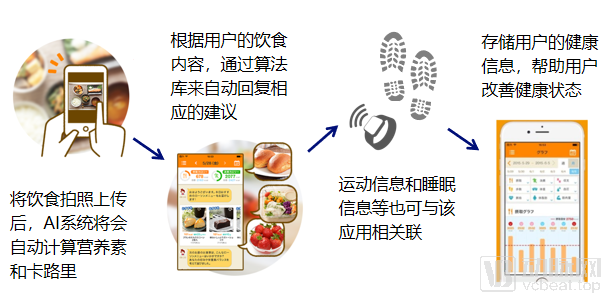
For example, Link&Communications provides health improvement services specifically tailored to dietary needs.
Second, Commercial Insurance
For example, Dai-ichi Life Insurance not only provides “Protection” services for patients with dementia but is also committed to developing and marketing “Prevention” insurance products aimed at preventing dementia.
Third, Clinical Examination
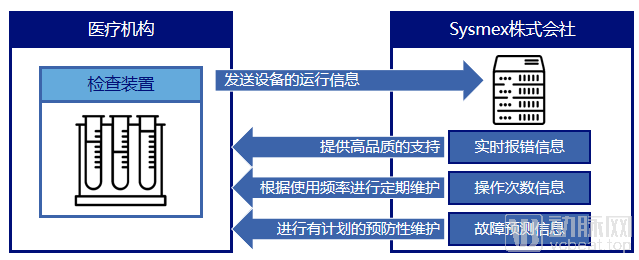
For example, Sysmex Corporation, a medical device company engaged in both manufacturing and sales, enables its diagnostic equipment to provide real-time feedback on operational status. The backend system analyzes this data to facilitate preventive maintenance, thereby enhancing equipment operational efficiency.
Fourth, Pharmaceutical Manufacturing
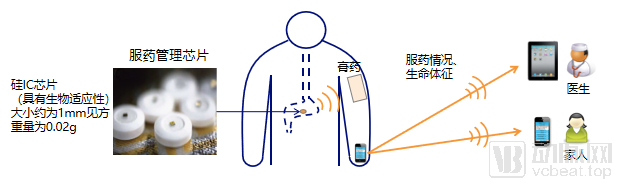
For instance, Otsuka Pharmaceutical launched a digital therapeutic in the United States that incorporates ingestible micro-sensors. These sensors detect whether patients have taken their medication, thereby improving adherence and helping to reduce healthcare expenditures.
5. In-Hospital Communication Software
For instance, Jikei University School of Medicine introduced an information communication application for medical staff, which successfully shortened diagnosis time and length of hospital stay, thereby reducing direct medical costs.
By leveraging chat-enabled software, healthcare professionals can share various medical images—including CT scans, MRIs, and electrocardiograms (ECGs)—as well as live operating room footage in real time. As a closed social networking service (SNS), the platform restricts information exchange to pre-registered medical personnel only. The use of this software has helped reduce physicians’ diagnostic time by 40 minutes, direct medical costs by 8%, and hospital length of stay by 15%.
Sixth, Robotics
For instance, Juntendo Urayasu Hospital utilizes robots for comprehensive patient guidance and psychological care for inpatients. The hospital serves approximately 2,000 patients daily. To enhance service quality, particularly during the busy morning hours, it employs Pepper robots to provide comprehensive guidance, including information on consultation procedures and hospital facilities.
It is worth noting that although care robots have not yet achieved widespread adoption, their technology has already attracted attention in the nursing field.