Internet Hospitals Enter a Golden Era as Companies Reveal Revenue Figures and Release the '2019 Internet Hospital Report' [VB100]

Yuanxin Technology
Internet Medical Service Provider

Beijing Universe In Nutshell Technology
Provider of Online Learning Service Platform for Traditional Chinese Medicine

POMDOCTOR LIMITED
Pharmaceutical E-commerce Service Provider

Yuntai Network
One-stop Solution Provider for Internet Healthcare
December 20–22, 2019, the 2019 Future Healthcare 100 Conference, themed “New Growth in Life,” was held at Jiuhua Resort in Beijing. The conference comprised a total of 15 forums.
On the morning of the 22nd, as one of the 15 forums, the Internet Hospital Innovation and Development Forum was held as scheduled, jointly hosted by VCBeat, the Internet Hospital Branch of the Chinese Research Hospital Association, and Eggshell Research Institute.
Although the conference has entered its third day, attendees’ enthusiasm remains undiminished. The venue is not only packed to capacity, but the aisles are also crowded with people. Approximately 100 companies are participating, with total attendance reaching 300.
Such a scenario is no accident. With the arrival of policy certainty, the internet hospital sector holds limitless potential. This also reflects the industry’s recognition of VCBeat’s five years of continuous tracking, reporting, research, and support for the growth of the internet healthcare industry.

Internet Hospital Innovation Forum Draws a Packed House
In 2019, internet hospitals entered a new phase of development. Not only did the number of such institutions reach a new peak, but a wider variety of enterprises also became involved, including pharmaceutical companies, medical device manufacturers, and insurance providers. Building on their established scale, incumbent internet hospitals have honed their expertise in areas such as digital healthcare networks, pharmaceutical e-commerce, chronic disease management, and medical science popularization. Meanwhile, emerging internet hospitals have given rise to specialized platforms focusing on traditional Chinese medicine (TCM), medical aesthetics, and obstetrics and gynecology. Consequently, the overall landscape of internet hospitals has exhibited a trend toward vertical specialization.
So, what changes occurred in internet hospitals in 2019? What are the various vertical models? And what are the future opportunities and ultimate forms? More than ten guests from industry research associations and internet healthcare companies discussed and provided outlooks on these issues, with two companies also disclosing their latest revenue data.
At the forum, VCBeat also released the “2019 Internet Hospital Report: From Model Transformation to Service Innovation,” showcasing its latest research findings. Instructions for accessing the report are provided at the end of this article.
In 2018, the General Office of the State Council issued the “Opinions on Promoting the Development of ‘Internet+’ Medical Health,” followed by the release of three supporting documents related to internet-based healthcare by the National Health Commission and the National Administration of Traditional Chinese Medicine. In 2019, the National Healthcare Security Administration issued the “Guiding Opinions on Improving Pricing for ‘Internet+’ Medical Services and Medical Insurance Payment Policies,” and various localities subsequently formulated a series of supporting policies.
Against this backdrop, as of October 2019, there were already 269 internet hospitals across China.
“It is estimated that the number will reach around 300 by the end of the year,” said Wen Jian, President of the Internet Hospital Branch of the Chinese Research Hospital Association, in his speech. He stated that the current policy environment is a product of the integration of internet technology with the realities of China’s healthcare industry, playing a significant role in promoting industry development and facilitating medical access. “The construction of internet hospitals is currently at its best phase.”

Wen Jian, President of the Internet Hospital Branch of the Chinese Research Hospital Association
However, internet hospitals are still in their nascent stage, with certain contradictions and issues remaining; Wen Jian has provided a systematic overview of these challenges.
Currently, the silo effect in big health and medical data remains severe, and technical standards are not unified; initial and follow-up consultations across different medical institutions require further standardization and clarification by the industry.
Meanwhile, information security is the baseline for internet hospitals; patient privacy must be protected while ensuring interoperability. Given the cross-regional nature of the internet, how can the legitimate rights and interests of both doctors and patients be safeguarded? This requires joint efforts from the legal, ethical, and industry sectors to promote the establishment of standards. Furthermore, current regulatory frameworks across different regions remain inconsistent in terms of granularity and models.
At the capital level, it is essential to balance the intensity of investment with the pace of development in the healthcare industry. “Healthcare investment is not like opening an ordinary commercial store; one cannot simply calculate profitability or time to IPO based on metrics such as revenue per patient, daily patient volume, or a fixed timeframe,” said Wen Jian. He believes that those seeking quick profits should look beyond the healthcare sector.
Regarding the current state of talent, Wen Jian pointed out that resources of renowned medical experts are limited, and the hospitals and platforms they can serve are also constrained. It is essential to develop curricula, compile teaching materials, and conduct training tailored to the characteristics of internet hospitals to ensure an adequate supply of talent.
In response to the aforementioned issues, Wen Jian also put forward multi-faceted recommendations. For example, the government should strengthen overall planning, increase fiscal investment, formulate industry standards, build shared platforms, improve laws and regulations, and demonstrate the feasibility and viability of constructing public utility platforms.
Wen Jian stated that the greatest advantages of internet hospitals lie in the openness, integration, and shared nature of their platforms. In the future, it is hoped that the involvement of commercial insurance will gradually transform healthcare delivery models; that public demand will drive the formation of a closed-loop system for internet medical services; and that key entry points for social capital into internet healthcare will be leveraged to promote the translation and application of information technologies such as 5G, artificial intelligence, and blockchain, thereby restructuring the medical industry chain. Meanwhile, the role of academic organizations within the internet hospital sector should be utilized to guide and standardize industry development.
Since the beginning of this year, the Chinese government has implemented a series of reforms in the pharmaceutical sector, with policies being rolled out at an accelerated pace. The centralized volume-based procurement of drugs has made price reductions for generic drugs an inevitable trend, while national medical insurance negotiations have also placed pricing pressure on innovative drugs. These developments will trigger chain reactions affecting clinical diagnosis and treatment, medication practices, and insurance reimbursement. Against this backdrop, how should pharmaceutical manufacturers and distribution companies adapt their strategies? Luo Dongtao, Co-founder and Chief Marketing Officer (CMO) of Miaoshou Doctor, shared his insights.

Luo Dongtao, Co-founder and CMO of Miaoshou Doctor
Luo Dongtao believes that the payment structure for medication costs—currently split among basic medical insurance, out-of-pocket expenses, and commercial insurance in a 5:4:1 ratio—may shift to a 4:3:3 ratio in the future. The sales distribution of prescription drugs between in-hospital and out-of-hospital channels, currently at an 8:2 ratio, may also evolve into a 4:3:3 split among public hospitals, internet-based prescription sharing platforms and pharmaceutical e-commerce, and community healthcare settings. Furthermore, the proportion of visits to physical hospitals is expected to decline, while the rate of follow-up consultations via internet hospitals is projected to increase.
The shifting landscape of the in-hospital and out-of-hospital pharmaceutical markets is posing significant challenges for pharmaceutical companies. Luo Dongtao stated that with off-patent originator drugs and generics seeing substantial price cuts, companies must adopt low-cost marketing strategies; the clustered launch of new specialty drugs has turned a blue ocean into a red ocean; and as pilot initiatives for the outflow of prescription drugs are being explored, there is an urgent need for enterprises to develop new sales models.
How to Respond to Challenges? Luo Dongtao’s Recommendation: Pharmaceutical companies need to accelerate the R&D and market launch of innovative drugs, improve the accessibility of innovative drugs, and speed up negotiations for inclusion in the national medical insurance program; expand into untapped markets in third- and fourth-tier cities as well as counties and townships, shifting from a product-centric to a patient-centric approach; transform marketing models, where new technologies represented by internet healthcare can create greater opportunities.
How Should We Promote the Outflow of Prescriptions and Open Up New Channels for Drug Sales? Luo Dongtao Summarizes Some Practical Experiences.
For example, Miaoshou Doctor’s physical pharmacy network has expanded to 70 cities, comprising over 200 pharmacies located adjacent to Grade A tertiary hospitals and DTP (Direct-to-Patient) pharmacies, with more than 300 new and specialty drugs in its product portfolio. Leveraging its online and offline sales networks, Miaoshou Internet Hospital has intensified its focus on internet-based medical consultations, achieving an average daily traffic of 5 million visits, and has established 30 hospital prescription-sharing platforms. Furthermore, Miaoshou Doctor founded Yuanxin Huibao, which not only operates as an insurance broker but also collaborates with insurance companies to jointly design insurance products, thereby deeply engaging in the insurance sector.
The aforementioned businesses have established a comprehensive system encompassing the medical supply chain, pharmaceutical supply chain, and payment-side supply, upgrading from single-drug delivery to a whole-course disease management center.
Luo Dongtao revealed that, driven by the establishment and integration of a series of business operations, Miaoshou Doctor’s drug sales surged from RMB 400 million last year to RMB 4 billion this year. “In the future, we hope to leverage new technologies and new models to unleash greater growth potential in the O2O channel for prescription drugs.”
After transforming the consumer sector, the internet has gradually entered the healthcare industry. Multiple internet-related keywords, such as artificial intelligence, 5G, big data, information traceability, and blockchain, are also profoundly impacting healthcare. As a new product of the industry, internet hospitals can be analyzed from multiple dimensions. Hao Jianyao, Vice President of Jianke, provided a review and outlook from the perspective of scenario migration.

Hao Jianyao, Vice President of Jianke
“Previously, blood pressure measurements required visits to hospitals or pharmacies. Now that blood pressure monitors have become widely available, there is no longer a need to make special trips to these locations for testing,” said Hao Jianyao. He noted that this shift is driven by reductions in both actual and usage costs, leading to a migration of medical scenarios—a trend that will continue to expand in the future.
Scenario migration signifies a variety of market opportunities. For instance, Taobao represents the migration of shopping scenarios, while online video and audio represent the migration of entertainment scenarios. As healthcare scenarios gradually shift from within hospitals to outside settings, new possibilities for innovation emerge.
The opportunity in internet healthcare lies in the efficiency revolution driven by technology. For instance, online prescription renewals for follow-up visits by patients with chronic diseases may take only two minutes, whereas the same process at a hospital would take at least several hours. Additionally, the technological revolution itself, such as AI, has already yielded very promising results by enabling machines to handle many of physicians’ routine tasks. As technology continues to mature, efficiency gains are expected to increase further.
How to Make an Impact in Healthcare Scenario Migration? Hao Jianyao Shares Jianke’s Exploratory Model.
This year, building on its existing pharmaceutical e-commerce and internet hospital operations, Jianke introduced the H2H (Hospital to Home) model, which primarily consists of four core components: Jianke Doctors, Jianke Online Pharmacy, Jianke Chronic Disease Management Center, and Jianke New Media. Among these, Jianke Doctors provides online follow-up consultations, with over 100,000 online physicians and a cumulative annual volume of 1.59 million electronic prescriptions. The online pharmacy focuses on enriching its SKU offerings and strengthening its supply chain. Meanwhile, the Chronic Disease Management Center leveraged AI technology to reduce its call center seats from 1,500 to 300, while simultaneously increasing the number of patients served several fold.
The four major modules work in synergy to create an H2H-model smart hospital. “In the future, integrating health checkups, insurance, home-based elderly care, and medical finance will unlock immense market potential that is difficult to predict,” said Hao Jianyao.
During the speech, Hao Jianyao also shared business performance data. Thanks to the improvement of the H2H ecosystem, in October this year, the revenue from Jianke Doctors alone reached over 49 million yuan, compared to just over 400,000 yuan during the same period last year.
Hao Jianyao believes that there are still many opportunities in the internet healthcare industry, and even during a capital winter, opportunities remain.
This year, in addition to the influx of diverse enterprises into the trend of internet hospitals, public hospitals are also extensively building internet hospitals or conducting in-depth operations on existing platforms. So, how should public hospitals build and operate their internet hospitals? In response, Huang Zhengwei, Co-founder and General Manager of Yuntai Network, proposed a patient-centered internet healthcare ecosystem.

Huang Zhengwei, Co-founder and General Manager of Yuntai Network
First, an internet hospital serves as the online campus of a public hospital; however, it should not be regarded merely as an extension of the offline campus or a simple application of online tools. It must have independent operational boundaries, such as clearly defining the scope of services provided by the online campus. Additionally, it should be equipped with a dedicated operations team, clearly identified medical and nursing staff, and its own set of independent regulations.
After establishing the internet hospital platform for public hospitals, it remains merely a platform and framework; therefore, services in three key areas should also be provided.
First, it is an extension of hospital services, such as online consultations and follow-ups, whereby the hospital’s core resources deliver services via the platform;
Second, service aggregation should be implemented. Service providers specializing in chronic disease management for specific conditions and wearable devices, among others, can join the platform to offer their respective services. Furthermore, given the limited availability of physician resources—particularly specialist expertise—within individual hospitals, aggregation is also necessary. This involves integrating medical teams from medical consortiums and surrounding community healthcare institutions. Overall, the goal is to consolidate all health-related teams onto the internet hospital platform.
Third, after aggregating a sufficient variety of service types, conduct in-depth operations for vertical services such as specialty care and chronic disease management, thereby achieving a patient-centric transformation.
Based on these concepts, Yuntai Network developed a mobile app for Peking Union Medical College Hospital (PUMCH). The app has become the primary channel for appointment registration and has enhanced and upgraded dozens of features, including outpatient check-in and blood draw scheduling. Currently, Yuntai Network is assisting PUMCH in applying for an internet hospital license. In addition, Yuntai Network can build aggregated platforms for regional internet hospitals, such as the Guangdong Cloud Hospital, which has already onboarded more than 70 large hospitals within Guangdong Province.
Currently, Yuntai Network has established deep collaborations with 700 hospitals, connected 6,000 hospitals, and onboarded 110 service providers.
“We will help public hospitals establish and operate internet hospitals by leveraging compliant products, mature architectures, in-depth operations, and a rich ecosystem,” summarized Huang Zhengwei.
How Can Internet Hospitals Build a Patient-Centric System? Wang Yuxiao, CEO of Chunyu Doctor, believes that when physical hospitals first began establishing internet hospitals, they aimed to transfer their existing logic, processes, and informatization methods online. In contrast, internet healthcare companies design products from the patient’s perspective, focusing on logic such as how to make medical consultations most convenient and medication acquisition easiest. Although there is a clash in logic between these two approaches, they can still be integrated. Therefore, internet hospitals are actually driven by the dual goals of enhancing patient experience and improving hospital efficiency.
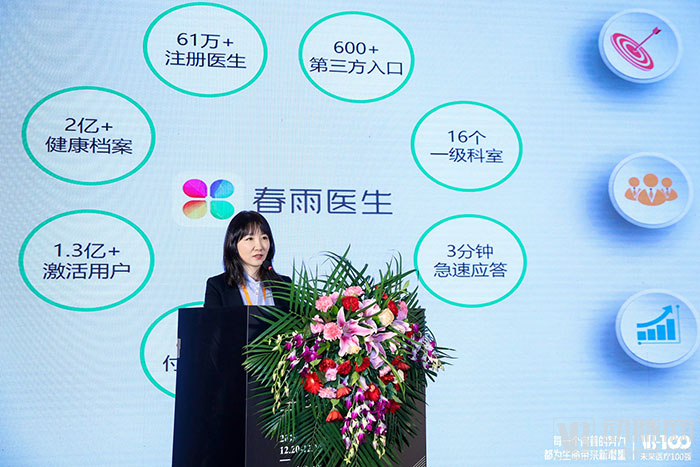
Wang Yuxiao, CEO of Spring Rain Doctor
“Our understanding of the concept of internet hospitals focuses on two key stages: pre-consultation screening and post-consultation management,” Wang Yuxiao stated. Hospitals aim to attract appropriate patients for consultations while ensuring efficient patient flow within the facility. To achieve this, precise triage must be conducted before consultations, and patients can return to community-based settings for rehabilitation afterward—both areas where internet companies excel. By allowing hospitals to address core clinical issues and leveraging internet technologies to handle front-end and back-end processes, data integration and accumulation can be effectively realized.
Currently, there are 610,000 doctors registered on Chunyu Online, of whom 380,000 can engage in in-depth interactions with patients.
Spring Rain Doctor’s practices in the field of internet hospitals include Yanda Internet Hospital, Yinchuan Spring Rain Internet Hospital, Guizhou Pu’an Spring Rain Cloud Hospital, Kunming Children’s Hospital Internet Diagnosis and Treatment Platform, and CITIC Huizhou Internet Diagnosis and Treatment Platform. It also exports medical resources to more than 600 partner organizations.
To achieve a patient-centered approach, relying solely on the internet hospital model is insufficient; it is necessary to extend peripheral nerves downward and shorten the physical distance to patients.
Wang Yuxiao candidly admitted that Spring Rain Doctor took some detours along the way. Previously, it incubated two projects—Smart Medicine Box and Spring Rain Living Room Healthcare—with the aim of integrating medical services into home settings. However, this step proved overly ambitious and difficult to implement. “Therefore, we scaled back our approach, shifting the physical presence from the household level to the community level.”
Thus, Spring Rain Doctor has developed Health Kiosks centered around its internet hospital, enabling deployment in communities, nursing homes, and enterprises. These Health Kiosks offer services such as health data monitoring, medication guidance, health education, and online prescription issuance. To date, more than 300 Health Kiosks have been launched across China. Behind these lightweight Health Kiosks lies a robust middle platform, built upon Spring Rain Doctor’s eight-year accumulation of medical resources and medical data, while also leveraging the Spring Rain Intelligent Medical Assistant Brain to enhance service efficiency.
During the roundtable discussion at the Internet Hospital Innovation Forum, several founders and executives from the internet healthcare industry explored future scenarios and models for internet hospitals.
"Building the Meituan-Dianping of the Traditional Chinese Medicine Sector"

Ma Wei, President of Beijing Universe In Nutshell Technology
Ma Wei, President of Beijing Universe In Nutshell Technology, stated that Traditional Chinese Medicine (TCM) offers effective solutions for common and chronic diseases, such as the diabetes management solution recently developed by the company. From an industry perspective, TCM lacks scientific and data-driven analysis; therefore, there is a hope to integrate TCM resources through internet healthcare and online education platforms, leveraging technologies such as big data analytics, AI, and 5G.
In recent years, Beijing Universe In Nutshell Technology has centered its efforts on heritage education, connecting over 300,000 TCM practitioners and securing an internet hospital license. Looking ahead, Ma Wei plans to transform the current “TCM Online School” into the Meituan-Dianping of the TCM sector within the internet hospital landscape.
Integrate Private Medical Institutions to Enhance Resource Utilization

Wu Hao, CEO of Taozi Internet Hospital
Wu Hao, CEO of Taozi Internet Hospital, noted that a significant amount of medical resources in privately run healthcare institutions remain underutilized, and these institutions continue to face low patient trust. Internet hospitals can reshape the doctor-patient relationship, maximize the utilization of offline resources through online collaboration with physicians, transform the traditional business roles of hospitals, and enhance the overall image of privately run healthcare providers.
Therefore, Taozi Internet Hospital has built an integrated online-offline medical platform. The online component functions as an internet clinic that assists physicians in building their personal brands, while the offline component collaborates with privately operated medical institutions to integrate high-quality resources, including medical equipment and facilities. It provides physicians with shared consulting rooms, operating theaters, and hospital wards, ultimately facilitating a seamless online-offline model that delivers comprehensive medical services from diagnosis to treatment, thereby improving the utilization efficiency of medical resources.
Health Management of Regional Internet Hospitals

Yan Hong, Chairman of Wanjia Yan Internet Hospital
Yan Hong, Chairman of Wanjia Yan Internet Hospital, believes that as an internet hospital positioned within the regional medical ecosystem, it aims to deeply integrate online and offline services in the future, providing comprehensive health management for local patients and serving as their family doctors.
Currently, building on its two self-operated physical hospitals, over 100 directly operated pharmacies, and nearly 10 clinics in Chongqing, Wanjia Yan has established an internet hospital platform to extend its services from offline to online. By deeply cultivating the regional market and leveraging its comprehensive medical system to serve individual consumers, Wanjia Yan brings health management services to schools, communities, and enterprises. In the future, Wanjia Yan also plans to introduce collaborations with commercial insurance providers and wearable device manufacturers to further empower and enhance its health management ecosystem.
The Value of Future Internet Hospitals Lies in Pre- and Post-Hospital Care

Hu Yifan, Vice President of POMDOCTOR LIMITED
Hu Yifan, Vice President of POMDOCTOR LIMITED, believes that internet hospitals affiliated with physical hospitals have a natural advantage in managing chronic diseases during the in-hospital phase. In contrast, the greatest value of internet hospitals not affiliated with physical hospitals will lie in the pre- and post-hospital phases, linking the in-hospital segment together.
POMDOCTOR LIMITED, which started as a pharmaceutical e-commerce platform, began building and operating its internet hospital in 2015, positioning itself for chronic disease follow-up consultations and management. “We are currently making attempts to integrate insurance for patients with pre-existing conditions with clinical practices,” said Hu Yifan. He noted that the integration between health insurance and internet healthcare remains superficial at present. In the future, the company hopes to collaborate with commercial insurers to participate in insurance product design, thereby standardizing medical practices and achieving the dual goals of health management and medical cost containment.
At the forum, VCBeat’s Eggshell Research Institute released the “2019 Internet Hospital Report: From Model Transformation to Service Innovation.” Through systematic analysis of data from 107 internet hospitals and in-depth interviews with executives of relevant companies and industry experts, the report transitions from model analysis to service research. It primarily examines which services are being strengthened and which are being deemphasized by internet hospitals, maps the evolving trajectory of their service focus, and assesses the impacts of these shifts.
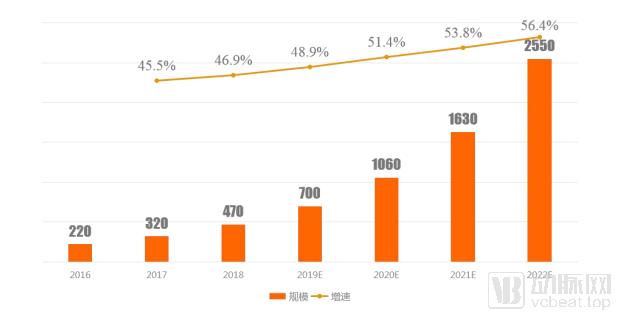
Market Demand for Internet Hospital Services, 2016–2022; Data Source: China Industry Information Network, VCBeat Knowledge Base
Internet hospitals have entered a critical year of development, aiming to meet patient demand by increasing the number of institutions and improving service quality. In the future, as internet hospitals are launched across China, their service coverage will expand to a larger population. Furthermore, with the continuous integration of technologies such as 5G and artificial intelligence, services provided by internet hospitals will become more diversified, accelerating the expansion of market demand. By 2020, the total market demand for internet hospitals is projected to reach RMB 255 billion, with a compound annual growth rate (CAGR) of 53.9% over the next three years.
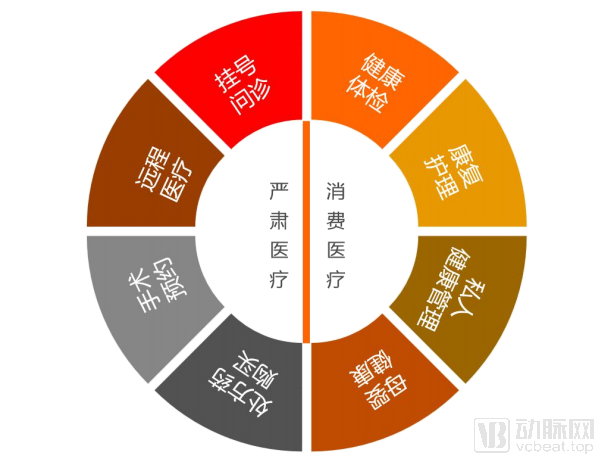
Market Demand Composition for Internet Hospital Services
The market demand for internet hospital services is primarily divided into two categories: serious medical needs and consumer healthcare needs. Constrained by policy regulations and the current stage of development, the present market demand for internet hospital services mainly consists of appointment registration and consultations (including text-based and video consultations) and telemedicine (such as remote consultations, remote diagnosis, and remote monitoring). These services primarily address follow-up visits for certain common diseases, thereby having a limited impact on expanding the overall market scale of internet hospital services. As people’s purchasing power continues to strengthen, expenditure on medical and health-related consumption is also increasing. Personalization and high quality are becoming new requirements for medical services. Consequently, consumer-oriented medical services—such as health management, rehabilitation and nursing care, and maternal and child health—will emerge as new drivers of demand for internet hospital services in the future.
The above is an excerpt from the report. The overall structure of the report is as follows:
I. Insights—Development of Internet Hospitals
1. Evolution: Internet Hospitals Driven by Policy
2. Progress: Peak of Internet Hospital Construction
3. Blueprint: Pathway for the Internet Hospital Ecosystem Framework
II. Analysis—Internet Hospital Service System
1. Demand: Market size exceeds RMB 250 billion, with expanding demand for consumer healthcare
2. Standardization: Centering on safety assurance to refine medical services
3. Ecosystem: Integrate Multi-Party Resources to Build a “Closed-Loop Healthcare” Service System
III. Perspective: Service Innovation in Internet Hospitals
1. Enterprise platform-based service innovation exhibits greater enthusiasm
2. Disease Diagnosis and Treatment Become the Focus of Service Innovation in Internet Hospitals
3. Hospital-led Model: Building Specialized Disease and Department Services Around Core Disciplines
4. Cloud-based diagnosis and treatment facilitate inter-hospital collaboration by integrating regional resources
5. Specialty Internet Hospitals Have Inherent Advantages in Chronic Disease Management
6. Enterprise Platform-Based Upgrade of Chronic Disease Management Service System
7. Online Sales of Prescription Drugs Drive New Growth for Enterprise-Platform Internet Hospitals
IV. Trends: The Future Development Path of Internet Hospitals
1. Regional Internet hospitals will gradually replace individual Internet hospitals
2. Specialty-Focused Internet Hospitals Will Emerge as a New Competitive Landscape
3. The Internet hospital technology platform will be iteratively upgraded to meet patient needs
Scan the QR code below for the full report.