

Bi Yuanfeng of VB Data: Building Future Healthcare Hub Cities – Seven Key Elements and Five Implementation Strategies [2019 VB100]

VCBeat
Internet Medical Health Media
From December 20 to 22, the “2019 Top 100 Future Healthcare” conference, hosted by VCBeat and co-organized by KPMG China, Legend Capital, BV Baidu Ventures, Weilai Capital, Puhua Capital, Tsinghua Nomura China Research Center, Changling Capital, Legend Star, Yuanjing Capital, the Internet Hospital Branch of the Chinese Association of Research Hospitals, Aimeida, Zero2IPO Capital, and Yanzhi, kicked off at the Jiuhua Mountain Resort in Beijing.
More than 5,000 participants registered for this conference, which featured 15 forums: Future Healthcare Summit, Top 100 Summit, Leadership Summit, Health and Medical Fund Partners Summit, China-Japan Health Industry Development Forum, Innovative Drugs Forum, Innovative Health Insurance Forum, Digital Pathology and Precision Diagnostics Forum, Health Management Forum, Medical Devices Forum, Internet Hospital Forum, Smart Hospital Construction Forum, Pharmaceutical Company Digital Marketing Forum, Biotechnology Forum, and Medical Artificial Intelligence Forum, covering 11 major hot topics of 2019.
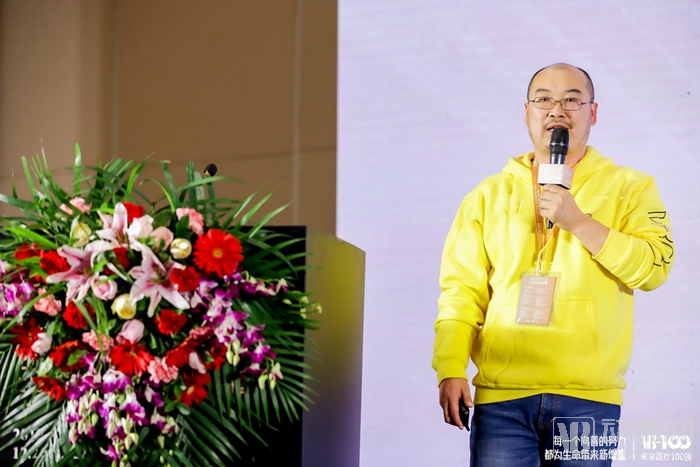
At the China-Japan Health Industry Development Forum held on the afternoon of December 21, Bi Yuanfeng, Co-founder and COO of VCBeat, delivered a keynote speech titled “Finding the Intersection Between the Growth Curve of Medical Innovation and the Industrial Development Curve of Cities.” In his address, he defined the concept of “future medical coordinate cities” and proposed corresponding development pathways. This article presents a curated compilation of the highlights from his presentation.
The following is the transcript of the speech (abridged):
To identify the intersection between medical innovation growth and urban industrial development curves, let us first examine an international case study: the “Life Sciences Corridor” in the Boston area of the United States. This globally renowned life sciences industry cluster was jointly established in 2014 by the cities of Boston, Braintree, Cambridge, Quincy, and Somerville. Although the area is relatively compact, spanning a one-hour subway ride, it has to date gathered more than 600 biotechnology companies and 48 universities, and is home to five of the six largest hospitals in the United States.
In 2012, the total output value of the life sciences and technology industry in the Boston area exceeded $30 billion. By 2017, this figure had risen to $87.7 billion, representing a threefold increase compared to 2012 in less than six years. In a country with low economic growth, such a rate of expansion is highly noteworthy.
In 2017, innovative companies in the Boston area collectively secured over $3.6 billion in venture capital funding.
Massachusetts, home to the Boston area, is one of the smaller U.S. states by land area. It hosts other life sciences industry clusters as well, yielding some interesting data. Between 2009 and 2018, Massachusetts added more than 12 million square feet of commercial laboratory space, a 71% increase—a striking figure.
Among the top biopharmaceutical employers in Massachusetts are familiar names such as Sanofi, Novartis, and Pfizer. Over the past three years, a total of 21 companies in Massachusetts have gone public, with their combined market capitalization exceeding $10 billion and IPO proceeds surpassing $2.34 billion.
Each year, the U.S. National Institutes of Health (NIH) provides funding for life sciences research to states across the country. In 2017, Massachusetts received more than $2.7 billion in NIH funding, ranking second nationwide. Meanwhile, the per capita NIH funding in the Boston area reached $693, maintaining the top position in the United States for over two consecutive decades.
Can we build such industrial clusters, similar to those in the Boston area of Massachusetts, enabling small regions to unleash significant economic momentum?
Let’s first examine the state of China’s medical innovation industry, which also exhibits typical regional distribution characteristics; we have mapped this as follows:
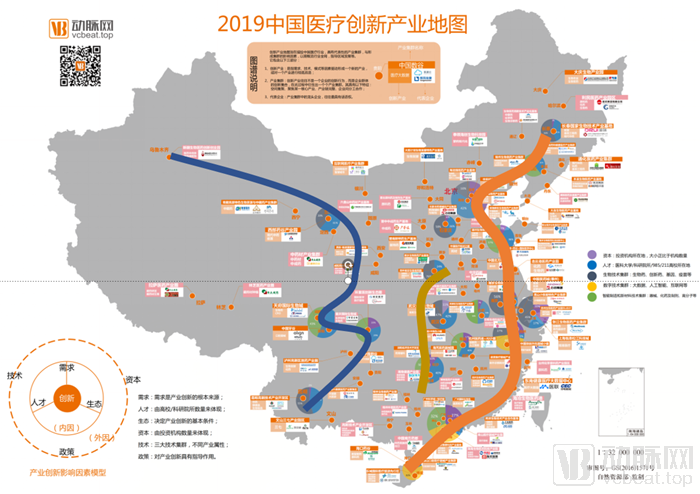
Eastern Coastal Industrial Belt:This is the core cluster of China’s healthcare industry. Stretching from north to south, it encompasses the Bohai Rim industrial circle, the Yangtze River Delta industrial circle, the Greater Bay Area industrial circle, and Hainan Province. There is a high concentration of biotechnology clusters; digital technology clusters have shown prominent performance in Beijing, Shenzhen, Hangzhou, and Hainan; while intelligent manufacturing and new material clusters feature notable highlights in Suzhou, Shenzhen, and Jinan.
Central Industrial Belt:This region serves as a cornerstone of China’s healthcare industry. Key cities include Wuhan, Zhengzhou, Nanning, and Nanchang. Wuhan has demonstrated notable strength in biotechnology clusters, while Zhengzhou and Nanchang are showing a trend toward development in intelligent manufacturing and new materials.
Western Industrial Belt:This is the expansion zone of China’s healthcare industry. Key cities include Chengdu, Chongqing, Xi’an, Lanzhou, Kunming, and Urumqi. Chengdu, Xi’an, and Guiyang boast strong foundations in digital technology clusters, while intelligent manufacturing and new materials technology clusters hold significant potential in cities such as Chongqing and Xi’an.
Next, we will analyze the reasons behind the formation of various industrial clusters from three perspectives.
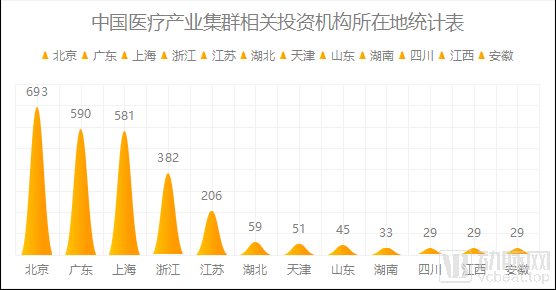
First, the financial perspective.The number of investment institutions established in various regions, to a certain extent, represents the construction of the local financial system. As shown in the figure below, the top five provinces and municipalities in terms of the number of investment institutions are all located in the eastern coastal areas, where the total number of healthcare-related investment institutions accounts for half of the national total.
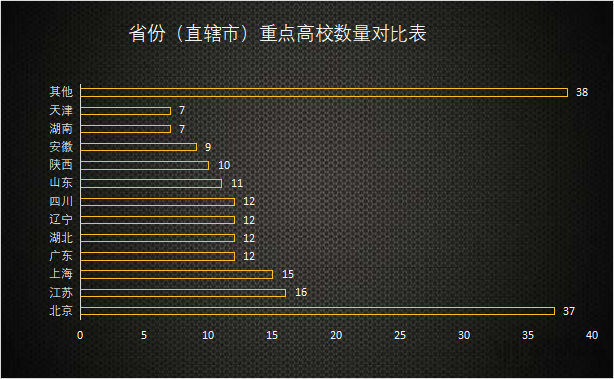
Second, the perspective of talent.The number of universities, to a certain extent, reflects the local talent supply, specifically referring to graduates from medical universities or Project 985 and Project 211 institutions. The eastern coastal industrial belt still leads in terms of university count, while central and western regions such as Hubei, Hunan, and Anhui are not far behind. Therefore, central and western regions should leverage their talent advantages to promote local industrial development.
Third, the technological perspective.This perspective is relatively more complex. To facilitate understanding, we have created the following schematic diagram of technology clusters:
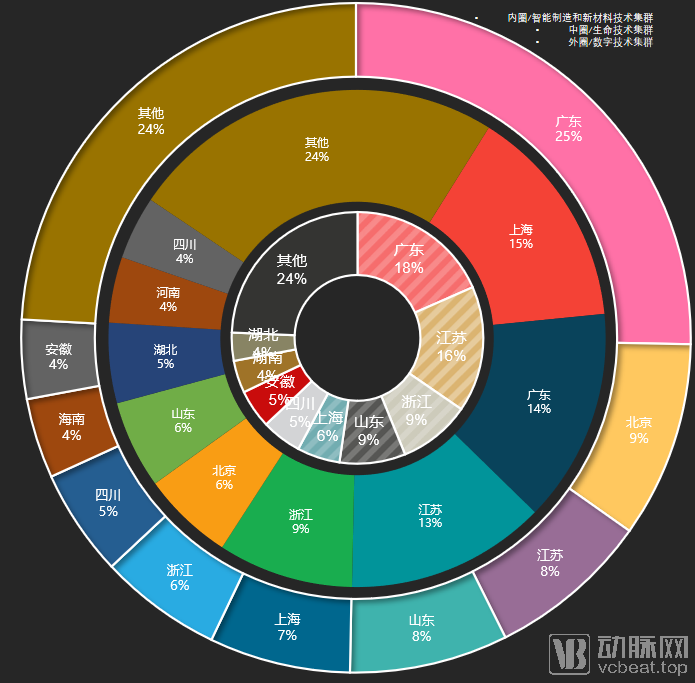
In the schematic diagram,Outer RingIt is a cluster of digital technologies. Innovative healthcare enterprises are primarily supported by digital technologies such as the internet, big data, artificial intelligence, blockchain, AR, and VR. Guangdong ranks first, followed by Beijing, Jiangsu, Shandong, and others;
Center CircleIt is the life technology cluster. The technologies employed by medical innovation enterprises include genetic engineering, proteomics, and cellular immunotherapy, with Shanghai, Guangdong, Jiangsu, and other regions holding comparative advantages;
Inner RingIt is a cluster of intelligent manufacturing and new material technologies, primarily leveraging innovations in automation control, robotics, 3D printing, and 5G. Guangdong and Jiangsu rank first and second, respectively, in this sector.
Drawing on the experience of Boston’s life sciences cluster and analyzing China’s medical innovation industry from multiple perspectives, we are compelled to ask: What is the core logic underlying regional medical industry clusters?
We believe that changes in any industry are driven by underlying technologies. These foundational technologies give rise to new scenarios and demands, leading to the emergence of new products and services, and ultimately resulting in the restructuring of the entire industrial system.
Over extended periods, innovative enterprises continuously emerge. By leveraging an understanding of industrial dynamics, various regions and cities have the opportunity to attract these enterprises into specific physical areas—not small-scale spaces, but rather larger geographic zones. Ultimately, the agglomeration of these innovative firms gives rise to regional industrial clusters.
Inspired by this concept, we have begun to attempt to define the future medical coordinate cities.
# Future Healthcare Hub CitiesFuture Healthcare Hub Cities refer to cities where the healthcare industry serves as the core, and the output value directly driven by the health and medical industry chain within a city (or region, typically within a straight-line distance of 50–100 km) exceeds RMB 200 billion, accounting for more than 5% of the city’s (or region’s) GDP, thereby becoming a pillar industry of the city (or region).
We have identified seven elements across three tiers for future medical hub cities and developed a “Torch Model” of these elements, aiming to provide greater assistance to urban industry promoters.
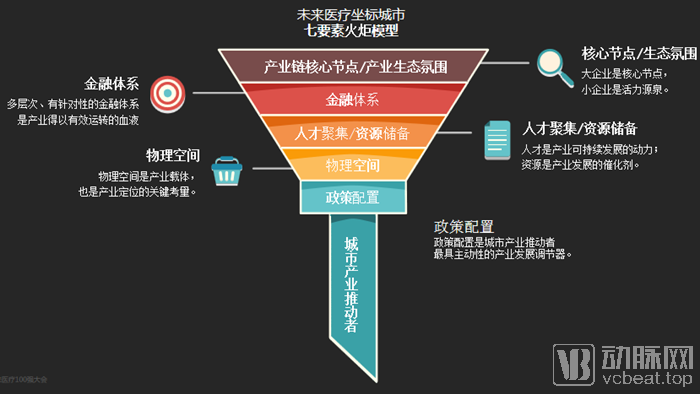
The first level has only one element, namelyPolicy Configuration, is the most proactive industrial development regulator for urban industry promoters.
The second level consists of three elements:Physical Space, Talent Aggregation, and Resource ReservesPhysical space serves as the industrial carrier and a key consideration in industrial positioning; talent is the driving force for sustainable industrial development; resources act as the catalyst for industrial growth.
The third level also consists of three elements:Financial System, Core Nodes of the Industrial Chain, and Industrial Ecosystem AtmosphereA multi-tiered, targeted financial system serves as the lifeblood for the effective operation of industries; within the industrial ecosystem, large enterprises act as core nodes, while small enterprises are the source of vitality.
To better understand the “Torch Model” of the seven elements, we provide an illustrative example.
Physical Space Expansion and Talent Aggregation Boost Shanghai Zhangjiang’s Biopharmaceutical Industry
After years of development, the biopharmaceutical industry in Shanghai Zhangjiang reached a scale of RMB 71.72 billion in 2018 and is expected to exceed RMB 100 billion by 2020, with local authorities intensifying efforts to enhance both physical infrastructure and talent aggregation.
In terms of physical space, the Zhangjiang biopharmaceutical industry expanded in 2019, adding four new industrial bases:
Zhangjiang Innovative Drug Industrial Base (South Zhangjiang): Covering an area of approximately 3 square kilometers, it is positioned as a base for the industrialization of innovative drugs and medical technologies, as well as a contract manufacturing organization (CMO)/contract development and manufacturing organization (CDMO) production base.
Zhangjiang Medical Device Industry Base (Zhangjiang East Zone): Covering an area of approximately 4 square kilometers, it is positioned for the R&D and manufacturing of high-end medical devices;
Desano Laogang Base: Covering an area of nearly 0.5 square kilometers, it is positioned as a base for the industrialization of chemical drugs and CMO services;
Zhangjiang Headquarters Park: Approximately 2 square kilometers, positioned as a hub for R&D centers and corporate headquarters.
In terms of talent aggregation, as China’s biopharmaceutical industry is largely driven by overseas professionals and returnees from abroad, Shanghai often serves as the first destination for such individuals upon their return or arrival. In 2017, Pudong New Area established China’s first Overseas Talent Bureau to handle work permits, permanent residency recommendations, identity verification, and related support services for overseas talent.
Policy Configuration Drives the Development of Chengdu’s Internet Healthcare Industry
In recent years, Chengdu, Sichuan has prioritized the development of its digital industry, with internet healthcare emerging as a key sector. The growth of internet healthcare is heavily reliant on policy support. Following policy formulation, effective implementation is crucial. Chengdu has focused on practical execution, helping the industry achieve a closed-loop value chain.
In November 2016, the Sichuan Provincial Development and Reform Commission, in conjunction with the Sichuan Provincial Health and Family Planning Commission, issued the “Notice on Setting Prices for Internet Medical Services,” thereby addressing policy-level issues related to pricing, health insurance reimbursement, and fee standards for internet-based medical services.
In December 2018, the “Sichuan Provincial Internet Healthcare Supervision Platform” was launched, marking China’s first “provincial-level regulatory platform for the internet healthcare industry.”
In June 2019, the Sichuan Provincial Health Commission and the Sichuan Provincial Administration of Traditional Chinese Medicine jointly issued the “Notice on Further Improving Work Related to Internet Hospitals and Internet-Based Diagnosis and Treatment” (hereinafter referred to as the “Notice”), which included internet-based medical services within the scope of medical insurance reimbursement.
VCBeat·Eggshell Research Institute conducted a review of regions across China involved in the internet healthcare industry. The data shows that 74.4% of internet healthcare companies are concentrated in five provinces and municipalities: Beijing, Guangdong, Zhejiang, Shanghai, and Sichuan. Among them, Sichuan is home to 221 internet healthcare companies, representing a scale that cannot be underestimated.
Jiangxi Jinxian: Policy Synergies Drive Industrial Chain Extension and Talent Acquisition
Let’s examine another less well-known case.
Jinxian, Jiangxi is a small county-level city under Nanchang. In 2004, it established a Medical Device Technology Park, building its medical device industry from the ground up.
Today, more than 60,000 people in Jinxian, Jiangxi Province are engaged in the sales of medical devices, with over 6,000 sales companies established across China. The annual sales revenue ranges from approximately RMB 20 billion to RMB 30 billion. In 2018, the output value of medical devices in this region exceeded RMB 15 billion, with disposable infusion sets accounting for 30% of the national market share, and five enterprises ranking among the top 100 medical device companies in China.
What Has Jinxian, Jiangxi Done to Achieve Dramatic Changes Over the Past 15 Years? We Summarize That It Primarily Relies on the Strategic Allocation and Continuous Accumulation of Policies, Which Have Driven Leading Enterprises in Industrial Transformation and Upgrading, Supply Chain Extension, and Talent Acquisition.
For example, the local government has streamlined administrative procedures and provided support for governmental approvals. It has established specialized agencies to assist enterprises with approval processes for clinical trials, quality testing, manufacturing licenses, and medical device sales licenses. Additionally, a RMB 10 billion industrial fund was set up to reduce corporate investment burdens. These measures have facilitated the smooth transformation of Hongda Group, a leading local enterprise, into the fields of hemodialysis, in vitro diagnostics, and intelligent medical equipment.
In October 2018, the locality began introducing minimally invasive needle (knife) arthroscopic surgical instruments and Jingjin Knife therapy, among other projects, to promote extension of the industrial chain. Furthermore, the locality collaborated with the University of Shanghai for Science and Technology to establish a workstation in Jinxian, thereby providing talent support.
Therefore, even a small region can develop a regional medical industry cluster.
Five Key Modules for Building a Future Medical Industry Hub City
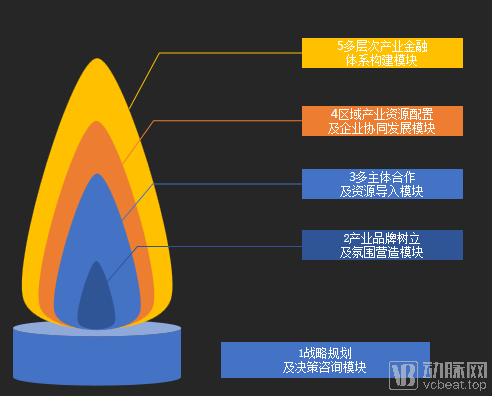
Currently, most cities remain in the initial stage of developing their positioning within the future healthcare industry landscape. Drawing on our years of observation, research, and accumulated expertise in the healthcare sector, we have outlined a plan comprising five key modules:
Strategic Planning and Decision-Making Consultation.Conduct a baseline assessment of the city’s industrial landscape based on technological clusters, investigate the development status of relevant industries domestically and globally, interview stakeholders regarding core industries in surrounding regions, and formulate detailed industrial plans.
Industry Branding and Atmosphere Creation.Align with the city’s industrial strategy to establish appropriate industry brand positioning, and implement phased promotional initiatives tailored to current conditions to foster a favorable industrial ecosystem.
Multi-stakeholder Collaboration and Resource Introduction.Conduct multi-level, diverse business matchmaking activities for resource institutions or enterprises based on the characteristics of different stages to promote industrial agglomeration.
Regional Industrial Resource Allocation and Collaborative Enterprise Development.Accelerate industrial collaboration among enterprises within the region, leverage geographic advantages to effectively promote regional industrial cooperation, and thereby attract more enterprises from outside the region to establish operations locally.
Construction of a Multi-tiered Industrial Finance System.Leveraging nationwide investor resources and incorporating capability assessments of investment institutions, we adopt a structure of fund-of-funds and specialized sub-funds to utilize financial leverage in accelerating industrial clustering and promoting industry development.
We hope to collaborate with like-minded city administrators to jointly advance the implementation of five major modules, thereby accelerating the development of a benchmark city for the future healthcare industry.