

Xuhui District in Shanghai Launches China's First AI-Powered Child Healthcare Intelligence Platform

YITU
Provider of Full-Stack Intelligent Healthcare Product Solutions
On December 23, the press conference for the Xuhui District Children’s Medical Health Intelligent Service Platform was grandly held at the Fenglin Subdistrict Community Health Service Center in Shanghai. Distinguished attendees included Wu Qianyu, Inspector of the Shanghai Municipal Health Commission; Qin Liping, Deputy District Mayor of Xuhui District; Ren Xuelei, Deputy Director (presiding) of the Xuhui District Health Commission; Zhou Rulin, Deputy Director of the Xuhui District Health Commission; Zhang Lei, Deputy Director of the Xuhui District Health Commission; Sun Ya, Director of the Xuhui District Health Administration and Development Center; Yi Chuntao, Director of the Fenglin Subdistrict Community Health Service Center in Xuhui District; and Fang Cong, Vice President of Yitu Medical.
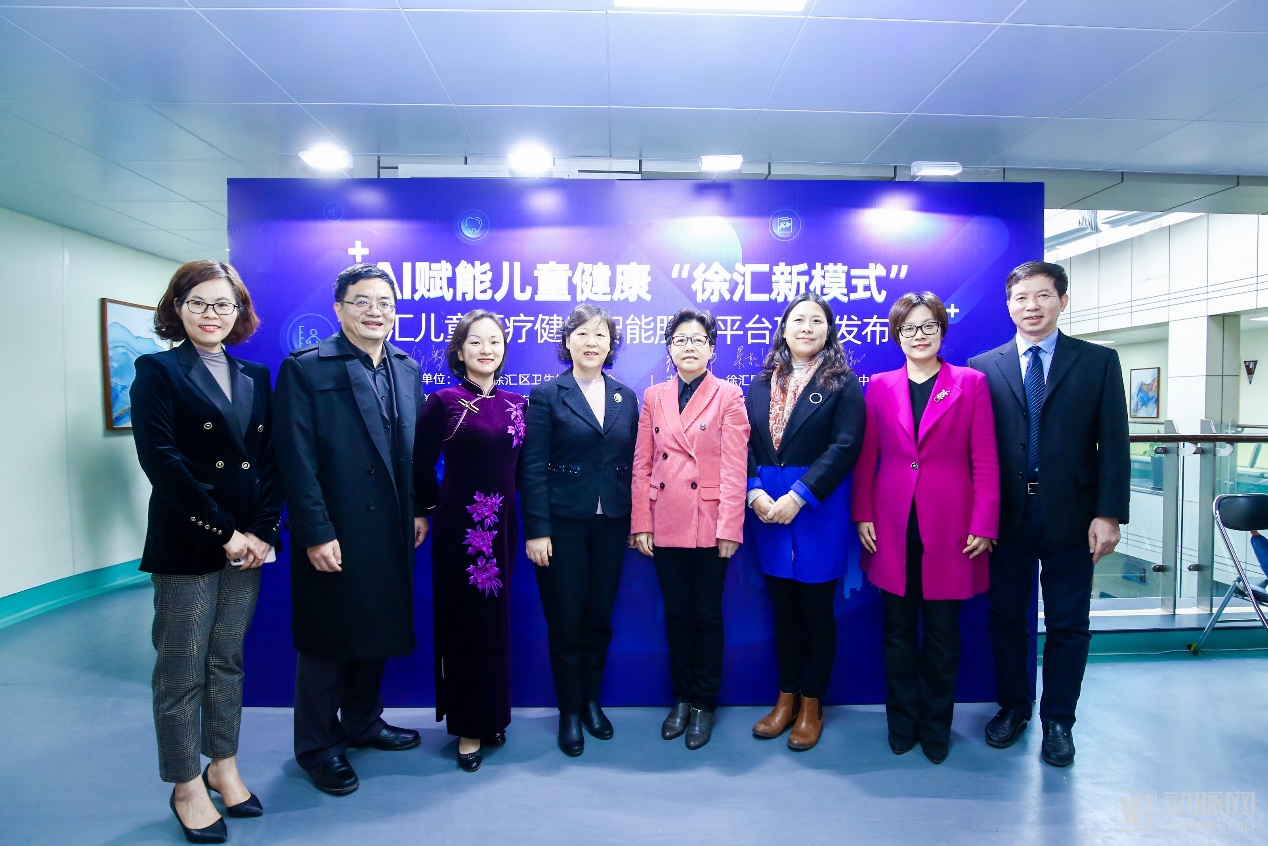
Group Photo Attendees: Wu Qianyu, Inspector of the Shanghai Municipal Health Commission (fourth from right); Qin Liping, Deputy District Mayor of Xuhui District (fourth from left); Ren Xuelei, Deputy Director of the Xuhui District Health Commission (presiding over work) (second from left); Zhou Rulin, Deputy Director of the Xuhui District Health Commission (second from right); Zhang Lei, Deputy Director of the Xuhui District Health Commission (third from right); Sun Ya, Director of the Xuhui District Health Care Management and Development Center (first from left); Yi Chuntao, Director of the Fenglin Community Health Service Center in Xuhui District (first from right); Fang Cong, Vice President of Yitu Medical (third from left)
The Xuhui District Children's Medical Health Intelligent Service Platform, recently completed under the guidance of the Xuhui District Health Commission and spearheaded by the Xuhui District Health Development Center, leverages AI technology as its core. Focusing on the most urgent needs in pediatric care, the platform establishes an intelligent service system for children in Xuhui District that covers all disease categories and the entire spectrum of growth and development. It promotes full-process intelligence in early disease screening, growth and development assessment, and health management, thereby creating the "Xuhui Model" in the field of pediatric medical services.
Leveraging advanced AI technology, the platform features robust self-learning capabilities, becoming “smarter with use” as its user base and usage duration grow. This enables parents to access expert-level pediatric medical services within their communities without leaving home, thereby comprehensively enhancing primary healthcare security, residents’ sense of gain in medical care, and the government’s precision management of medical resources.
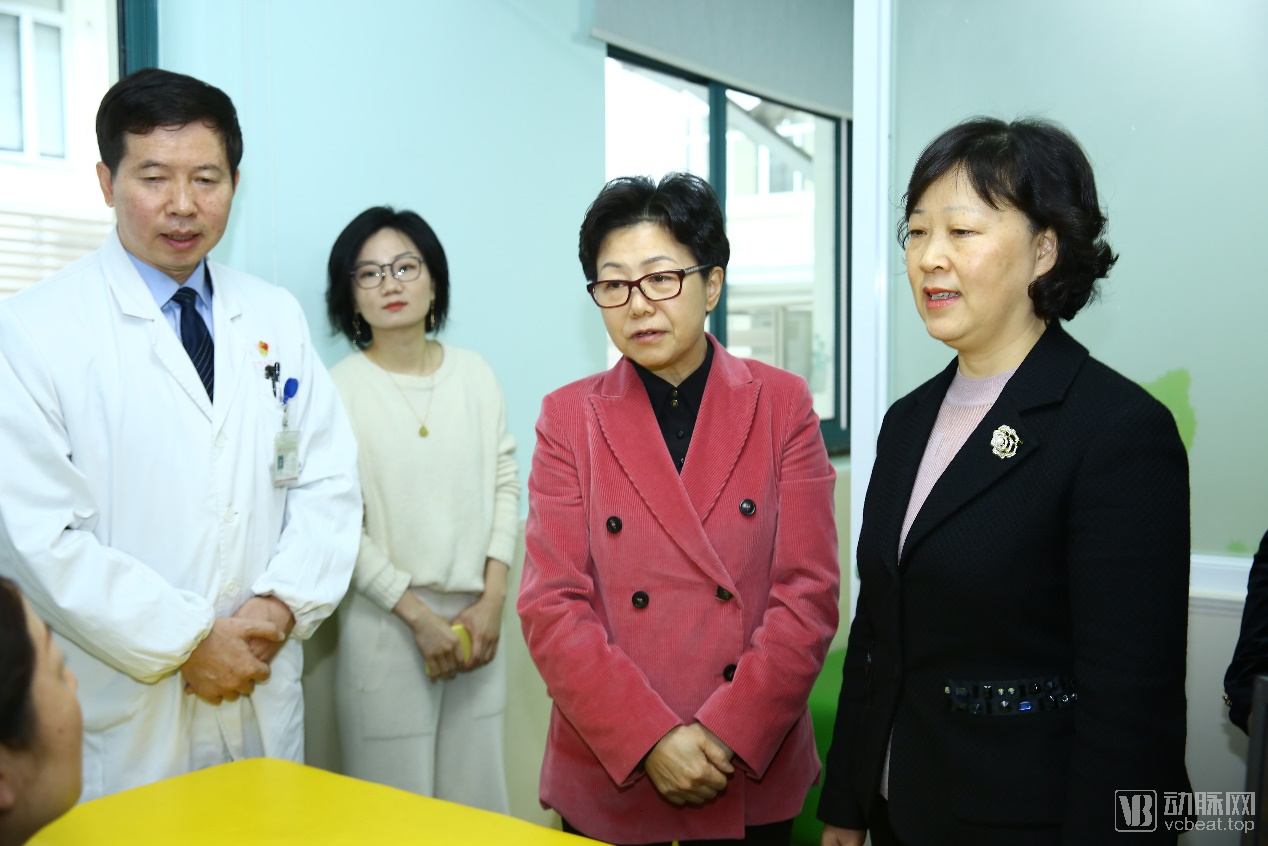
Wu Qianyu, Inspector of the Shanghai Municipal Health Commission (second from right), and Qin Liping, Deputy District Mayor of Xuhui District (first from right), inspected the platform’s operations, accompanied by Yi Chuntao, Director of the Fenglin Community Health Service Center in Xuhui District (first from left).
The "Report on the Development of Maternal and Child Health Services in China (2019)" released by the National Health Commission shows that pediatric medical professionals in China have long been in short supply. There are only 0.63 pediatricians per 1,000 children nationwide. Long-standing issues such as a shortage of physicians and heavy service burdens have constrained the development of pediatric healthcare services in China. In particular, primary healthcare institutions face even greater challenges in providing pediatric services, making it urgent to enhance their service capacity.
Currently, Phase I of the project—the Smart Child Growth and Development Management Platform—has been initially established and is operational. Integrating multiple functions such as intelligent growth screening, intelligent assessment, and intelligent referral, the platform reduces the time required for growth and development assessments from the original 5–15 minutes to mere seconds. Moreover, its bone age interpretation accuracy reaches the level of senior pediatric specialists. Children in Xuhui District can now access expert-level growth and development assessments at community health service centers, thereby overcoming many longstanding challenges associated with traditional assessments, including slow processing speed, low accuracy, and poor consistency.
Meanwhile, the service platform can also facilitate coordinated operations among multi-tier medical institutions within the region through intelligent referral systems, enabling referral and consultation services, and feeding back results to community health service centers to help enhance the service capabilities of primary healthcare institutions.
Qin Liping, Deputy District Mayor of Xuhui District, pointed out in her speech that the district attaches great importance to the development of the artificial intelligence (AI) industry and has been steadily advancing its “Dual-T Strategy for Building an AI Highland.” In the second half of this year, Xuhui District signed a strategic cooperation agreement with Yitu Technology, an AI unicorn incubated locally in Shanghai. The two parties will engage in in-depth collaboration across multiple fields. The establishment of this intelligent service platform for children’s medical healthcare marks a milestone in Xuhui District’s vigorous efforts to develop the AI industry, build an AI highland, and empower primary healthcare with AI technologies. She expressed hope that the project team would continue to make persistent efforts, deepen and solidify their work, and achieve even greater accomplishments.
Wu Qianyu, Inspector of the Shanghai Municipal Health Commission, extended her congratulations on the launch of the platform. She emphasized that children’s medical and health services are vital to public well-being. In recent years, Shanghai has implemented multiple measures to increase the supply of pediatric medical services and improve service quality, making significant progress in areas such as the development of pediatric medical consortia and the enhancement of diagnostic and treatment capabilities at the primary care level. She expressed hope that Xuhui District would become a “new model, new experience, and new benchmark” in the process of building the platform.
Subsequently, Sun Ya, Director of the Xuhui District Health Administration and Development Center, delivered a detailed report on the “Xuhui Model” of intelligent services for children’s medical healthcare.
“The integration of medical AI technology will significantly enhance the efficiency of growth and development assessments for children in Xuhui District, alleviating the workload of pediatricians in the district,” said Sun Ya, Director of the Xuhui District Health Administration and Development Center. “With the future incorporation of more medical AI applications, the widespread adoption of the ‘physician + AI’ workflow, and the extensive collaboration within regional medical consortia, pediatric healthcare services in the region are poised to achieve full-process intelligence, with steady improvements in service efficiency and quality.”
With the rapid growth of China’s national economy, the health challenges facing Chinese children, particularly those in urban areas, are shifting from infectious diseases to issues related to growth and development, especially pediatric endocrine disorders such as precocious puberty, short stature, and obesity. According to the Report on Nutrition and Chronic Disease Status of Chinese Residents (2015) released by the National Health Commission, the prevalence of obesity among children and adolescents aged 6–17 years in China has exceeded 8%.
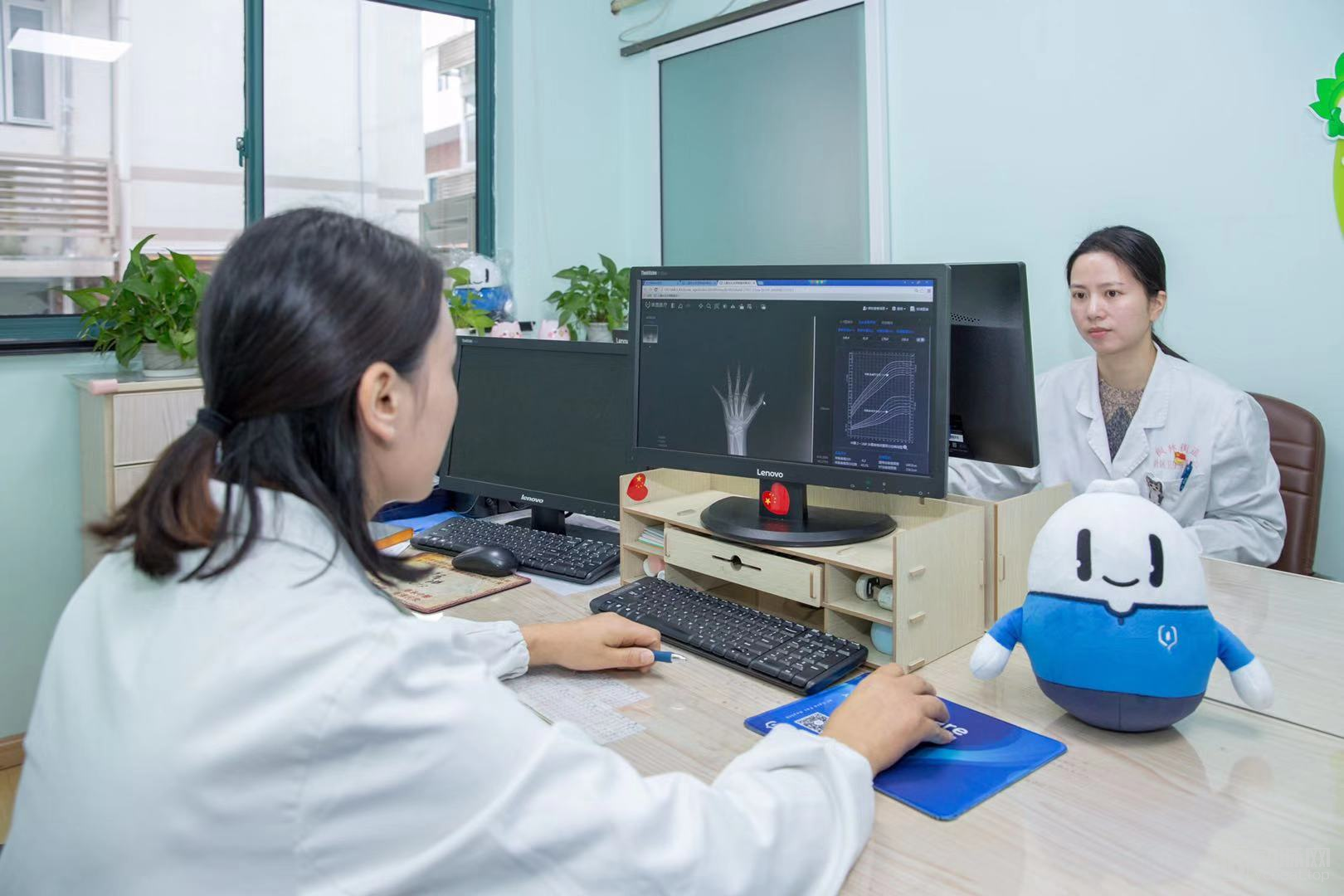
Community Health Service Center Physicians Experience the Intelligent Service Platform for Children's Medical Healthcare
However, due to the lack of a systematic and scientific assessment framework for child growth and development in China, evaluation indicators have long been confined to superficial metrics such as height, weight, and secondary sexual characteristics. A comprehensive and scientifically grounded assessment system and network have yet to be established, resulting in a generally limited understanding among various sectors of society regarding the value of child growth and development assessments.
“Early detection, early diagnosis, and early treatment are the cornerstones of managing pediatric endocrine disorders,” stated Professor Fu Junfen, the guiding expert for the development of this AI-based bone age assessment system, Head of the Endocrinology, Genetics, and Metabolism Group under the Pediatric Branch of the Chinese Medical Association, and Executive Vice President of the Children’s Hospital, Zhejiang University School of Medicine. Discussing the application of AI technology in growth and development assessment, she noted, “Intelligent growth and development assessment offers numerous advantages, including rapid processing, high precision, and strong consistency. These features are crucial for conducting regular bone age assessments within a region and accurately monitoring children’s growth and development status. Meanwhile, scientific research based on large-scale medical and health big data from children in the region will yield substantial results and drive many frontier studies, such as the establishment of regional bone age standards for children.”
On the day of the event, at the Fenglin Street Community Health Service Center, a mother brought her five-year-old daughter for an intelligent growth and development assessment. After capturing an X-ray of the child’s left hand, the doctor simply clicked the mouse to initiate AI-assisted “doctor + AI” intelligent image interpretation. Within just a few seconds, a comprehensive and precise growth and development assessment report appeared on the screen. Following expert review, the report was promptly delivered to the parent, eliminating the need for long queues and waits, thereby making “expert-level” medical services readily accessible.
“Leveraging advanced medical AI technology, we have not only achieved intelligent assessment of children’s growth but also aim to incorporate healthcare services for multiple pediatric conditions across the entire growth and development cycle into this platform in the future. This will enable comprehensive data aggregation and governance, as well as intelligent medical services throughout the full spectrum of growth and development, ensuring that technological advancements benefit every resident in our jurisdiction,” stated Director Sun Ya.