

Sino-Japanese Healthcare Industry Collaboration Opportunities: Insights from the 2019 Future Healthcare 100 Summit
From December 20 to 22, the “2019 Top 100 Future Healthcare” forum, hosted by VCBeat and co-organized by KPMG China, Legend Capital, BV Baidu Ventures, Weilai Capital, Puhua Capital, Tsinghua Nomura China Research Center, Changling Capital, Legend Star, Yuanjing Capital, the Internet Hospital Branch of the Chinese Association of Research Hospitals, Aimeda, Zero2IPO Capital, and Yanzhi, kicked off at Jiuhua Resort in Beijing.
This year’s conference attracted over 5,000 registrants and featured 15 forums, namely: the Future Healthcare Summit, the Top 100 Summit, the Leadership Summit, the Health & Medical Fund Partners Summit, the China-Japan Health Industry Development Forum, the Innovative Drugs Forum, the Innovative Health Insurance Forum, the Digital Pathology and Precision Diagnostics Forum, the Health Management Forum, the Medical Devices Forum, the Internet Hospital Forum, the Smart Hospital Construction Forum, the Pharmaceutical Companies’ Digital Marketing Forum, the Biotechnology Forum, and the Medical AI Forum, covering 11 major hot sectors in 2019.
At the China-Japan Health Industry Development Forum held on the afternoon of December 21, Takumi Omoto, Senior Consultant at the Consulting Division of Nomura Research Institute, Ltd.; Yuanfeng Bi, Co-founder and COO of VCBeat; Katsuya Asafusa, Deputy General Manager of Fujifilm (China) Investment Co., Ltd. and Head of the Medical Products Division; Ziyi Fu, General Manager of the Elderly Care and Nursing Business Promotion Headquarters at Hitachi (China) Co., Ltd.; Yi Zheng, Vice President of Fosun Health Insurance and Health Management Group; Liping Xing, Deputy General Manager of Ping An Healthcare and Technology Company Limited and CEO of Ping An Haoyi Investment Management Co., Ltd.; and Jurong Yu, Partner at Zero2IPO Capital and Partner at Zero2IPO Healthcare Investment, attended the event and delivered insightful speeches. The session was moderated by Ichiro Kawashima, Deputy Director at Nomura Research Institute, Ltd.
Guests from both countries delivered speeches on topics including the development of the health industries in China and Japan, opportunities for bilateral cooperation, and their respective innovations and distinctive features. VCBeat (WeChat ID: vcbeat) has compiled the highlights of their insights.
Takumi Oamoto: Digitalization—The Solution to Japan’s Healthcare Industry Challenges

From a national perspective, the QCA framework is indispensable in the healthcare industry. Q: Quality, referring to service quality; A: Accessibility, referring to the convenience of accessing medical care; C: Cost, referring to expenses. Japan holds advantages in both Q and A, but still faces challenges in C: high healthcare expenditure as a percentage of GDP, and difficulties in controlling medical costs due to its highly aged population.
The Japanese government is committed to leveraging technological means to enhance efficiency (reduce costs) and optimize service content (improve quality assurance). To this end, the Japanese government has proposed three measures: diverse forms of employment and social participation, extension of healthy life expectancy, and reform of medical and welfare services.
In the realm of digital healthcare service reform, the Japanese government has established four key priority areas:
First, promote the application of genomic medicine and AI.In the field of genomics, China is leveraging whole-genome information and other data on a national scale to identify the causes of diseases such as cancer, drive the development of diagnostic and therapeutic methods, and advance the realization of personalized medicine.
Second, promote PHR (Personal Health Records).By providing individuals with feedback on their personal health records (PHR) data held by governments and healthcare institutions, this approach helps them modify their lifestyle habits and improve their health status.
Third, promote the application of clinical information in medical and nursing care.Japan aims to establish a nationwide system for accessing patients’ medical information, enabling the retrieval and reference of historical diagnosis and treatment records from any location in the country, thereby ensuring that patients receive the most appropriate medical care and high-quality nursing services.
Fourth, promote the effective utilization of databases.Promote the development of big data infrastructure in the fields of healthcare and nursing.
Specific measures for private enterprises mainly include six aspects: providing health management services, developing and selling new commercial insurance products, utilizing advanced equipment for clinical examinations, researching and developing digital therapeutics, and developing in-hospital communication software and robots.
Bi Yuanfeng: Regional Medical Industry Cluster

Boston is a globally renowned hub for the life sciences industry. To date, the region is home to more than 600 biotechnology companies and 48 universities, and hosts five of the six top hospitals in the United States. Much like the Boston area, could China also develop a city with such a concentrated cluster?
Based on the landscape of the healthcare and medical industry, we have delineated industrial belts in the eastern, central, and western regions. Specifically, we analyze regional disparities and distinctive features through the lenses of finance, talent, and technology.
When conducting a detailed analysis of an industry, we rely on a core foundational model. This model comprises three components: Domain, Domain Redefinition, and Temporal Relationships. We have observed that changes in any industry are driven by underlying technologies. These technologies give rise to new scenarios and demands, leading to the emergence of new products and services, and even the restructuring of the entire ecosystem.
We have found that over extended periods, as innovative enterprises continue to emerge, various regions and cities have the opportunity to guide them into specific physical spaces—spaces that are not small in scale but rather cover a relatively large area—by leveraging their understanding of industrial dynamics, ultimately forming regional industry clusters. Therefore, we have begun attempting to define the concept of “Future Medical Coordinate Cities.”
We have identified the key elements of future healthcare hub cities. A future healthcare hub city is defined as a city (or region, typically within a straight-line distance of 50–100 km) where the healthcare industry serves as the core, with the output value directly driven by the health and medical industrial chain exceeding RMB 200 billion, accounting for more than 5% of the city’s (or region’s) GDP, thereby becoming a pillar industry of the city (or region).
Currently, most cities remain in the initial stage of developing their positions as hubs for the future healthcare industry. Leveraging its in-depth research and advantageous resources, VCBeat proposes “Plan A” for positioning cities as coordinates in the future healthcare industry, focusing on “city-specific positioning, industrial brand positioning, and resource channel positioning,” with the core objective of building an integrated development circle for the health and medical industries.
We have summarized three levels and seven elements:
The first level contains only one element, namelyPolicy Configuration, policy configuration serves as the urban industry promoter and the most proactive regulator of industrial development.
The second level comprises three elements:Physical Space, Talent Aggregation, and Resource ReservesPhysical space serves as the industrial carrier and is a key consideration in industrial positioning. Talent is the driving force for the sustainable development of industries, while resources act as the catalyst for industrial growth.
The third level also comprises three elements:Financial System, Core Nodes of the Industrial Chain, and Industrial Ecosystem Atmosphere, a multi-tiered, targeted financial system serves as the lifeblood that enables industries to operate effectively. Large enterprises are the core nodes, while small businesses are the source of vitality.
Katsuya Asafusa: Healthcare Integrating Prevention, Diagnosis, and Treatment

The title of my presentation today has been finalized as “A Joyful 100 Years.” Given Japan’s high level of population aging, we aim to leverage advanced technologies and solutions to provide effective and comprehensive safeguards for human health, enabling people to lead increasingly fulfilling and joyful lives as they age.
Our understanding of the healthcare business encompasses three aspects: prevention, diagnosis, and treatment. “Prevention” includes skincare products, health supplements, and personal care series. “Diagnosis” covers X-ray imaging diagnostics (FCR/DR), endoscopy, radiopharmaceuticals, ultrasound imaging diagnostic equipment, and clinical biochemistry analyzers. “Treatment” includes low-molecular-weight drugs, biopharmaceuticals, and regenerative medicine.
Currently, cancer is a major “health killer” for humanity. To combat it, early cancer screening is urgently needed. One characteristic of the current medical landscape in China is an insufficient total number of physicians, necessitating the use of faster and higher-precision diagnostic equipment to improve efficiency and benefit more patients and healthcare providers.
The LCI (Linked Color Imaging) and BLI (Blue Laser Imaging) technologies integrated into Fujifilm’s endoscopy systems enable detailed visualization of microvasculature and subtle structural features, facilitating better differentiation between “neoplastic lesions” and “inflammatory lesions.” With clear, easily interpretable images, these technologies offer significant advantages in both early cancer screening and detailed examination, thereby aiding clinical diagnosis.
Regarding the future direction of development, the advent of the AI era enables more organic integration across various sectors to jointly address medical challenges and alleviate burdens on both healthcare providers and patients. In China, the healthcare landscape is undergoing significant changes, including growth in the medical market, rapid population aging, an increase in lifestyle-related diseases, and advancements in cutting-edge technologies. Meanwhile, frontline healthcare in China continues to face persistent issues such as physician shortages, low operational efficiency in hospitals, pronounced disparities in medical care, and inadequate standards at primary care institutions. The application of medical AI technology can contribute to resolving these challenges. Furthermore, medical AI holds promise for enhancing public health awareness, promoting smart healthcare, and facilitating inter-regional medical collaboration, thereby driving the development of China’s healthcare system from three key dimensions: diagnosis, operational models, and workflow processes.
Medical AI will also be a key focus of Fujifilm’s future development in healthcare. Currently, Fujifilm is developing its medical AI brand, “REiLI,” which combines artificial intelligence with the company’s traditional strengths in image processing to enable automatic identification of anatomical structures, support lesion detection and measurement, and generate diagnostic reports, while continuously improving through data-driven learning.
Zheng Yi: New Developments and Trends in the Big Health Sector
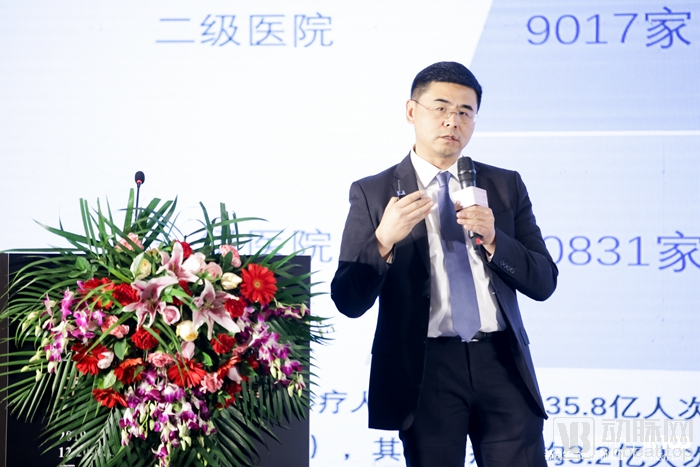
Policy Trends
Looking to the Future Through Policy. In September this year, the National Development and Reform Commission and other departments jointly issued the Action Outline for Promoting High-Quality Development of the Health Industry (2019–2022), further concretizing national strategy and clearly focusing on ten major initiatives: the project to expand high-quality medical and health resources, the “Internet + Medical Health” enhancement project, the quality improvement project for traditional Chinese medicine health services, the cross-sector integration project for health services, the technological innovation project in the health industry, the deepening development project for health insurance, the clustered development project for the health industry, the talent development project for the health industry, the business environment optimization project for the health industry, and the comprehensive regulatory project for the health industry.
In November, the state issued the newly revised "Administrative Measures for Health Insurance," focusing on meeting the growing health protection needs of the people. China's health insurance sector has enormous development potential and is experiencing rapid growth. There are several points in the newly revised measures that I find particularly noteworthy:
First, standardize insurance operations and optimize supply-side reforms. Emphasizing the regulatory tone of “returning to fundamentals” and “insurance is for protection,” we will actively advance supply-side reforms, meet diverse customer needs, regulate health insurance business practices, and safeguard consumer rights and interests.
Second, affirm the value of health services and encourage the integration of the health industry ecosystem. Insurance companies are encouraged to combine health insurance products with health management services to achieve the goals of reducing health risks and minimizing disease-related losses. The New Measures adjust the proportion of health management service costs to 20% of net premiums.
Third, encourage the application of big data and technology, with a focus on specialized operations. Promote the use of big data and other technologies in insurance operational risk control, raising higher requirements for the specialized operation of health insurance.
The Development of Digital Technology
When it comes to digital technology, I believe it is an indispensable component of the future mature world. According to consumer research conducted by Philips, 75% of surveyed consumers stated that digital technologies are very important for their health management. Meanwhile, McKinsey estimates that the market value generated by data-driven healthcare amounts to $500 billion, while global venture capital investment in digital health reached a high of $14.6 billion in 2018. Digital technology is driving a comprehensive upgrade of the health industry toward a customer-experience-centric model, enabling seamless, dynamic, and personalized products and services.
While digital technologies are reshaping human consumption patterns, they are also transforming the relationship between individuals and healthcare, thereby driving transformation and innovation across the entire healthcare industry. Medical activities such as consultations, hospital visits, and treatments are no longer confined to healthcare institutions; instead, patient-centered medical services are available anytime and anywhere. Treatment plans, clinical research, and drug development are shifting away from population-based approaches toward targeted, personalized, and precision therapies tailored to individual patients. The doctor-patient dynamic is evolving from a hierarchical relationship into a collaborative partnership, empowering patients with a voice in their treatment process. Healthcare data is no longer siloed within hospitals, laboratories, and insurance companies; the rise of wearable devices and mobile smart devices has significantly diversified the sources of health data. Throughout the diagnostic and treatment journey, physicians are no longer withholding information about treatment efficacy but are actively guiding patients by sharing relevant information. Furthermore, medical and health knowledge is no longer the exclusive domain of healthcare professionals and medical experts; ordinary individuals can now access professional health and medical information through the internet and social media platforms.
Four Major Future Trends in the Global Health and Wellness Industry
Trend 1: Payment and Accessibility of Healthcare Products and Services
Guided by value-based healthcare, the shift from fee-for-service to pay-for-performance; data integration between payers and providers for win-win collaboration, with informatics and digitalization capabilities being key.
Trend 2: Cross-Ecosystem Integration
Factors such as socioeconomic status, employment/occupation, social service systems, education, environment, community, and accessibility of healthcare services all have a profound impact on health. The traditional medical and health industry is integrating with enterprises in real estate, education, and transportation sectors; in the future, collaborative mechanisms will be established to address Social Determinants of Health (SDOH).
Trend 3: Consumer Demand for Healthcare Products and Services
Consumers are raising the bar for the price, quality, experience, and safety of products and services. Healthcare is shifting from a passive to an active model, moving from a provider-centric approach to a customer-centric one. The healthcare industry is transitioning from disease treatment to health management, with consumers taking a more proactive and direct role in managing their health—encompassing prevention, early intervention, and the achievement of holistic physical and mental well-being. Guided by personal health needs and risk assessments, consumers are actively curating personalized, comprehensive health management plans. Meanwhile, the industry is leveraging digital customer engagement to facilitate a transformation from B2C to C2B.
Trend 4: Technological Innovation Empowers Industrial Development
Digital technology, wearable devices, and the Internet of Things (IoT)/internet-driven healthcare will comprehensively enhance services. The healthcare industry will further integrate data with sectors such as retail, finance, and technology to support industrial development and upgrading. Technological innovation will drive a comprehensive upgrade across the industry, improving the speed and precision of diagnosis, treatment, pharmaceutical quality, products, and services, as well as enhancing self-management, patient/consumer experience, R&D of new drugs and medical devices, and personalized medicine. Meanwhile, the systematic construction of data security and compliance frameworks will be further refined and strengthened.
Fu Ziyi: Pathological Migration Prediction Models Enable Effective Health Management
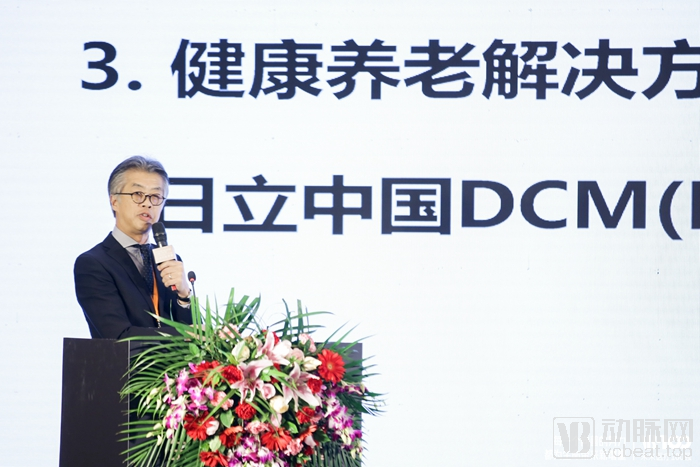
So-called pathological transition refers to the creation of a [Pathological Transition] model that analyzes the interrelated factors of various diseases by leveraging large volumes of prescription and physical examination data, thereby enabling high-precision prediction of medical costs associated with lifestyle-related diseases.
By leveraging machine learning to quantify the interdependencies among various health indicators, it is possible to model pathological progression and forecast future medical expenditures. For instance, current measurements of neutral fats (triglycerides), blood pressure, and blood glucose levels can be used to predict the risk of developing conditions such as diabetes, hypertension, and dyslipidemia.
Establishing this model requires the accumulation and learning of large volumes of data. The process begins with necessary data cleaning of the raw data, followed by constructing associations among attributes, building a similarity matrix between attributes, and calculating the conditional probability tables for each attribute node. After the learning phase, a disease progression model is developed: the raw data undergoes necessary cleaning to predict future medical costs and the incidence probability of certain diseases.
Using this pathological migration model technology, we have verified the physical examination and medical expenditure data of 110,000 Hitachi employees enrolled in the Hitachi Health Insurance Society, predicting future medical costs with an error rate of less than 5%.
Predictive models based on pathological progression frameworks can provide effective health management solutions, contributing to reduced healthcare costs. For instance, predictive technologies can be employed to deliver targeted health coaching to high-risk populations, helping individuals improve lifestyle habits, achieve weight loss, and prevent diseases.
Xing Liping: Innovation and Development of Third-Party Medical Services

As the involvement of private capital in healthcare deepens, third-party medical institutions have emerged as a new driving force for healthcare reform. From the perspective of national policy, the government has encouraged the vigorous development of third-party medical services since 2013, guiding the establishment of specialized medical laboratory and medical imaging centers. In 2017, policies explicitly encouraged medical imaging and clinical laboratory institutions to develop along the lines of group-based and chain operations. By 2018, support was extended to the outsourcing of hospital laboratory and imaging services. In June 2019, policies further supported collaboration between public hospitals and third-party medical institutions.
Amid the broader environment of healthcare cost containment, third-party medical institutions are also seizing opportunities for development. Cost-control measures across various regions have expanded from pharmaceuticals to medical consumables and diagnostic tests, forming a comprehensive encirclement. Outsourcing medical testing services to high-quality, high-standard third-party medical institutions represents the future trend for hospitals.
Nowadays, third-party medical institutions, particularly those specializing in medical technology services, have become important partners of the traditional hospital system. However, third-party medical testing centers face high entry barriers:
First, technical support.“Remote image interpretation” relies on the data transmission, storage, and processing capabilities of imaging data systems, the precision of imaging equipment, and the diagnostic expertise of radiologists; in the future, it will increasingly depend on the level of AI technology.
Second, industry standards.To achieve mutual recognition of imaging examination results across different institutions, it is necessary to establish and adhere to unified technical standards in the medical imaging industry, thereby minimizing interference caused by factors such as inconsistencies in human interpretation.
In this context, Ping An Insurance has accelerated the construction of its healthcare ecosystem and actively expanded into the third-party medical testing market. Through its subsidiary Ping An Healthcare Technology, it has established Ping An Health (Testing) Centers across China. Guided by the objectives of promoting tiered diagnosis and treatment and enabling regional sharing of medical resources, these centers have built an integrated service loop encompassing imaging diagnostics, clinical laboratory testing, and precision examinations.
In the field of medical laboratory testing, Ping An Health (Testing) Center has established a joint venture medical laboratory with Japan’s SRL Corporation, an internationally leading medical testing services group. By introducing a team of experts from China and Japan, and leveraging highly automated process design and internationally advanced precision management, the laboratory aims to set the gold standard for domestic testing technology and provide clients with high-precision clinical services.
Yu Jurong: Integrated Healthcare, Elderly Care, and Nursing Enterprises Are a Promising Direction for Investment Firms

We find that all elderly care issues can be summarized as those related to “health, wellness, and nursing,” which manifest in two forms: proactive medical and elderly care, and receipt of professional rehabilitation and nursing services, ultimately achieving the goal of a high quality of life and dignified aging.
The healthcare and elderly care sector is driven by multiple factors both domestically and internationally, including favorable policies, consumption upgrades, payment innovations, technological advancements, and diversified capital. As countries with prominent aging populations and pioneering elderly care industries, Japan and the United States offer valuable lessons in terms of systems and models. Japan’s public pension system and long-term care insurance system have evolved over several decades, with their robust institutional frameworks serving as the cornerstone of its elderly care services. A wide range of stakeholders, including industrial enterprises, real estate developers, insurance companies, financial conglomerates, and the government itself, participate in the supply side of elderly care services. In contrast, the United States represents a typical market-oriented model, characterized by diverse payment mechanisms and a supply side dominated by private enterprises.
China’s aging level is now comparable to that of Japan and the United States. Currently, China is at a turning point in the formation of its aged society. Over the next 8–10 years, the health, elderly care, and nursing sector in China is expected to enter a period of explosive growth, characterized by a sharp rise in demand and the emergence of industry leaders and listed companies.
Looking back at China, the country’s rehabilitation, elderly care, and nursing institutions have exhibited a state of “vigorous growth” after three decades of development, with numerous rehabilitation hospitals, nursing homes, care centers, and rehabilitation departments established. From the perspective of the capital market, more than ten years of evolution have yielded a clear trajectory: starting from traditional medical device manufacturers and distributors, moving through state-owned enterprises (SOEs) and central SOEs, then to market-oriented private equity (PE) and venture capital (VC), and finally to the current gradual entry of strategic investors. The landscape of capital inflow is now distinctly defined. Investment focus has also continuously shifted: from products to devices, and from platforms to services, with capital deploying comprehensive investments across the entire sector. In terms of investment performance, internet healthcare ventures based merely on hype, simple companion robots, and asset-heavy rehabilitation and nursing facilities built primarily around real estate appear to have limited prospects—“spring blossoms have faded.” Conversely, specialized service providers delivering serious medical-grade care, integrated companies offering combined medical and elderly care services, and B2B enterprises enhancing service efficiency and coverage are currently thriving—“summer flowers are in full bloom.” Meanwhile, sectors such as big data-driven innovative insurance payment models for patients with chronic conditions, practical assistive devices, smart products, and talent training and matchmaking platforms require greater patience; they need to undergo sufficient “summer growth” before yielding an “autumn harvest.”
Global population aging is accelerating, yet the process of addressing this challenge is complex and protracted. No single industry, company, or nation can bear this burden alone; instead, collective synergy is essential to effectively confront and resolve the issue. On one hand, stakeholders must share common values in tackling elderly care: moving away from isolated development and an excessive pursuit of short-term gains and speed, while embracing the potential for extending healthy lifespan, adhering to long-termism, and strengthening our shared commitment to our collective destiny. On the other hand, capital instruments can be leveraged to foster cohesion and drive collaborative synergies.