

Jiayou Jiankang and Li Ying: An Innovative Real Estate-Integrated Healthcare Model Creating New Growth Drivers for Primary Care Institutions
As China’s socio-economic landscape evolves at a rapid pace and the demand for health services continues to grow, healthcare institutions are extending their medical and health services into residents’ homes. Meanwhile, the real estate industry is entering a phase of upgrading, with “real estate–healthcare integration” garnering increasing attention. What innovations characterize the business models in this sector? What challenges will they encounter, and how can these be addressed?
At the recently concluded “2019 Top 100 Future Healthcare Companies” Conference, Ms. Li Ying, Co-founder and President of Jiayou Health, shared her insights on “Innovative Business Models in Real Estate-Integrated Healthcare,” setting a benchmark for the operational development of community healthcare, real estate-integrated healthcare, and preventive medicine.
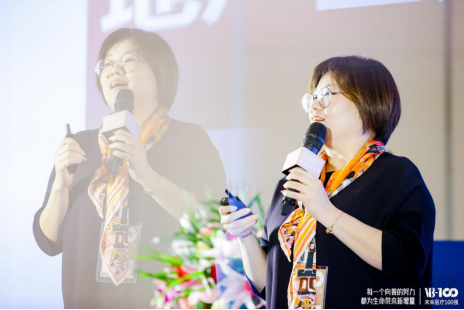
(Li Ying, Co-founder and President of Jia You Jian Kang)
Jiayou Health, established in August 2016, is one of China’s earliest medical brands dedicated to national health management, boasting years of medical expertise and an extensive pool of physician resources. Ms. Li Ying stated, “Since its inception, Jiayou Health has been defined by three core attributes: community healthcare, real estate-integrated healthcare, and preventive medicine.”
Community healthcare serves as a critical entry point in health management scenarios. According to data from the National Bureau of Statistics of China, there were 997,433 medical and health institutions nationwide in 2018, among which approximately 940,000 were primary care medical and health institutions, accounting for about 95% of all medical institutions. The total number of patient visits to medical and health institutions reached 8.308 billion, with primary care institutions handling 4.34 billion visits, representing approximately 53% of the total.
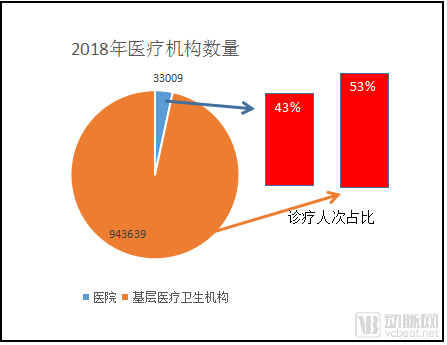
(Compiled from data of the National Bureau of Statistics)
In developed countries, primary care clinics handle 85%–90% of patient visits. By contrast, there is still significant room for growth in China. Ms. Li Ying stated, “While there is widespread optimism about primary care, community-based healthcare, and health management, confidence in physical healthcare institutions remains low. We believe that the foremost challenge for primary care clinics and private medical institutions is survival, followed by achieving a certain level of profitability, thereby enabling them to better serve residents.”
Since its inception, Jiayou Health has been contemplating how to ensure the survival of brick-and-mortar medical institutions. After years of exploration, Jiayou Health has finally identified a model that integrates community-based healthcare with real estate-linked medical services.
Integrating community healthcare with real estate-based medical services offers at least two advantages. First, primary care institutions can save on expensive rental costs by partnering with real estate-backed medical facilities. Second, real estate marketing efforts can help promote outpatient clinics, enabling residents to understand their service offerings and capabilities, thereby building trust among the community.
For real estate developers, it can enhance the value of their products and increase differentiated competitiveness in marketing. Currently, Jiayou Health has partnered with major real estate companies such as Shidi Group and R&F Group, continuously promoting the “Community Healthcare + Real Estate Healthcare” model.
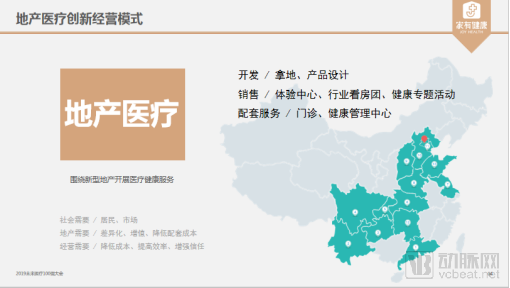
(Innovative Real Estate Healthcare Business Model, Photo Provided by the Company)
Since 2019, the monthly year-on-year sales area of commercial residential properties in China has been declining, clearly reflecting sluggish sales performance. In addition, the secondary housing market has also shown a downward trend. The development trends in the real estate sector include: first, a shift from product-based competition to service-based competition; second, a transformation from property development to community operations; and third, an extension from single-focus real estate business to integrated, innovative community platform services.
These development trends are an inevitable outcome of the real estate industry’s shift from new-build properties to existing stock, a result of social capital flowing into emerging industries such as healthcare, and a consequence of the ongoing trends in urbanization and urban renewal. Currently, most “real estate + healthcare” concepts in the market involve two independent entities that intersect at certain points but have yet to achieve long-term mutual benefit.
Real estate healthcare requires the integration of real estate into healthcare and healthcare into real estate; only by merging the two can sustainable, shared profitability be achieved. For example, consider the relationship between property developers and property management services: high-quality property management promotes property sales. Similarly, providing residents with high-quality medical services can also boost property sales.
The third pillar is preventive medicine. Jiayou Health believes that illness is a low-frequency event in community settings, where the majority of residents are healthy individuals. Furthermore, given current healthcare-seeking behaviors, patients tend to prefer large hospitals for treatment when they fall ill or are diagnosed with serious conditions. Therefore, outpatient clinics primarily focus on treating common ailments, as well as providing rehabilitation and preventive care management. From a business perspective, preventive medicine can also enhance the revenue and profitability of outpatient clinics.
Therefore, Jia You Jian Kang designs its service offerings with preventive medicine as the core focus. Its services include family physician services, skin management, rejuvenating medical aesthetics, children's health management, traditional Chinese medicine (TCM) wellness, oral health, telemedicine, rehabilitative exercise, stress relief, nutritional balance, public health services, and home hospital beds.
Li Ying stated, “During operations, basic medical services at the outpatient clinic account for only 30%–35% of revenue, while 65%–70% comes from preventive medicine and integrated medical-elderly care projects, including children’s health management and youth-oriented aesthetic medicine.”
The design of preventive medicine services does not imply that residents will proactively seek outpatient care for health management; rather, health management requires initiation and guidance by healthcare staff. In this process, Jia You Jian Kang has established a proactive prevention system within communities, with all services delivered by its medical personnel. This system comprises eight key components: health education lectures, free community clinics, home environmental risk assessment and mitigation, food and water quality safety testing, disease screening, community morning exercise programs, in-home dust mite eradication, and rehabilitative exercise.
In addition to proactive prevention systems, the competence of outpatient physicians is another critical factor influencing trust. Li Ying believes, “Primary care physicians do not need to focus extensively on rare or complex diseases, but they must possess the ability to treat common illnesses and to identify and detect acute and critical conditions.” Therefore, Jia You Health conducts routine training for physicians in these two areas. Furthermore, Jia You Health commits to arriving at residents’ homes within five minutes. In the event of acute or critical conditions, this enables pre-hospital emergency care within the “golden five minutes,” which is of significant importance for safeguarding residents’ lives. By offering daily health advice from a friend’s perspective and being able to respond immediately when health issues arise, physicians play a vital role in building trust among residents.
In building trust with residents, Jiayou Health organizes various community-based initiatives. Its four core routine activities include regular free clinic consultations, preventive healthcare exercise sessions, health education lectures, and disease screening programs. Additionally, tailored signature events—such as the “Family Junior Doctor” program, Health Carnivals, and mass yoga gatherings involving thousands of participants—are launched based on the specific characteristics of local outpatient clinics. These activities not only strengthen relationships with residents but, more importantly, gradually reshape their healthcare-seeking behaviors, encouraging them to prioritize health and value medical services.
Proactive prevention systems and community activities are limited to health management within outpatient settings. To achieve comprehensive, multi-scenario health management coverage, it is essential to leverage the power of the internet. Therefore, Jiayou Health has developed the Jiayou Health Cloud HIS system. This system comprises an outpatient management module, a health management module, a customer relationship management (CRM) module, and the integration of residents’ lifestyle data.
By deploying smart products across multiple scenarios, residents' health data is aggregated into the cloud-based Hospital Information System (HIS). Leveraging this cloud HIS, Jiayou Health can more accurately construct comprehensive profiles of residents' lifestyles and health status, thereby enabling precise health management. In home settings, smart family doctor video speakers allow community residents to consult with their family doctors without leaving home and transmit health data in real time to their mobile devices. Smart micro-clinics are primarily distributed within communities to meet residents' three major needs: medication purchase, medical consultation, and diagnostic testing. Furthermore, Jiayou Health's portfolio of smart products also includes WeChat mini-programs and smart wearable devices.
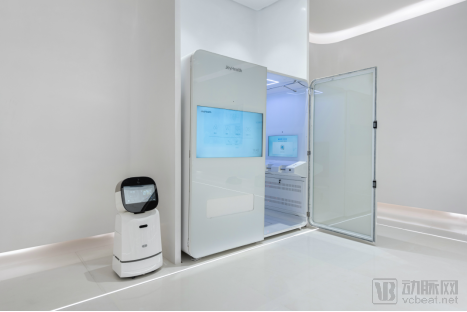
(Smart Micro-Clinic, image provided by the company)
Jiayou Health’s independently developed Micro-Clinic integrates remote video consultations, self-service medication purchases, and routine medical testing, comprising smart medicine cabinets and unmanned consultation rooms. The Micro-Clinic offers a range of services, including height and weight measurement, body fat analysis, temperature screening, blood pressure monitoring, blood oxygen saturation testing, ECG monitoring, skin assessment, and oral examination. Innovatively equipped with a remote auscultation module, the Micro-Clinic connects patients to physicians at Jiayou Health’s physical outpatient clinics. Physicians can assess conditions and prescribe medications via online auscultation. After receiving a prescription, patients can pay for their medications through a mobile device and collect them from the smart medicine cabinet located on the left side of the Micro-Clinic.
In addition to services such as medication purchases and medical consultations, basic health monitoring functions—including blood pressure, blood oxygen, heart rate, and body fat measurement—are provided free of charge.
In her speech, Li Ying revealed that in 2019, Jia You Health opened up certain business segments to chain franchising, and there were three key opportunities that prompted this move.
First, Jia You Jian Kang underwent a three-year journey from incubation to maturity. During this period, the company streamlined its internal standardized management and is now capable of exporting a standardized business model.
Second, in 2019, policies regarding privately-run medical institutions were relaxed. In May of this year, the National Health Commission, the National Development and Reform Commission, the Ministry of Finance, the Ministry of Human Resources and Social Security, and the National Healthcare Security Administration jointly issued the "Opinions on Carrying Out Pilot Programs to Promote the Development of Clinics." The "Opinions" will be piloted in ten cities, including Beijing, Shanghai, and Shenyang. The pilot measures include: simplifying the access procedures for clinics, removing planning restrictions on the establishment of clinics, and changing the management of clinics from a practice licensing system to a filing-based system. Meanwhile, physicians who have practiced in medical institutions for at least five years and hold intermediate or higher professional titles are encouraged to establish specialty clinics on a full-time or part-time basis.
Furthermore, the “Opinions” also point out that clinics should be encouraged to join medical consortiums, and support should be provided for their scaled-up and group-based development, thereby establishing standardized management and service models. The government is encouraged to include eligible clinics in the roster of medical institutions authorized to provide contracted family doctor services through government procurement of services. As a result, the barriers to establishing clinics will be lowered, and greater opportunities for development will emerge. It can be said that the springtime for clinics has arrived!
Third, Jiayou Health has developed a set of strategies to enhance residents’ health awareness, standardized them, and made them scalable for widespread adoption. Li Ying stated, “Regardless of which franchise partner we collaborate with, we have the capability and confidence to effectively manage customers by leveraging the standardized processes and strategies that Jiayou Health has refined over the past three years.”
“Jiayou Health maintains a highly open attitude toward franchise partners. Li Ying told reporters, ‘Jiayou Health adheres to a core principle: achieving win-win outcomes for all stakeholders. Residents, real estate developers, and future franchise partners must all derive benefits from the platform. This is the foundation of our collaboration.’”
For franchisees, Jia You Jian Kang welcomes anyone willing to engage in community healthcare and preventive medicine. The only requirement is that the franchisee must hold qualifications for operating a medical institution. Li Ying stated, “Based on our three-year review, we believe that outpatient clinics with a medical background and foundation are better positioned to deliver high-quality services.”