

VINNO Technologies Files IPO Prospectus: Pioneering High-End Domestic Ultrasound with Proprietary RF Metadata Platform and Dual-Drive Innovation Strategy

VINNO
High-end Digital Color Ultrasound Diagnostic Equipment and Related Technology R&D, Manufacturer
Have you heard of “GPS”?
Don’t misunderstand: the “GPS” referred to here is not the Global Positioning System, but rather the trio of Fortune 500 companies—General Electric (GE), Siemens, and Philips. For a long period in the past, these three giants dominated China’s high-end medical device market, collectively accounting for nearly 90% of the total market share. The remaining 10% was fiercely contested by numerous other foreign medical device companies, leaving domestic firms with little room to grow.
However, bolstered by intensified national policy support, advancements in industrial technology, and an influx of market capital, a wave of companies dedicated to the research, development, and manufacturing of high-end domestic medical devices has entered the arena, challenging the “GPS” trio of industry giants. Among them is VINNO Technology (Suzhou) Co., Ltd. (hereinafter referred to as “VINNO”), which is committed to creating high-end domestically produced ultrasound systems.
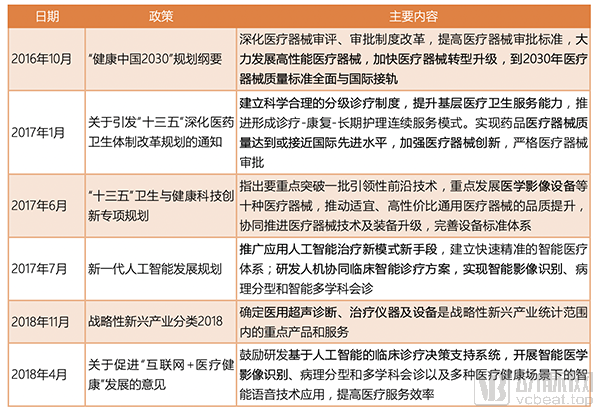
China's Medical Device Policies (2016-2018)
In mid-2019, VINNO was featured in a special episode of “Economic Half-Hour” on CCTV Finance Channel, titled “Frontline Investigation of China’s Economy: New Equipment, New Healthcare, New Health.” Its journey of innovation not only showcased the cutting-edge developments in China’s medical device industry but also helped more people recognize VINNO as a domestic ultrasound enterprise specializing in the R&D, manufacturing, and sales of high-end digital color ultrasound diagnostic systems and related technologies.
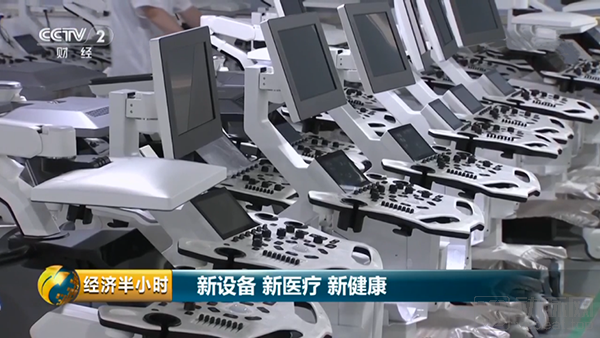
"Economic Half-Hour: New Equipment, New Medical Care, New Health" – Special Report on VINNO
“There are many ultrasound companies in China, but most are still concentrated in the mid-to-low-end market. Our original intention in starting the business was to build a high-end domestic ultrasound brand, and this goal has remained unchanged over the past nine years,” said Tian Yuan, Co-founder and COO of VINNO.
Recalling the company’s origins, Tian Yuan traced the timeline back to 2010. At that time, the domestic market for high-end ultrasound imaging equipment was still largely monopolized by imported brands, indicating substantial profits waiting to be captured. Meanwhile, numerous Chinese manufacturers had already established a presence in the mid-to-low-end market, accumulating certain brand recognition. Had VINNO followed a similar entrepreneurial path and positioning, it would not have possessed any distinct competitive advantage. Therefore, since its establishment in 2010, VINNO has been committed to breaking into the high-end ultrasound market.
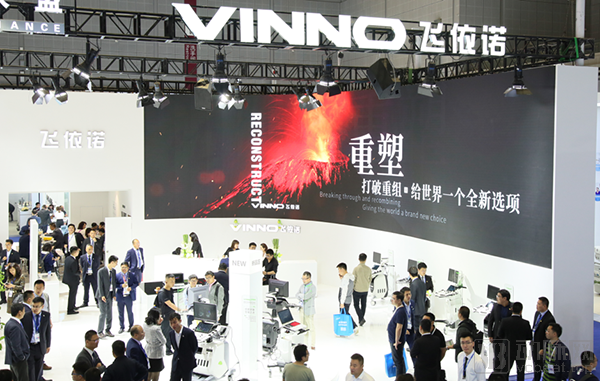
VINNO Makes Appearance at 2019 CMEF Exhibition
“To mitigate the patent risks associated with our former employer, we adopted an entirely new technical route and developed a proprietary RF radio frequency metadata platform,” Tian Yuan recalled. “However, this path was far from easy; it was fraught with uncertainty. As the first company globally to apply this technological approach, our R&D cycle lasted nearly four years. Not only did the timeline far exceed the original plan, but we also burned through over 100 million yuan in funding. Nevertheless, it was precisely this initial perseverance that paved the way for VINNO’s independent research and development capabilities.”
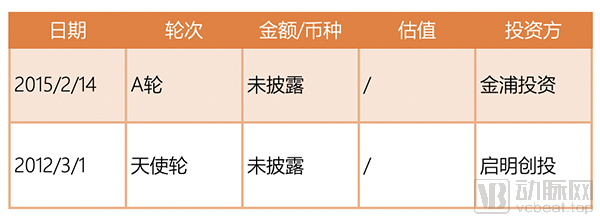
VINNO's Historical Financing Rounds
Four years after its founding, VINNO finally launched its own color Doppler ultrasound products in 2014, but its path to market was fraught with obstacles. On one hand, domestic and international markets had low recognition of Chinese brands, making it difficult for VINNO to gain sales traction; some foreign distributors even suggested positioning the brand as “Design in Germany, Made in China.” On the other hand, despite its focus on high-end ultrasound equipment, VINNO struggled to penetrate the market of Grade A tertiary hospitals, leaving the company facing a difficult strategic dilemma.
“Faced with the ‘stumbling blocks’ on our entrepreneurial journey, Tian Yuan admitted that the team also experienced hesitation and wavering, but ultimately chose to return to its original aspiration. ‘It is not easy to create high-end products, nor is it easy to build a brand, but can we not even uphold the identity of being a Chinese national brand? Therefore, we remained firm, telling every customer around the world that we are a “Design in China, Made in China” brand,’ said Tian Yuan. ‘On the other hand, if our products are not accepted by Grade A tertiary hospitals, how can they be considered high-end? So we initially focused on breaking through in the clinical departments of these hospitals, gradually gaining recognition from their ultrasound departments, which ultimately opened up the market.’”
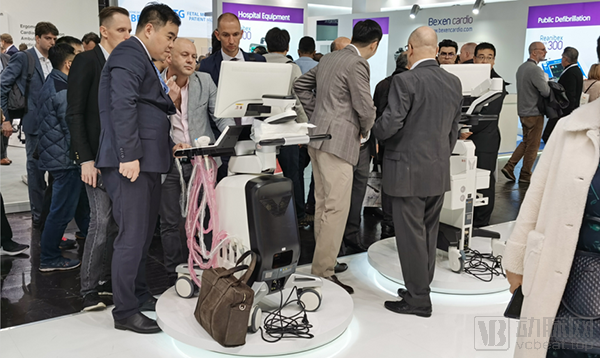
VINNO Makes Appearance at MEDICA 2019 in Germany
By combining superior imaging quality with multiple innovative technologies, VINNO has won the trust of more than 300 Grade-A tertiary hospitals in China. Notably, the Chinese PLA General Hospital (301 Hospital) procured eight VINNO ultrasound systems in a single purchase, supporting the development of domestically produced ultrasound equipment.
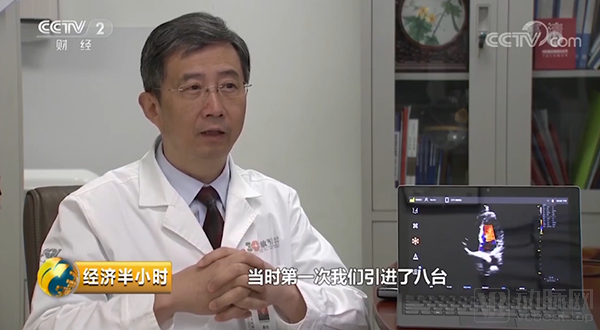
Professor Tang Jie, Honorary Director and Former Director of the Department of Ultrasound, First Medical Center of the Chinese PLA General Hospital
While consolidating its position in the domestic market, VINNO has also expanded globally, with its products exported to more than 80 countries and regions across Europe, Asia, Africa, and Latin America, earning widespread acclaim from experts and customers worldwide.
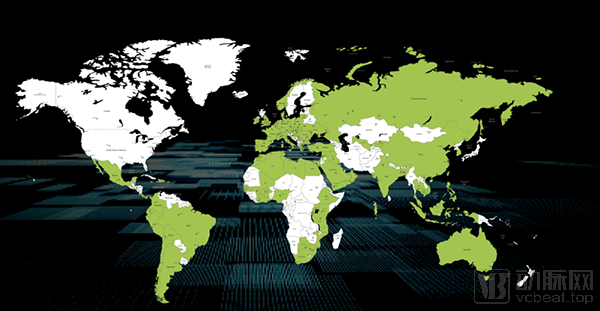
VINNO's Sales Footprint
The medical device industry, particularly in the high-end product segment, has exceptionally high entry barriers. Continuous investment in innovation and R&D is not only a key factor in enhancing the competitiveness of domestically produced medical devices but also VINNO’s most valuable competitive advantage. It is reported that the company has grown to a workforce of over 400 employees, with the majority belonging to the R&D team, and more than 50% of them possessing 15 years of R&D experience.
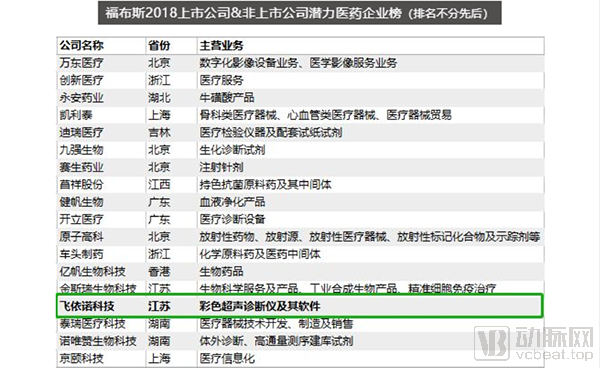
It is precisely with such an elite R&D team that VINNO has been able to undertake multiple national-level scientific research projects and be selected for the Forbes 2018 List of Most Promising Private Healthcare Companies, marking the global rise of China’s “intelligent” manufacturing.
To date, VINNO has launched more than 30 models of color ultrasound imaging equipment, primarily comprising two major series: console-based and portable systems. Meanwhile, the company began expanding its product line to include handheld ultrasound devices in 2016, and obtained EU CE certification for these products in November 2019. It is expected to receive CFDA certification in early 2020.
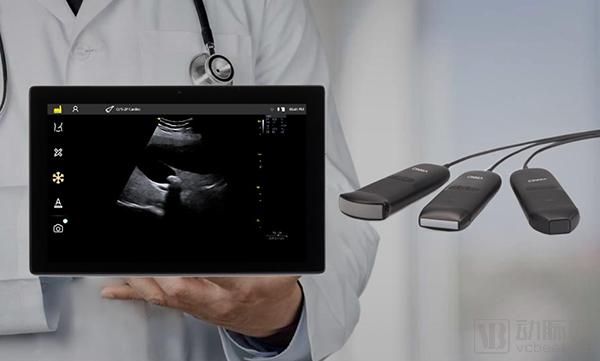
VINNO Handheld Ultrasound
In addition to the breadth of its product portfolio, VINNO is also committed to achieving professional excellence in the field of ultrasound. It is well known that image acquisition and processing form the foundation of ultrasound technology. VINNO’s independently developed RF (Radio Frequency) raw data platform can acquire raw diagnostic data at a volume 40 times greater than that of traditional technologies, significantly enhancing image contrast and resolution. When paired with a high-frequency 23 MHz transducer, this technology makes it possible to visualize minute lesions. Building on this foundation, VINNO is currently researching and developing next-generation platform technologies. The new generation of products based on this platform is expected to enter the market in the near future, aiming to deliver surprises that exceed customer expectations.

VINNO RF Radiofrequency Metadata Platform
Moreover, VINNO is an industry leader in ultrasound fields such as musculoskeletal imaging and cavitation, earning recognition from experts in clinical practice. “VINNO has innovatively launched an integrated ultrasound diagnosis and treatment system. Its cavitation technology features minimal side effects and high safety, reaching a world-class level internationally,” stated Professor Liu Zheng, Director of the Department of Ultrasound at the Second Affiliated Hospital of Army Medical University (Xinqiao Hospital), in a media interview.
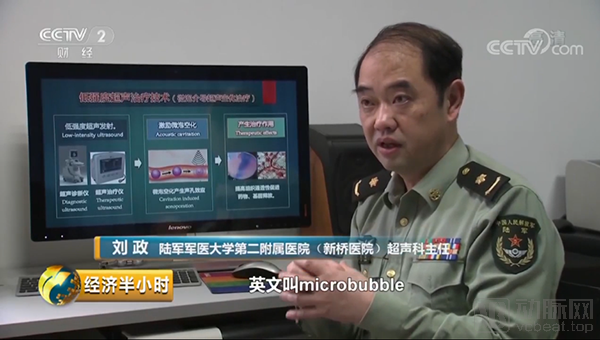
Professor Liu Zheng Explains Ultrasound Cavitation Technology
“Our R&D chain for ultrasound equipment is quite comprehensive, encompassing both hardware design capabilities and algorithm-level expertise,” said Tian Yuan. “To date, the company holds more than 200 invention patents, including over a dozen international patents.”
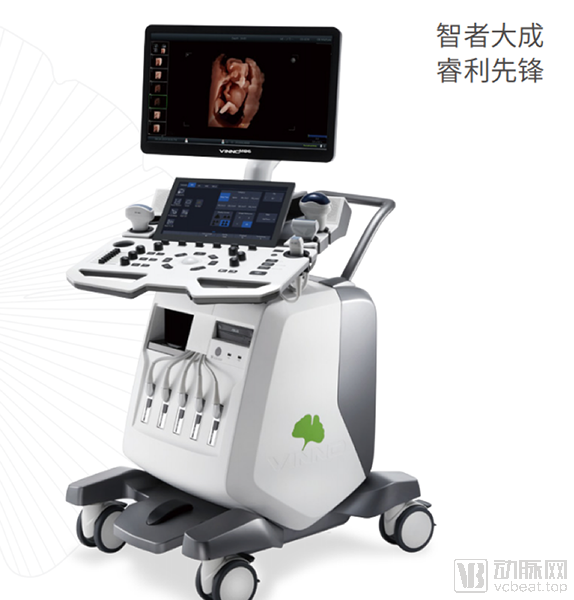
VINNO’s New High-End Flagship Ultrasound System — VINNO M86
On the other hand, to align with the trends in intelligent healthcare and remote diagnosis, VINNO has developed a remote ultrasound solution named “Xinglinghui,” which is currently operational in multiple regions worldwide. By enabling time-shared remote diagnostics, this platform facilitates the efficient utilization of medical resources and promotes the development of primary healthcare.

VINNO Remote Ultrasound Solution — Xinglinghui
Tian Yuan stated to VCBeat, “We believe the primary scenario for remote diagnosis should involve sonographers performing scans at a different location, with physicians at the backend conducting diagnoses during their available time. This is what we refer to as ‘time-shifted diagnosis,’ a approach that is more practical and easier to popularize. In the future, by integrating AI algorithms, relatively real-time diagnosis can be achieved.”
Regarding VINNO’s future development, Tian Yuan revealed to VCBeat that the company has made handheld ultrasound a strategic priority. “We believe that the democratization of ultrasound represents the next major growth opportunity in the field. We have allocated substantial resources to this area, and we aim to seize this opportunity.”
According to Signify Research, the global market size for ultrasound equipment was $6.9 billion in 2018, with handheld ultrasound devices accounting for less than 2% of total sales. Meanwhile, incomplete statistics indicate that there are currently only 14 players globally in this niche segment of handheld ultrasound, making it a vast blue-ocean market.
“Our handheld ultrasound device is used by connecting to a tablet and is not yet available for smartphones, as we believe the stability and overall performance of mobile phones do not yet meet our requirements,” said Tian Yuan. “Currently, multiple units are undergoing clinical trials externally, and customer feedback indicates that the image quality is excellently beyond expectations. We may make improvements in terms of weight and wireless connectivity.”
“In the future, we will continue to rely on the dual-wheel drive of ‘depth’ and ‘breadth,’ focusing on becoming the most professional provider of ultrasound solutions in specific clinical application segments. Through our handheld ultrasound devices, we aim to popularize ultrasound technology, making it a standard visual diagnostic tool for every clinician. Only by achieving technological depth can we expand our reach, ultimately forming a comprehensive and mutually reinforcing system.”