

Medical AI in 2019: Challenging Yet Promising Amid Efforts in Implementation, Regulatory Approval, and New Application Scenarios
After years of development, medical artificial intelligence has entered a phase of deepened growth. The industry has evolved from concept popularization to exploring product validation, implementation, regulatory approval, and commercialization. Meanwhile, its areas of empowerment have expanded from medical imaging to disease prediction, chronic disease management, healthcare quality control, and drug research and development.
Through collaboration with medical device manufacturers, hospitals, government agencies, and other stakeholders, artificial intelligence is gradually advancing the preliminary research and development of standards for intelligent medical devices, the construction of industry databases, research on technical evaluation and clinical trial methodologies, and the establishment of public service platforms.
Looking ahead, although the development of medical AI in 2019 encountered various difficulties, its significant role in the healthcare sector has been widely recognized by the industry, and it is subtly transforming medical practices and even healthcare models.
How Did Medical AI Develop in 2019? The Medical Artificial Intelligence Forum at the 2019 Future Healthcare Top 100 Conference, co-hosted by VCBeat and Yuanjing Capital, Provided Insights and Answers.
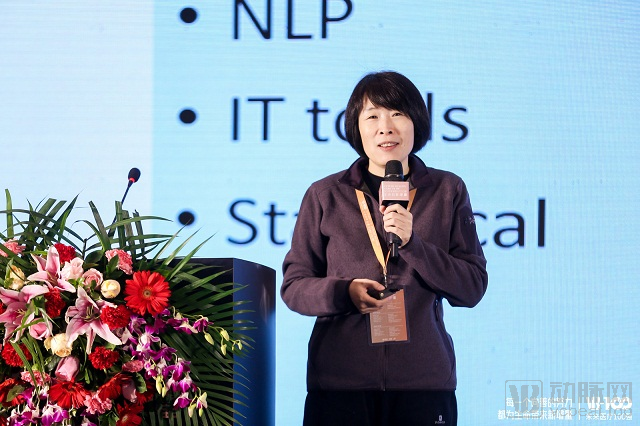
Director, Department of Medical Imaging, Peking University First Hospital Wang Xiaoying
High-quality AI products and services can significantly contribute to cost reduction and efficiency improvement in hospitals. Therefore, hospitals should actively collaborate with enterprises and universities to create a favorable environment for the application of medical AI. Developing AI within hospitals is not aimed at acquiring AI products per se, but rather at leveraging AI projects to optimize clinical workflows and facilitate the practical implementation of AI technologies in hospital settings. Specialized tasks should be entrusted to professionals; thus, hospitals need to partner with academia and industry to jointly realize the value of AI.
Hospitals should adapt to new technologies by transforming themselves. Currently, the Department of Medical Imaging does not provide a sufficiently favorable environment for the application of medical AI. First, traditional healthcare workflows are not conducive to the integration of modern information tools; we are striving to integrate PACS/RIS with AI systems. Second, the processes for generating, collecting, and processing medical data are not standardized. Unstructured data, data with ambiguous semantics, and individually acquired data all impair AI performance. Only by changing the work habits of healthcare professionals and standardizing clinical practices can standardized medical data be generated. Third, traditional medical imaging reports are not conducive to presenting AI results. We are experimenting with structured reports and combined text-and-image reports to publish findings, thereby improving the display of AI outputs and enhancing patient experience.
Work in the AI field should also broaden its horizons. The application of AI in healthcare extends far beyond image recognition and interpretation. Key metrics for evaluating healthcare services include quality, safety, efficiency, and patient experience, all of which represent critical needs for improving healthcare delivery. Director Wang Xiaoying stated that hospitals do not prioritize commercialization when developing and using products, nor do they focus primarily on algorithmic model research as universities do. Hospitals place greater emphasis on practicality; regardless of whether the informational or intelligent tools employed utilize deep learning, machine learning, or rule-based programming, they are deemed satisfactory as long as they are effective and user-friendly.
Hospitals maintain firm principles in their collaborations with academia and industry, with strict legal and regulatory compliance being paramount. AI scientific research projects must be formally established and can only be implemented after approval by the institutional ethics committee. AI-enabled clinical services must adhere to the Administrative Measures for the Clinical Application of Medical Technologies issued by the National Health Commission’s Bureau of Medical Administration and Healthcare Services, meeting the NHC’s basic requirements for medical institutions, personnel, technology management, and training management. Furthermore, data security is a top priority; Peking University First Hospital strictly prohibits any individual or organization from downloading or copying medical data without prior authorization. Only by operating within the framework of laws and regulations can we ensure the sustainable and healthy development of AI in hospitals.

Li Ming, Chief Medical Advisor for IBM Greater China
Last week, Paul Roma, President of Watson Health, published an article on IBM’s official blog outlining the development trends in the healthcare industry for 2020. He argued that while future trends continue to align with the core objectives of the past decade—namely, enhancing patient experience, improving efficiency, and reducing healthcare costs—the broader trajectory of the healthcare sector is increasingly shifting toward an inclusive, value-based health service system.
So-called value-based healthcare and value-based health can be simply understood as a cost-effectiveness relationship: achieving more with less spending. In fact, the goal of healthcare reform is to provide people with appropriate medical technologies, rather than so-called “the best” medical technologies. This value-based health system encompasses individual medical value and population-level social value, as well as technological value and the value of resource allocation.
Therefore, a value-based healthcare system necessarily involves more stakeholders and elements. It is fundamentally driven by technology, including artificial intelligence (AI), blockchain, cloud computing, the Internet of Things (IoT), and quantum computing. Without big data, algorithmic innovation, and increased computational power, AI would not have resurged in this new wave. Cloud computing significantly lowers the barrier to entry, while blockchain enables more participants to access data conveniently, rather than centralizing it in a single location. The emergence of quantum computers represents a disparity akin to that between nuclear weapons and conventional arms when compared to today’s classical computers, with IBM taking the lead in the commercial production of quantum computers.
Digital therapeutics deliver software-generated interventions directly to patients, aiming to prevent, manage, or treat physiological disorders or diseases. They serve as a beneficial complement to traditional treatment modalities and also involve health insurance payers and applications in the life sciences sector. Advantages include providing patients with more precise treatment plans and reducing the overall incidence of disease through prevention, early intervention, and superior value-based healthcare models.
IBM Watson Health is not only applied in the field of oncology but also has extensive applications across multiple domains within the broader healthcare system.
For instance, in the payer sector, solutions include medical payment programs, government health and healthcare initiatives, social security and care services, oncology and genomics solutions, provider solutions, life sciences solutions, and medical imaging solutions. In the life sciences field, IBM Clinical Development is prominently promoted in the Chinese market, effectively shortening clinical trial cycles. Micromedex provides clinicians and pharmaceutical researchers with a real-time, comprehensive drug information database. The health management service operation platform, built on IBM Watson Health SPM, offers intelligent, integrated solutions for chronic disease management and general health management. As for the well-known Watson for Oncology solution, it has already assisted over 50,000 cancer patients in China.

Ma Chun'e, Founder and CEO of Shukun Technology
We believe that artificial intelligence and human physicians do not stand in a relationship of mutual substitution, but rather one of human-AI collaborative intelligence. The synergistic collaboration between physicians and medical AI products yields superior outcomes compared to physicians working alone, particularly in terms of diagnostic and therapeutic efficacy, efficiency, and patient experience. As a tool, medical AI can facilitate the delivery of enhanced healthcare services.
For example, on October 16, the “Joint Research and Development Application Center for Health Information Technology” in Pinggu District was officially established. Eight technology enterprises, including Huawei, China Mobile, Shukun Technology, and Ping An Group, signed cooperation agreements with the Pinggu District Health Commission. Leveraging medical consortiums anchored by institutions such as Beijing Friendship Hospital and Beijing Hospital of Traditional Chinese Medicine, Pinggu District, together with hospitals and technology companies, is jointly building the “Pinggu Smart Healthcare Model.” By utilizing artificial intelligence and information technology, this initiative aims to serve as an effective gatekeeper for major diseases among the local population.
In December 2019, led by the Beijing Municipal Health Commission and in collaboration with the Pinggu District Health Commission and the health commissions of grassroots districts in the Beijing-Tianjin-Hebei region, the Cardiopulmonary-Cerebral Auxiliary Diagnosis Platform was incorporated into the “China Health Journey” initiative. At the launch event, 25 grassroots district health commissions from the Beijing-Tianjin-Hebei region signed agreements with Shukun Technology to establish the Beijing-Tianjin-Hebei Grassroots Medical Imaging Artificial Intelligence Center. Our aim is to deploy these proven technologies, already successfully utilized at major hospitals such as Peking Union Medical College Hospital and Beijing Anzhen Hospital, at the grassroots level. National healthcare reform policies have designated coronary heart disease and stroke as key targets for management, incorporating them into the Healthy China 2030 Planning Outline.
However, primary care institutions lack the corresponding technical personnel and outstanding medical experts. Therefore, it is necessary to introduce artificial intelligence as the first-line gatekeeper and establish connectivity with large tertiary Grade A hospitals to provide robust support. Shukun Technology aims to leverage the power of technology to reduce the incidence rates of these diseases.

Luo Shiming, Executive Director of VCBeat
Zeng Yongqin, Senior Director, Philips Innovation Center
In 2019, the development of artificial intelligence entered a phase of deepening complexity. Medical AI faced the test of commercial implementation, with major products increasingly adopted in clinical practice, integrated into hospital workflows, and entering the paid market. Medical AI products transitioned from a year of product validation to a year of market validation.
To this end, in 2019, VCBeat partnered with Philips to explore the latest advancements in medical AI applications in 2019, starting from the application scenarios of AI in hospitals and aiming at the commercial implementation of products. The study covered nearly 200 innovative companies, gathering rich first-hand information through interviews, field visits, questionnaire surveys, and expert consultations. It comprehensively analyzed the current state of the industry from multiple perspectives, including product attributes, implementation progress, business models, policies, capital, and bidding processes. The resulting report, titled "2019 China Medical Artificial Intelligence Report," is the fourth annual report on medical AI released by VCBeat over the past three years.
The report primarily covers the following: First, using the data flow of hospital diagnosis and treatment processes as the main thread, it focuses on various application scenarios of artificial intelligence in hospitals, shares solutions and practices from over 40 startups, and proposes the concept of an integrated, end-to-end AI-enabled hospital. Second, it updates the application data of the interviewed enterprises for 2019. Third, it analyzes the potential business models of various medical AI applications from different dimensions of business modeling. Fourth, it compiles statistics on the backgrounds of marketing heads at more than 40 medical AI companies and analyzes their market promotion strategies in 2019. Fifth, it indirectly validates market acceptance by leveraging hospital bidding and tendering data alongside corporate financing and investment data.
For the detailed report, please scan the QR code below.

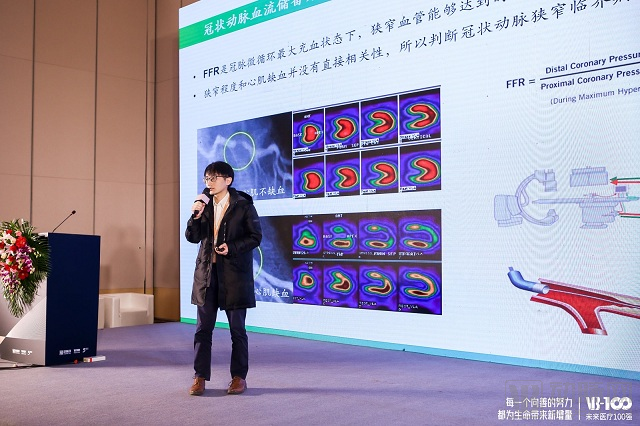
Fang Qu, President and CTO of Xingmai Technology
Value-based healthcare, in layman’s terms, is akin to the concept of return on investment in business operations: reducing healthcare expenditures while ensuring medical efficacy. This concept aligns well with the current environment of health insurance cost containment.
For instance, although individuals insured for cardiovascular and cerebrovascular conditions account for no more than 5% of the total insured population, these conditions consume over half of the medical insurance fund. Overall, the financial burden of cardiovascular and cerebrovascular diseases on the medical insurance system is substantial. High-value consumables, represented by coronary stents, are a significant factor influencing cardiovascular expenditure. Currently, the National Healthcare Security Administration is reducing the prices of high-value consumables through measures such as zero-markup policies, centralized procurement, and anti-corruption initiatives, which have significantly lowered the costs of diagnosis and treatment for cardiovascular and cerebrovascular diseases.
Meanwhile, Xingmai Technology aims to leverage technological solutions to optimize stent utilization while ensuring the quality of diagnosis and treatment.
The 2017 American College of Cardiology guidelines on FFR diagnosis state that FFR measurement can provide more rational guidance for stent use while ensuring procedural quality. However, due to limitations such as the high cost, invasiveness, and radiation exposure associated with invasive FFR measurement, this technology has not been widely adopted in China.
By integrating DSA data with CTA imaging for model training, Xingmai Technology has conducted in-depth R&D by leveraging innovative approaches such as deep learning and hemodynamics. Aligned with clinical needs and building upon the principles of computational fluid dynamics (CFD) simulation, the company has independently developed a fully automated mesh generation technology and a proprietary CFD solver. This innovation reduces the processing time from the original 4–6 hours to just 10 minutes, eliminates the need for involvement by fluid dynamics engineers, and ensures high accuracy.
Building on this foundation, Xingmai Technology has further developed a preoperative planning system for coronary artery bypass grafting (CABG). Due to the complexity of CABG procedures, it is challenging for surgeons to determine the optimal length of the graft vessel preoperatively. Excessive graft length increases patient trauma, while insufficient length may compromise drainage efficacy. Additionally, key decisions remain regarding the selection of anastomotic start and end points, as well as the sequencing of sequential grafts. While experienced surgeons can mentally simulate postoperative hemodynamic changes, many lack such extensive experience.
Through the coronary artery bypass grafting (CABG) preoperative planning product independently developed by Xingmai, physicians can directly select the length and diameter of the graft vessels, as well as the anastomotic start and end points, using a mouse on the platform. Subsequently, within 5 to 10 minutes, the system can simulate hemodynamic changes within the grafts, including variations in pressure and wall shear stress. Wall shear stress has a significant impact on the vessel lumen and is strongly correlated with postoperative graft re-occlusion. Collectively, these parameters provide valuable guidance for cardiac surgeons.

Huang Gao, Chief Scientist at Xiaobai Century
After years of development, deep convolutional network technology has advanced rapidly, and its integration with medical imaging has seen extensive practical application. However, when applying algorithms to real-world medical data, we still face numerous challenges: First, interpretability. Physicians rely on deep convolutional networks for assisted diagnosis, requiring not only diagnostic results but also interpretable reasoning, as the rigor of medical practice mandates a thorough understanding of the underlying basis. Second, multimodal diversity of data. Medical data encompasses not only images but also textual information and other modalities. Third, causal inference, which remains a highly challenging issue in the field of AI. While correlations can be identified through various algorithms—for example, data may reveal a correlation between smoking and lung disease—determining causality from data is significantly more complex. Fourth, the generalizability of AI models across different devices and medical centers. Fifth, the integration of AI algorithms with medical knowledge.

Tian Min, Partner at Yuanjing Capital
Reviewing the current landscape of innovation in the healthcare industry, we believe that China’s “AI + Healthcare” market is still in a relatively early stage. However, with continued favorable policies and in-depth technological exploration, we are optimistic about various fields that integrate AI data with medical technologies.
In our view, AI technology can play a significant role in both the pharmaceutical and healthcare sectors. This encompasses pharmaceutical-related areas such as drug discovery, drug synthesis, preclinical CRO, and clinical CRO, as well as the healthcare industry chain closely tied to patients, including early diagnosis and screening, medical record analysis, disease diagnosis, and post-treatment rehabilitation.
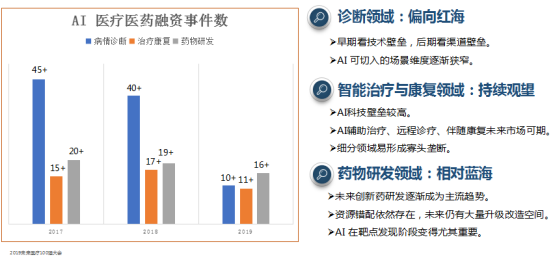
A comparison of financing events in the AI healthcare and pharmaceutical sector in 2017, 2018, and 2019 reveals that disease diagnosis attracted the highest number of investments among the three key areas—disease diagnosis, treatment and rehabilitation, and drug R&D. Within this segment, medical imaging-assisted diagnosis accounted for as high as 80%, making it a veritable red ocean market.
In the diagnostics sector, particularly in medical imaging, countless companies have flooded the market since 2016, launching startups across various imaging specialties. However, the initial technological barriers in this field were not as high as anticipated, whereas the exploration of sustainable business models and long-term development pathways has proven to be a protracted endeavor. Nevertheless, AI plays a significant role in early screening and diagnosis of diseases, especially in primary care settings where medical resources and expertise are limited.
The rehabilitation sector primarily focuses on chronic disease management based on various physiological data, and several companies in China have already begun exploring this field. In recent years, as China’s population aging intensifies, the demand for rehabilitation services among the elderly has grown. Consequently, wearable assistive rehabilitation devices and chronic disease monitoring and management systems present significant market potential. We continue to monitor emerging opportunities in this sector.
In the field of drug development, significant differences still exist between China and the United States. A large number of medical AI companies in the U.S. are concentrated in drug R&D, while in China, returnee teams and local teams have begun making various attempts in this area over the past two years. Relatively speaking, China is still in the early stages of development in this field, but it holds enormous market potential. As AI-enabled drug research involves high technical barriers, enterprises need to establish technical collaborations with major companies in the early stage, and later rely on continuous data accumulation and the construction of business models to build their own industry barriers.

Wang Jian, CEO of Jianhai Technology
Jianhai Technology primarily leverages artificial intelligence to assist with patient follow-up and chronic disease management.
The healthcare industry is segmented into five markets: health management, pre-diagnosis, diagnosis, post-diagnosis, and rehabilitation. While the pre-diagnosis and diagnosis stages are widely recognized by the public, the post-diagnosis phase—spanning from patient discharge to follow-up outpatient visits—is often overlooked within the broader healthcare system. Jianhai Technology primarily focuses on the post-diagnosis market.
The challenge in post-consultation patient management lies in the excessive workload. National policies encourage family doctors to take charge of patient care, and in the current landscape of internet-based healthcare, chronic disease management is also assigned to physicians. However, I believe this is difficult to achieve because doctors are a scarce resource within the entire healthcare system. Therefore, Jianhai Technology aims to leverage AI to enhance productivity in the healthcare industry, thereby enabling more effective patient management.
We found that in hospitals, nurses rather than doctors are usually responsible for postoperative patient management. Therefore, our first step was to develop a virtual nurse to serve as an intermediary between doctors and patients, assuming responsibility for patient management.
Furthermore, while there is a substantial body of research and guidelines on clinical pathways in China, literature and guidance specifically focused on patient management pathways remain relatively scarce. Although wearable devices are currently employed for chronic disease monitoring and physiological assessment, they have not yet facilitated effective patient management. To address this gap, Jianhai Technology has systematized disease-specific knowledge bases to construct a knowledge graph for patient management.
Jianhai Technology’s approach to post-consultation patient management is the Whole-Course Dynamic Pathway. We streamline the patient’s post-consultation management pathway by generating a fixed tracking path based on the patient’s initial visit, diagnosis, medication, medical advice, and laboratory/imaging tests. When a patient’s treatment plan changes, all subsequent follow-up content is dynamically adjusted. This means patients are managed according to post-operative care protocols rather than being managed solely based on their initial disease classification.
To this end, Jianhai Technology has developed an intelligent AI follow-up system, with its core advantage lying in its AI technology—the Jishi Brain. Equipped with intelligent interactive assistance, intelligent decision support, and intelligent processing engines, it integrates technologies such as deep learning, big data processing, speech synthesis, recognition, and analysis. Through channels like telephone calls and WeChat, it assists medical personnel in carrying out hospital follow-ups, satisfaction surveys, follow-up visit reminders, and chronic disease management.

Tu Weiwei, Head of Healthcare Business and Chief Scientist at 4Paradigm
The fourth paradigm is characterized by using machines to uncover patterns in massive datasets. Due to the high reproducibility of machines, patterns can be continuously discovered from data with the aid of AI algorithms, wherever data is available.
There are four core issues in the prevention and management of diabetes: prediction, intervention, management, and public education.
To this end, 4Paradigm and Ruijin Hospital have jointly launched chronic disease management products such as “RuiNing ZhiTang” and “RuiNing ZhiXin.” With minimal input indicators, these products can assess and predict the risk of common conditions—including diabetes and diabetes-related cardiovascular complications—along with associated risk factors, for at least the next three years. They provide personalized intervention plans to help users engage in long-term self-management. The product series offers targeted support for all three levels of chronic disease prevention as defined by the World Health Organization. Leveraging 4Paradigm’s leading artificial intelligence technologies and Ruijin Hospital’s cutting-edge research on metabolic diseases, the series features high screening accuracy, medically interpretable predictive metrics, personalized intervention strategies, and capabilities for sustained self-management.
As a technology company, we do not possess medical expertise. Therefore, we believe we should identify our appropriate role by focusing solely on the technical aspects during product development. We provide our partners with our capability to extract patterns from data, thereby empowering various medical fields, including medical insurance, commercial insurance, health management, computer-aided diagnosis, medical imaging, and drug research and development.

Lü Hairong, Co-founder of iYisheng and Associate Researcher at Tsinghua University
Despite significant advancements in medical AI to date, few solutions have achieved practical clinical adoption. The primary reasons cited by physicians are a lack of trust in AI products and poor user experience. The lack of trust stems from the following factors:
First, data issues. The low quality and lack of credibility in source data make it difficult to ensure the reliability of trained models and algorithms.
Second, the issue of machine learning “black boxes.” If the models we train exhibit bias, particularly systemic bias, the consequences can be severe; diagnostic errors may occur without any visibility into the underlying logical processes. This flaw undermines confidence among many users, physicians, and industry practitioners in the models they have developed, making it even less likely that clinicians will adopt them.
For instance, AI-driven pathological research conducted in school laboratories can yield model algorithms with accuracy rates exceeding 99.9%. However, when these products are deployed in clinical settings, their clinical utility remains limited. This is because physicians make diagnoses based on clinical guidelines, professional experience, and historical case reviews. Only by integrating expert systems, probabilistic graphical networks, and knowledge graphs into the models can we instill confidence in their clinical application among physicians.
How to Make Medical AI Trustworthy? I Believe There Are Several Perspectives:
First, knowledge management. Inputting clinical guidelines and medical knowledge bases into the system. IBM Watson has done an excellent job in this area.
Second, knowledge graph construction. After machine entry of data, a high-quality knowledge graph can be formed.
Third, case-based learning. This approach combines traditional data-driven model building with a curated case library.
Fourth, ensure seamless interaction between the aforementioned system and users. Therefore, the most critical task is to build a full-stack visualized system for interaction and explanation. This approach facilitates effective and timely engagement between the underlying logic and knowledge base and both physicians and general users.
The core capabilities built by full-stack AI include: listening, speaking, seeing, thinking, learning, and interaction.
Hu Zhigang, General Manager of Silicon Intelligence
With the development of medical AI to its current stage, regulatory approval has become the industry’s primary focus, serving as a critical prerequisite for large-scale commercialization by enterprises. In May, Silicon Intelligence’s products entered the NMPA’s Green Channel for expedited review of Class III medical devices. In December, the National Medical Products Administration (NMPA) conducted an on-site quality management system audit at the company.
Regarding the Class III medical device certification for AI-based medical products, the National Medical Products Administration (NMPA) primarily focuses on four aspects in the innovative medical device approval process: First, core algorithm patents must clearly demonstrate their application in the company’s products, with a thorough explanation of the core algorithmic technologies and how they are integrated into the product. Second, product finalization requires clear documentation of the sources of standard data, with explanations provided from the perspectives of quantification and traceability. Third, the product must demonstrate significant clinical value, supported by real-world clinical data proving its effectiveness in addressing clinical problems, which should be submitted to regulatory authorities.
Key Points for the Review of Deep Learning-Assisted Decision-Making Medical Device Software: Similar to other product development approaches, the process can be divided into stages such as clinical needs analysis, data collection, algorithm design, and verification and validation, among which data is the most critical element.
Data collection encompasses activities such as data acquisition, data preprocessing, data annotation, and dataset construction.
Data collection places greater emphasis on the compliance of data sources and the diversity of data. To achieve better alignment between products and clinical practice, data collection must take into account factors such as disease composition, geography, population distribution, medical devices, institutional hierarchy, and epidemiology. Furthermore, data quality assessment, the degree of data de-identification, and data transfer methods must all comply with established regulatory standards.
Data Preprocessing: This includes data cleaning and data processing. The preprocessing phase must consider the impact of the selected methods on the product and associated risks, and clearly define the state of the data before and after preprocessing. Furthermore, the software tools used for preprocessing must be validated to demonstrate the reliability of the data processing.
Data Annotation and Quality Control During the Annotation Process. Annotators must meet clearly defined qualification requirements, undergo rigorous training and assessment, and the annotation process should specify standardized workflows and methodologies, with continuous quantitative analysis of annotation quality.
Construction of the Dataset: Following rigorous annotation, a labeled dataset is established and subsequently partitioned into training, validation, and test sets. Key considerations for dataset partitioning include clinicians’ practical experience and the specific requirements of algorithm experts. Furthermore, data partitioning must account for sample distribution and clinical needs. The training set should maintain a balanced sample distribution to ensure adequate learning across various disease categories. In contrast, the validation and test sets should reflect the actual disease prevalence encountered in real-world clinical scenarios, while also accounting for potential confounding factors from other diseases.