

ThinkArI Bio Secures Tens of Millions of RMB in Series A Funding Led by Mifang Capital to Build a Full-Chain Diagnostic Platform Focused on Flow Cytometric Applications and Reagents
VCBeat (WeChat ID: vcbeat) has learned that Shenzhen Xinkairui Biotechnology Co., Ltd. (“Xinkairui”) recently announced the completion of its tens-of-millions-yuan Series A financing round, led by Mifang Capital and participated in by Shenzhen Investment Holdings.
Currently, flow cytometry is primarily used in clinical settings for cell-based analyses, including lymphocyte subset analysis, immunophenotyping of hematologic malignancies, detection of other hematologic disorders, and evaluation of male infertility.
Over the past decade, the application of flow cytometry in clinical and research settings has gradually expanded. The domestic market for conventional flow cytometry products has experienced rapid growth, with a compound annual growth rate (CAGR) of approximately 25%. However, clinical testing items remain relatively concentrated, and sample pre-processing as well as subsequent data analysis are extremely complex and specialized, demanding substantial expertise from operators. These factors have significantly constrained the market development of flow cytometry-based assays within this niche clinical segment.
However, with the maturation of liquid bead array technology, flow cytometry applications have gradually expanded into the fields of proteins and molecules, particularly demonstrating significant growth potential in reproductive health, combined testing of tumor markers, autoimmune diseases, combined testing of cardiac and heart failure biomarkers, and multiplex pathogen detection.
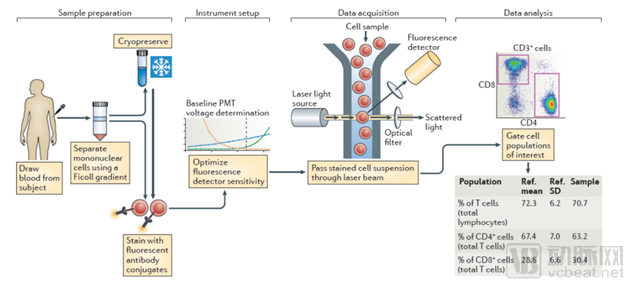
Flow Cytometry-Based Liquid Bead Array Technology enables high-throughput protein and nucleic acid detection on flow cytometry platforms by encoding microspheres (e.g., based on microsphere size or the intensity of encapsulated fluorescence). Compared with traditional techniques, liquid bead array technology offers flexible multiplexing, high throughput, rapid analysis, cost-effectiveness, and high accuracy. It also allows simultaneous detection of proteins and nucleic acids on a single platform, representing the developmental direction of basic life sciences research and medical diagnostics. Industry experts regard it as one of the trending technologies in clinical diagnostics.
Xinkairui Bio possesses a POCT flow cytometry analysis system based on microfluidic chips, as well as a benchtop flow cytometry analysis system primarily utilizing optical fiber and micro-nano technologies. The POCT flow cytometry analysis system is compact and portable, achieving true handheld functionality to meet the diverse needs of various clinical end-users.
This device can directly test samples such as whole blood, serum, and plasma, with results readable within minutes. It eliminates the need for complex and highly specialized steps like sample pre-processing and subsequent data analysis, greatly facilitating use across various clinical departments. This makes it possible to expand flow cytometry testing to hospital outpatient and emergency departments, surgical units, community hospitals, township hospitals, nursing homes, private clinics, and even home settings.
The core technology of the benchtop flow cytometry analysis system is derived from research and development outcomes created by Canada’s National Optics Institute for the Canadian Space Agency, and it has traveled to space with astronauts from NASA and the CSA, completing blood testing missions aboard the International Space Station.
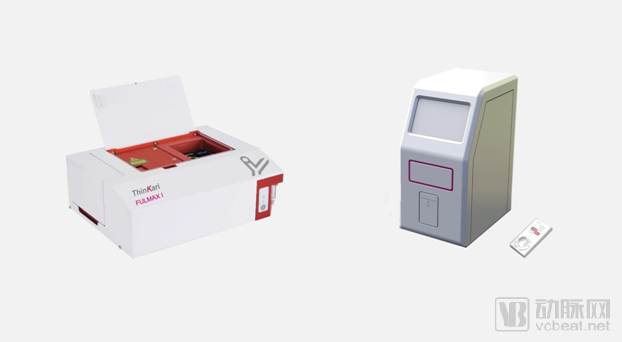
Furthermore, XinKairui Biology’s proprietary technology enables precise fluidic control, staining, incubation, mixing, amplification, and fluorescence detection on microfluidic chips. Leveraging this technological platform, the company has not only developed a fully automated flow cytometer and an integrated, user-friendly point-of-care testing (POCT) analysis system, but also launched a variety of high-quality diagnostic reagents tailored to clinical needs, thereby ensuring the accuracy and stability of clinical testing.
From 2011 to 2020, the global flow cytometry market size grew at a compound annual growth rate (CAGR) of 10.3%, reaching USD 6.5 billion in 2020. In China, the CAGR during the same period was 24.4%, with the domestic flow cytometry market size projected to reach approximately RMB 6 billion in 2020.
Currently, foreign enterprises hold a monopoly in the domestic flow cytometry market, with BD and Beckman alone accounting for over 90% of the market share. XinKaiRui’s flow cytometry analysis system is poised to break this foreign monopoly by leveraging its lower cost, superior capability for simultaneous multi-analyte detection, and differentiated product features and strategic positioning.
POCT is premised on clinical departments as its primary application scenarios. Currently, both domestic and international POCT applications are concentrated in clinical departments. However, with the gradual advancement of China’s tiered diagnosis and treatment policy and the construction of the “Five Major Centers,” the primary care market and emergency centers—currently in their early stages of development—will become the main application scenarios for POCT in China in the future. The substantial market potential, coupled with policy implementation, will drive large-scale volume growth for the POCT industry.
XinKairui’s POCT products effectively address the pain points of existing flow cytometry solutions, such as high costs, complex operations, and cumbersome maintenance, providing a simple and user-friendly, “foolproof” testing platform for laboratories at all levels, emergency departments, clinical departments, and centers for disease control and prevention.
Jiahua Dou, founder of XinKaiRui Biotech, holds a Ph.D. in Electrical Engineering from the University of Toronto, Canada, and has over 15 years of R&D experience in micro/nanofabrication, integrated photonics, and microfluidic devices. Co-founder Lu Chen holds a Ph.D. in Analytical Chemistry from the University of Toronto, Canada, and has over 15 years of experience in innovative research, product development, and management in the field of point-of-care diagnostics.
The two co-founded ChipCare in Canada, successfully developing a handheld point-of-care testing (POCT) system for CD4+ T-lymphocyte counting based on microfluidic chip technology, which was ranked first in the “Canada Innovation Challenge” by Canadian Business Magazine. Other core team members of the company are seasoned professionals in product development, R&D, and sales from leading IVD companies such as Luminex, Mindray, Guosai, and BGI.
Dr. Li Shanbing, Partner at Mifang Capital, stated that CoreCare possesses the advantage of autonomous control over core reagents and consumable raw materials, such as coded microspheres and microfluidic chips, along with a core technical team spanning multiple disciplines. Mifang Capital is optimistic about CoreCare’s unique product and technological advantages in the field of flow cytometry analysis and will integrate its industrial layout and resources in the IVD sector to advance hand in hand with CoreCare.