

Nobel Biocare Hosts International Digital Implant Symposium, Highlighting Transformation in Oral Implantology and Launching Tooth-in-a-Box™
As the wave of emerging digital technologies, represented by 3D printing, artificial intelligence, and big data algorithms, sweeps across the globe, the manufacturing industry has entered the era of intelligent Industry 4.0. Benefiting from this trend, dentistry has transitioned from traditional techniques to the era of precise digital dentistry, officially ushering in Dentistry 4.0 and injecting new momentum into the development of oral diagnosis and treatment.
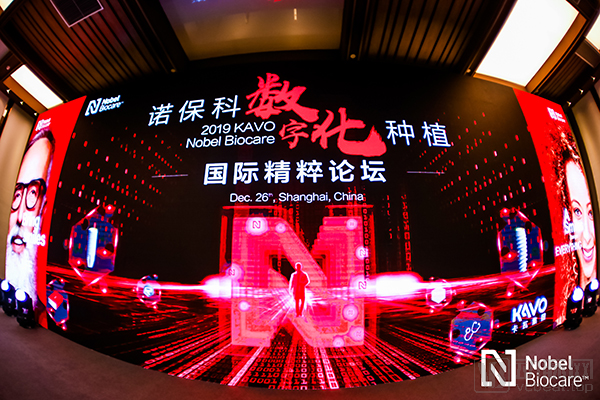
In line with the development trends of digital dentistry, the International Essence Forum on Digital Implantology, hosted by Nobel Biocare, a global leader in the field of dental implants, kicked off in Shanghai on December 26, 2019. The forum invited experts and scholars from both domestic and international fields of oral implantology to share cutting-edge applications and case studies in digital implant restoration with all attendees.
At the forum, keynote speaker Dr. Jun Fujinami, who holds a Bachelor’s degree and a Ph.D. from Tokyo Dental College and is the founder of Fujinami Dental Clinic, delivered two keynote presentations: “Comprehensive Application of Digital Technologies in Implant Dentistry” and “Digital Implantology in the Anterior Esthetic Zone.” He noted that the traditional digital implant workflow involves multiple steps, including preoperative CBCT imaging, impression taking, fabrication of diagnostic wax-ups, and subsequent scanning for data integration; however,Nowadays, by simply acquiring the patient’s CT and intraoral scan data, clinicians can immediately use implant planning software for preliminary treatment planning. Once the treatment plan is finalized, if chairside surgical guide printing is available, the surgery can be performed on the same day, significantly reducing the patient’s visit time.
Meanwhile, Dr. Jun Fujinami noted that among the commonly used digital software brands in Japan, Nobel Clinician®, developed by Nobel Biocare, holds a market share of approximately 30%, surpassing similar products from other competitors and enjoying widespread popularity among clinicians.
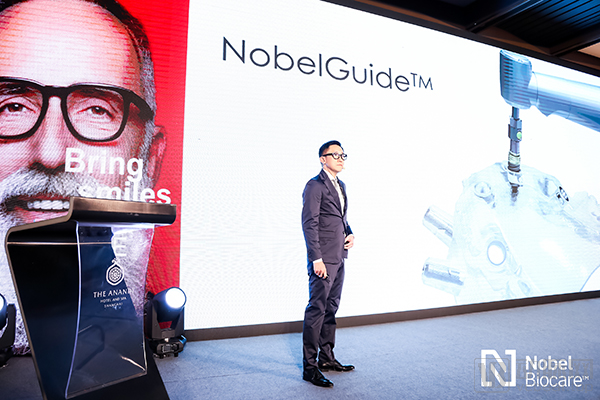
Prof. Jun Fujinami
In addition, Dr. Zhou Guohui, an expert in oral implantology and maxillofacial surgery, Honorary Associate Professor at the Faculty of Dentistry of The University of Hong Kong, Visiting Professor at Shanghai Ninth People’s Hospital affiliated with Shanghai Jiao Tong University, and founder of the Century Mao Implant Centers in Shanghai and Hong Kong as well as Pinzhong Dental in Shanghai, delivered keynote speeches on “Digital Solutions for Oral Implant Restoration” and “Freehand, Surgical Guides, and Real-Time Navigation: Clinical Applications in Oral Implant Surgery.”
Professor Zhou Guohui stated,Digitalization is the trend in dental implantology. By integrating various digital technologies, such as cone-beam CT and intraoral scanning, different techniques and treatment plans can be tailored to diverse indications for dental implants.Meanwhile, the rapid advancement and cost reduction of 3D printing technology have facilitated its widespread application in dental implantology, orthognathic surgery, and oral and maxillofacial tumor treatment. Furthermore, the extensive clinical adoption of intraoral scanning and Digital Smile Design (DSD) has significantly shortened consultation times, streamlined treatment planning for clinicians, enhanced doctor-patient communication, and yielded superior aesthetic outcomes.
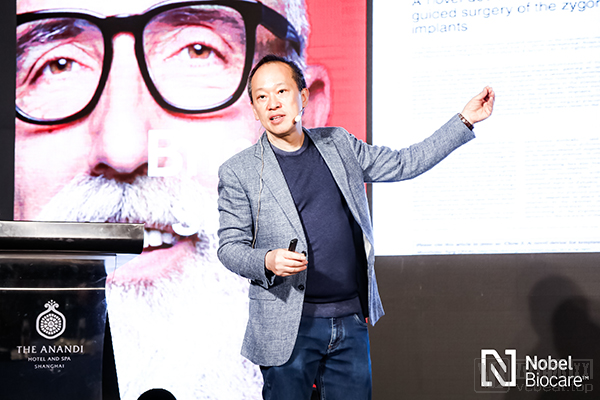
Teacher Zhou Guohui
Following the forum, VCBeat (WeChat ID: vcbeat) had the privilege of interviewing Professor Jun Fujinami and several leading clinical practitioners in China’s dental implant field who were among the first to adopt Nobel Biocare’s Tooth-in-a-Box™ digital implantology and restorative solutions. Together, they discussed the development pathways of digital implantology both domestically and internationally.
“Fast, precise, minimally invasive, and comfortable”—this is the consensus among all attendees regarding the advantages of digital implantology.
Traditional dental implant surgery relies on manual visual assessment to determine the placement of the implant fixture. In the absence of precise assistance from advanced technological equipment, dentists struggle to obtain a detailed understanding of the patient’s oral condition, often resorting to “blind” implantation based solely on experience and intuition, the drawbacks of which are evident.
Digital implantology relies on intraoral scanning technology to meticulously assess parameters such as alveolar bone density, height, and width. It facilitates the design of optimal biomechanical implant sites and accurately transfers preoperative planning data—including implant position, angulation, and depth—to the surgical procedure via surgical guides. This approach helps surgeons avoid critical nerves and blood vessels, thereby enhancing surgical safety and precision while reducing operative time.
“At first, we were quite apprehensive about adopting this technology. However, as we gradually implemented it in clinical practice, we found that the precision of digital implantology is actually very high,” said Xie Jiamin, Dean of Shanghai Moore Putuo Stomatological Hospital, in an interview.
Dean Xie noted that Moore Putuo Dental Hospital is arguably the first and most active user of Nobel Biocare’s Xiao Hong He™ in the Shanghai region. This premium, digitally customized implant and restorative solution is not only commendable for its implantation precision but also features a comprehensive digital workflow that makes implant surgery faster and more comfortable, thereby meeting the clinical demands of future developments in implant dentistry.
It is reported that the Nobel Biocare™ Red Box, launched globally as a flagship product by the Nobel Biocare China team, incorporates the use of original NobelGuide® fully guided surgical templates, enabling precision and minimally invasive procedures in implant surgery. Additionally, immediately restored prostheses fabricated based on preoperative digital design allow patients to “have teeth immediately, look beautiful immediately, and smile confidently right after surgery.”
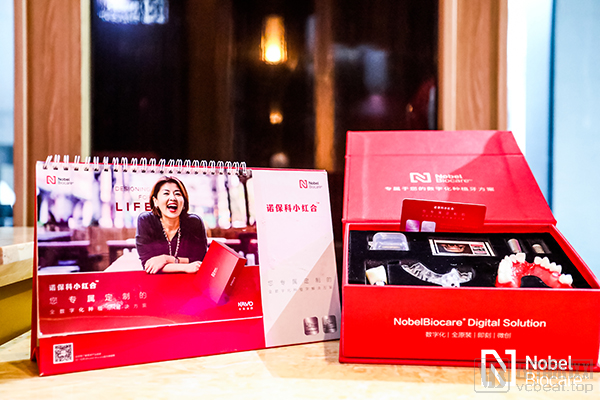
Nobel Biocare Little Red Box™
The product line is currently categorized into three types: “single-tooth,” “multi-tooth,” and “edentulous,” covering all clinical indications and receiving widespread market acclaim. Dr. Zhang from the Department of Oral Implantology at Shanghai Ninth People’s Hospital, Shanghai Jiao Tong University School of Medicine, expressed hope that Xiaohonghe™ will develop more comprehensive full-mouth digital solutions, including osteotomy guides, to further advance the development of digital implantology.
When it comes to digital implantology, one cannot fail to mention Japan, China’s maritime neighbor.
As one of the earliest countries to adopt digital implantology, Japan has achieved a globally leading position in technological advancements within this field. During the forum, keynote speaker Dr. Jun Fujinami revealed that there are over 40,000 cases of digital implantology performed annually in Japan, with approximately 30% utilizing Nobel Biocare’s original NobelGuide® guided surgery system. For his own practice, Dr. Fujinami employs digital technologies for diagnostic analysis in 100% of his cases.
Professor Atsushi Fujinami stated that Japan’s development of digital implantology was not without challenges; at the time, the national health insurance system did not cover the new medical procedures associated with digital implantology, which hindered the widespread adoption of this emerging technology in the country.
In this context, healthcare professionals interested in digital implantology formed study and mutual support groups during their spare time to engage in systematic training and case design discussions, thereby gradually promoting this emerging technology across China. To date, Japan has incorporated digital implantology into medical school curricula, establishing a relatively comprehensive system for both theoretical and practical training.
Meanwhile, unlike the practice in China where dental technicians are responsible for design based on data, Japanese physicians personally design surgical guides and implants during digital implant procedures, tailoring them more closely to individual patient needs.
Professor Teng Bochun stated candidly that China’s digital implantology sector is currently experiencing exponential growth. However, the information gap between clinicians and technicians in the use and design of digital tools remains an urgent issue to address, while there is also significant room for improvement in continuing education on digital implantology and restorative solutions.
As population aging intensifies in China, the elderly population continues to grow steadily. In 2018, individuals aged 60 and above accounted for 17.9% of the total population, while the prevalence of tooth loss has been rising continuously. Among those aged 55 and older, more than 50% experience tooth loss. The average number of missing teeth is 5.7 among middle-aged and elderly individuals, and 9 among the oldest-old. According to estimates by Dongxing Securities, the total number of missing teeth in China reaches 2.288 billion, with the potential market size for dental implants amounting to RMB 215.5 billion. The compound annual growth rate (CAGR) over the next decade is projected to be 25%.
Driven by market demand for dental implants, the development of digital implantology is thriving on fertile ground. Currently, when it comes to digital implantology, the public is more familiar with the assistance provided by digital surgical guides in implant surgery. In fact, a more precise digital implant technology—digital implant navigation—is currently under research and exploration.
It is understood that digital implant navigation uses an optical positioning system to track the spatial positions of the patient's oral cavity and surgical instruments in real time, and matches the patient's oral space with virtual images (implant plans) through computer registration technology. Mr. Zhou Guohui introduced at the forum, "Compared to today's digital guide plate technology, digital navigation saves the process of making guide plates. Doctors can perform surgery immediately after CT scanning and plan design. This one-stop surgical service not only further shortens the patient's surgery time but also improves medical efficiency."
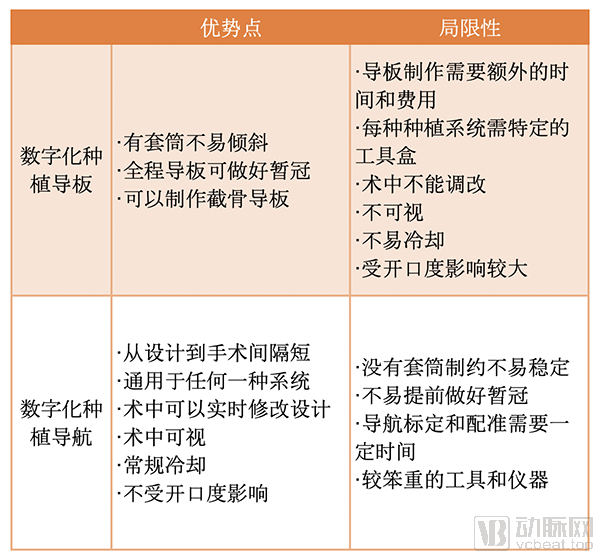
Currently, the expansion and application of navigation systems across various medical fields have confirmed that they are poised to become an indispensable component of future medical practices, particularly in surgical procedures. Professor Jun Fujinami stated that Japan may begin implementing digital navigation technology for dental implants in the first half of 2020, expressing his belief that this technology will further enhance the precision of oral implantology.
Meanwhile, when discussing the integration of the highly popular artificial intelligence with digital implantology, Dr. Jun Fujinami acknowledged that while AI involvement makes dental implant procedures more convenient and streamlined, it remains inseparable from a learning-driven approach. Only through continuous learning and improvement during the design process can clinicians better serve their patients.