

JunLian Healthcare New Drug Express Issue 37: Key Updates on Seven Pipeline Candidates Across Neurology, Hematology, Oncology, and Metabolism
Dec 30, 2019 18:00
CST Updated
18:00

This week, there were a total of 7 new drug data entries, including 2 in neurology, 2 in hematology, 2 in oncology, and 1 in metabolism.
❖Allergan’s CGRP small-molecule receptor antagonist has been approved for the treatment of migraine, marking the first oral CGRP receptor antagonist approved by the FDA. The CGRP pathway is a well-established target in migraine drug development. Multinational corporations (MNCs) have pursued breakthroughs in both large-molecule and small-molecule modalities. Previously, small-molecule development was halted due to hepatotoxicity concerns, whereas three monoclonal antibody therapies have received FDA approval: Aimovig (co-developed by Novartis and Amgen), Teva’s Ajovy, and Lilly’s Emgality. Owing to their long half-lives, these antibodies can effectively reduce migraine frequency with monthly or even quarterly injections. Allergan’s Ubrelvy, a next-generation small-molecule CGRP receptor antagonist, has successfully overcome prior hurdles in the small-molecule CGRP space, as its structure appears to effectively mitigate hepatotoxicity risks.
❖ Hanmi Pharmaceutical’s Poziotinib Releases Clinical Data for the First Cohort in NSCLC Treatment; Study Fails to Meet Prespecified Primary Endpoint of Overall Response RateHanmi Pharmaceutical announced clinical data for poziotinib in the first cohort of patients with non-small cell lung cancer (NSCLC). The study failed to meet its prespecified primary endpoint of overall response rate (ORR), with an ORR of only 14% among 115 patients. This result directly caused Spectrum Pharmaceuticals’ stock price to plummet by 50% in pre-market trading.In NSCLC, exon 20 insertion mutations occur in more than 7% of cases, yet this subset has long lacked effective therapeutic options. Even osimertinib has shown limited efficacy. At the 2018 World Conference on Lung Cancer (WCLC), poziotinib demonstrated a striking ORR of 43% in patients with this specific mutation type. Despite significant adverse effects, these earlier results generated considerable anticipation. However, the multicenter trial subsequently revealed a dramatic decline in ORR.Hanmi Pharmaceutical has previously entered into licensing and product development collaborations with Eli Lilly, Sanofi, Boehringer Ingelheim (BI), Roche, Johnson & Johnson, and Zai Lab, nearly all of which ended in failure. Consequently, Hanmi is now widely regarded as a highly risky partner. Currently, several Chinese companies are still engaged in joint development of bispecific antibodies with Hanmi, warranting caution going forward.
Seattle Genetics Submits NDA for HER2 TKI to FDA
Seattle Genetics Announces Submission of NDA to FDA for HER2-Specific Oral TKI Tucatinib, in Combination with Trastuzumab and Capecitabine, for the Treatment of Patients with Unresectable Locally Advanced or Metastatic HER2-Positive Breast Cancer
Tucatinib is an oral tyrosine kinase inhibitor thatHER2Exhibits high selectivity, but for members of the human epidermal growth factor receptor (HER) familyEGFRNo significant inhibitory effect
A Randomized, Double-Blind, Active-Controlled Study to Compare the Efficacy and Safety of Tucatinib in Combination with Standard-of-Care Trastuzumab and Capecitabine Versus Trastuzumab and Capecitabine in Patients with Locally Advanced Unresectable or Metastatic HER2-Positive Breast Cancer
The triple-combination therapy incorporating tucatinib significantly improved patients’ progression-free survival (PFS), reducing the risk of disease progression or death by 46% compared with the active control group. Compared with the control group, the triple-combination regimen also improved overall survival (OS), reducing the risk of death by 34%.
Hanmi Pharmaceutical's Poziotinib Failed to Meet the Prespecified Primary Endpoint of Overall Response Rate in NSCLC Clinical Trials
Hanmi Pharmaceutical andspectrumAnnouncementPoziotinibTreatmentNSCLCClinical data from the first cohort did not meet the clinical endpoints,SpectrumStock Price Plummets in Pre-Market Trading50%. According to feedback from Luye Pharma, Hanmi's domestic partner in China, the collaboration on this project has been terminated.
Poziotinib is primarily used to treat non-small cell lung cancer (NSCLC) with exon 20 insertion mutations, a population that accounts for more than 7% of all NSCLC cases.
MD Anderson Cancer Center conducted a multicenter Phase II trial enrolling 115 cancer patients.
The overall response rate (ORR) in 115 patients was only 14%, with a disease control rate (DCR) of 68.7%, both significantly lower than previously reported data (ORR of 43% and DCR of 90% presented at the 2018 WCLC).
Allergan’s CGRP Receptor Antagonist Approved for Migraine Treatment
The FDA announced the approval of Allergan’s calcitonin gene-related peptide (CGRP) receptor antagonist, Ubrelvy (ubrogepant), for the acute treatment of migraine, marking the first oral CGRP receptor antagonist approved by the FDA.
Ubrelvy is a next-generation small-molecule CGRP receptor antagonist. Calcitonin gene-related peptide (CGRP) released by the trigeminal nervous system acts as the “switch” that triggers migraine attacks. Ubrelvy exerts its therapeutic effect by inhibiting CGRP receptors. Its structure differs from that of previous-generation small-molecule antagonists, effectively addressing the issue of hepatotoxicity.
A total of 1,439 migraine patients were enrolled in a randomized, double-blind, placebo-controlled clinical trial to evaluate the efficacy and safety.
"The proportion of patients treated with Ubrelvy who achieved pain freedom and resolution of other key migraine symptoms within two hours post-treatment was significantly higher than that in the placebo group."
FibroGen Submits NDA for Hypoxia-Inducible Factor Prolyl Hydroxylase Inhibitor
FibroGenAnnounced that it has alreadyFDAsubmitted the hypoxia-inducible factor prolyl hydroxylase inhibitor jointly developed by the company with Astellas and AstraZeneca (HIF-PHI) Roxadustat (roxadustat) New Drug Application (NDA), dialysis for the treatment of anemia caused by chronic kidney disease/Non-dialysis patients
Roxadustat is an oral small-molecule hypoxia-inducible factor prolyl hydroxylase inhibitor (HIF-PHI) for the treatment of renal anemia. It inhibits prolyl hydroxylase (PH) by mimicking alpha-ketoglutarate, one of the substrates of PH, thereby modulating the role of PH in maintaining the balance between HIF synthesis and degradation, ultimately correcting anemia.
Phase 3 clinical trial, enrolling over 10,000 patients worldwide, to evaluate efficacy and safety compared with the standard therapy, darbepoetin alfa
Compared with the standard therapy alfaepoetin, roxadustat showed no significant differences in clinical benefits and side effects among dialysis patients. For patients with renal anemia not undergoing dialysis, roxadustat can achieve significant clinical efficacy, effectively correcting and maintaining hemoglobin levels.
Mechanism of Action of Hypoxia-Inducible Factor Prolyl Hydroxylase Inhibitors (HIF-PHI)
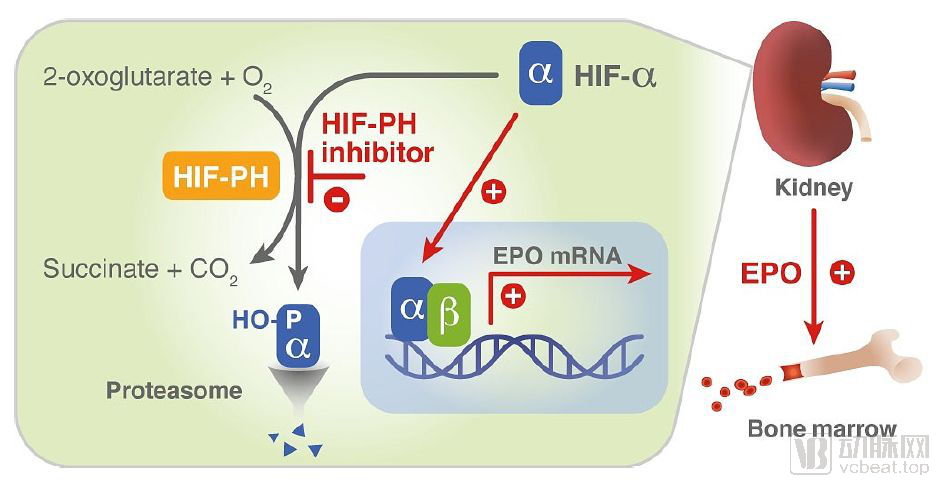
Data Source: Discovery of Molidustat
Eisai’s Orexin Receptor Antagonist Dayvigo Approved for Market Launch
Eisai’s Orexin Receptor Antagonist Dayvigo Approved by FDA for the Treatment of Insomnia
Dayvigo (lemborexant) is an orexin receptor antagonist. Orexin is a neuropeptide secreted by the hypothalamus that plays a crucial role in maintaining wakefulness. By blocking the binding of orexin A and orexin B to orexin receptor 1 (OX1R) and orexin receptor 2 (OX2R), Dayvigo suppresses wakefulness, thereby treating various symptoms of insomnia.
Criticality3Phase study, with a total of approximately2000evaluated in adult patients with insomniaDayvigoEfficacy Compared with Control Drugs and Placebo
Dayvigo demonstrated statistically significant advantages over placebo in both subjective and objective assessments of sleep onset and sleep maintenance.
BioMarin Pharmaceutical Submits Marketing Application for Hemophilia Gene Therapy in the United States
BioMarin Pharmaceutical Announces Submission of Biologics License Application (BLA) to the U.S. FDA for Valoctocogene Roxaparvovec, a Gene Therapy for Adult Patients with Hemophilia A
Valoctocogene roxaparvovec is a gene therapy that uses an AAV5 viral vector to deliver a transgene expressing factor VIII. This therapy has been granted Breakthrough Therapy designation by the U.S. FDA and PRIME medicine designation by the European Union, as well as orphan drug status by both the EMA and the FDA.
Interim Data Analysis of Phase 3 Clinical Trials, and the Latest 3-Year Efficacy Data from Phase 1/2 Clinical Trials
In the Phase 1/2 clinical trial, patients who received a single dose of gene therapy at 6e13 vg/kg continued to maintain control over their annualized bleeding rate (ABR) and factor VIII usage in the third year post-treatment. Over the three-year treatment period, both ABR and factor VIII utilization decreased by an average of 96%. Patients no longer required prophylactic factor VIII injections.
ABR Data in Patients with Hemophilia A Treated with Different Doses of Gene Therapy
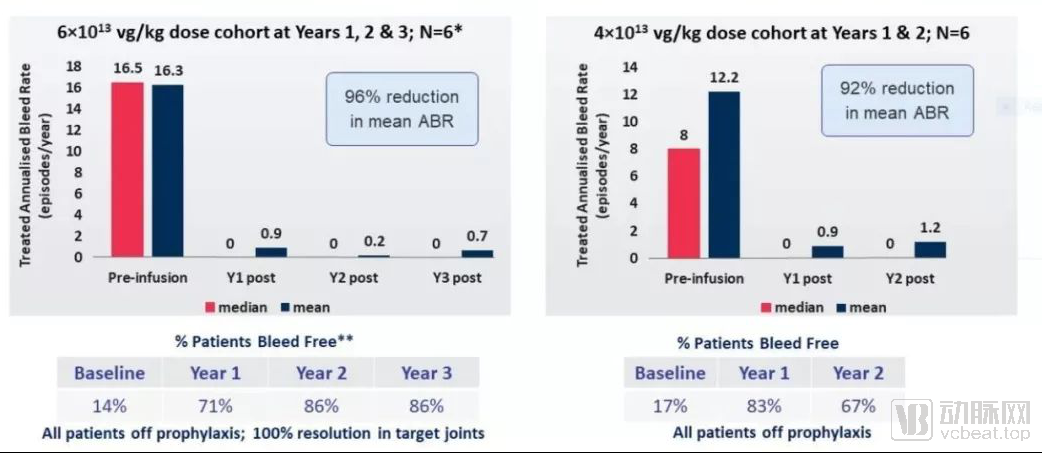
Data Source: BioMarin
Positive Data from Pivotal Phase 3 Trial of Oral Diabetes Therapy; Regulatory Submission Planned for Next Year
Poxel SA and Sumitomo Dainippon Pharma jointly announced that imeglimin, their innovative therapy for diabetes, met the primary efficacy endpoint in the Phase 3 TIMES 2 clinical trial in patients with type 2 diabetes.
Imeglimin is the world’s first glimin-class drug. It features a novel mechanism of action. Scientists at Poxel believe that mitochondrial dysfunction is one of the causes of diabetes, and imeglimin holds promise for reversing the underlying root of this disease by improving mitochondrial bioenergetics.
To evaluate the efficacy and safety of imeglimin as monotherapy or in combination with currently approved glucose-lowering therapies (including DPP-4 inhibitors, SGLT2 inhibitors, GLP-1 receptor agonists, biguanides, etc.) for the treatment of patients with type 2 diabetes.
Whether used as monotherapy or in combination with other glucose-lowering therapies, imeglimin significantly reduces patients’ glycated hemoglobin (HbA1c) levels.
❖Intra-Cellular Therapies Announces FDA Approval of Caplyta (lumateperone) for the Treatment of Schizophrenia in Adults. Caplyta is a first-in-class potent serotonin 5-HT2A receptor antagonist and dopamine phosphoprotein modulator (DPPM). The efficacy of Caplyta was demonstrated in two placebo-controlled clinical trials, which showed statistically significant improvements in total scores on the Positive and Negative Syndrome Scale (PANSS) compared with placebo.
❖Bridge Biotherapeutics Announces Submission of IND Applications to the U.S. FDA and South Korea’s Ministry of Food and Drug Safety (MFDS) to Initiate Phase 1/2 Clinical Trials of BBT-176. BBT-176 is an innovative EGFR tyrosine kinase inhibitor (TKI) designed to inhibit EGFR harboring the C797S mutation.
❖The approval status of BeiGene’s PD-1 antibody tislelizumab has been updated to “Approval Completed – Pending Certificate Issuance,” indicating that market approval is imminent. China has currently approved six PD-1 monoclonal antibodies: two imported and four domestically produced. These are Bristol Myers Squibb’s Opdivo, Merck & Co.’s Keytruda, Innovent Biologics’ Tyvyt, Hengrui Medicine’s camrelizumab, Junshi Biosciences’ Tuoyi, and BeiGene’s tislelizumab.
❖China’s original new drug for the treatment of Alzheimer’s disease, Jiuqi-1® (sodium oligomannate capsules, code: GV-971), has finally been officially launched in the Chinese market. The price per box is RMB 895 (specification: 150 mg × 14 capsules × 3 blister packs). Patients can purchase it at major professional pharmacies (DTP pharmacies) across China with a doctor’s prescription.