

How Can Medical Cloud Services Empower Cardiothoracic Department Development? — Zhou Yunan, CMO of XinYi International at FTC2019
The FTC 2019 Inaugural China Forum on Frontier Technologies in Cardiac Surgery was held in Beijing on November 9–10, 2019. The event was hosted by the Cardiac Surgery Professional Committee of the Chinese Medical Education Association and the Cardiovascular Surgical Technology and Engineering Branch of the Chinese Medical Biotechnology Association, co-organized by Da Yisheng Bingqi Pu, and undertaken by VCBeat.
At the conference, Zhou Yunan, Chief Medical Officer (CMO) of SENYINT, delivered a presentation titled “Empowering Cardiac Surgery Department Development with Medical Cloud Services,” sharing insights on how 5G, the Internet of Things (IoT), artificial intelligence (AI), and cloud platforms facilitate the development of cardiac surgery departments. This article presents a curated compilation of his key highlights.
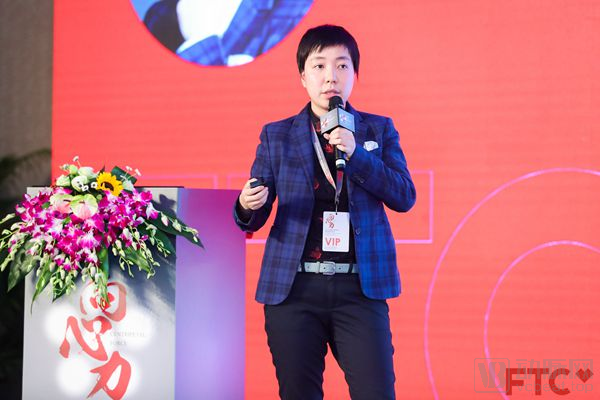
SENYINT CMO Zhou Yunan
In China, there are 8 billion outpatient and emergency visits annually. On the supply side, there are 12,000 classified hospitals, of which only one-tenth are Grade A tertiary (San Jia) hospitals. Thirty-seven percent (3.3 billion) of patients seek care at these San Jia hospitals, leading to a mismatch between medical demand and supply, disordered patient flow, and overwhelming burdens on hospitals. In the field of cardiac surgery, the large patient volume, high technical requirements, and severe shortage of medical resources have long been persistent challenges in China’s cardiac surgery development. National policies strongly promote medical consortia, specialty development, and special capacity building for chronic disease prevention and management at the primary care level. Leveraging policy support, the transition from disordered to efficient healthcare delivery depends on two key factors: technology-driven innovation and new models of efficient healthcare access.
Technology-driven innovation encompasses 5G and the Internet of Things (IoT), cloud computing, artificial intelligence (AI), virtual reality (VR) technology, blockchain, and digitalization. These innovative technologies will propel the development of smart hospitals, hospital informatization, remote surgery, medical cloud services, intelligent diagnostics, and immersive medical education. New models for efficient healthcare delivery include internet-based consultations to improve access and efficiency, AI-assisted diagnostics and surgical robots to enhance the intelligence of diagnosis and treatment, as well as the integration of medical care with elderly care, remote monitoring, and intelligent medication delivery to achieve efficient management of chronic diseases.
From the perspectives of pre-diagnosis, intra-diagnosis, and post-diagnosis, innovative technologies can empower the diagnosis and treatment process in multiple ways. In the pre-diagnosis phase, cloud platforms are utilized for disease screening, intelligent triage, and data monitoring, which significantly saves physicians' time and effectively directs patients to treatment centers. For instance, in the development of stroke centers, SENYINT participated in the construction of stroke centers in the Yangtze River Delta region. Through platform-based computing for data monitoring and intelligent triage, ambulances were able to transport stroke patients to certified stroke centers at the earliest opportunity, thereby providing higher-quality services. During the intra-diagnosis phase, intelligent platforms leverage AI to assist in diagnosis. The data generated during this phase serves as clinical data, ultimately linking to insurance systems. Subsequently, based on regional incidence rates, more effective treatment plans tailored to local public health needs can be calculated. In the post-diagnosis phase, cloud platforms enable seamless connectivity in remote care, online pharmacies, and academic research initiatives.
In the medical consortium model, a team of experts at the upper tier provides comprehensive support to hospitals at the lower tier. Currently, such support is often delivered by experts who travel to local facilities during weekends or other spare time. A 5G-based cloud department collaboration platform enables the integration of remote consultations, outpatient services, ward rounds, education, live streaming, technical collaboration, cloud departmental meetings, and clinical research infrastructure development—all within a single platform.
The collaborative platform of Cloud Departments connects high-end medical resources in Beijing, Shanghai, and Guangzhou at the upper end with grassroots medical institutions at the lower end, facilitating remote healthcare scenarios. Taking remote diagnosis and treatment as an example, hospitals at the lower end can rapidly upload imaging and other data to the cloud. Under 4G networks, importing MRI images typically takes seven to eight minutes, whereas in the 5G era, this time is reduced to mere seconds. Physicians at the upper end can quickly access data from lower-end hospitals via the cloud platform and formulate diagnostic and treatment plans. Another example is remote ward rounds, an initiative being piloted this year within the construction of medical consortia. This approach integrates informatization, mobility, and remote medical services. In remote ward round scenarios, physicians at the upper end can provide professional guidance on ward rounds, along with diagnostic and therapeutic recommendations, to their counterparts at the lower end directly through the cloud platform and mobile devices.
Remote Surgical Guidance ScenariosRemote surgical guidance scenarios primarily consist of two components. For physicians within a medical consortium, when patients seek care at a consortium hospital and the attending physician determines that expert remote assistance is required to complete a surgical procedure, they request remote surgical guidance. For members of the expert team, when they provide “technical collaboration” at a consortium hospital and require remote assistance from senior experts to complete a surgical procedure, they may also seek such support.
Remote surgical applications based on 5G technology and cloud platforms have already been implemented in orthopedics. Through medical robots and high-definition audio interaction systems, remote experts can provide timely remote surgical treatment to patients at primary care hospitals. The 5G network effectively ensures the stability, real-time performance, and safety of remote surgeries, enabling experts to perform precise remote surgical manipulation and guidance across different regions. However, in the field of cardiac surgery, procedures are highly complex and difficult to perform solely via robots. Currently, synchronized visual fields can be utilized to assist in the remote completion of such surgeries.
In research settings, data can be stored upon patient submission. Typically, such data are protected and cannot be accessed arbitrarily. However, these data can be utilized for scientific research through the translation of research achievements—for example, to investigate whether a specific patient subgroup exhibits unique responses to certain treatment regimens, or to validate postoperative care standards at key milestones.
For nearly a decade, SENYINT has been dedicated to advancing tiered diagnosis and treatment systems and facilitating medical service connectivity among hospitals. Currently, the SENYINT Medical Cloud Platform connects 7,000 hospitals across 31 provinces in China, achieving full provincial coverage in eight regions: Guizhou, Shaanxi, Shanxi, Qinghai, Xinjiang, Henan, Jiangxi, and Guangxi. The platform now handles an average annual volume of 250,000 referrals and teleconsultations.
SENYINT is committed to building borderless healthcare by delivering cloud services in specific clinical scenarios. Departments managing acute and critical conditions—including respiratory medicine, stroke, cardiology, emergency care, transplantation, neurology, and obstetrics and gynecology—urgently require cloud computing solutions to meet quality control standards.
Among the eight provincial platforms supported by SENYINT, Guizhou Province serves as a prime example. Currently, it has taken the lead in China by establishing a remote medical service system for public hospitals across provincial, municipal, county, and township levels. This system covers 199 county-level hospitals and 1,543 township health centers throughout the province, facilitating 236,000 remote consultation cases, providing remote training to over 300,000 healthcare professionals, and serving more than 360,000 patients. Building on this foundation, SENYINT has also undertaken the construction of Guizhou’s province-wide stroke platform, aiming to enhance regional specialty capabilities through “sustainable, capacity-building assistance.”
In the future, SENYINT will continue to deepen its clinical services, focusing on strengthening business linkages among medical institutions, fostering inter-departmental collaboration and mutual support within clinical departments, and enhancing doctor-patient diagnostic and treatment services. These efforts aim to achieve efficient coordination and equitable distribution of high-quality medical resources, refine healthcare management, continuously improve healthcare accessibility, and facilitate the implementation of tiered diagnosis and treatment.