

78-Year-Old Retired Professor Seeks Technology Commercialization at 2019 Future Healthcare 100 Summit
On December 20, the 2019 Future Healthcare Top 100 Conference, hosted by VCBeat, kicked off at the Jiuhua Resort in Beijing. The venue brought together healthcare entrepreneurs, hospital directors and department heads, investors specializing in the medical sector, and other industry stakeholders. Among the 5,000 registered attendees of the Future Healthcare Top 100 Conference, one participant stood out: Professor Liang Guoguang, who was 78 years old at the time.
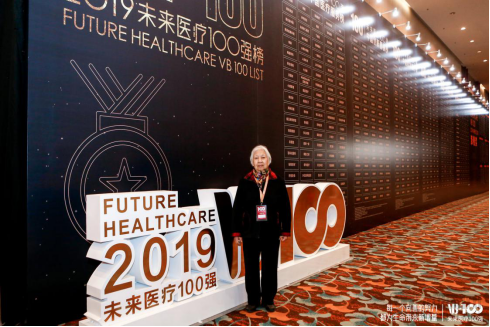
(Professor Liang Guoguang Attends the 2019 Future Healthcare Top 100 Conference)
On December 22, at Beijing Jiuhua Resort, with a temperature of -5°C and a level-2 northerly wind, Professor Liang Guoguang, now retired, told reporters in a one-on-one negotiation room that he had two reasons for attending the conference: first, to learn about the latest developments in the medical field; and second, to seek partners for the translational application of two breakthrough technological instruments independently developed by his team, which are used for early screening of cardiovascular diseases such as primary hypertension, thrombosis, and sudden cardiac death.
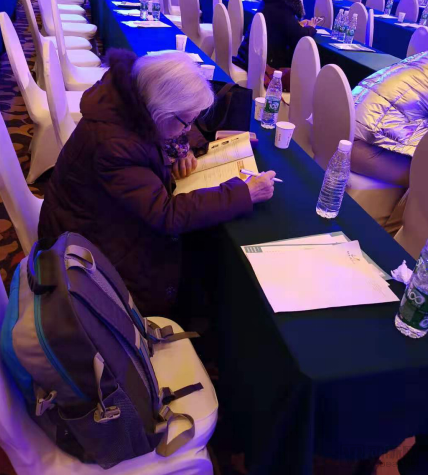
After the conference, Professor Liang Guoguang was reviewing the conference proceedings.
The Blood Apparent Yield Stress Detector and the Vascular Intima Electrokinetic Potential Meter are diagnostic instruments independently developed by Professor Liang Guoguang. The development of these two devices, specifically designed for the early screening of major cardiovascular diseases, is rooted in Professor Liang’s professional background. After graduating from the Department of Biophysics at Beijing Medical University in 1966, Professor Liang was assigned to the Chinese Academy of Medical Sciences. He was later appointed to Xi’an Medical University (now merged into Xi’an Jiaotong University).
Biophysics is the scientific discipline that investigates the physical properties of biological matter, the physical and physicochemical principles governing life processes, and the mechanisms by which physical factors influence biological systems. Since the emergence of biophysics in the 1950s, biological experimental research has increasingly relied on the continuous development and application of physical techniques such as diffraction, spectroscopy, spectrometry, kinetics, and image analysis. It was against this backdrop and under these conditions that biophysics rapidly evolved into an independent academic discipline.
X-ray computed tomography (CT), ultrasound, magnetic resonance imaging, electronic imaging, and artificial organs are all major achievements of biophysics that are now widely used in the medical field.
In 1958, marked primarily by the establishment of the Institute of Biophysics at the Chinese Academy of Sciences, China embarked on its journey in the development of biophysics. Professor Liang Guoguang was among the first graduates in this field.
In recent years, biophysics in China has made significant progress, laying a solid foundation in several areas, including the structure of biological macromolecules, membrane biophysics, visual and neurobiophysics, and theoretical biophysics. The blood apparent yield stress detector and the vascular intima electrokinetic potential meter, independently developed by Professor Liang Guoguang, serve as prime examples of the development of biophysics in China.
During her career, Professor Liang Guoguang has been engaged in clinical cardiology, biophysics teaching, and research on the integration of traditional Chinese and Western medicine. In 1990, she successfully invented the “constant-pressure variable-speed capillary viscometry method” and a viscometer based on this principle, subsequently obtaining patents for both the instrument’s structure and its underlying principle (a utility model patent and an invention patent).
Professor Liang Guoguang has conducted the following research in the field of cardiovascular medicine: He investigated the biomechanical mechanisms underlying the initiating factors of primary hypertension, proposing that primary hypertension be reclassified as secondary hypertension. This approach facilitates early diagnosis and targeted treatment based on clearly identified etiologies, which not only avoids the need for lifelong medication but also prevents premature aging and failure of vital organs, including the heart, brain, kidneys, and major blood vessels. Furthermore, he identified the causes of sudden cardiac death in young and middle-aged adults, demonstrating that early screening can effectively prevent such events.
Professor Liang Guoguang told reporters, “I began my clinical work in cardiovascular medicine in 1975. At that time, I encountered a peculiar case: an 18-year-old man who had enlisted in the military after passing the rigorous physical examination standards for pilots suffered sudden cardiac death at the age of 21. The autopsy ruled out conditions such as myocarditis and cardiomyopathy, revealed no visible thrombi, and showed normal coronary arteries; however, it did reveal microvascular occlusion extending from the apex to the majority of the myocardium.”
Consequently, Professor Liang embarked on long-term investigations into the pathogenesis, screening, and pre-diagnosis of this disease, and developed a blood apparent yield stress detector and a vascular surface electrokinetic potential meter. Extensive animal experiments and partial clinical observations have demonstrated that these instruments exhibit high reliability in the etiological diagnosis of primary hypertension and in the pre-diagnosis of sudden cardiac death caused by myocardial small vessel and microvascular stasis.
Given that the incidence, disability, and mortality rates of cardiovascular and cerebrovascular diseases caused by hypertension currently rank highest among all diseases in China, with a particularly pronounced trend toward affecting younger populations, the prevention, diagnosis, and treatment of these conditions have become a key component of the “Healthy China Action.” To this end, Liang expressed his hope to promptly share his years of accumulated experience and research findings with society to benefit patients.
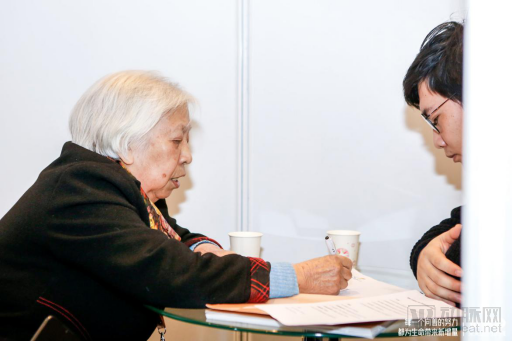
Professor Liang Guoguang Explains the Relevant Principles to Reporters
Professor Liang Guoguang was able to develop a technology for monitoring microvascular occlusion because she possesses expertise in both biology and physics. A key concept underlying this technology is the streaming potential. Professor Liang explains, “As blood flows through vessels, it generates a streaming potential, which drives normally flowing cells toward the central axis of the vessel. Consequently, blood does not adhere to the vessel wall, thereby preventing the formation of mural thrombi.” Therefore, accurate measurement of the streaming potential enables the early diagnosis of mural thrombi and distal microcirculatory disorders.
She stated, “Animal experiments and years of clinical observation have demonstrated that the clinical concordance rate is significantly improved when this experimental method is used to diagnose blood stasis syndrome. Investigating the rheological mechanisms underlying the development of blood stasis syndrome holds practical significance for the rational formulation of treatment plans and the accurate screening of drugs to enhance cure rates.”
This also demonstrates the broad practical value of the blood apparent yield stress detector and the vascular intima electrokinetic potential meter invented by Professor Liang Guoguang. She stated, “At my age, fame and profit are no longer important to me; I only hope to promote this technology so that more people can benefit from it.”
Professor Liang Guoguang’s participation in the Future Healthcare 100 Conference is driven by his hope to leverage the platform provided by the event to identify partners, thereby accelerating the clinical application of this technology and benefiting a broad population of patients with cardiovascular diseases such as hypertension and thrombosis. Specific collaboration proposals can be discussed in detail at a later stage.