

China's Multidisciplinary Team (MDT) Model: Development, Impact, and Investment Prospectus
I. Overview of the Multidisciplinary Team (MDT) Model and Its Development in the United States
Multi-disciplinary Treatment (MDT) ModelThe Multi-disciplinary Treatment (MDT) model is a therapeutic approach in which experts from multiple disciplines discuss cases of a specific disease or diseases affecting a particular system, and formulate the optimal treatment plan for patients by integrating opinions from various specialties. This model is particularly suitable for the diagnosis of complex conditions such as cancer, renal failure, and heart failure. To improve healthcare quality, some hospitals in China officially adopted the MDT model in 2007. Compared with traditional expert consultation models, the MDT model requires standardized multi-departmental collaboration and greater patient engagement.
MDT is a treatment process conducted by a senior expert team through multidisciplinary collaboration. The MDT team maintains a fixed composition and consultation schedule. Under the MDT model, multiple specialists can comprehensively analyze the patient’s condition in a timely manner, ensuring that all treatment options are considered to formulate the most appropriate therapeutic plan for the patient. This approach helps avoid misdiagnosis and enhances both medical efficiency and quality of care.
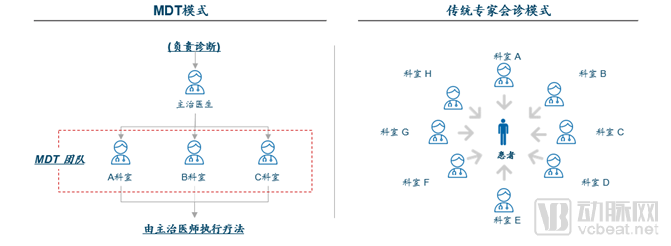
Compared with MDT, traditional expert consultations lack standardized team structures and evidence-based clinical guidelines, characterized by randomness and ad hoc arrangements. Traditional expert consultations are often conducted to diagnose and manage new issues arising during the course of disease treatment or to rectify erroneous treatment plans.
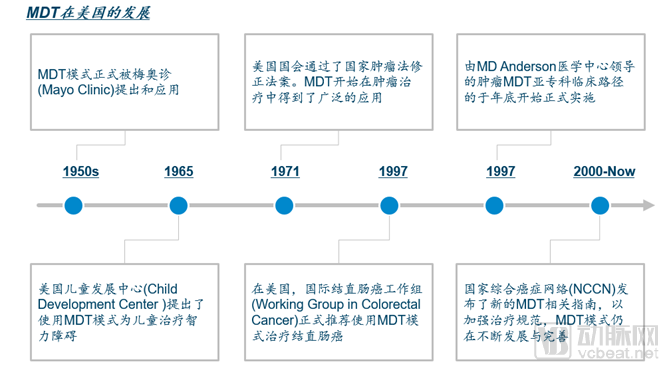
After decades of development, the MDT model has been comprehensively implemented and refined in hospitals at all levels in the United States. The MDT model was first proposed by the Mayo Clinic in the United States in the 1960s and rapidly developed after being standardized in the 1990s by medical centers such as MD Anderson Cancer Center. Initially focused on oncology diagnosis and treatment, the MDT model has since expanded across various therapeutic fields. With the recent release of new MDT-related guidelines by the NCCN, the MDT model continues to evolve and improve.
Compared with the United States, the coverage rate of the Multidisciplinary Team (MDT) model in Chinese hospitals is low; insufficient medical resources in China are one of the key factors contributing to this low hospital coverage.
On November 30, 2018, the National Health Commission announced the first batch of pilot hospitals for multidisciplinary team (MDT) diagnosis and treatment of tumors (digestive system). Currently, there are 231 Grade A tertiary hospitals in China implementing MDT, accounting for only 16% of all Grade A tertiary hospitals and 9% of all tertiary hospitals. Among hospitals below the tertiary level, very few have adopted the MDT model, primarily due to insufficient medical resources and the lack of standardized MDT guidelines in China.
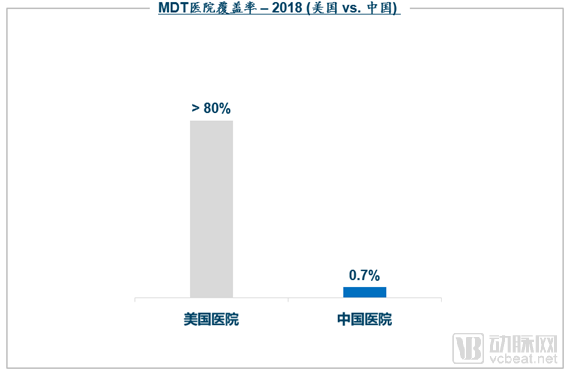
Data Source: HC3i Digital Healthcare Network, “Notice on Issuing the List of Pilot Hospitals for the First Batch of Multidisciplinary Diagnosis and Treatment of Tumors (Digestive System)” (2018)
In the United States, MDT has become the standard of care for treating complex diseases such as cancer, renal failure, and schizophrenia. Currently, more than 90% of large hospitals in the U.S. employ the MDT model for the clinical diagnosis of complex conditions, including malignant tumors and schizophrenia. In contrast to the U.S., China’s healthcare system provides both outpatient and inpatient MDT services.
Among tertiary hospitals in China that have implemented the MDT model, approximately 94% provide inpatient MDT services to enhance medical efficiency and quality. In contrast, direct outpatient MDT consultations are not common in the United States; patients typically require a referral from a primary care physician for hospital admission to access MDT services.
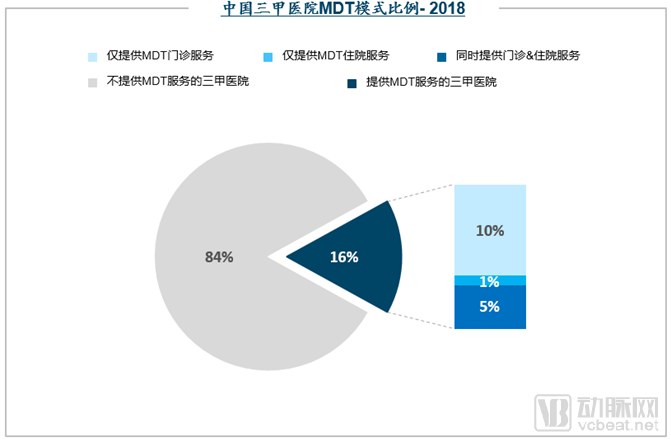
Data source: “Pros and Cons of the Multidisciplinary Team (MDT) Model” (2018)
Due to variations in MDT fees across different hospitals, the charging for MDT services within China’s healthcare payment system has not yet been fully standardized. Currently, there are significant discrepancies in MDT pricing among hospitals, indicating that China’s MDT fee structure still requires formalization and institutionalization. Meanwhile, hospitals currently exhibit low willingness to implement the MDT model, primarily because the current reimbursement rates for MDT services are too low to cover the medical costs incurred.
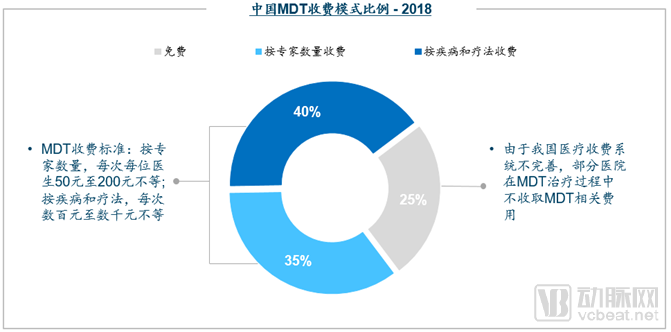
Data source: "The Pros and Cons of the Multidisciplinary Team (MDT) Model" (2018)
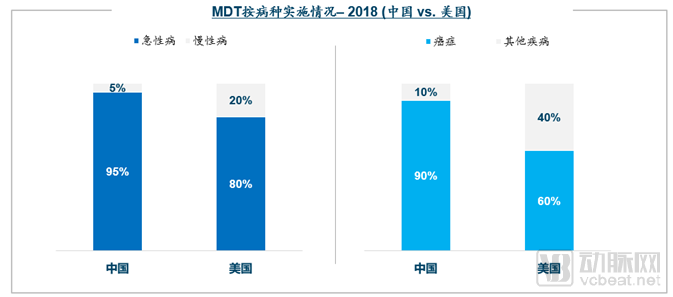
In China, due to the relatively short development period and limited maturity of the multidisciplinary team (MDT) model, its application has been primarily concentrated in cancer treatment. As China progressively implements standardized MDT protocols and accumulates sufficient clinical experience, the MDT model will not only remain applicable to oncology but also be widely extended to other therapeutic areas.
Compared with China, the MDT model in the United States has been widely applied to the treatment of complex diseases such as neurological disorders, cardiovascular diseases, and renal failure. Cancer-related MDT accounts for only about 60% of all disease-specific MDTs in the United States.
Compared with China, the United States’ well-developed health insurance system enables a higher reimbursement rate for multidisciplinary team (MDT) services. Currently, private health insurance penetration in China is low (only 9.1%), and reimbursement for MDT costs relies primarily on public health insurance, with reimbursement rates lower than those in the United States. In contrast to China, the United States has a robust health insurance system, with approximately 85%–90% of Americans covered by either public or private health insurance. The high reimbursement rates have facilitated the development of MDT in the United States.
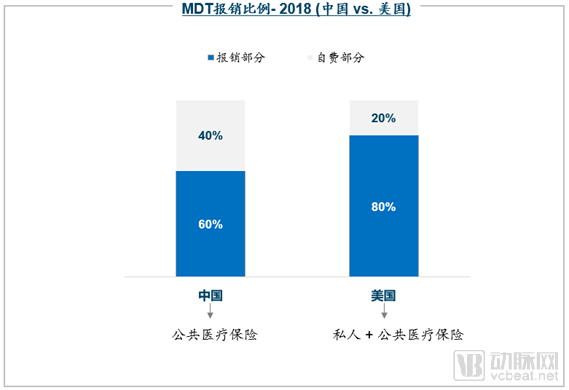
Data sources: “How to Compare U.S. Health Insurance Plans” (2018), “Report on the Development Index of China’s Commercial Health Insurance” (2018)
II. Financial Analysis: Current Revenue and Expenditure of the MDT Model in China
1. Labor Cost Analysis
Compared with the traditional consultation model, colorectal cancer MDT requires double the manpower costs and consultation time.
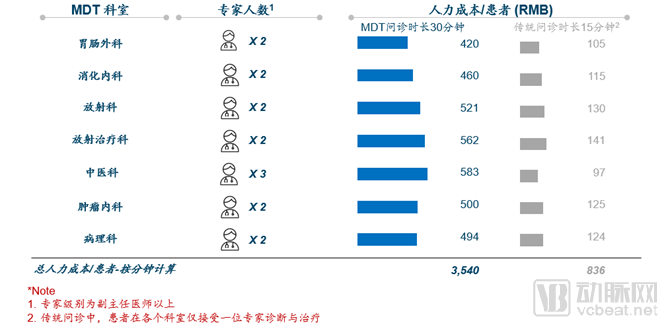
Data sources: “White Paper on the Practice Status of Chinese Physicians” (2018), “Survey Report on Compensation for Chinese Doctors” (2018)
2. Financial Analysis – Colorectal Cancer MDT
Taking the colorectal cancer multidisciplinary team (MDT) as an example, each department within the MDT must include 2–3 experts at the level of associate chief physician or above to ensure the comprehensiveness and integration of treatment plans. In contrast, traditional consultations involve only one specialist from a single department evaluating the patient. Regarding consultation duration, MDT guidelines specify that each MDT session should last 30 minutes to ensure discussion quality, whereas the average duration of a traditional consultation is 15 minutes. Based on calculations derived from reports on physicians’ working hours and compensation levels, hospitals incur an additional labor cost of RMB 2,704 per patient for colorectal cancer MDT consultations compared with the traditional care model.
Inpatient Revenue Analysis
The MDT model has reduced hospital inpatient revenue, primarily due to shortened lengths of stay and fewer complications. This demonstrates that the MDT model enhances both medical efficiency and quality of care.
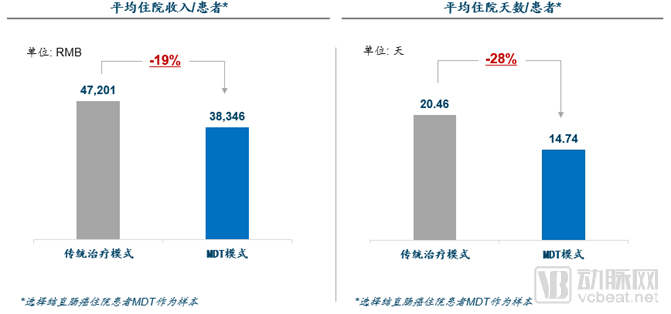
Data source: “International Experience Shows That Multidisciplinary Team (MDT) Cancer Treatment Reduces Mortality Risk by Up to 27% and Cuts Costs by Over 20%” (2018)
Opportunity Cost Analysis
In traditional treatment, the average consultation revenue per patient is 700 yuan, meaning the opportunity cost of MDT is 2,800 yuan. The financial analysis uses a simplified calculation based on average outpatient figures; in actual cases, the opportunity cost may be higher.
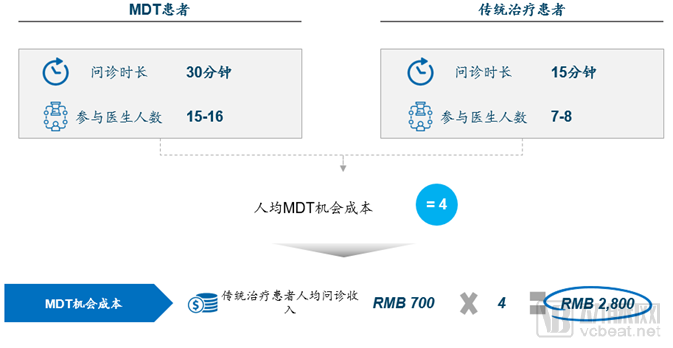
Comprehensive Analysis of Outpatient Revenue
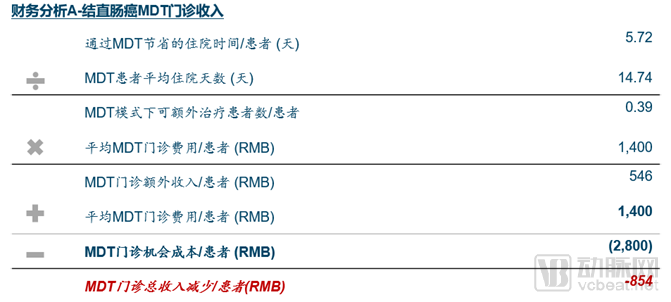
In the multidisciplinary team (MDT) model for colorectal cancer, the hospitalization time saved per patient treated can be utilized to provide additional treatment for 0.39 patients. However, compared with the traditional treatment model, outpatient revenue in the MDT model decreases by 854 yuan. Currently, the low fee structure for MDT services fails to cover the medical costs incurred by the MDT program. Standardizing MDT fees would offset the revenue loss associated with the MDT model.
2. Financial Analysis – Lung Cancer MDT
Inpatient Revenue Analysis
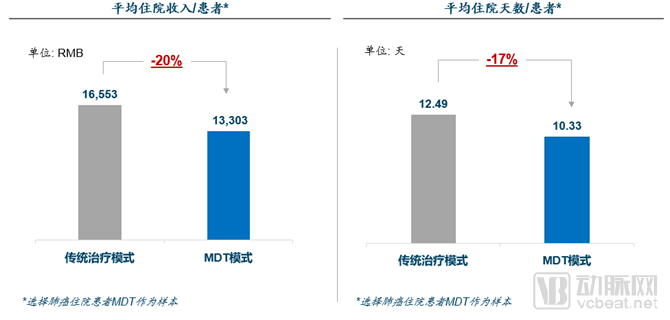
Data source: “International Experience Shows That Multidisciplinary Team (MDT) Cancer Treatment Reduces Mortality Risk by Up to 27% and Cuts Costs by Over 20%” (2018)
The MDT model has reduced hospital inpatient revenue, primarily due to shortened lengths of stay and fewer complications. This demonstrates that the MDT model enhances both medical efficiency and quality of care.
Opportunity Cost Analysis
In traditional treatment, the average consultation revenue per patient is RMB 1,400, meaning the opportunity cost of MDT is RMB 5,600. The financial analysis uses a simplified calculation based on average outpatient visits; in actual cases, the opportunity cost may be higher.
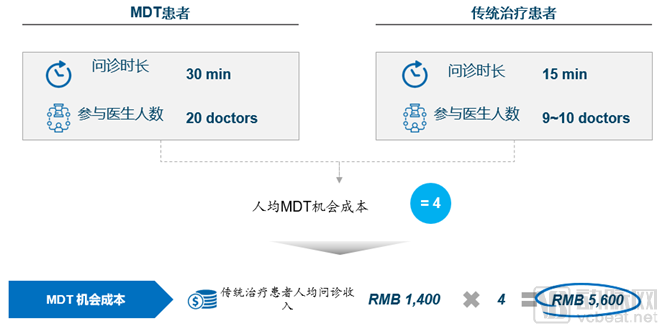
Comprehensive Analysis of Outpatient Revenue
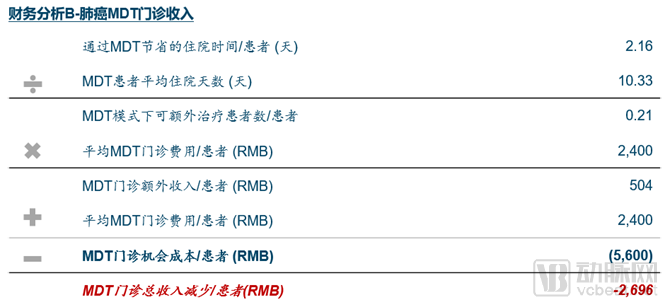
In the colorectal cancer MDT model, the inpatient stay saved per patient treated can be utilized to provide additional treatment for 0.21 patients. However, compared with the traditional treatment model, outpatient revenue from MDT decreases by RMB 2,696. Currently, the fees for MDT services are relatively low and insufficient to cover the medical costs incurred by MDT implementation. Standardization of MDT pricing can offset the revenue loss associated with MDT.
III. Summary of the Main Advantages and Current Issues of MDT
The primary advantage of the Multidisciplinary Team (MDT) approach lies in reducing surgical mortality risk and improving patient survival rates. Relevant studies indicate that MDT-based treatment significantly increases the five-year survival rate for patients with various cancers by 15–40%. Meanwhile, the MDT model has substantially reduced surgical mortality rates across the treatment of different cancer types.
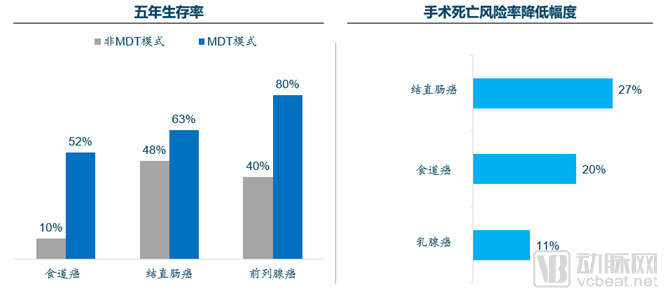
Data sources: “International Experience Shows That Using Multidisciplinary Teams (MDTs) for Cancer Treatment Reduces Mortality Risk by Up to 27% and Saves Over 20% in Costs” (2018), “The Value of Multidisciplinary Team Meetings for Patients with Gastrointestinal Malignancies: A Systematic Review” (2017), “Do Multidisciplinary Team (MDT) Processes Influence Survival in Patients with Colorectal Cancer? A Population-Based Experience” (2015)
Key Advantages of the MDT Model in China:
1. MDT can improve patient prognosis, including survival rates. Better treatment outcomes can enhance a hospital's reputation and attract more patients.
2. MDT can enhance patient awareness during the treatment process, which helps improve the hospital’s reputation.
3. The MDT model can shorten hospital stays and improve medical efficiency.
4. MDT facilitates interdepartmental teamwork and promotes healthcare reform.
Current Issues with the MDT Model in China:
1. Compared with traditional treatment methods, the per capita treatment cost of MDT is higher, and it is difficult to compensate for the increased treatment costs of the MDT model under China's current medical charging system.
2. The MDT model requires a high degree of collaboration and egalitarian communication among team members. Currently, most hospitals in China lack the conditions and atmosphere for effective teamwork, as top surgeons often hold the highest decision-making authority. Low levels of teamwork compromise the effectiveness of the MDT model.
3. There is a significant shortage of key talent for Multidisciplinary Teams (MDTs). Pathologists are scarce in China, with a current nationwide shortfall of 100,000 professionals. Consequently, the labor costs for hospitals to organize regular discussions and maintain highly efficient MDT teams remain prohibitively high.
Author: Rui An Business Consulting
Ryan Partners is composed of professionals dedicated to management consulting and research, specializing in vertical industries such as pharmaceuticals and healthcare, fast-moving consumer goods (FMCG), manufacturing, and digital new media. With expert skills and services, the firm aims to provide clients with comprehensive solutions, including global market research, market access strategies, market potential assessments, and other business intelligence offerings. Ryan Partners helps clients address various challenges encountered at different stages of the business cycle, enabling them to evaluate and understand market environments and potential opportunities, thereby enhancing their competitiveness in the global marketplace.
URL: http://www.ryan-partners.com/
WeChat Official Account: ruianshangwu