

Kintor Pharmaceutical Files for Hong Kong IPO with Lead Drug NDA Expected in 2020 and Four Clinical-Stage Candidates

Kintor
Innovative Drug Developer
VCBeat has learned that on December 31, 2019, Kintor submitted its IPO application to the Hong Kong Stock Exchange, becoming another small-molecule targeted therapy company to list in Hong Kong after Ascentage Pharma. The funds raised from this listing will be primarily used for clinical trials, production, and sales management related to Kintor’s two AR (androgen receptor) inhibitors: pyrilutamide and fortaren.
Established in 2009, Kintor is a China-based innovative pharmaceutical company headquartered in Suzhou, Jiangsu Province. The company focuses primarily on developing drugs for androgen receptor (AR)-related diseases, with its lead product, proktamide (a second-generation AR antagonist), having entered Phase III clinical trials.

Kintor's Key Financing Overview
Since its inception, Kintor has undergone five rounds of financing, was listed on the National Equities Exchange and Quotations (NEEQ), and completed a private placement. In October 2019, Kintor just closed a $45 million strategic investment round, with investors including HighLight Capital, Huajin Capital, CCB Science and Technology Innovation Fund, Free Trade Zone Fund, and Yicheng Hongtai.
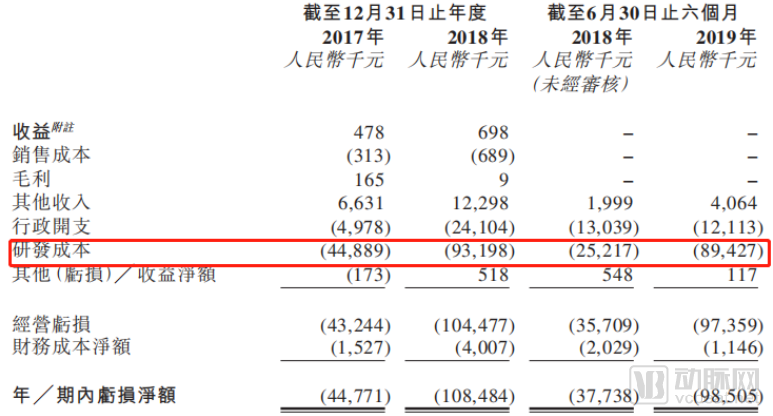
Kintor’s Revenue Performance (Image sourced from Kintor’s prospectus)
As Kintor has not yet launched any products or out-licensed its rights, it has not established a stable source of revenue to date. Since the second half of 2018, Kintor’s R&D expenditures have increased rapidly, primarily due to the substantial capital required for Phase III clinical trials of its lead product candidates.
The financial position of Kintor disclosed in its prospectus was not particularly strong, with limited current assets and total current liabilities exceeding current assets. However, as previously noted, Kintor had just secured $45 million in strategic investment in October 2019, meaning its actual liquidity situation had improved significantly.
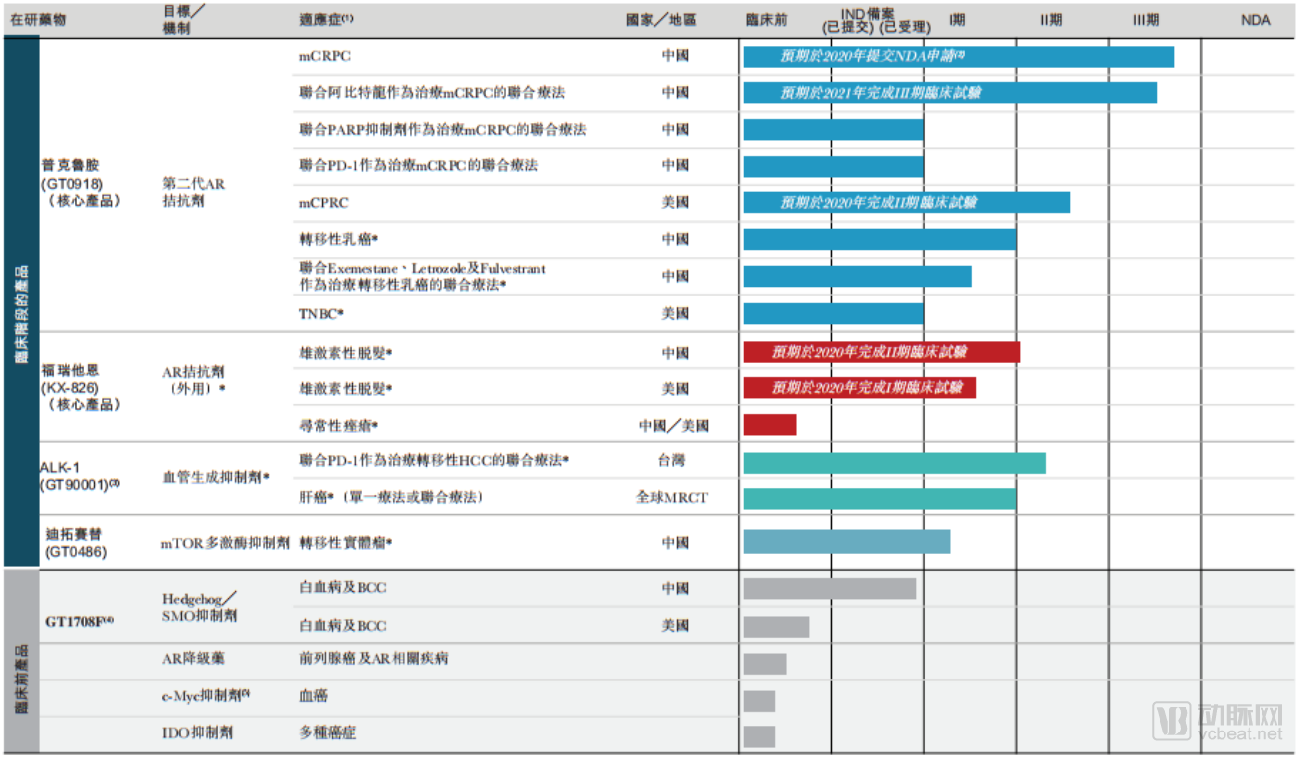
Kintor’s R&D Pipeline (Image from Kintor’s Prospectus)
Kintor is deeply engaged in the fields of prostate cancer, breast cancer, and liver cancer—three major malignancies that lack effective treatments and account for 50% of the cancer patient population. As of the release of its prospectus, Kintor’s drug pipeline includes four core products under development, comprising three small-molecule drugs and one monoclonal antibody drug.
ProxalutamideIt is Kintor’s lead investigational drug and is currently undergoing Phase III clinical trials in China for mCRPC (metastatic castration-resistant prostate cancer). In addition to prostate cancer-related clinical trials, Kintor has initiated Phase I/Ib clinical studies in China evaluating pirarubicin monotherapy for metastatic breast cancer, while combination therapy regimens are being investigated in Phase Ic trials.
Castration-resistant prostate cancer is currently a research hotspot in the global oncology field. According to VCBeat’s statistics on clinical trials, the number of clinical studies with prostate cancer as an indication ranks among the top five for oncology indications. As there are currently no highly effective treatment options for castration-resistant prostate cancer, Kintor’s drug pyrilutamide is a product that holds significant promise.
Kintor also has another topical AR antagonist,Furaltadone, currently undergoing clinical studies for androgenetic alopecia and has entered Phase II clinical trials. As a novel androgen antagonist, foritan will compete with finasteride, the current mainstream clinical medication, by virtue of its fewer side effects.
In addition to AR antagonists, Kintor also has global licenses obtained from PfizerALK-1Phase II Clinical Trial Underway. Self-developedmTOR InhibitorsDitosepThey have also entered Phase I clinical trials. Both drugs primarily target metastatic solid tumors for which there are currently no clinical solutions.