

Sidoke Files for IPO After Securing Partnerships with Leading MedTech Firms and Planning Nationwide Rollout to 10,000 Primary Clinics
At 8 a.m., as the city slowly awakened, a large group of elderly residents had already gathered in the limited space of a township health center in Pingxiang County, Yunnan Province, waiting for disease screening using handheld ultrasound devices. This marked the first time local residents could access ultrasound screening right at their doorstep.
In 2019, Sdoko, a developer of handheld ultrasound hardware, and Shanghai Shenzhi, a company specializing in AI-powered ultrasound imaging, visited countless such grassroots medical outposts. Zhang Zhuo, CEO of Sdoko & Shanghai Shenzhi, stated, “Unless you come here in person, it is hard to imagine the robust demand for medical services amidst such scarce healthcare resources.”
Over the past three years, leveraging its proprietary, independently developed underlying algorithm platform, Siduoke & Shanghai Shenzhi has garnered significant recognition and successfully established partnerships with Kangda Medical, Meinian Onehealth, and several multinational medical imaging giants.
However, when Siduoke and Shanghai Shenzhi delved into the capillaries of China’s healthcare system—specifically the grassroots medical sector—they initially found themselves at a loss. They discovered that the needs of grassroots healthcare are not merely a scaled-down version of those in tertiary Grade A hospitals, nor are they a low-cost alternative. On the contrary, serving grassroots healthcare places greater demands on a company’s operational and R&D capabilities.
After a year of exploration on the front lines of primary care, Zhang Zhuo confidently told VCBeat that Siduoke’s products are expected to be deployed in more than 10,000 clinics across China next year.
Sidoco & Shanghai Shenzhi’s first growth curve stems from serving frontline medical and healthcare enterprises. Currently, Sidoco & Shanghai Shenzhi is expanding its second growth curve into the primary care market. In the future, Sidoco & Shanghai Shenzhi has laid out a third growth curve: leveraging AI to reduce costs and enhance efficiency in ultrasound services.
On December 20, 2019, at the Future Healthcare 100 Conference co-hosted by VCBeat and Eggshell Research Institute, Zhang Zhuo was invited to deliver a speech titled “Intelligent Ultrasound Serving Primary Care.” Following the conference, VCBeat conducted an exclusive interview with Zhang Zhuo to gain deeper insights into Sidoco & Shanghai Shenzhi’s perspectives on primary healthcare and ultrasound AI.
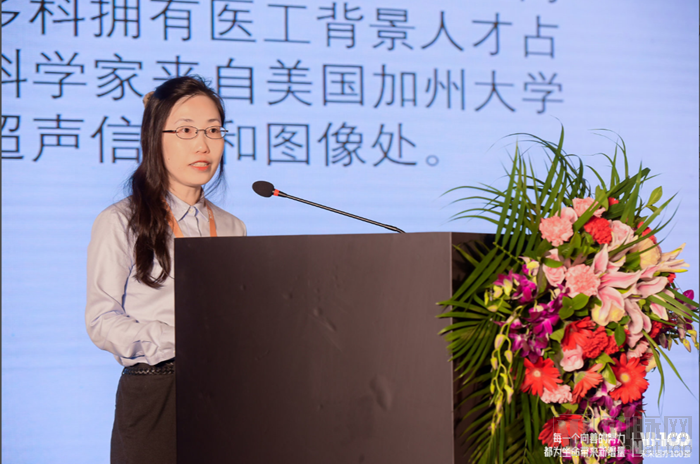
Sito & Shanghai Shenzhi CEO Zhang Zhuo Delivers Speech
As a startup, Sidoco has experienced rapid growth. From 2018 to 2019, the company completed three rounds of financing, gaining recognition from multiple leading investment firms in the industry. Within two years of its establishment, its products obtained registration certificates from the China Food and Drug Administration (CFDA) and CE certification. Furthermore, Sidoco has established collaborations with numerous top-tier medical device manufacturers.
However, in primary healthcare settings, mere speed cannot resolve entrenched challenges amid insufficient supply and highly concentrated resources. Sidoco & Shanghai Shenzhi have chosen to slow down and meticulously map out the intricacies of primary healthcare.
Zhang Zhuo stated, “We even have our backend R&D engineers conduct grassroots field research to understand user needs firsthand. Healthcare demands at the primary care level are not merely a simplified version of those in tertiary hospitals. Only through direct experience can developers truly grasp the needs of primary care physicians and shift their entrenched perceptions of grassroots healthcare.”
Reevaluating Primary Healthcare: They found that, from the patient side, both the frequency and amount of payments at primary healthcare institutions are not low in terms of willingness to pay. For the vast majority of patients, primary healthcare institutions are the most familiar and trusted providers. On the other hand, patients actually have a relatively high level of awareness regarding medical equipment. Therefore, the patient retention and benefits brought by portable ultrasound devices to primary healthcare institutions are very significant.
“At the primary care level, patients are willing to spend around RMB 100 on treatment for a common cold. The medical insurance system is also encouraging patients to seek care at primary healthcare facilities through structural adjustments,” said Zhang Zhuo. “Although patients in these communities tend to be older, they understand what ultrasound is and its significant clinical value. The key pain point in primary healthcare is the lack of diagnostic and treatment capabilities, which has led to substantial patient attrition.”
Secondly, from the physician’s perspective, the product requirements of primary care physicians are not merely a simplified version of equipment used in tertiary hospitals. They have unique needs for medical products.
Zhang Zhuo cited an example of a grassroots healthcare facility they encountered during their research that had been absorbed from a pharmacy. Such a small health outpost serves both diagnostic and medication-dispensing functions, while also providing inpatient beds and monitoring services; however, the clinical competence of its physicians is highly limited.
“This reality requires our engineers to design products based on the cognitive level and needs of primary care physicians. To some extent, this is more challenging than designing products for doctors at tertiary hospitals.”
In terms of telemedicine, primary healthcare institutions are tasked with multiple functions, including serving as the initial point of contact for primary care, facilitating two-way referrals, implementing tiered diagnosis and treatment for acute and chronic conditions, and ensuring coordinated care between upper- and lower-level facilities. They operate both as independent entities and as a critical component of the broader healthcare system.
Zhang Zhuo told VCBeat that primary healthcare institutions need to connect with higher-level medical facilities, but the challenges to be addressed go beyond cloud services and big data; the core issue is determining who actually benefits from cloud adoption.
Finally, Siduoke and Shanghai Shenzhi must continuously add product features while maintaining ease of use. Zhang Zhuo pointed out, “Much like smartphones, the simpler the front-end interface becomes, the higher the R&D barriers on the back end.”
In terms of product presentation, the handheld ultrasound devices from Siduoke & Shanghai Shenzhi are only as large as a smartphone. With multiple built-in modules, they achieve high-definition image transmission with zero latency. For disease-specific solutions, Siduoke & Shanghai Shenzhi have developed comprehensive whole-body, general practice, and full-scope solutions tailored to common and frequently occurring conditions at the primary care level. Additionally, the products incorporate remote diagnosis and remote education solutions.
Technologies such as 5G, big data, artificial intelligence, and cloud computing have disrupted every aspect of our lives. However, healthcare remains a fortress yet to be conquered by these intelligent technologies. In addition to the inherent insularity of the healthcare system, many entrepreneurs have not yet truly examined this sector with an equitable perspective.
Zhang Zhuo smiled and said, “In the underserved market for ultrasound in primary healthcare, we have been gradually venturing into deeper waters. Initially, we addressed the issue of availability; once our product was developed, we focused on making it affordable for primary care settings; ultimately, we realized that we also needed to tackle the challenge of usability.”
During the interview, Zhang Zhuo showed the reporter two photographs. One captured the smiles on many elderly patients’ faces when portable ultrasound devices were introduced to primary healthcare institutions. The other was a comparison of a company R&D engineer’s hair density in 2018 versus 2019; by 2019, the engineer had essentially lost most of his hair.
Although 2019 took a toll on engineers’ hairlines, R&D engineers led the company to achieve remarkable results. Shanghai Shenzhi was officially established in late 2018 as a device manufacturer specializing in micro AI imaging. Shenzhi’s Intelligent Core Algorithm Center boasts more than ten U.S.-trained MDs and large-scale imaging datasets annotated by millions of industry-leading physicians. Shanghai Shenzhi Information has now developed a proprietary algorithmic imaging database unique in China and successfully built an Ultrasound Imaging Cloud Center.
The AI + medical imaging sector is highly crowded, yet the AI + ultrasound imaging niche remains largely untapped. Shanghai Shenzhi Information chose to enter this field because AI-powered ultrasound offers substantial benefits to primary healthcare.
Ultrasound imaging largely relies on dynamic images acquired from multiple planes by physicians for diagnosis, placing high demands on the sonographer’s individual technical proficiency.
Although telemedicine has largely addressed the imbalance in the distribution of high-quality medical resources, due to the specific nature of ultrasound medicine, large-scale clinical application of remote ultrasound diagnosis is not yet feasible at this stage, pending the establishment of standardized protocols for ultrasound image acquisition, image quality control, and data transmission.
Therefore, leveraging auxiliary diagnostic systems to assist primary care physicians in addressing real-time diagnostic challenges may offer a viable approach to alleviating the shortage of medical specialists at the grassroots level in the current stage.
While AI-enhanced ultrasound offers numerous benefits, its high technical barrier excludes the majority of users.
Implementing AI-based diagnosis for ultrasound imaging requires more research investment than simple medical image recognition. Due to the dynamic nature of ultrasound imaging, applying deep learning methods to make intelligent medical judgments from a dataset is akin to analyzing ultrasound features from video footage.
Zhang Zhuo mentioned in his speech, “Ultrasound imaging lacks standardization, and it generates at least 20 frames per second. Our team has been making attempts in this area in Shanghai for three years.”
In addition to the non-standardized and dynamic nature of medical imaging, the second major challenge is that engineers must not only address issues related to algorithms and data but also understand disease mechanisms and clinical information, continuously refining their products based on feedback from physicians.
“At present, we can proudly state that we are the first to achieve real-time assessment. Furthermore, while delivering high-quality results, we have also implemented split-screen functionality. During the diagnostic process, not only can the operator view the images in real time, but the imaging data can also be transmitted to senior specialists for consultation,” revealed Zhang Zhuo. “Shenzhi Information’s AI-based products have been contracted with an international medical device company, and the initial phase of this collaboration has already yielded certain scientific research outcomes.”
Over the past year, Zhang Zhuo has devoted a significant amount of time to communicating with clients. As CEO, she describes herself as being at the bottom of the company’s food chain: externally, she must navigate complex and ever-changing customer demands; internally, she needs to mobilize her team to execute on those demands swiftly.
Looking ahead, Siduoke and Shanghai Shenzhi still have a long journey ahead, with a greater focus on translating technology into products that address real-world needs. As Zhang Zhuo remarked in his speech, “We firmly believe that product implementation must be grounded in real-world scenarios, particularly in the healthcare industry.”