

Aurora Medicine: Focused on Urogenital Oncology, Building Innovative Drug Platforms, and Advancing Global New Drug Development

Asieris
Innovative Drug Developer
In March 2019, the NCCN Annual Conference was held as scheduled in Orlando, Florida, USA, with the simultaneous release of the latest edition of the NCCN Clinical Practice Guidelines in Oncology (hereinafter referred to as the “Guidelines”). NCCN, which stands for the National Comprehensive Cancer Network, is a non-profit academic organization composed of 21 leading cancer centers in the United States. Since the 1970s, oncologists worldwide have consistently relied on the annual NCCN guidelines for various cancer types as authoritative resources to guide clinical practice.
In this edition of the Guidelines, the NCCN describes the standard treatment for non-muscle-invasive bladder urothelial carcinoma (NMIBC) as follows: transurethral resection of bladder tumor (TURBT) is the preferred initial intervention, with postoperative intravesical instillation therapy determined based on the risk of recurrence.
This characterization has not undergone substantial change over the past 30 years. Non-muscle-invasive bladder cancer (NMIBC) is a subtype of bladder cancer, one of the most common urological malignancies, with approximately 75% of newly diagnosed bladder cancer cases classified as NMIBC. Bladder cancer is often referred to as the “most expensive” tumor and represents a highly aggressive form of cancer. The five-year mortality rate among patients diagnosed with NMIBC is approximately 40%–50%; long-term survival is even rarer in cases where metastasis occurs.
Dr. Deng Yijun, Vice President of New Drug R&D at Asieris Pharmaceuticals, told VCBeat that although patients with non-muscle-invasive bladder cancer (NMIBC) can undergo intravesical therapy using chemotherapeutic agents or Bacillus Calmette-Guérin (BCG) to induce an immune response, they endure significant suffering during treatment, and the prognosis remains suboptimal, indicating a substantial unmet clinical need.

Dr. Deng Yijun, Vice President of New Drug R&D at Asieris Pharmaceuticals
“On the other hand, the development of new drugs for bladder cancer has failed to achieve breakthroughs in the past few decades. One important reason is that the tissue characteristics of the bladder urothelium make it difficult for drugs to reach their site of action and exert therapeutic effects, posing significant challenges to new drug development,” pointed out Dr. Deng Yijun.
Asieris Pharmaceuticals’ investigational drug APL-1202, a targeted MetAP2 enzyme inhibitor, is the first oral small-molecule therapy for non-muscle-invasive bladder cancer (NMIBC) to enter Phase III clinical trials in the past three decades, positioning it at the forefront globally. APL-1202 features unique metabolic properties, undergoing rapid metabolism in vivo and delivering the drug to the site of action (the bladder) via urine. It subsequently accumulates in the bladder with urine to reach therapeutically effective concentrations, thereby achieving an “intravesical instillation-like” effect while sparing patients the discomfort associated with surgical instillation procedures. Dr. Deng Yijun stated that, owing to APL-1202’s novel antitumor mechanism and its unique advantage of “oral instillation,” the development of this project has successively received support from China’s National Major Special Projects for New Drug Innovation during the 12th and 13th Five-Year Plan periods.
Around the year 2000, a research team at Johns Hopkins University in the United States discovered that an antibiotic used in the 1960s to treat urinary tract infections (namely APL-1202) could inhibit tumor angiogenesis and identified its target as methionine aminopeptidase 2 (MetAP2). The primary intracellular function of MetAP2 is to cleave the N-terminal methionine from newly synthesized proteins, which is fundamental to protein synthesis.
In 2010, Asieris Pharmaceuticals obtained the global development rights for APL-1202 from Johns Hopkins University, prioritizing a series of preclinical and clinical development activities in China for the treatment of non-muscle-invasive bladder cancer. APL-1202 has been marketed as an antibiotic in several European countries for many years, demonstrating a favorable clinical safety profile and a relatively mature manufacturing process. Dr. Deng Yijun stated that by investigating new clinical applications and mechanisms of action for existing drugs, and establishing an independent novel drug discovery platform, the company can maintain its autonomous innovation capabilities while significantly reducing the risks associated with new drug development. As an innovative pharmaceutical company, Asieris places great emphasis on independent R&D capabilities, which aligns with this strategic development approach.
In 2016, APL-1202 completed its Phase II clinical trial in China and demonstrated favorable efficacy. The positive efficacy results from the Phase II clinical trial of APL-1202 in China were reported at the 2016 Annual Congress of the European Association of Urology (EAU), the 2017 Conference on Bladder Cancer Treatment and Research jointly organized by the Albert Institute and MD Anderson Cancer Center, and the 2017 Annual Meeting of the Chinese Society of Clinical Oncology (CSCO), garnering significant attention from the industry.
In March 2017, Asieris Pharmaceuticals rapidly launched the registrational clinical trials and drug manufacturing of APL-1202 in China, with the participation of 40 clinical centers. In May 2019, APL-1202 completed the enrollment of all patients in its Phase III clinical trial in China. Additionally, Asieris initiated the Phase I clinical trial of APL-1202 in the United States in 2018, advancing APL-1202 into the international market.
Asieris Pharmaceuticals, co-founded in 2010 by Dr. Pan Ke, a founding team member of Hutchison MediPharma (Shanghai), and Dr. Zhuang Chengfeng, former Senior Director of Regulatory Affairs at Johnson & Johnson in the United States, is one of the few domestic global innovative drug R&D companies focused on anti-tumor and related diseases of the genitourinary system.
Currently, Asieris Pharmaceuticals operates business and R&D centers in Shanghai, Beijing, Taizhou Medical City (Jiangsu Province), and the United States. The company has two investigational drugs in Phase III clinical trials, including ALP-1202, as well as multiple novel original drugs poised to enter clinical trials.
In 2018, Asieris Pharmaceuticals established a new drug R&D center in Shanghai. By fully leveraging its accumulated advantages in market demand, clinical hospital resources, and industry expert teams from years of experience in developing drugs for urogenital diseases, the company gradually built an R&D team and technology development platform aligned with its strategic positioning, significantly enhancing its independent innovation capabilities in new drug development.
It was at this time that Dr. Deng Yijun joined Asieris Pharmaceuticals as Vice President of New Drug R&D, tasked with establishing the Asieris Shanghai R&D Center. He earned his bachelor’s and master’s degrees in Chemistry from Sun Yat-sen University and holds a Ph.D. in Bioorganic Chemistry from Case Western Reserve University in the United States. Over the past two decades, Dr. Deng has held positions at pharmaceutical companies including Johnson & Johnson, Viropharma Inc., Tetralogic Pharmaceuticals, and VenatoRx Pharmaceuticals, where he engaged in new drug R&D and project management, encompassing early-stage molecular design, synthesis, optimization, as well as GMP manufacturing and quality control of clinical drugs and formulations.
Among these, the novel anticancer drugs Birinapant (TL32711) and Remetinostat (SHP-141), for which Dr. Deng Yijun served as Chief Chemist, have entered Phase II clinical trials in the United States. “I worked with Dr. Pan Ke and Dr. Zhuang Chengfeng, co-founders of Asieris Pharmaceuticals, for many years at Johnson & Johnson in the U.S. We maintained close communication throughout the process of their founding Asieris Pharmaceuticals, so I consider myself an old friend of the company. When Asieris Pharmaceuticals decided to establish a new drug R&D center to strengthen its independent innovation capabilities, I gladly accepted Mr. Pan’s invitation and officially joined the Asieris team.” According to Dr. Deng Yijun, after more than a year of efforts, Asieris Pharmaceuticals has built a multidisciplinary R&D technical team led by several senior returnee experts. Significant progress has also been made in platform construction, with two unique technology platforms established to date.
The first is the MetAP inhibitor platform. “In the study of expanding the indications for APL-1202, the Asieris team conducted in-depth research on the mechanism of action of MetAP2,” introduced Dr. Deng Yijun. “We discovered that APL-1202 can help regulate the immune system within tumor cells in the tumor microenvironment, and it also demonstrated strong synergistic effects with PD-1 inhibitors in animal models. The discovery of this new mechanism has laid the foundation for establishing our MetAP immunomodulatory technology platform.” The Asieris R&D team is developing a new generation of MetAP2 inhibitors for cancer treatment based on this newly identified mechanism. Another product derived from the MetAP platform includes APL-1501, which is under development for multidrug-resistant infections. This project has received support from the National “13th Five-Year Plan Major New Drug Creation Special Project” and is expected to submit an Investigational New Drug (IND) application by the end of 2020.
Furthermore, Asieris has established a platform for improved dosage form technologies, aimed at enhancing the pharmacokinetic profiles, safety, and even the efficacy of existing drugs. On this platform, the company has independently developed APL-1301. Dr. Deng Yijun stated, “APL-1301 overcomes certain pharmacokinetic limitations of APL-1202, offering greater convenience in administration and broader applicability. With full independent intellectual property rights, it will be globally developed as the second-generation product of APL-1202.” It was disclosed that APL-1301 is also planned to submit an Investigational New Drug (IND) application for clinical trials in 2020.
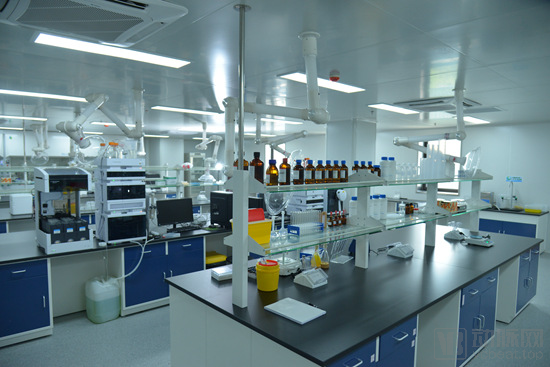
Asieris Pharmaceuticals Laboratory
As an emerging biopharmaceutical company, Asieris Pharmaceuticals prioritizes independent R&D capabilities while closely monitoring technologies and products related to genitourinary tumors abroad. The company has strengthened collaborations with domestic and international biotech firms and research institutions, along with product in-licensing initiatives. Notable examples include collaborative research with Mount Sinai Hospital in the United States and Okayama University in Japan, as well as securing global development rights for Cevira®, a product for treating cervical precancerous lesions, in July 2019. The project is currently initiating global Phase III clinical trials.
Dr. Deng Yijun stated that new drug development is a high-risk industry. Asieris adopts a dual-pronged strategy to maximize the mitigation of R&D risks. On one hand, it increases investment in early-stage development projects to strengthen its independent R&D capabilities and product pipeline; on the other hand, it actively licenses in late-stage products aligned with its strategic focus—including those already undergoing Phase II or III clinical trials abroad or already marketed—for further development. “We plan to advance multiple new drugs into clinical trial stages every one to two years in the future.”