

Bosera Health Announces 'Adaptive Intelligent Interoperability' Suite to Advance Smart Hospital Development with Cutting-Edge Technologies
On January 3, 2020, the “Frontier Forum on Digital Medicine in China: Polymorphic Intelligent Connectivity for Smart Services,” hosted by China Digital Medicine Magazine and co-organized by B-Soft Co., Ltd., was held in Beijing. Themed “Polymorphic Intelligent Connectivity,” the forum focused on smart medical insurance and the construction of next-generation Hospital Information System (HIS) platforms, exploring the application and development of cutting-edge technologies such as blockchain, data middle platforms, and the Internet of Things (IoT) in the healthcare sector. The forum aimed to promote the polymorphic development of smart hospital construction through scientific and technological innovation.

Leaders from the Hospital Management Institute of the National Health Commission and the editorial board of *China Digital Medicine*, experts in the field of domestic healthcare information, heads of medical institutions, directors of information centers, and key professional staff attended the event. The forum also featured a live webcast, allowing 300 information technology professionals who were unable to attend in person to follow the latest developments in the field.
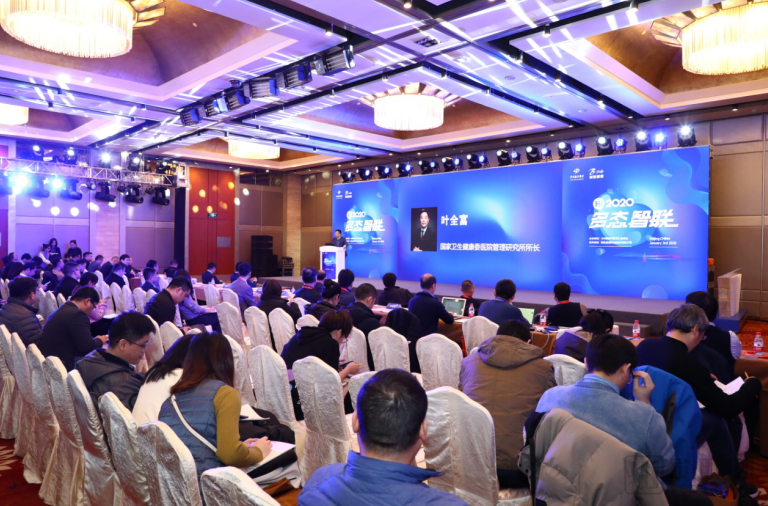
Director Ye Quanfu of the Hospital Management Institute under the National Health Commission delivered a speech at the forum. Director Ye stated that promoting the application of various new technologies in the field of healthcare informatization to support healthcare reform and the development of smart hospitals was the original intention behind organizing this forum.
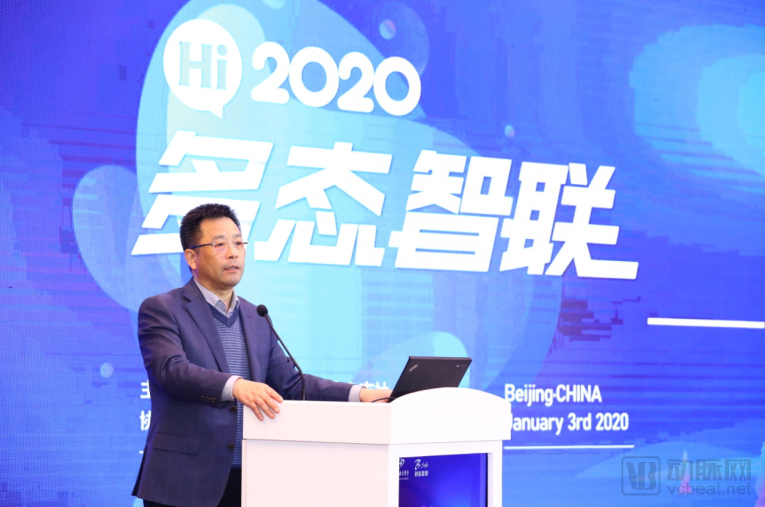
Ge Hang, Chairman of B-Soft, delivered a keynote address at the forum, calling on all participants to heed the call to “seize every minute and make the most of their prime.” Under its “One Body, Two Wings” strategic framework, B-Soft continues to build upon its traditional healthcare and public health business lines, while achieving breakthroughs in areas such as the Medical Internet of Things (MIoT) and Internet-based healthcare. The company will further increase its R&D investment and efforts, leveraging new technologies and innovative approaches to continuously support the development of smart hospitals.
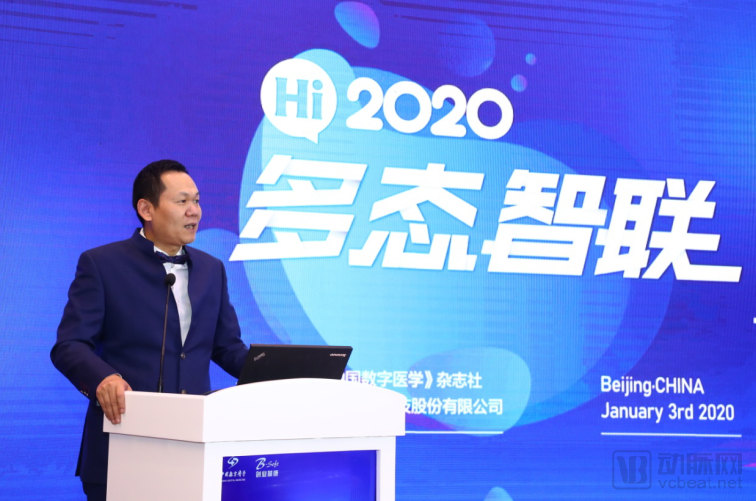
In the New Era, How Can New Technologies and Ideas Continuously Empower the Development of Smart Healthcare? The “Multi-Modal Intelligent Connectivity · Smart Services” Product Launch Held During the Conference Provided Answers to This Question for All Attendees.
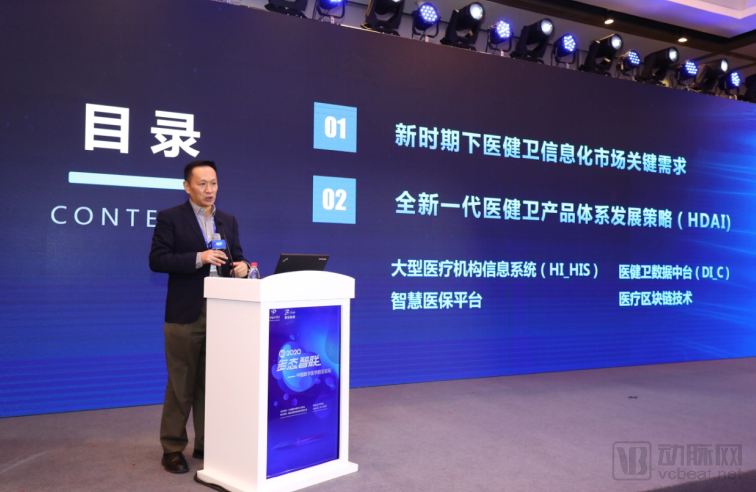
At the keynote speech titled “Polymorphic Intelligent Connectivity and Integration of Integrated Healthcare Information Systems,” Zou Yue, Chief Architect at B-Soft, unveiled the company’s latest products in four key areas on behalf of B-Soft Technology Co., Ltd.: a new platform-based Hospital Information System (HIS), a data middle platform, blockchain-enabled healthcare solutions, and smart medical insurance. In subsequent sessions, experts from Fujian Medical University Union Hospital and Jiangyin People’s Hospital shared their experiences in implementing blockchain healthcare and IoT-enabled hospital initiatives, respectively, providing valuable references for healthcare institutions’ informatization efforts in this new phase.
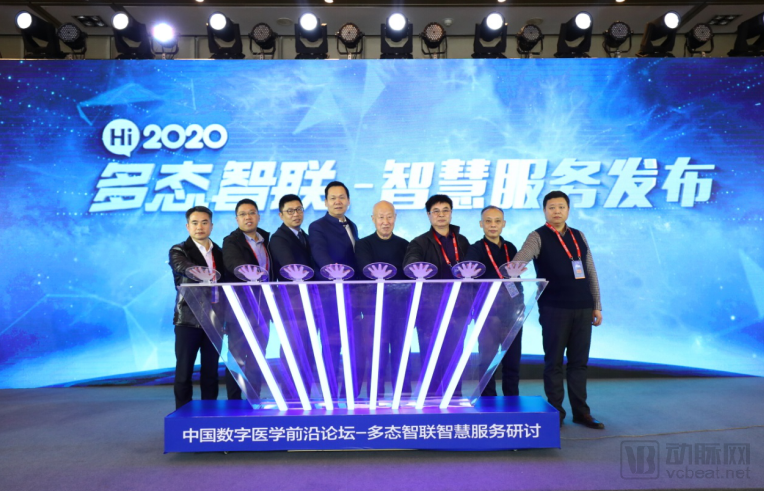
Distinguished guests, including Ren Lianzhong, former Director of the Computer Center at the Chinese PLA General Hospital; Li Huacai, Executive Editor-in-Chief of China Digital Medicine magazine; Wang Zhichao, Vice President of the Third Affiliated Hospital of Henan University of Chinese Medicine; Chen Shituan, President of Zichuan District Hospital in Zibo City, Shandong Province; Ge Hang, Chairman of B-Soft Co., Ltd.; Zhang Lvzheng, President of B-Soft Co., Ltd.; Hu Zhijian, Director of the Information Center at Union Hospital affiliated with Fujian Medical University; and Gong Hai, Chief of the Medical Equipment Department at Jiangyin People’s Hospital, attended the on-site launch ceremony for “2020 Polymorphic Intelligent Connectivity Smart Services,” pooling multi-party efforts to jointly advance the development of smart hospitals.
In 2019, B-Soft jointly won the bid for Package 8 of the National Healthcare Security Administration’s procurement project for business application software in the construction of the national healthcare security information platform. This package primarily included three major components: the Basic Information Management Subsystem, the Healthcare Security Business Foundation Subsystem, and the Application Support Platform Subsystem. This marked B-Soft’s first major victory after establishing its Healthcare Security Division. Leveraging this momentum, B-Soft will continue to support the development of provincial and municipal healthcare security information platforms across China.
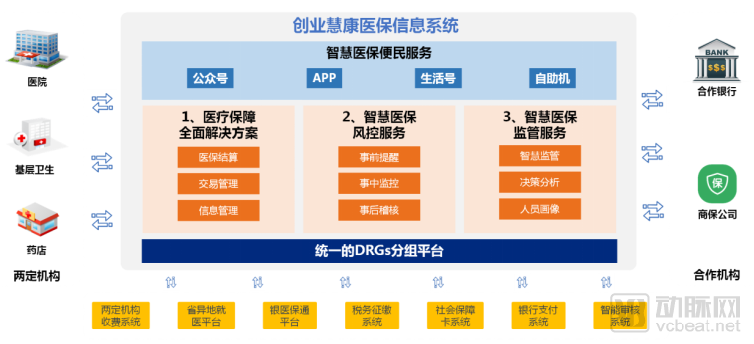
With the national medical insurance platform’s construction planning, upgrading hospitals’ medical insurance information systems has become urgent. B-Soft’s newly launched smart medical insurance product meets the requirements of the DRG (Diagnosis-Related Groups) reform in medical insurance, implementing end-to-end control across all business processes and stages, including clinical practices and medication management. In the area of commercial health insurance, B-Soft has established a payment and settlement platform within its internet healthcare operations. In the future, this system will also provide corresponding solutions and service guarantees to facilitate interaction between basic medical insurance and commercial insurance.
President Xi Jinping emphasized that the integrated application of blockchain technology plays an important role in new technological innovations and industrial transformations.
In June 2019, B-Soft and the Union Hospital of Fujian Medical University jointly undertook a project commissioned by the National Health Commission of China—“Research and Practice of Blockchain Based on Tiered Diagnosis and Treatment.” The project aims to effectively integrate regional medical resources by leveraging the decentralized advantages of blockchain technology, and to address the difficulty residents face in accessing medical care through coordinated efforts between upper- and lower-level institutions within medical consortia and medical communities.
In December, at the interim review meeting for the research project “Blockchain Research and Practice Based on Tiered Diagnosis and Treatment,” organized by the Statistical Information Center of the National Health Commission, it was pointed out that “blockchain + healthcare” can leverage its advantages in areas such as data privacy protection and information traceability. The project should accelerate its research progress, develop and compile application standards for blockchain within the healthcare industry, and promote the development of industry applications.
Hu Zhijian, Director of the Information Center at Fujian Union Hospital, delivered a keynote speech titled “Research and Practice of Blockchain Based on Tiered Diagnosis and Treatment” at the forum, introducing project progress and summarizing experiences.
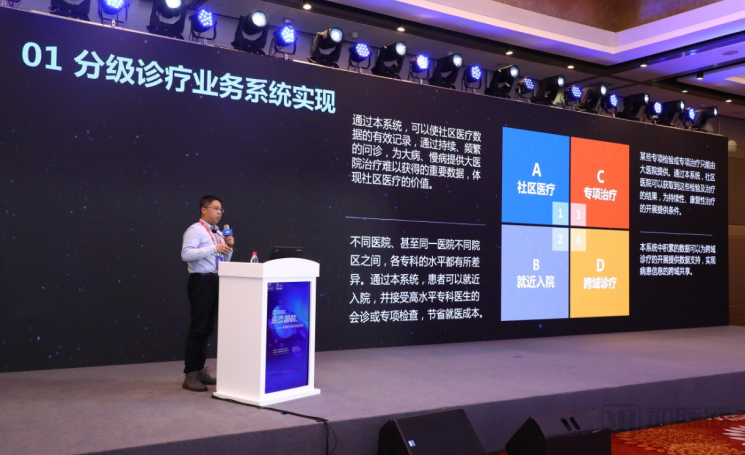
Director Hu introduced that the medical consortium is one of the typical application scenarios of blockchain healthcare. By leveraging Blockchain 3.0 technology, all medical resources within the consortium are recorded on the blockchain, creating a unified ledger to ensure comprehensive openness of medical resources. Resource data is stored using a fully synchronized distributed architecture. Each medical institution is only responsible for managing the extent of resource sharing within its own unit and performing necessary maintenance. By adopting common transaction rules and smart contracts, the risk of human intervention is reduced. Through disintermediation, scarce and tight medical resources can be reserved and applied for by the most suitable patients in greatest need, thereby improving resource utilization efficiency. This approach achieves accessibility, trustworthiness, and diversity of medical resources, seeking incremental growth within existing stock and enhancing the rational supply of medical resources.
The application of the Internet of Things (IoT) is one of the key trends in the development of smart hospitals, serving as a crucial technical foundation for achieving refined operational management and enhancing the quality of medical services. Experts from Jiangyin People’s Hospital delivered a presentation titled “Informatization Practices in IoT-Based Monitoring of Medical Equipment,” sharing practical experiences in the advancement of hospital IoT applications with their peers.
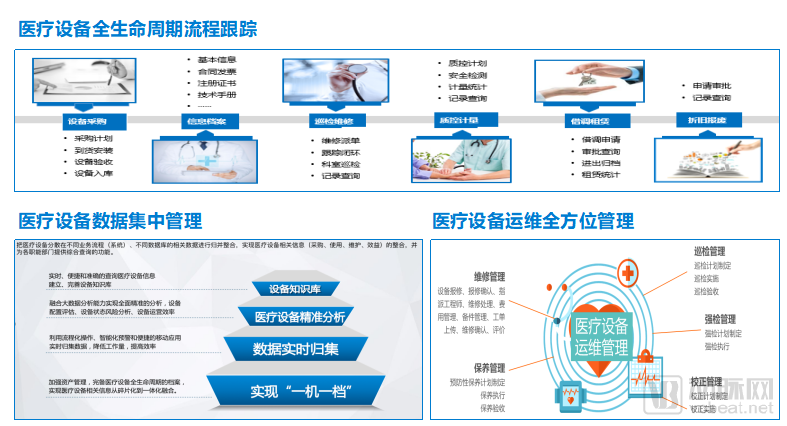
With the support of B-Soft, Jiangyin People's Hospital leverages the Internet of Things (IoT) to empower the development of its smart hospital infrastructure. By collecting data from medical devices and information systems, the hospital has implemented cockpit-style visual management and unified analytics, enabling refined management of equipment utilization efficiency.
Currently, many hospitals have implemented a series of fragmented and siloed application systems in areas such as digital ward management and intelligent device management. In the future, it will be essential to leverage an IoT infrastructure platform to provide comprehensive device connectivity and management solutions for hospital IoT applications. This platform should support the conversion and integration of various IoT communication protocols, achieving unified and centralized access for multi-vendor devices and multi-protocol environments. By decoupling IoT application business workflows and establishing an open, interconnected standard system for IoT applications, hospitals can reduce their dependence on specific hardware scenarios during development. Furthermore, by integrating with hospital information platforms, this approach enables the construction of a multi-tiered platform architecture, serving as the cornerstone for the development of smart hospitals.
One of the core components of B-Soft’s medical and health mid-end is the data mid-end, which integrates data resources, provides data technology capabilities, unifies data and service interfaces, and strongly supports various front-end businesses across the data industry chain.
The middle platform serves as a bridge connecting the front-end and back-end systems. With this new architectural layer, stable and generic business capabilities from the increasingly bloated front-end systems can be “sunk” into the middle platform, thereby streamlining the front end and restoring its responsiveness. Meanwhile, business capabilities from the back-end systems that require frequent changes or need to be directly accessed by the front end can be “extracted” into the middle platform, granting these capabilities greater flexibility and lower change costs, thus providing the front end with more robust “capability firepower” support.
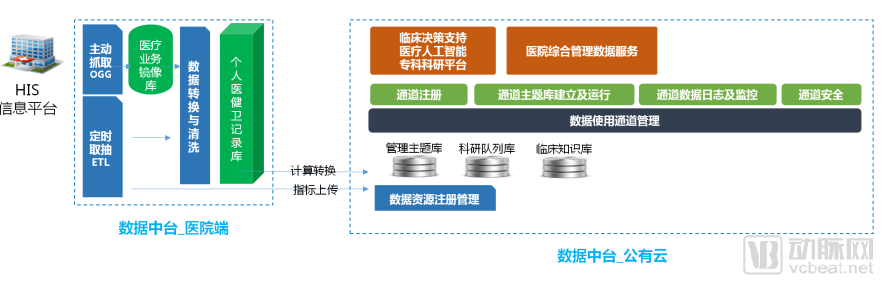
B-Soft’s newly released Adaptive Intelligent Interoperability (AI²) Hospital Information System for Large Healthcare Institutions/Groups (HI-HIS6.0) is a next-generation platform-based HIS solution. It emphasizes business process coordination, decision-making alerts, and strategic control across multi-organizational structures, achieving integrated operations within hospitals, unified medical and public health services externally, and cohesive group-wide management.
As the HIT industry enters a new era of “dual oversight” by the National Health Commission (NHC) and the National Healthcare Security Administration (NHSA), the direction of informatization in the healthcare sector is to provide core products and solutions for integrated care. These solutions must meet healthcare institutions’ requirements vis-à-vis the NHC, including tiered diagnosis and treatment, standardization of clinical practices, hospital management, and performance evaluation; while also satisfying the NHSA’s demands for intelligent cost control, behavioral supervision, and cost monitoring. In the future, they should additionally fulfill the requirements for collaboration with commercial insurance.
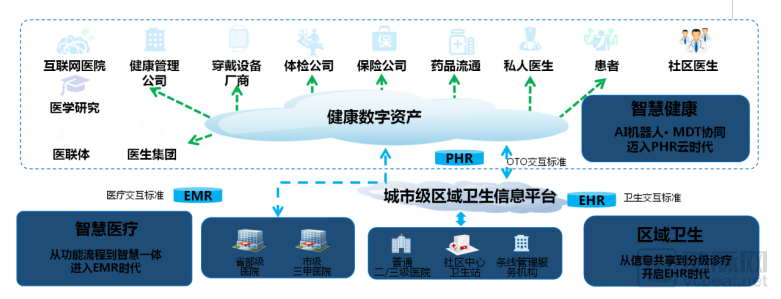
Concurrently, adjustments to various public service processes and the adoption of new diagnostic and treatment technologies have made “polymorphism” a key feature of next-generation core systems. Furthermore, the integration of emerging information technologies—such as cloud computing, big data, IoT, mobile internet, 5G, AI, and blockchain—enables ubiquitous connectivity. Through intelligent enhancements driven by knowledge bases, decision support systems, data middle platforms, and AI, “smart connectivity” has also become a defining characteristic of next-generation core systems.
In his presentation, Zou Yue emphasized that HI-HIS 6.0 places particular emphasis on multi-organizational architecture, process optimization, business integration and collaboration, decision-making early warning systems, and strategic control. It aims to achieve internal business integration within hospitals, external integration of medical, health, and public health services, and vertical integration across group management.
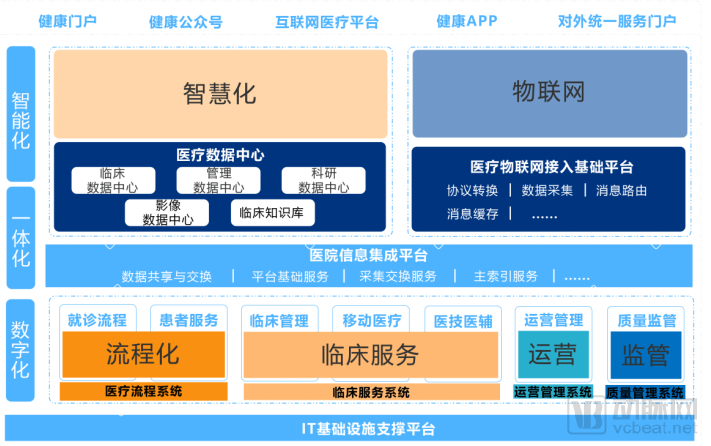
At this forum, Adaptive Intelligent Interoperability (AI²) showcased innovative application scenarios driven by emerging information technologies—including 5G, artificial intelligence, blockchain, and the Internet of Things—for the advancement of healthcare informatization.
B-Soft continuously researches and expands new technologies and applications to drive the development of smart healthcare. Proactively positioning itself for the new era characterized by the dual oversight of the National Health Commission and the National Healthcare Security Administration, B-Soft aligns with market expectations and supports the gradual transition into an integrated healthcare era. It provides medical institutions with comprehensive, moderately forward-looking, and timely IT support, while meeting requirements for governance, management, operations, and collaboration.