

JunLian Healthcare New Drug Bulletin Issue 38: Key Clinical Updates and Pipeline Highlights
Jan 06, 2020 18:00
CST Updated
18:00

This week, there were 8 new drug data entries, including 5 for oncology, 1 for pain, 1 for metabolism, and 1 for immunology.
❖Incyte’s Selective JAK1 Inhibitor Itacitinib Fails to Meet Primary Endpoint in Phase III Trial for Acute GVHDThe stock price plummeted 10% in after-hours trading, wiping out $2 billion in market capitalization. Although Innovent Biologics entered into a collaboration agreement with Incyte in December 2018, Incyte’s recent setback did not affect Innovent’s share price. Looking back at the JAK inhibitor landscape, six JAK inhibitors have been approved globally (four in China), with the global market sales approaching $5 billion. As the twin stars of this sector, ruxolitinib (Incyte/Novartis) and tofacitinib (Pfizer) have demonstrated strong market performance, with sales of $2.364 billion and approximately $1.774 billion, respectively, both having crossed the threshold into blockbuster status. Furthermore, many new companies are rushing to enter this therapeutic area, including Gilead and AbbVie, which are aiming to develop highly selective agents. More significant developments are expected to emerge in the near future.
❖ ZeJing’s Phase 3 clinical trial of donafenib as first-line treatment for advanced hepatocellular carcinoma has achieved success. The median overall survival (mOS) in the experimental group was 12.2 months, compared with 6.5 months in the control group receiving sorafenib. This marks the first time in twelve years that a small-molecule monotherapy has demonstrated superior efficacy over sorafenib in head-to-head trials for advanced hepatocellular carcinoma worldwide—an achievement neither O’K nor lenvatinib accomplished at their respective launches. Since its inception, donafenib has garnered significant attention and support, including funding from multiple national “Major New Drug Development” science and technology special projects. It is expected to submit a new drug application in early 2020. However, sorafenib generated approximately $528 million in global sales in 2018, with about $36.2 million in the United States and $68.17 million in China. With sorafenib’s patent nearing expiration, whether donafenib can break through existing market ceilings will depend on the company’s commercial capabilities.
Incyte’s JAK1 Inhibitor Itacitinib Fails in Phase III Trial
Incyte Announces Phase 3 Trial of JAK1 Inhibitor Itacitinib for Acute GVHD Fails to Meet Primary Endpoint; Shares Drop 10% in After-Hours Trading, Wiping Out $2 Billion in Market Capitalization
Itacitinib is a JAK1 inhibitor.
Phase III Clinical Trial: Efficacy Evaluation of Itacitinib Combined with Corticosteroids Versus Placebo Plus Corticosteroids in the Treatment of GVHD, with the Primary Endpoint Being Overall Response Rate and the Key Secondary Endpoint Being Non-Relapse Mortality at Six Months
2At day 8, the overall response rate did not show significant improvement (74.0% vs. 66.4%, p=0.08). There was also no difference in the key secondary endpoint of six-month non-relapse mortality.
SavaraofMolgradexAwardedFDA Breakthrough Therapy Designation
Savara Announces That the U.S. FDA Grants Breakthrough Therapy Designation to Its Investigational Drug Molgradex for the Treatment of Patients with Autoimmune Pulmonary Alveolar Proteinosis (aPAP)
Molgradex is an inhaled formulation of recombinant human GM-CSF. Molgradex has been granted orphan drug designation by the U.S. FDA and the European Medicines Agency for the treatment of patients with PAP.
A pivotal, randomized, double-blind, placebo-controlled clinical study designed to evaluate the efficacy and safety of Molgradex in patients with autoimmune pulmonary alveolar proteinosis (aPAP). The primary endpoints were the change in pulmonary ground-glass opacity score and serum PAP biomarkers after 24 weeks of treatment. Key secondary endpoints included the change in the alveolar-arterial oxygen gradient (A-aDO2) from baseline, among others.
After 24 weeks of treatment, patients in the treatment group showed significant improvements compared with the placebo group in terms of ground-glass opacity (GGO) scores, changes in serum pulmonary alveolar proteinosis (PAP) biomarkers, alveolar oxygen content, patient health status, and hemoglobin concentration. Furthermore, the trial demonstrated that continuous dosing yielded superior therapeutic efficacy compared with alternate-week dosing.
Schematic Comparison of Normal Alveoli and Alveoli in Patients with PAP
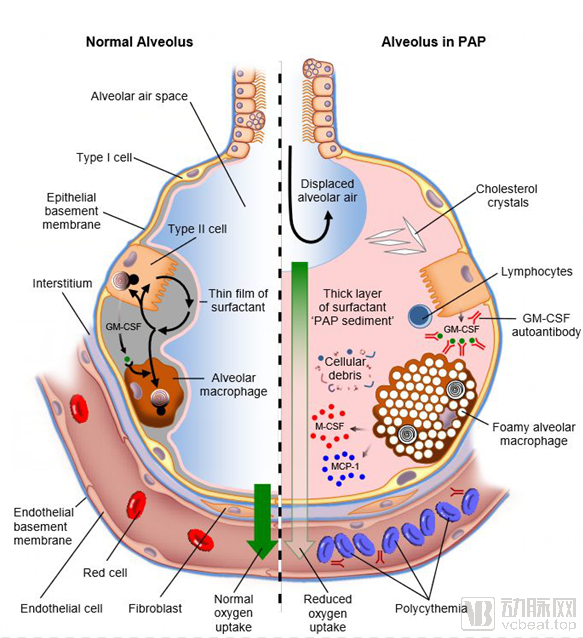
Data Source: Savara
MorphoSys Has Submitted Marketing Application for CD19 Monoclonal Antibody Tafasitamab
MorphoSys Announces Submission of Biologics License Application (BLA) to the U.S. Food and Drug Administration (FDA) for Tafasitamab (MOR208), a CD19 Monoclonal Antibody, in Combination with Lenalidomide for the Treatment of Patients with Relapsed or Refractory Diffuse Large B-Cell Lymphoma (r/r DLBCL)
Tafasitamab is a humanized monoclonal antibody with an optimized Fc domain that targets CD19. The Fc-modified tafasitamab is designed to enhance antibody-dependent cellular cytotoxicity (ADCC) and antibody-dependent cellular phagocytosis (ADCP), thereby improving the key mechanisms for killing tumor cells.
A single-arm, open-label Phase II study evaluating tafasitamab in combination with lenalidomide for patients with relapsed or refractory diffuse large B-cell lymphoma (R/R DLBCL) who have received at least one but no more than three prior therapies (including anti-CD20 targeted therapy) and are ineligible for high-dose chemotherapy (HDC) and autologous stem cell transplantation (ASCT).
Compared with lenalidomide monotherapy, the tafasitamab plus lenalidomide combination regimen demonstrated significant clinical advantages, with an ORR of 67.1% (vs. 34.2%) and a CR rate of 39.5% (vs. 11.8%).
Roche’s IMspire150 Trial Meets Primary Endpoint
Roche Announces That Its Phase III IMspire150 Study Met the Primary Endpoint of PFS (Progression-Free Survival)
IMspire150 is a study of the triplet combination first-line therapy with the PD-L1 monoclonal antibody atezolizumab (Tecentriq), the BRAF inhibitor vemurafenib (Zelboraf), and the MEK inhibitor cobimetinib for BRAF V600 mutation-positive advanced melanoma.
A Phase II, multicenter, double-blind, randomized controlled trial enrolling 500 treatment-naïve patients with BRAF V600 mutation-positive advanced melanoma, randomized to receive either anti-PD-L1 monoclonal antibody plus dual-targeted therapy or dual-targeted therapy alone, with the primary endpoint being investigator-assessed progression-free survival (PFS).
Compared with vemurafenib plus cobimetinib, the addition of atezolizumab significantly prolongs progression-free survival (PFS), marking a new breakthrough in the efficacy of immuno-targeted combination therapy for advanced BRAF-mutant melanoma.
Zelgen Biopharmaceuticals’ Donafenib Tosylate Phase III Clinical Trial Achieves Success
Suzhou Zelgen Biopharmaceuticals Co., Ltd. (hereinafter referred to as “Zelgen Pharma”) announced the success of its Phase III clinical study of donafenib tosylate as first-line treatment for advanced hepatocellular carcinoma
Donafenib is an oral small-molecule antineoplastic agent belonging to the class of multi-targeted multi-kinase inhibitors. Preclinical pharmacological studies have confirmed that donafenib can simultaneously inhibit the activity of multiple receptor tyrosine kinases, including VEGFR and PDGFR, directly inhibit various Raf kinases, and suppress the downstream Raf/MEK/ERK signaling pathway. By inhibiting tumor cell proliferation and tumor angiogenesis, it exerts antitumor effects through dual inhibition and multi-target blockade.
3. Key Phase III clinical study comparing patients in the nafeinib treatment group with those in the sorafenib control group (current standard of care), with overall survival as the primary endpoint
In patients with unresectable or metastatic advanced hepatocellular carcinoma who had not received prior systemic therapy, the median overall survival (mOS) was significantly superior to that in the sorafenib control group, demonstrating a statistically significant and clinically meaningful prolongation.
Axsome Therapeutics’ Novel Oral Multi-Mechanism Drug AXS-07 Achieves Success in Phase 3 Clinical Trial for the Acute Treatment of Migraine
Axsome Therapeutics Announces That the Phase 3 MOMENTUM Trial Evaluating AXS-07, a Novel Oral Multi-Mechanistic Agent for the Acute Treatment of Migraine, Met Both Regulatory Co-Primary Endpoints
AXS-07 consists of MoSEIC meloxicam and rizatriptan. Meloxicam is a new molecular entity for the treatment of migraine, formulated using Axsome Therapeutics’ MoSEIC (Molecular Solubility Enhanced Inclusion Complex) technology, which enables rapid absorption of meloxicam while maintaining a prolonged plasma half-life. Meloxicam is a COX-2-preferential nonsteroidal anti-inflammatory drug (NSAID), and rizatriptan is a 5-HT1B/1D receptor agonist.
A randomized, double-blind, placebo- and active-controlled Phase III trial, conducted under the FDA Special Protocol Assessment (SPA), to evaluate the efficacy and safety of AXS-07 in the acute treatment of moderate to severe migraine. The study utilized the Migraine Treatment Optimization Questionnaire (mTOQ-4) for assessment and enrolled only patients with a history of inadequate response to prior acute migraine therapies.
Compared with placebo, AXS-07 significantly improved migraine pain and the most bothersome symptom. Furthermore, AXS-07 met key secondary endpoints, demonstrating a statistically significant advantage over the active comparator rizatriptan in terms of sustained relief of migraine pain.
MoSEIC Delivery Technology
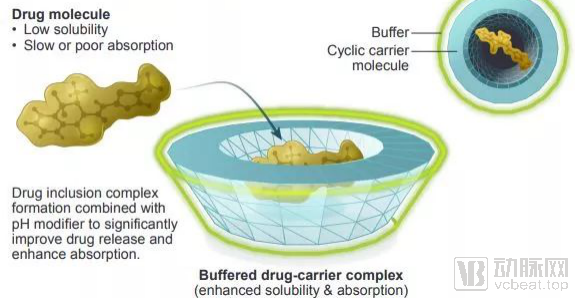
Data Source: Axsome
Lexicon’s Glucose-Lowering Drug Zynquista Announces Phase III Study Data
Lexicon Pharmaceuticals recently announced the top-line data from the Phase III SOTA-EMPA study evaluating Zynquista (sotagliflozin), an SGLT1/2 inhibitor for the treatment of type 2 diabetes.
The active pharmaceutical ingredient of Zynquista is sotagliflozin, a dual SGLT-1/SGLT-2 inhibitor being developed for the treatment of type 1 and type 2 diabetes.
A multicenter, 2:2:1 randomized, double-blind, placebo- and active-controlled, parallel-group study in patients with type 2 diabetes mellitus who had inadequate glycemic control despite treatment with DPP-4 inhibitors, comparing the efficacy and safety of sotagliflozin, empagliflozin, and placebo, with the primary endpoint being superiority in lowering blood glucose levels
The study met its primary endpoint: in patients with type 2 diabetes treated with DPP-4 inhibitors, sotagliflozin (400 mg) demonstrated superiority over placebo in reducing A1C at week 26 of treatment.
Sesen Bio Submits BLA for Vicinium
Sesen Bio Announces Initiation of Rolling Submission of Biologics License Application (BLA) for Vicinium (oportuzumab monatox) to the U.S. Food and Drug Administration (FDA)
Vicinium is a locally administered fusion protein immunotoxin that targets the epithelial cell adhesion molecule (EpCAM) antigen on the surface of tumor cells. It is composed of a recombinant humanized anti-EpCAM antibody single-chain variable fragment (scFv) conjugated to Pseudomonas exotoxin A. Upon binding to EpCAM expressed by cancer cells, it is internalized into the cytoplasm, inducing apoptosis.
A Single-Arm, 24-Month, Open-Label, Multicenter Phase III Study to Evaluate Vicinium as Monotherapy via Intravesical Administration in Patients with High-Risk, BCG-Unresponsive Non-Muscle-Invasive Bladder Cancer (NMIBC), Divided into Three Cohorts
Among patients who achieved complete response at the 3-month time point, 52% maintained a duration of complete response ≥12 months after treatment initiation; 96% had an overall survival ≥2 years; 90% had a progression-free survival ≥2 years; and 29% remained event-free at the 12-month time point.
❖ German biopharmaceutical company MorphoSys announced that it has submitted a Biologics License Application (BLA) to the U.S. FDA for tafasitamab (MOR208), in combination with lenalidomide, for the treatment of patients with relapsed or refractory diffuse large B-cell lymphoma (r/r DLBCL). Tafasitamab is a humanized Fc-enhanced monoclonal antibody targeting CD19. Its Fc domain has been modified with two amino acid substitutions (S239D and I332E) to significantly enhance affinity for the activating FcγRIIIa receptor on effector cells, thereby potentiating antibody-dependent cellular cytotoxicity (ADCC) and antibody-dependent cellular phagocytosis (ADCP), which are key mechanisms for tumor cell killing.
❖AstraZeneca and Merck & Co. Announce FDA Approval of Olaparib for First-Line Maintenance Treatment in Adult Patients with Metastatic Pancreatic Cancer Harboring Germline BRCA Mutations (gBRCAm) Whose Disease Has Not Progressed Following Platinum-Based Chemotherapy, Making It the Currently Only Approved Targeted Therapy for Pancreatic Cancer. This approval is based on data from the Phase III POLO clinical trial, which demonstrated that, compared with placebo, olaparib as first-line maintenance therapy doubled progression-free survival (PFS), reduced the risk of disease progression by 47%, and doubled both the 1-year and 2-year PFS rates in patients with pancreatic cancer.
❖Antengene Announces TFDA Approval for Phase I Open-Label Clinical Trial of ATG-019, a Dual PAK4/NAMPT Oral ModulatorAntengene announced that the Taiwan Food and Drug Administration (TFDA) under the Ministry of Health and Welfare has recently approved the initiation of a Phase I open-label clinical trial for ATG-019, a dual-target oral modulator of PAK4 and NAMPT. This trial aims to evaluate the safety and tolerability of ATG-019 (a dual PAK4/NAMPT inhibitor) in patients with advanced solid tumors or non-Hodgkin lymphoma. The Phase I study will assess ATG-019 as monotherapy and in combination with niacin ER (vitamin B3/nicotinic acid) in patients with advanced solid tumors or non-Hodgkin lymphoma who have no standard treatment options available.
❖The National Medical Products Administration (NMPA) has approved the marketing registration application for Xiamen Wantai Canghai Biopharma’s bivalent human papillomavirus vaccine (E. coli) (brand name: Cecolin). This is the first domestically produced human papillomavirus (HPV) vaccine to receive approval in China, indicated for females aged 9–45 years. Cecolin is the first HPV vaccine manufactured in China to be submitted for production approval; it targets HPV types 16 and 18 and has been included in the National Major New Drug Development Program. In accordance with relevant regulations, including the “Announcement on Optimizing Drug Registration Review and Approval Procedures,” the NMPA designated it as a priority review product, thereby expediting the approval of its marketing registration application.