

FTC2019 | Professor Xu Xuezeng of Xijing Hospital: The Present and Future of Endoscopic Cardiac Surgery
In the history of cardiac surgery development, most techniques were introduced from abroad. However, one technique is a Chinese innovation: totally thoracoscopic cardiac surgery. This procedure was pioneered at Xijing Hospital. Over the past two decades, Xijing Hospital has not only been the first in the world to develop this technique but has also refined it by shortening operative time and reducing complications. Furthermore, the hospital has promoted its adoption across other institutions, expanding from a single center to 30–40 hospitals capable of performing the procedure.
As a leading center for the development of cardiac surgery in China, one of the key reasons for the rapid growth of Xijing Hospital lies in its specialization within cardiac surgery, where each professional is responsible for a specific segment, concentrating efforts to achieve breakthroughs in particular subfields. Professor Xu Xuezeng has been the physician in charge of cardiac endoscopic surgeries over the past two decades. At the 2019 FTC First China Cardiac Surgery Frontier Technology Forum, Professor Xu Xuezeng provided a detailed explanation of the current state and future prospects of endoscopic surgery.
During his speech, Professor Xu Xuezeng candidly admitted that he had initially questioned the significance of this technology when it was still immature. However, through continuous development and refinement, Professor Xu’s team has expanded the application of this surgical procedure to 23 disease indications, pioneering international efforts in all but peripheral artery disease (PAD) and atrial fibrillation.
In the future, he hopes that companies will develop medical devices and consumables in response to clinical needs, enabling this highly challenging technique to be performed by less experienced physicians with the aid of such equipment and supplies, rather than evolving into a procedure heavily dependent on individual surgeon expertise.
VCBeat (WeChat ID: vcbeat) has compiled the content of his speech. Below is the original transcript of the speech (abridged).
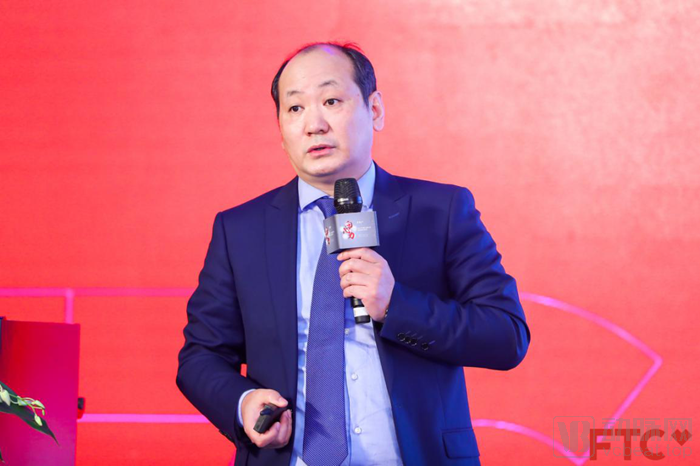
Professor Xu Xuezeng
The development of totally endoscopic cardiac surgery can be divided into three stages, with the first stage being the initial phase from 2000 to 2003. Endoscopic surgery had already been applied in general surgery during the 1990s. However, when we performed the first totally endoscopic atrial septal defect (ASD) repair, the key difference between our work and that of general surgery was that this procedure had never been performed abroad either. We had no prior cases to draw upon, making our effort truly unprecedented. Thus, we pioneered the application of endoscopic techniques in cardiac surgery.
In the early stages of endoscopic cardiac surgery, we lacked mature experience, dedicated surgical instruments, and endoscopic surgical techniques; we even had to learn endoscopic procedures from the Department of General Surgery. Endoscopic surgery had been practiced for over a decade in general surgery, urology, and general thoracic surgery. While general surgeons could travel to the United States and Europe for training, we had to rely on learning from the Department of General Surgery.
"In the early stages, several surgeries we performed were relatively successful, but the operation time was particularly long, the surgical difficulty was exceptionally high, and there were also more complications in the initial period."
At the time, I actually began to question whether the surgery was truly necessary—spending a significant amount of time performing an atrial septal defect repair merely to minimize the surgical incision.
I went to discuss my concerns with the department director, asking him about the significance of this surgical procedure. The director responded as follows: “The novelty of any technique lies precisely in its immaturity. It would be unfair to evaluate it from the outset using traditional technical standards.”
To be honest, those words did not convince me at the time. As a skeptic, I was well aware of the limitations of laparoscopic surgery, and my goal was to address these issues.
Subsequently, endoscopic surgery entered a phase of development. During this period, as surgical experience accumulated, complications associated with the procedure steadily decreased, approaching levels comparable to those of traditional open surgery. Meanwhile, the range of indications suitable for endoscopic cardiac surgery expanded; operative times were significantly reduced; and surgical procedures became standardized, with fixed, specialized teams. This technique was also adopted by more than ten hospitals across various regions.
Every step of optimization represents our continuous exploration, as exemplified by the development of an elite surgical team. Previously, I served as the lead surgeon, but my assistants frequently changed. Later, we recognized that for such highly complex procedures, it was essential to establish a fixed, elite team.
The third phase represents the maturation stage of cardiac endoscopic surgery. During this period (2010–2019), the highest number of procedures performed at a single center exceeded 5,700 cases. The duration of simple procedures was reduced to one hour, outperforming traditional surgical approaches. Cardiac endoscopic surgery entered the “bloodless era,” with 90% of surgeons adopting a “type and screen without transfusion” strategy for all patients except those with anemia. Complication rates approached or surpassed those of conventional surgery. Thirty to forty hospitals in China adopted this technique, and five to ten hospitals performed more than 100 cases annually.
In recent years, many other innovative surgical techniques have emerged, such as 3D endoscopic platforms and robotic surgery.
Robotic surgery was first introduced by the Chinese PLA General Hospital (301 Hospital), with Academician Gao Changqing’s team pioneering robotic minimally invasive procedures in 2007. Between 2010 and 2013, Shanghai Zhongshan Hospital, Shanghai Ruijin Hospital, Shenyang General Hospital, Nanjing General Hospital, and Xijing Hospital also successively initiated robotic surgical programs.
In 2015, after our hospital introduced the surgical robot, our team completed 100 robotic surgeries. At this stage, robotic surgery still has some drawbacks: first, it is very expensive; second, the technology is not yet mature.
In essence, da Vinci robotic surgery is also a type of laparoscopic surgery, but it provides surgeons with a better visual field, offering a view similar to that of open-chest surgery.
However, the da Vinci Surgical System has a weakness: its robotic arms are cumbersome, prone to collision in confined spaces, and have limited range of motion.
In addition to robotic surgery, there is also 3D laparoscopic surgery. It provides real-time visual feedback; the surgical field offers a three-dimensional stereoscopic view, which can reduce the learning curve for novices.
If endoscopic surgery continues to advance, we will continue to learn from general surgery to perform single-port procedures; however, such surgeries currently pose significant challenges for physician training.
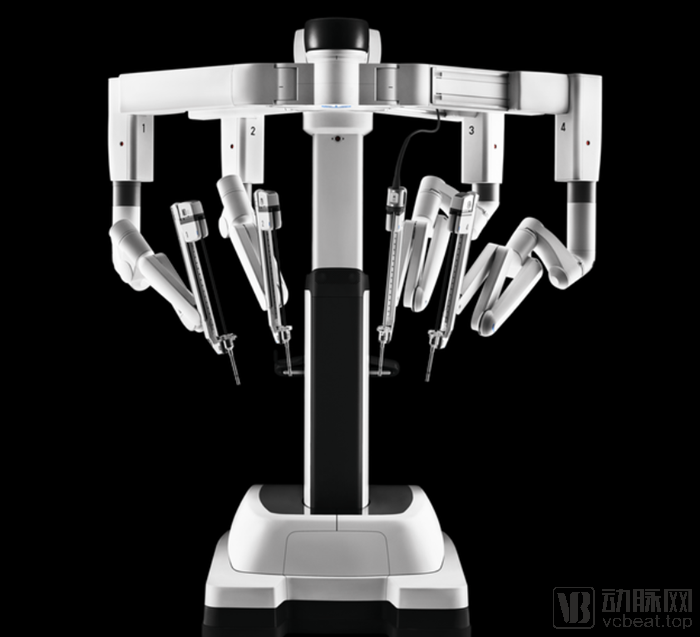
Da Vinci Surgical Robot (Image from the official website of Intuitive)
So, what areas remain for improvement in endoscopic cardiac surgery? Currently, advancements and developments in the equipment and consumables used for endoscopic cardiac surgery can enhance its safety.
On surgical equipment, if wrist-articulated instruments are available—meaning the movement of the instrument tip can be controlled by wrist motions, offering seven degrees of operational freedom to transmit the surgeon’s wrist movements to the instrument tip—the safety of our surgical procedures would be significantly enhanced. However, this requires that the wrist-articulated instruments can be shaped at will according to the surgeon’s preferences and then locked into place, thereby becoming rigid instruments.
Pre-curved instruments represent another development direction. Specifically, traditional straight instruments are shaped using curved molds during the manufacturing process, resulting in finished products with various configurations such as S-shapes and L-shapes to accommodate different surgical angles. The advantages include the ability to form an “operating triangle” within the operative field and to resolve handle interference or “clashing.” However, there are currently no mature products available on the market.
In addition to improvements in surgical equipment, breakthroughs in surgical consumables can also drive the development of endoscopic cardiac surgery.
For example, cardiac incision closure devices, sutureless cryogenic preservation technology, vena cava occluders (external compression and internal expansion), implantable occlusion devices, outflow tract dilators, implantable heart valves, coronary proximal/distal anastomotic devices, and coagulative biological adhesives. The production of these devices can significantly advance laparoscopic cardiac surgery.
Total Laparoscopic Surgery Originated in China: Advantages and a Weakness. Due to the lagging development of domestic healthcare, our R&D capabilities for medical equipment and consumables fall short of those abroad.
For example, I had long assumed that after decades of development, hospitals like Xijing Hospital would be on par with their foreign counterparts in terms of hardware equipment, or at least not significantly lagging behind. However, I have found that while we are comparable to international standards in major medical equipment, we still fall far behind in smaller devices, such as wound closure devices.
What is lacking is collaboration between companies and physicians, with the market responding slowly to the needs of clinicians. In a healthy ecosystem, advanced medical device companies should collaborate with us to develop products based on clinical needs. Companies need not worry that there will be no market simply because a product is a Chinese first without international precedents; as long as it meets clinical needs, it will undoubtedly find a market.
From the perspective of future development, the advancement of endoscopic surgery (including bypass procedures, complex congenital heart disease repairs, etc.) relies on the research and development of high-tech medical equipment and instruments, rather than merely minimizing "surgical incisions."
Due to the current immaturity in the development of many surgical instruments and consumables, the learning curve and difficulty for laparoscopic surgery remain high. However, I am opposed to the "subjective minimally invasive effect" that relies solely on the surgeon’s individual technical skills.