

Northern Light's Helmsman Deng Feng and His Investment Logic in the Health Sector

Northern Light Venture Capital
Venture Capital Firms
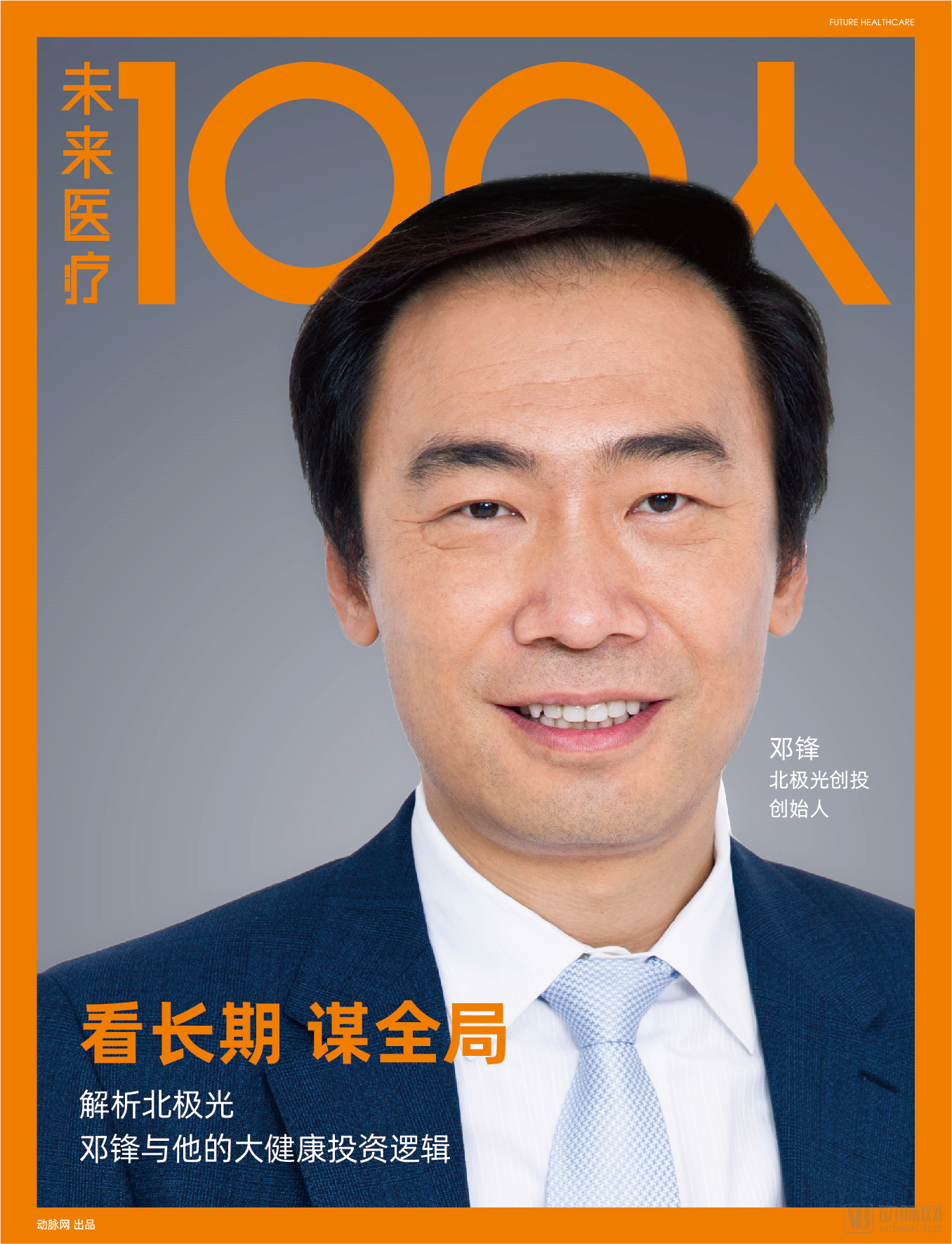
Deng Feng speaks rapidly and with strong logical coherence, making it difficult for the average person to keep up. To review and comprehend his remarks, I had to transfer the interview recording to a media player and play it back at 0.8x speed.
Deng Feng, a tall and imposing figure born in Beijing in 1963, is now 56 years old. He currently serves as a venture capitalist and is the founder of Aurora Venture Capital, a VC firm. Aurora Venture Capital currently manages total assets exceeding RMB 30 billion and has invested in more than 300 well-known companies, including Meituan, BGI Genomics, Hillstone Networks, and VIPKID. The firm focuses on three key sectors: TMT (Technology, Media, and Telecom), advanced technologies, and healthcare.
Before founding Northern Light Venture Capital, Deng Feng was an entrepreneur. In Silicon Valley, he founded NetScreen Technologies in 1997; the company went public on the Nasdaq four years later and was acquired for $4.2 billion in 2004.
Deng Feng, whose life has been marked by so many legendary experiences, now finds his greatest joy in reviewing projects. “I get really excited when talking with entrepreneurs about their ventures.” Among the three key sectors currently focused on by Northern Light Venture Capital, healthcare is primarily led and overseen by Deng Feng. In an exclusive interview with VCBeat, Deng shared his insights on the healthcare industry.
At the age of 50, Deng Feng used the mindset of his 25-year-old self to conduct a personal review during a family gathering.
“Over these two 25-year periods, much has remained unchanged, such as the pursuit of beauty, while other things have changed, such as one’s mindset. The shift during the first 25 years was that the world grew larger while the self seemed smaller. When I had just graduated with my master’s degree, I was filled with ambition and eager to make a mark; the world revolved around me. By the age of 50, you come to realize that you are merely a passerby in this vast world—the self diminishes as the world expands.”
“However, while you have become smaller in stature, your heart has grown larger. Your heart has become more inclusive and open, allowing you to accept your own imperfections as well as the imperfections of the world.”
This is Deng Feng’s inner monologue in self-assessment; if judged by the outside world, his life could be described as nothing short of legendary.
More than 30 years ago, while Deng Feng was still a student at Tsinghua University, he embarked on his entrepreneurial journey in the technology sector. In 1998, after winning the championship at the inaugural Tsinghua “Challenge Cup” with an improved single-board computer for image processing integrated with a digital electronic camera, he went on to rent three rooms in Building No. 2 of Tsinghua University, recruited several junior students, and began undertaking various projects from Zhongguancun.
Through his entrepreneurial ventures, he earned his first substantial fortune. At a time in the 1990s when his parents’ monthly salary totaled just over 70 yuan, he paid his employees a daily wage of 100 yuan. In retrospect, Deng Feng is considered one of the earliest entrepreneurs in Zhongguancun.
After pursuing a master’s degree in computer science at the University of Southern California, Deng Feng naturally made his way into Silicon Valley, becoming a benchmark figure for Chinese engineers launching startups there. In 1997, he founded NetScreen in Silicon Valley. Just four years after its establishment, the company went public on the NASDAQ stock market, and was later acquired by Juniper Networks in 2004 for $4.2 billion. This amount was equivalent to the combined market capitalization of China’s three major internet portals—Sina, NetEase, and Sohu—at the time, while BAT (Baidu, Alibaba, and Tencent) were still in their fundraising stages.
In 2005, Deng Feng returned to China and chose to venture into risk capital investment, which he regarded as “an endeavor that is both interesting and meaningful.” Declining numerous invitations from prominent venture capital firms and companies, Deng adopted an entrepreneurial mindset and founded Northern Light Venture Capital, with its first office established in the Science and Technology Building of Tsinghua Science Park.
Deng Feng arrived at an opportune moment. Although the venture capital industry had already passed its pioneering phase, it was enduring a prolonged dark period amid the internet bubble that had persisted since 2001, with no sign of recovery in sight. According to Liu Zhou, Chairman of Fortune Capital (Reach Capital), “Before 2005, domestic venture capital firms faced a dilemma—fundraising fell short, and exit channels for investments were blocked—leading many to become confused and skeptical about the industry.”
In 2004 and 2005, China’s venture capital market experienced a large-scale boom driven by favorable policies. In May 2004, with the approval of the State Council, the China Securities Regulatory Commission (CSRC) authorized the Shenzhen Stock Exchange to establish the Small and Medium-sized Enterprise (SME) Board within its main board market. On April 29, 2005, the CSRC issued the Notice on Issues Concerning the Pilot Program for Share Structure Reform of Listed Companies, announcing the launch of the pilot share structure reform—known as the “Share Structure Reform for Full Circulation,” a milestone etched into the history of China’s capital markets.
In addition to Northern Light Venture Capital, other firms that later gained widespread acclaim, such as Sequoia China and BlueRun Ventures China, were also established in that year. Accel Partners and IDG Capital (then known as “IDG VC”) jointly launched the China Growth Fund in the same year.
From engineer to entrepreneur, then to business leader, and finally to venture capitalist, Deng Feng has embraced a new identity. In this role as a venture capitalist, he has found immense satisfaction. His macro perspective on venture capital is that wherever there is change, there are investment opportunities; where there is significant change, there are major opportunities.
Around the time he returned to China, great changes came!
Deng Feng never chases trends.
However, Aurora Venture Capital, which positions itself around “technology, early-stage, and value-add,” has invested in a trend once.
In 2011, the prevailing trend was “group-buying,” with over a thousand group-buying websites of various types emerging, a phenomenon the industry dubbed the “War of a Thousand Groupon Clones.” Although Deng Feng also recognized that the barriers to entry in the group-buying sector were low, he approached the decision from a different perspective and ultimately invested in a company—Meituan.com—which at the time ranked outside the top three.
Deng Feng stated, “The investment in Meituan was primarily a bet on the founder.” He was impressed by Wang Xing’s entrepreneurial passion, capacity for deep thinking, and the company’s strong execution capabilities. In 2018, with the IPO of Meituan Dianping, Northern Light Venture Capital achieved a return of approximately 60 times.
Beyond Meituan, Aurora Venture Capital’s extensive investment portfolio includes more than 300 notable companies such as Hillstone Networks, BGI Genomics, VIPKID, and Burning Rock Biotech. How has Aurora achieved this? And how has it earned a reputation for being “Professional” and “Decent” within the industry?
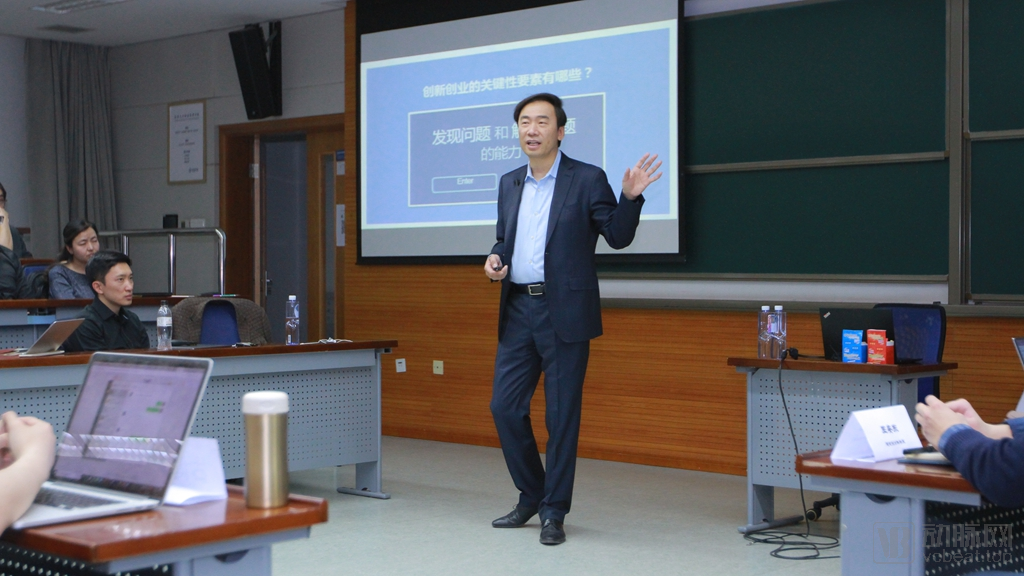
The photo shows Deng Feng teaching students at Tsinghua University.
A major pain point in venture capital is that the quality of an investment can only be assessed after several years. This is also why many funds resort to high-risk bets: if they fail to deliver results within two to three years, their limited partners (LPs) may cease further funding.
From the perspective of its limited partner (LP) structure, Northern Light Venture Capital is under no “urgency,” as most of its LPs are long-term capital providers. These commitments come entirely from long-term institutional investors, including university endowments, pension funds, and foundations. U.S.-based institutional LPs are willing to accept fund terms of up to 14 years or even longer.
The source of the fund also determines Aurora Venture Capital’s style of “taking a long-term view and planning holistically.” As a result, some industry commentators have remarked that “Aurora carries Silicon Valley DNA.”
In terms of investment strategy, Northern Light Venture Capital adheres to the approach of being “strategically aggressive yet tactically conservative.” “When we identify a promising sector, we must enter it early on. Even if it means paying ‘tuition fees’ initially, we will invest in one or two projects first to conduct reconnaissance—for instance, by co-investing in later-stage deals. Once we gain clearer visibility, we will make significant commitments in terms of both capital and personnel, gradually moving toward earlier stages.” Deng Feng specifically clarified that this “early stage” does not necessarily refer to early-stage startups, but rather to the early phase of an entire sector, just before a major wave of growth arrives.
As the founder of a venture capital (VC) firm, it is also crucial to build a highly competent team. Deng Feng’s strategy for this is “snowballing.” “In the early stages of building our team, we recruited younger investors with high potential, gave them opportunities, and allowed them to grow gradually. At Northern Light Venture Capital, investment is not just about optimizing a single deal; rather, it focuses on how to optimize a company and a fund from a long-term perspective. The same applies to individuals: the team takes a long-term view on how to optimize one’s career path. As individuals accumulate experience and expertise, the team becomes progressively stronger,” said Deng Feng. He noted that working in VC requires rapid learning and evolutionary capabilities, and the best learning opportunities come from entrepreneurs. “When we meet with entrepreneurs, half of our time is spent learning from them and brainstorming together—identifying what we have overlooked and where our cognitive blind spots lie.”
To this end, Deng Feng often reminds his team members not to assume a sense of superiority simply because they sit across the negotiation table. They must maintain an open mindset and cultivate equal, respectful relationships with entrepreneurs. “Do not look up to someone like Jack Ma with undue reverence, nor look down on those without prominent backgrounds; treat everyone with equal respect.”
Today, competition among venture capital (VC) firms in China is, to some extent, less about who has superior judgment and more about who has access to better deal flow. This deal flow, in turn, stems from accumulated professional networks. “At Northern Light Venture Capital, we strive to become equal partners with entrepreneurs, growing together. Even after a successful exit, we can still sit down for tea and chat, reminiscing about how we worked together back in the day. Entrepreneurs are also willing to introduce their friends to us.”
Among the six current partners at Northern Light Venture Capital, under a flat management structure, each partner focuses on their respective sector, with Deng Feng overseeing healthcare.
Deng Feng describes it as a long and wide track. In the healthcare sector, Northern Light Venture Capital’s investment portfolio includes companies such as BGI Group, CITIC Pharmaceutical, Burning Rock Biotech, and Taimei Medical Technology, spanning five sub-sectors including medical devices, biopharmaceuticals, and healthcare services.
According to data from the official website of the National Health Commission, China's total health expenditure was projected to reach RMB 5.79983 trillion in 2018, accounting for 6.4% of GDP. The healthcare sector was once regarded as poised to surpass real estate and automotive industries to become China's largest industry.
In 2009, Aurora Venture Capital entered the healthcare sector. In this field, Aurora continued to uphold its strategy and adopted a distinctive approach: “gradually entering the industry with the aim of moving into earlier-stage investments.”
The first deal we undertook was CITIC Pharma, a downstream player in the industry chain specializing in pharmaceutical distribution. Northern Light Venture Capital entered at a mid-to-late stage as a co-investor. According to Deng Feng, although they approached this investment with a mindset of “paying tuition fees,” the first investment did not fall through: “We exited one year after entry and made a threefold return.”
In the niche sector of gene sequencing, Northern Light Venture Capital first made a strategic co-investment in BGI Genomics to enter the field, and subsequently began to lead early-stage investments. To date, it has invested in six projects in this sector. For instance, Northern Light Venture Capital led the RMB 20 million Series A financing of Burning Rock Biotech in 2014. By February 2019, Burning Rock Biotech’s Series C funding round had reached RMB 850 million.
Adopting this strategy, Northern Light Venture Capital has expanded into an increasing number of niche sectors, with its investment portfolio gradually extending from the downstream to the upstream segments of the industry chain. Meanwhile, the snowball effect has become increasingly evident: the team has grown more mature, brand reputation has improved significantly, and deal flow has become increasingly abundant. On the last day of 2019, Zeltex Pharmaceuticals, a portfolio company of Northern Light Venture Capital, received approval from the China Securities Regulatory Commission (CSRC) for its initial public offering (IPO) registration on the STAR Market.
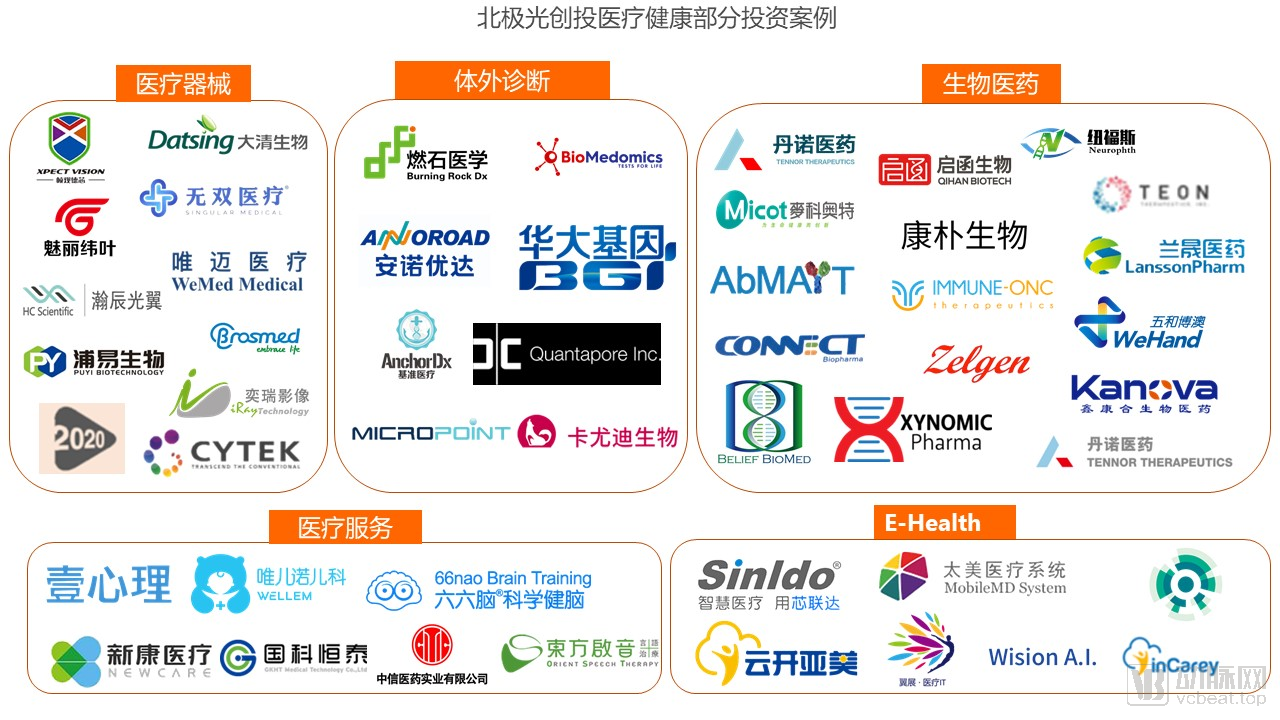
Data source: Northern Light Venture Capital
However, beyond investment strategies, Deng Feng places greater emphasis on forward-thinking. “Look five to ten years into the future and enter early, before the major waves hit. The healthcare sector in China will undergo significant transformation over the next 20 to 30 years. Many of the future billion-dollar enterprises are likely to emerge from the life sciences and healthcare fields, with all segments—including biopharmaceuticals, medical devices, diagnostics, healthcare services, and digital health—accelerating their progress.”
The following is a dialogue between VCBeat and Deng Feng.
QA
Venture Capital and Probability
VCBeat: It is often said in the industry that venture capital is like gambling. What is your view on this?
Deng Feng: To some extent, it is indeed like gambling, as both are matters of probability. No one can guarantee that a company will definitely succeed, given the multitude of uncertain factors.
I see two key differences. First, venture capital relies heavily on accumulated experience. In contrast, games of chance like roulette do not involve any such accumulation; each spin is independent of the previous one, and the probability remains the same regardless of how long one has been playing. Venture capital, however, benefits from accumulation: for instance, having evaluated numerous entrepreneurs makes it easier to identify different founder types, and extensive exposure to various industries provides deeper insights into their development cycles. Second, gambling yields immediate results once the bet is placed, whereas venture capital is a long-term endeavor where value can continue to be added even after the initial investment is made.
On Disruption
VCBeat: How do you think disruption will unfold in the healthcare industry?
Deng Feng: I believe it is unlikely to happen with lightning speed, but this industry will undergo tremendous changes over time. Disruptive innovation will stem from cross-industry collaboration, as the integration of knowledge leads to reduced costs and improved efficiency, which I consider to be a form of disruption.
Discussing the Traits of Outstanding Entrepreneurs
VCBeat: What common traits have you observed among outstanding entrepreneurs?
Deng Feng: At the level of values, one must first possess ideals that transcend financial returns. Second, there must be a genuine sense of responsibility that grows in tandem with the enterprise’s development. Initially, this responsibility is directed toward oneself; gradually, it extends to employees, investors, and customers. As this sense of responsibility deepens, it enables one to persevere. The third quality is magnanimity. Only with such broad-mindedness can one attract and retain talent, share the benefits with others while shouldering the burdens oneself, and assume a role akin to an elder brother within the company.
I believe the above three points are common to outstanding entrepreneurs. Of course, exceptional founders also possess the ability to learn quickly and have extensive experience.
The Landscape of the Healthcare Industry in the Next 10 Years
VCBeat: As an investor, what is your vision for the healthcare industry in 10 years?
Deng Feng: I am very optimistic about the future. From China’s perspective, healthcare’s share of GDP will continue to grow rapidly, the number of innovative products from China will keep increasing, and China’s healthcare reforms will make progress.
In ten years, population aging will undoubtedly be a massive challenge. It harbors significant opportunities, which we have been closely monitoring. However, it remains unclear which segments within the aging economy or silver economy are asset-light or asset-heavy.
China’s medical industry going global is undoubtedly a major trend, with an increasing number of companies becoming competitive internationally and industry consolidation taking place. In the pharmaceutical sector, China will see the emergence of several multi-billion-dollar companies comparable to BeiGene.
On the Opportunities of the Times and Individual Destiny
VCBeat: How do you view topics such as the opportunities of the times and individual destiny?
Deng Feng: I was born in 1963. There is an article online stating that individuals born between 1963 and 1972 are the most fortunate cohort in Chinese society, a view with which I concur. The rationale lies in the profound transformations this generation has witnessed, transitioning from an agrarian society to an industrial one, then to an information society, and finally to an intelligent society, thereby experiencing such significant epochal changes.
All entrepreneurship and investment stem from change; significant opportunities are scarce in a stable society. From this perspective, our generation has lived through a truly transformative era.