

EUROIMMUN China: Dominating the Autoimmune Diagnostics Market and Driving Chinese Innovation Globally
It is estimated that there are approximately worldwide5-8%The population threatened by autoimmune diseases is growing, and the rising rates of disability and mortality year after year pose significant challenges to the diagnosis and treatment of these conditions.
In China, the current state of diagnosis and treatment for autoimmune diseases is far from optimistic. Taking rheumatoid arthritis (RA), a representative autoimmune disease, as an example, its incidence rate in mainland China is 0.42%. The disability rates among RA patients at disease durations of 1–5 years, 5–10 years, 10–15 years, and ≥15 years are 18.6%, 43.5%, 48.1%, and 61.3%, respectively. As the disease progresses, the incidence of disability and functional impairment gradually increases.
In recent years, the field of autoimmune diseases has seen the emergence of several blockbuster drugs, such as infliximab, etanercept, and adalimumab. Adalimumab is the best-selling drug globally, with worldwide sales reaching $19 billion in 2018.
What is less well known is the dominant player in China’s autoimmune diagnostics market: EUROIMMUN Medizinische Labordiagnostika AG. As early as 1999, EUROIMMUN Medical Diagnostics (China) Co., Ltd. was established in Beijing. In China, EUROIMMUN has partnered with nearly 2,000 medical institutions nationwide, providing comprehensive diagnostic and treatment services to 50 million rheumatism patients across the country. Its in vitro diagnostic products hold over 80% of the market share for autoimmune diseases.
Looking back on Euroimmun’s journey to becoming the dominant player in China’s autoimmune diagnostics market, Euroimmun China has achieved a leap from “Made in China” to “Intelligently Made in China.”
Twenty years ago, EUROIMMUN introduced autoantibody test kits, ushering China’s autoantibody testing into an era of standardization. In 2004, EUROIMMUN established a production base in Hangzhou, China, to independently manufacture advanced diagnostic reagents and rapidly respond to the needs of Chinese users. Since 2012, EUROIMMUN has actively responded to market demands in China by achieving independent research and development of innovative products, which have gained recognition in both European and American markets.
After two decades of dedicated development, EUROIMMUN has established China as its R&D center and built a complete industrial value chain in the country. How will EUROIMMUN China continue to maintain its dominant position in the autoimmune disease market in the future? VCBeat (WeChat ID: vcbeat) interviewed Mr. Li Chuan, Asia-Pacific President of EUROIMMUN Medical Diagnostics (China) Co., Ltd.
Euroimmun is an internationally leading in vitro diagnostics company with operations in Germany, Poland, Switzerland, the United States, Italy, China, and Brazil. Notably, sales from the Chinese market account for 50% of Euroimmun’s global revenue, making an irreplaceable contribution to the development of its worldwide market.
Over the past two decades, Euroimmun’s core product portfolio has achieved a 70–80% market share in China, fundamentally improving the quality of life for Chinese patients with autoimmune diseases and their families.
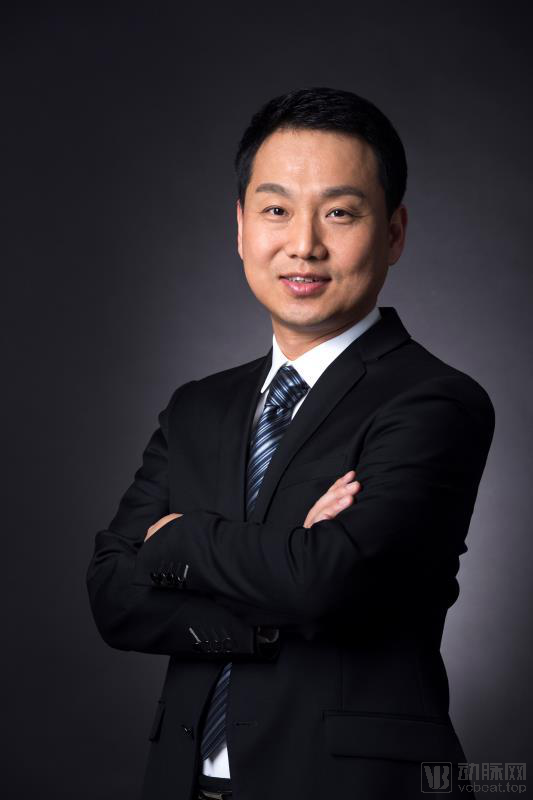
The key figure behind Euroimmun China’s achievements is Mr. Li Chuan, President of the Asia-Pacific Region at Euroimmun Medizinische Labordiagnostika (China) Co., Ltd. In 2009, when Mr. Li first joined Euroimmun, he quadrupled Euroimmun China’s turnover within just three years. In 2012, Mr. Li assumed the role of President of the Asia-Pacific Group. Over the following six years, sales maintained an annual growth rate of nearly 30%, with the Asia-Pacific Group’s performance accounting for 50% of the company’s global market share.
“A mighty tree grows from a tiny sprout; a nine-story tower rises from piled earth.” The rapid rise of Oumeng China can be attributed to its adherence to the “China-centric” strategy.
Mr. Li Chuan stated that Euroimmun China has always adhered to a ground-up approach driven by market needs. To better respond to user demands, Euroimmun China has assembled dedicated teams and accumulated technical expertise across the entire process, including product definition, research and development (R&D), and manufacturing. After products are launched, the company continues to track quality issues, gather feedback, and implement continuous optimizations. Today, the company has established a complete pharmaceutical industry value chain in China, encompassing research, development, production, and marketing.
It is well known that due to the late start of China’s in vitro diagnostics (IVD) industry, domestically produced products lag nearly a decade behind imported counterparts. The R&D capabilities for IVD products in China are relatively weak. However, Li Chuan believes that establishing a complete industrial value chain in China is imperative, both to better respond to domestic market demands and to enhance product accessibility.
Li Chuan recalled that when he joined Euroimmun, the first R&D project was an automated immunoblotting detection platform. At that time, diagnostic reagents required manual operation according to the instructions for use, resulting in low efficiency, and the accuracy of result interpretation was susceptible to various interfering factors. Against this backdrop, automation became the development trend in laboratory testing.
Euroimmun China has developed such an automated instrument that can automatically report results after reagents are loaded, and it is compatible with products from other companies. To date, nearly 2,000 units of this product have been deployed in China.
Li Chuan stated candidly, “Our independent research and development of products not only ensures quality but also optimizes costs. Only by addressing accessibility can we expand our sales channels, enabling more patients to receive early diagnosis and treatment.”
In addition to market demand, product cost is another key consideration for President Li Chuan. Imported products often carry prohibitive costs, making widespread adoption difficult. In-house developed products, on the other hand, not only ensure superior quality but also optimize costs, thereby facilitating distribution channels and making them more affordable for a broader customer base.
It is worth mentioning that this product not only fills a domestic gap in China but also shines brightly in the international market.
In response to the limited laboratory space in Europe, Euroimmun China has launched an upgraded “cigar box-style” product. This product has passed numerous rigorous tests conducted by the German headquarters, upholding the reputation of “Made in China.” From previously waiting for product development at the headquarters to now being urged by the headquarters to provide prototypes, Euroimmun China has truly achieved independent R&D capabilities on par with international standards.
As the helmsman of Euroimmun China, Li Chuan led Euroimmun Asia-Pacific to achieve a 15-fold growth in performance over 11 years, making it one of the most important members in the group’s global layout.
After 70 years of robust development, China has grown into the world’s second-largest healthcare market. As public demand for health services continues to rise, healthcare reform has entered its most challenging phase. In this highly competitive landscape, to emerge as a leader in China’s vast healthcare sector, Euroimmun China must not only navigate hidden reefs and ride out turbulent waves, but also maintain a firm grip on the helm, sailing cautiously with the wind.
Li Chuan believes that the healthcare industry is counter-cyclical and is unlikely to be significantly affected by economic fluctuations, with government healthcare policies being a notable exception. At present, the vigorous implementation of medical insurance cost containment is an inevitable trend. Euroimmun China should also approach this from such a perspective and adjust its strategy accordingly.
He stated that over the past decade, the entire healthcare industry has experienced rapid growth, with a significant increase in the number of hospitals and the level of services provided. The driving forces behind this trend include improvements in people’s living standards and rising demand for medical and health services. Additionally, government subsidies for the procurement of medical equipment have served as a major industrial driver.
With GDP growth gradually slowing, the state is finding it increasingly difficult to sustain the rapid rise in healthcare expenditures, making cost containment in medical insurance imperative. Significant price reductions for pharmaceuticals are already evident. It is foreseeable that the primary challenge for the diagnostics industry will shift to balancing high costs against prices constrained by stringent regulatory controls, while also coping with a risky contraction in user demand, collectively resulting in thin profit margins.
“However, the healthcare industry itself should not be driven by the pursuit of exorbitant profits,” Li Chuan added. As a sector vital to public welfare, any entrepreneur entering this field must recognize that healthcare requires sustainable investment—specifically, reasonable profit margins and consistent R&D spending—to spur technological innovation and deliver better medical products to the public. “Those seeking windfall profits should not enter this industry.”
“Modern medicine is still in its very early stages; wherever there are shortcomings, there lie opportunities,” said Li Chuan.
Undoubtedly, the weakest link in China’s healthcare system is primary care. Li Chuan believes that China’s current demographic structure exhibits an “I-shaped” pattern: while 200 million people have attained a middle-class, moderately prosperous lifestyle, 1.2 billion remain at the most basic socioeconomic level. Over the next decade, pursuing “market penetration into lower-tier segments” will be an essential path to pioneer new growth. This involves extending services from provincial-capital-level and national-level medical centers down to the broader urban and rural markets across China, thereby helping more people achieve their health aspirations.
Certainly, the expansion of this regional market is not only reflected in penetrating lower-tier domestic users but also accompanied by a reciprocal boost to the Asia-Pacific and even global markets.
Expanding into grassroots and regional markets is one of EUROIMMUN’s three major strategies. In addition, EUROIMMUN has laid out a user growth strategy across two key dimensions.
“The first dimension is to drive innovation and diversification in products and technology.” Currently, Euroimmun China has established a product portfolio centered on AI/ID/AL, instruments, laboratory services, and molecular diagnostics, supported by its in-house R&D team, which provides a robust talent foundation for the continuous iteration and expansion of its product offerings.
Innovation is in EUROIMMUN’s DNA. Li Chuan revealed that within EUROIMMUN China, the company identifies entrepreneurial role models by selecting “Stars of Entrepreneurship.” While everyone assumed that candidates from the technical department would surely prevail, the ultimate winner was an employee from the finance department. EUROIMMUN China hopes to convey that innovation should not be viewed as a privilege reserved for those in advanced technological fields; rather, employees in every position should regard the pursuit of excellence as a core belief.
Li Chuan stated that Euroimmun Medical will not only innovate on the product side but also continuously innovate in application scenarios.
“Under the traditional business model, our end users are clinical laboratories. However, taking a step forward, these laboratories essentially serve physicians across various clinical departments. We must not only sell our products to clinical laboratories but also assist them in conducting more effective market education, thereby enhancing clinicians’ understanding of the indicators associated with these diagnostic tests. Meanwhile, Euroimmun will also expand into markets such as health check-up centers and customs inspection, broadening the application scenarios for our products.”
Although Euroimmun has become the dominant player in the autoimmune in vitro diagnostics market, it remains cautious about the future. Li Chuan believes that amid the constant changes in the times and environment, only continuous learning can sustain evolution.
“Avoid recklessness and the rush for quick success; this is crucial. Despite the changing times, one must always uphold the original aspiration to strive hard. The rise of a great edifice cannot be achieved without the foundational work.” Perhaps this is the secret to Li Chuan’s success.