

Adaptive Biotechnologies: Decoding the Adaptive Immune System Through Genomic Sequencing, Backed by Microsoft and Roche

Adaptive Biotechnologies
Clinical Diagnostic Equipment Developer
When it comes to cancer detection via a single drop of blood, many people may scoff at the notion due to the shocking fraud perpetrated by Theranos. Although the bubble surrounding Theranos’ $9 billion valuation has burst, the inherent value of the technology itself—disease measurement using a single drop of blood—should not be dismissed.
In Silicon Valley, another company that remains bullish on blood-drop cancer testing is Adaptive Biotechnologies. Unlike Theranos’ high-profile and flamboyant approach, Adaptive Biotechnologies adopts a more pragmatic and low-key stance. According to a statistical survey by Stanford University, among the numerous unicorn companies in the healthcare sector, 23andMe and Adaptive Biotechnologies have published the most research papers, with 107 and 89 papers, respectively. Together, these two companies account for half of all publications by healthcare unicorns.
Although it has published numerous papers, Adaptive is not a research institution. Adaptive Biotechnologies is a Seattle-based developer of sequencing and analysis platforms, aiming to create universal blood tests and develop new cancer therapies to improve patient outcomes.
Overall, Adaptive has three major product lines: life sciences research, clinical diagnostics, and drug discovery. Among these three pipelines, clonoSEQ has already been commercialized. These three product lines have also gained recognition from industry giants including Microsoft, Genentech (a member of the Roche Group), and AbbVie, resulting in long-term collaborations. In June this year, Adaptive completed its initial public offering (IPO) on the NASDAQ.
Adaptive CEO Chad Robin stated, “We have two commercial products and a robust clinical pipeline capable of diagnosing, monitoring, and treating diseases such as cancer, autoimmune disorders, and infectious diseases. Our goal is to develop and commercialize immune-driven clinical products tailored to each patient.”
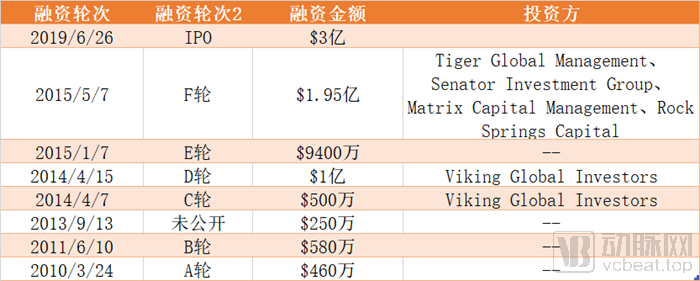
Adaptive Biotechnologies Funding History
Adaptive Biotechnologies was founded in 2009 with the goal of developing and commercializing immune-driven clinical products tailored to each patient. Adaptive owns TruTCR, a proprietary T-cell antigen receptor (TCR) discovery and immune profiling platform.
Adaptive’s website states: “We believe the adaptive immune system is nature’s most finely tuned diagnostic and therapeutic mechanism for most diseases, but the inability to decode it has prevented the medical community from fully leveraging its capabilities. Our proprietary immune medicine platform reveals and translates the vast genetic information of the adaptive immune system at an unprecedented scale, precision, and speed, enabling the development of products for life sciences research, clinical diagnostics, and drug discovery.”
Adaptive Immune Response: The entire process in which antigen-specific T and B lymphocytes, upon receiving antigenic stimulation, undergo activation, proliferation, and differentiation into effector cells, thereby eliciting a series of biological effects.
Regarding Adaptive, its core definition is that of an in vitro diagnostics (IVD) company, but its business has far transcended the limitations of traditional IVD enterprises. In the realm of diagnostics, Adaptive aims to achieve early cancer detection through gene sequencing. Meanwhile, Adaptive also seeks to leverage its diagnostic sequencing platform to develop a broader range of immuno-oncology therapies. Today, Adaptive collaborates with more than 125 biopharmaceutical partners annually.
In essence, Adaptive Biotechnologies aims to transform the human immune system itself into a data source for diagnostics. Each time the immune system responds to disease, T-cell receptor (TCR) proteins are expressed to recognize antigens. According to the approach postulated by Microsoft and Adaptive, mapping TCRs through a simple blood test can significantly aid in the early diagnosis of a range of diseases.
All information recognized by our immune system is encoded in the genes of immune cells, such as T cells and B cells, which circulate in our bloodstream.
Simply put, T cells are the special forces of the human body, capable of precisely targeting viruses. B cells act as the body’s missile arsenal. Shortly after a viral invasion, B cells exchange information with T cells and then rapidly differentiate, replicating themselves in large numbers within a short period. These newly generated B cells, loaded with “missiles,” proceed to launch them; each B cell can release approximately 2,000 missiles per second. These launched missiles are what we call antibodies.
Adaptive Biotechnologies uses a technology called next-generation sequencing to read the genes of these cells and create an immune repertoire consisting of billions of data points.
Adaptive Biotechnologies has developed a method for sequencing T cells and B cells. Genomic sequencing of these receptors is challenging because their genes undergo rearrangement over time. However, Adaptive has devised an approach that leverages its powerful ImmunoSEQ platform and computational biology to sequence these receptors.
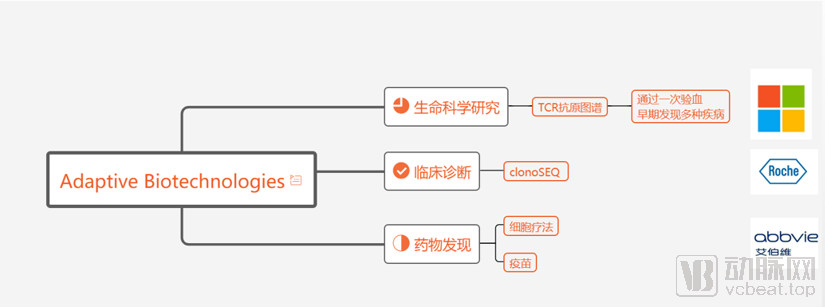
Adaptive Strategy and Partners
So, the question arises: what are the primary applications of Adaptive’s TruTCR and ImmunoSEQ? What are some examples of their successful implementation?
First, early diagnosis of diseases and personalized treatment.
Adaptive has partnered with the Microsoft Healthcare NExT initiative to map and decode the human immune system. Together, the two parties will leverage immune repertoire sequencing, proprietary computational models, and machine learning to map T-cell receptor (TCR) sequences to their bound antigens. By utilizing this data to construct a map linking millions of T cells to the specific pathogens they target, disease diagnosis will become more efficient and accurate. The ultimate goal is to enable improved diagnostics for all diseases, ranging from cancer and autoimmune disorders to infectious diseases.
The primary objective of the partnership with Microsoft is to leverage its cloud computing and machine learning capabilities. From the perspective of machine learning algorithms, the collaborative algorithms developed by Adaptive Biotechnologies and Microsoft differ from IBM Watson’s natural language processing and machine learning models, and are not related to image recognition algorithms. Microsoft is working with partners to develop a unique approach applied to healthcare.
In addition to precise diagnostics, Adaptive’s products can also be used for cell therapy development.
In January 2019, Adaptive Biotechnologies entered into a collaboration with Genentech, a member of the Roche Group. Adaptive will leverage its investigational TCR discovery platform to identify the optimal T-cell antigen receptors in patients, enabling therapies that most effectively target each patient’s personalized antigens. Genentech will then design and manufacture personalized cell therapies based on the information provided by Adaptive, thereby delivering enhanced treatment outcomes for each patient.
Leveraging its strength in the TCR platform, Adaptive Biotechnologies is also a star company in the field of TCR-T therapies. Its TruTCR T-cell receptor (TCR) screening platform can identify and characterize TCRs that effectively bind to target antigens through immune sequencing and other technologies.
TCR-T therapy is a form of adoptive cell transfer (ACT). Adoptive cell transfer involves isolating immunologically active cells from tumor patients, expanding and functionally characterizing them in vitro, and then reinfusing them into the patient to directly kill tumors or stimulate the body’s immune response to eliminate tumor cells.
The basic steps of TCR-T therapy are as follows: First, one or more tumor antigens are identified as therapeutic targets, and TCR sequences that specifically recognize these tumor antigens are obtained. Then, using genetic engineering techniques, the gene sequences encoding the antigen-specific TCRs are introduced into the patient’s own T cells to generate TCR-T cells capable of specifically recognizing the tumor antigens. After extensive expansion through in vitro culture, these TCR-T cells are infused back into the patient to eliminate tumor cells.
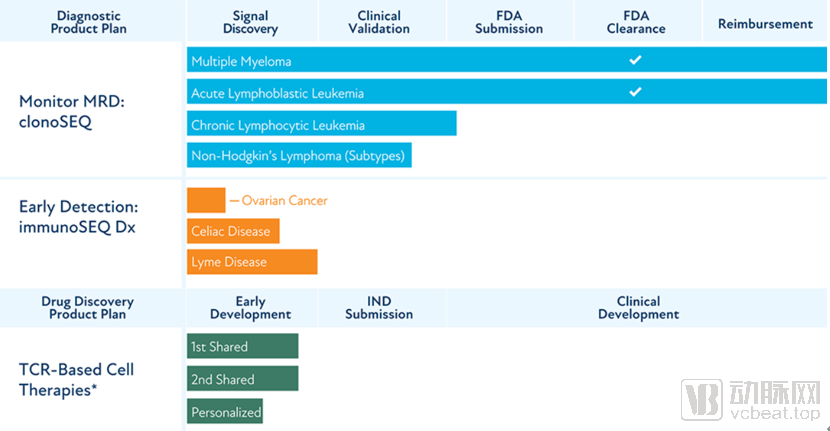
Adaptive’s Current Pipeline
It is worth noting that Adaptive’s ambitions are not mere talk, as it already has multiple products approved by the FDA. The FDA granted marketing authorization for the clonoSEQ Assay through the de novo review pathway. The clonoSEQ Assay uses DNA from bone marrow samples to detect and monitor minimal residual disease (MRD) in patients with multiple myeloma (MM) and B-cell acute lymphoblastic leukemia (ALL). Its ClonoSEQ MRD platform is highly sensitive to MRD in blood, capable of detecting levels as low as a single cell.
clonoSEQ is the first and only FDA-authorized in vitro diagnostic assay for MRD testing. It is also the first clinical diagnostic tool to receive FDA approval based on immune sequencing technology.
clonoSEQ leverages Adaptive’s proprietary immune sequencing platform to identify and quantify specific DNA sequences found in malignant cells, enabling clinicians to assess and monitor minimal residual disease (MRD) during and after treatment. This assay provides standardized, accurate, and sensitive measurement of MRD, allowing physicians to predict patient prognosis, evaluate therapeutic response over time, monitor patients during remission, and detect potential relapse. Clinical practice guidelines for hematologic malignancies recognize MRD status as a reliable indicator of clinical outcomes and treatment response, with clinical outcomes closely correlated to MRD levels measured by the clonoSEQ Assay in patients diagnosed with acute lymphoblastic leukemia (ALL) and multiple myeloma (MM).
Adaptive’s clonoSEQ has also garnered favor from the pharmaceutical company AbbVie, which utilizes clonoSEQ in drug development as an accurate and reliable method to assess improvements in patients’ quality of life with new therapies. In December 2019, the two parties entered into a multi-year collaboration aimed at supporting AbbVie’s clinical trials of venetoclax for multiple myeloma.
It is well known that precision diagnostics and personalized medicine represent the future trend in disease treatment. However, mapping an individual’s genetic profile while accounting for epigenetics and lifestyle factors is already sufficiently complex, yet still insufficient for comprehensive disease diagnosis and treatment. If T-cell receptors (TCRs) could be mapped, it might enable faster diagnoses. What remains unclear, however, is whether mapped TCRs can truly provide the necessary diagnostic clues for a broader range of diseases. Nevertheless, they may complement diagnostic efforts when integrated with genetics, epigenetics, and other health data sources.
Adaptive Biotechnologies was co-founded by brothers Harlan and Chad Robins. In September 2009, Robins and his brother established the company. Chad oversees corporate management and seeks business partnerships. Chad Robins holds an MBA from the Wharton School of the University of Pennsylvania and a bachelor’s degree in managerial economics from Cornell University.
Harlan is the Chief Scientific Officer, having served as the Project Leader for Computational Biology at the Fred Hutchinson Cancer Research Center (Fred Hutch) for 13 years. (Harlan held dual positions at Adaptive and Fred Hutch until he left Fred Hutch when Adaptive filed for its IPO.)
In addition to the two brothers, Julie Rubinstein, President of Adaptive Biotechnologies, previously held a global business development role in the oncology division of Pfizer Inc., with a primary focus on cancer immunotherapy.
Interestingly, Chad Robin stated in an interview that the company’s success was attributable to his mother, who would patiently listen and mediate conflicts between the two.
In an interview, Chad Robins, CEO of Adaptive Biotechnologies, stated, “Ultimately, this will become part of the ‘immune check-up’ or annual physical examination, assessing people’s biological systems. It will be as common as using MRI or X-rays to examine our immune system.” He believes that the first immune system-based test will be conducted within the next two years.