

Zhiyun Health Secures RMB 1 Billion in Combined C+ and D Funding Rounds, Enters Unicorn Territory
VCBeat (WeChat ID: vcbeat) has learned that Zhiyun Health (formerly known as Zhangshang Tangyi), a digital health company specializing in chronic disease management, has completed cumulative financing of RMB 1 billion across its Series C+ and Series D rounds. The Series D round was led by CMB International, with participation from existing shareholders SIG, Dongying Financial Group, Tasly, Bojiang Capital, and LB Investment. The Series C+ round was led by SIG, with participation from Samsung Electronics and Dongying Financial Group, among others. Probe Capital served as the financial advisor.
The RMB 1 billion raise represents the largest financing round globally in the chronic disease management sector. According to Kuang Ming, Founder and CEO of the company, this round of funding will be used to enhance the company’s data mining capabilities and advance the development of its AIoT ecosystem. With this financing, the company is now entering the ranks of unicorns.
Lian Suping, a member of the Management Committee of China Merchants International, stated, “As a leading enterprise in the field of chronic disease management, Zhiyun Health connects and empowers various stakeholders across the industry chain—including hospitals, patients, pharmaceutical companies, and insurers—through mobile internet and SaaS systems. It assists thousands of hospitals and physicians in managing and tracking patients’ conditions throughout their entire lifecycle, providing comprehensive solutions for disease and daily lifestyle management based on big data and AI technologies. The company has already achieved significant economic and social value. We remain firmly optimistic about Zhiyun Health’s long-term development in chronic disease management and look forward to its continued efforts to create greater value for society, customers, shareholders, and employees.”
Zhiyun Health was established in December 2014. After several years of development, its business has undergone multiple iterations, with increasingly clear objectives:
At its inception, it was positioned as a platform offering diabetes management services for C-side (patients) and patient management solutions for D-side (doctors).
As the business expanded, it subsequently entered the serious healthcare sector by providing SaaS platforms to hospitals and offering an e-commerce trading platform for pharmaceutical products.
Later, the company upgraded from single-disease diabetes management to comprehensive chronic disease management and established an internet hospital.
According to Kuang Ming, as of now, Zhiyun Health has integrated multiple patient care scenarios—including hospitals, pharmacies, and other settings—as detailed below:
Within the hospital, we primarily provide SaaS systems, Clinical Decision Support Systems (CDSS) for assisted diagnosis, and follow-up systems to enhance the overall effectiveness and efficiency of in-hospital patient care.
At pharmacies: The company is prioritizing the development of a prescription circulation platform, which directly channels doctors’ prescriptions and patient orders to partner pharmacies while providing user operations and management services for these pharmacies. Kuang Ming stated that this approach allows the company to disengage from complex supply chain management, enabling a more agile and rapid expansion. Meanwhile, it aligns with the broader trend of prescription outflow, helping pharmacies address challenges in prescription fulfillment and intricate member management, thereby achieving a win-win outcome for both parties.
In other scenarios: On one hand, the company connects with online platforms and medical consortia to provide comprehensive management solutions. For instance, it develops disease-specific decision trees that deliver personalized treatment plans based on patient heterogeneity. The current solution is in its preliminary stage but can differentiate thousands of subtypes.
On the other hand, the company is vigorously advancing the development of its AIoT (Artificial Intelligence of Things) infrastructure, aiming to ensure compatibility with various health data collection devices available on the market and establish the platform as a data storage hub. Kuang Ming stated that to implement more refined patient management in the future, it is essential to gather more dynamic information and enhance health records.
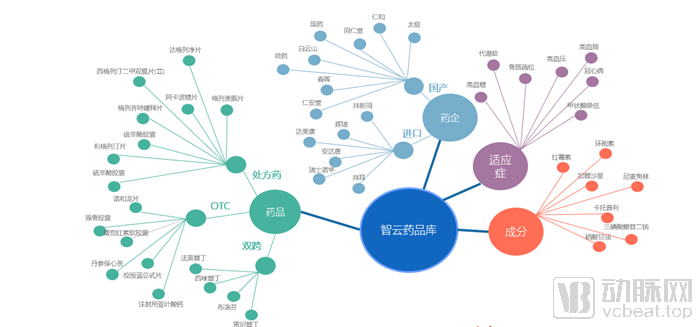
Knowledge Base and Decision Tree
Beyond integrating chronic disease management scenarios, Zhiyun Health is also attempting to extend its service workflow by collaborating with insurance companies, pharmaceutical firms, and government/industry associations. Kuang Ming stated that this holds significant importance for all three parties. For insurance companies, it can ensure customer health and reduce the overall loss ratio in the short term, while enhancing underwriting capabilities through more granular data and assessments in the long term. For pharmaceutical companies, it can directly help improve R&D efficiency at the clinical trial level. He revealed that these services have already begun commercialization.
As a leading enterprise in the industry, Zhiyun Health has initiated efforts to establish industry standards for chronic disease data and, with this as its core, is jointly building a Chronic Disease Big Data Center with CEC Data.
It is reported that the center will develop and formulate specifications and industry standards for the use of clinical research and diagnostic/treatment data related to chronic diseases, based on epidemiology and population distribution within China, while establishing and continuously improving a large-scale chronic disease database. In addition, it will establish data standards for clinical research on specific chronic diseases.
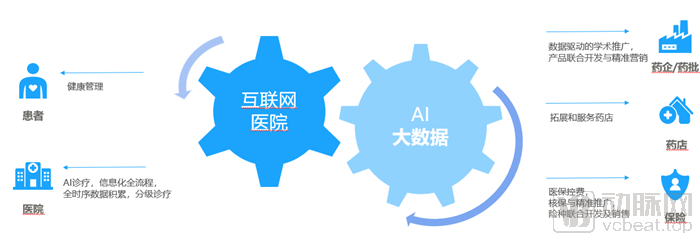
AI and Big Data Drive the Development of the Ecosystem
Behind the business iterations lies the team’s increasingly clear understanding of the logic underlying chronic disease management, as well as its grasp of competitive advantages. Kuang Ming pointed out that the three core elements of chronic disease management are physicians, continuous data, and service models. After nearly six years of persistent effort, iMedCloud has thoroughly integrated these three elements and achieved significant competitive advantages. In particular, after linking its business operations together, the company has entered a phase of rapid growth.
To this end, Zhiyun Health has injected significant fresh talent over the past year, including appointing Wang Yuxian, former Global Head of Advertising Product at Google and former Head of Advertising Product at Baidu, as Vice President of Product, and Yang Xiaobao, former Head of Government Affairs at AliHealth, as Head of Public Relations and Government Relations.
Reflecting on the business data, Kuang Ming revealed that over the past year, the company’s hospital client base grew by 2.5 times and its patient user base tripled. The company has also forged deep collaborations with pharmacies and integrated insurance services, achieving overall profitability at scale and reaching a pivotal turning point in its development.
In response, Tim, Managing Partner at SIG, stated, “Zhiyun Health started with diabetes, a typical chronic disease area. On one hand, it has built a highly sticky doctor-patient relationship chain centered around hospitals, achieving the most efficient utilization of doctors’ and hospital resources. On the other hand, leveraging the characteristic that endocrine diseases are systemic circulatory disorders, it can rapidly expand across all departments within hospitals at low cost. By continuously extending and penetrating deeply across three dimensions—hospitals, disease types, and patients—it aims to ultimately become China’s largest provider of chronic disease management service networks and ecosystems. As practitioners of value investing, we at SIG are honored to be a significant shareholder in Zhiyun Health and are committed to providing comprehensive support and empowerment to the company to the best of our ability.”
Kuang Ming also shared the company’s plans and goals for the new year: First, regarding the hospital’s Clinical Decision Support System (CDSS), the company is intensifying efforts to build drug databases, diagnosis and treatment databases, and knowledge bases, with a commercially viable product expected to be launched this year. Second, further expand pharmacy coverage. Third, broaden the AIoT ecosystem by partnering with more platforms. Finally, bring the chronic disease big data center into practical application.