

InOneCell Submits IPO Prospectus: Pioneering High-Throughput, Multi-Channel Single-Cell Sequencing Platform Enters Commercialization Phase
Dr. Lin Wei, CEO and founder of InOneCell (Yinwan Cells), told VCBeat that he first encountered single-cell sequencing in 2014. At that time, bulk RNA sequencing was the primary method for transcriptomic studies of biopsied tissue samples, involving the release of RNA from tissues followed by high-throughput quantitative analysis of the entire transcriptome.
“In 2012, Fluidigm, a U.S.-listed company, launched the C1 system, a Smart-Seq cDNA library preparation solution featuring 96 single-cell chambers, which made it possible to perform RNA sequencing and quantification on 96 cells. I had a strong intuition that sampling only 96 cells to characterize cellular properties was limited when dealing with tens of millions or even billions of cells; nevertheless, such high-resolution detection was already exciting enough. Once cell throughput increased to thousands or tens of thousands, the application scenarios for single-cell sequencing would become limitless,” recalled Dr. Lin Wei.
Over the next three-plus years, as Dr. Lin Wei had predicted, the rapid development of new high-throughput single-cell sequencing technologies has propelled the field to its current market tipping point. In terms of the global market size for research services alone, it has reached $500–600 million annually and is continuing to grow rapidly at an annual rate of approximately 17%.
In 2016, 10x Genomics launched its first high-throughput single-cell sequencing instrument, Chromium, enabling high-throughput single-cell cDNA library preparation at the hardware level. Listed on Nasdaq, the company is currently a flagship enterprise in the field of single-cell gene sequencing, with its market capitalization reaching as high as $10 billion in early 2020. During the same period, Dr. Lin Wei’s laboratory initiated single-cell sequencing projects and, together with collaborators, successively published research papers based on droplet-based high-throughput single-cell technology frameworks.
Prior to founding Yinwan Cell, Lin Wei earned his Ph.D. in Computational Biology from Tsinghua University and subsequently completed his postdoctoral fellowship at the National Cancer Institute of the National Institutes of Health (NIH). He previously served as a Senior Researcher at SAIC, a Fortune 500 government consulting firm; as a Senior Bioinformatics Expert in the Functional Genomics Laboratory at Cold Spring Harbor Laboratory; and as Principal Investigator (PI) leading a research group at the Immunology Institute of Baylor Medical Center in Dallas, Texas. As a key contributor, he has published multiple papers in top-tier journals such as Nature, Science, and Cell, and is an expert in the development and application of single-cell systems.

Dr. Lin Wei, CEO and Founder of Yinwan Cell
Dr. Wang Chunming, another core technical member of the team, completed his postdoctoral fellowship at the Institute for Immunology and Transplantation Research (formerly the Center for Translational Immunology) at Baylor College of Medicine under Dr. Lin Wei. He has many years of research experience in biosignal detection, implementation of microfluidic chip technology, and the development of next-generation deep sequencing applications in the biomedical field.
In 2016, Dr. Lin Wei and his team generated high-throughput single-cell sequencing data for the first time in their laboratory at Baylor College of Medicine. “In the early days, we used an assembled open-system approach to produce data, integrating microfluidic systems, reagent kits, and various technical modules,” described Dr. Lin Wei. “While these open platforms were more than adequate for research services and offered high flexibility, from the perspective of end-users lacking specialized experimental skills, an all-in-one integrated instrument would be more convenient, reliable, and accessible to a broader audience. Just as Illumina’s NGS instruments have played a pivotal role in clinical testing, the launch of rapid library preparation devices for single-cell sequencing, the reduction of associated testing costs, and the emergence of large-scale clinical application scenarios are inevitable trends in the industry’s development.”
In early 2018, Dr. Lin Wei’s team returned to China and collaborated with the National Engineering Research Center for Microfluidics at Northwest University to conduct single-cell sequencing. The participation of the team from the Xi’an Institute of Optics and Precision Mechanics of the Chinese Academy of Sciences brought the system optimization and the realization of an integrated all-in-one device a step closer. “Part of our team has a background in chemical biology, while the other part specializes in optoelectronic measurement and control technology. From the perspective of the industrial chain, we hold significant advantages in the production of reagents and consumables—such as integrated all-in-one instruments, microfluidic chips, and reaction microspheres—as well as in bioinformatics analysis services, enabling us to comprehensively enter the field of single-cell sequencing,” introduced Dr. Lin Wei.
More importantly, several senior experts and senior engineers from the field of optoelectronic tracking and measurement at the Xi’an Institute of Optics and Precision Mechanics, Chinese Academy of Sciences, have joined the team. After just one year of effort, Dr. Lin Wei’s team has achieved phased results in the development of single-cell equipment.
Meanwhile, the team published a paper on intelligent single-cell transcriptome identification and launched the Tumor Single-Cell Atlas Project. In June 2019, it unveiled the first prototype of an automated single-cell cDNA library preparation device capable of high-throughput, multi-channel detection. Dr. Lin Wei has established in-depth collaborations with numerous renowned domestic and international research and clinical institutions, including the City of Hope Translational Genomics Research Institute, Scripps Research, the Salk Institute, Renji Hospital affiliated with Shanghai Jiao Tong University, and Xiangya Hospital of Central South University.
In recent years, single-cell sequencing and related research topics have grown rapidly. Data show that in 2019, 1,338 scientific articles were published in PubMed, representing a year-on-year increase of 102.4% compared to 661 articles in 2018. However, the costs of reagents, consumables, and technical services for single-cell sequencing remain high. For example, with 10x Genomics, the service fee for data generation from a single-cell tissue sample ranges from RMB 20,000 to 40,000. Data analysis is more challenging than data generation and incurs even higher service fees.
“If the service fee for data generation is reduced to below RMB 10,000, the single-cell sequencing market will inevitably expand rapidly, reaching a level affordable to the market. A powerful new detection technology is like giving a child a microscope; if not constrained by cost, they would place sand grains, leaves, and small insects under the lens to satisfy people’s intense curiosity,” said Dr. Lin Wei. “Currently, the industrial layout of domestic single-cell sequencing companies involves a large number of third-party research service providers purchasing equipment and then offering specialized and complex single-cell sequencing services to other research institutions. However, single-cell RNA sequencing has high requirements for sample freshness. It would be more ideal if end users could conveniently perform the tests themselves, which is also the direction we have chosen to enter the industry. We are starting with the development and production of easy-to-operate, all-in-one integrated devices for single-cell sequencing library preparation and detection, fully leveraging our collaborative team’s advantages in optoelectronic measurement and control technology to produce high-performance, user-friendly equipment, and striving to reduce data generation costs to quickly establish a market advantage.” According to Dr. Lin Wei, after optimizing the entire system, the reagent and consumable costs of the new platform are less than one-third of those of comparable market competitors.
Overall, single-cell sequencing involves sequencing genetic material, including DNA and RNA, at the level of individual cells. By using single cells as the basic unit for qualitative and quantitative analysis, it enables the identification of cell types and functions within highly complex multicellular tissues, as well as changes or variations in the health or status of specific cells. In contrast, conventional assays based on bulk samples perform genetic analysis on entire tissue cell populations at an aggregate level, thereby losing significant detail.
From an operational workflow perspective, the core of single-cell sequencing technology requires equipment capable of labeling cellular identities for genetic material derived from different cells, followed by deep next-generation sequencing (NGS) based on this foundation.
Single-cell preparation typically involves dissociating and digesting tissues through mechanical methods, enzymatic digestion, or other combined approaches to form a single-cell suspension in buffer. Single-cell isolation and DNA/cDNA capture and labeling are critical steps in single-cell sequencing, closely influencing the quality and accuracy of the final single-cell data. Among these, high-efficiency microfluidic chips and precise optoelectronic measurement and control represent the key technologies for single-cell isolation and capture.
In terms of core technical components for single-cell sequencing instruments, the Yinwan Cell team has achieved independent production for the majority of these components.
Just as single-cell sequencing is one of the application scenarios for NGS deep sequencing, it represents a derivative application of NGS. As a central hub technology in biotechnology, NGS spans multiple fields and has given rise to various deep sequencing-related applications, such as genomics, epigenomics, microbiome, and metagenomic sequencing. Dr. Lin Wei envisions that single-cell sequencing itself will become another new hub technology, much like how NGS deep sequencing technology spearheaded a new industry. He anticipates that in all testing applications where multicellular tissues are the subject of study, the novel single-cell devices developed by Yinwan Cell will play a significant role, akin to Illumina’s NGS sequencing instruments.
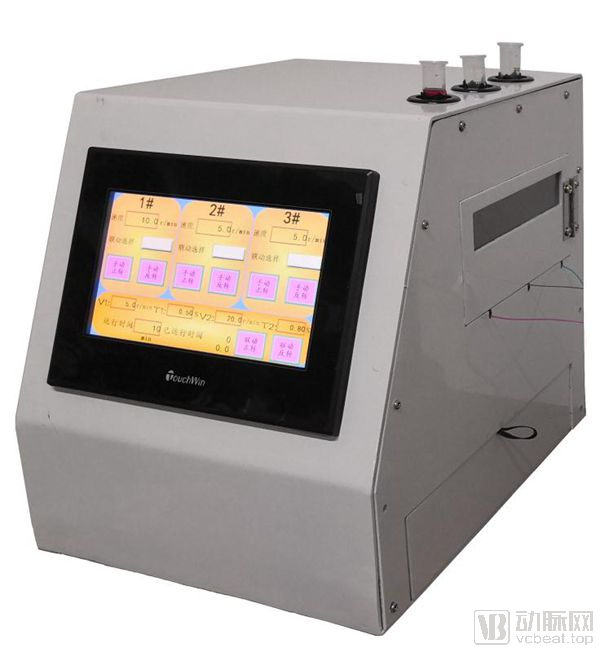
Yinwan Cell Single-Cell Sequencing Equipment
It has been revealed that Yinwan Cell has established collaborations with numerous renowned domestic and international research and medical institutions. The company is deploying equipment, conducting joint research initiatives, continuously testing and optimizing its devices and technologies, and engaging in the sale of reagents and consumables. These scientific collaborations aim to co-author academic papers, rather than merely supplying equipment, reagents, and consumables, generating single-cell data, or providing bioinformatics analysis services. This strategy represents a comprehensive market layout covering upstream and downstream applications of single-cell sequencing technology.
Currently, Yinwan Cell is undergoing angel round financing. The funds will be used for the development of new features for its integrated single-cell sequencing system, team building, and other purposes.