

YiJu Health Tech Builds Integrated 'Medical + Accommodation' Dual-Channel Platform to Deliver One-Stop Solutions for Cross-Regional Patients
Every winter, Old Li suffers from unbearable lower back pain. Despite numerous examinations at the county hospital, no definitive diagnosis was reached. Hearing former colleagues praise the medical expertise at Beijing’s 301 Hospital (PLA General Hospital), he, a resident of Inner Mongolia, decided to seek treatment there. “It was my first time seeking medical care in Beijing. I had to check several guesthouses near the hospital before finding one with a vacant room; I was in no position to be picky about the rudimentary conditions. I queued up early in the morning for registration, only to realize after hours of waiting that I was in the wrong line. By the time I rejoined the correct queue, all appointment slots were taken. I’ll have to try again tomorrow morning. I have no idea when I’ll finally complete my consultation and return home.”
Old Li is not an isolated case when it comes to seeking medical care across regions. According to data from the "2017 National Medical Service and Quality Safety Report," 16.83% of patients receiving cross-regional medical treatment nationwide flowed into Beijing, while 18.93% went to Shanghai. The 2018 report from "Jing Yi Tong," the official appointment registration platform for hospitals under the Beijing Municipal Administration, showed that out-of-town patients accounted for 27.14% of registrations. Based on the 110 million outpatient visits recorded at tertiary medical institutions in Beijing in 2017, this translates to approximately 31.88 million cross-regional outpatient visits.
Despite China’s vigorous promotion and implementation of tiered diagnosis and treatment in recent years, along with efforts to decentralize high-quality medical resources, most advanced medical technologies remain concentrated in Grade 3A hospitals in first- and second-tier cities. Under these circumstances, traveling to core Grade 3A hospitals in other regions for care remains a rigid demand for the majority of patients with severe conditions. However, information asymmetry and uncertainty regarding medical services, fragmented access channels, and logistical challenges related to accommodation and transportation for patients and their accompanying family members continue to be key pain points that detract from the experience of seeking cross-regional medical care.
In response to market demand, Yiju (Beijing) Technology Co., Ltd. (hereinafter referred to as “Yiju Tech”) was established, focusing on both in-hospital and out-of-hospital services across the entire healthcare journey to provide one-stop medical, elderly care, and housing solutions for patients seeking treatment away from their home regions.
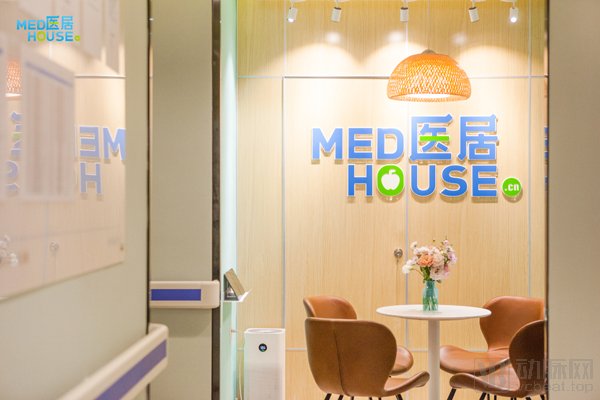
“Patients traveling from other regions to Beijing for medical treatment generate ancillary needs beyond clinical care, such as consultation, accompanied visits, accommodation, and transportation. These services, which hospitals are neither able nor willing to provide, are undertaken by us,” said Zhou Ruoyu, Co-founder and CEO of Yiju Technology.
Before founding Yiju Technology, Zhou Ruoyu worked for several years at Accenture, a multinational management consulting firm. He later entered the healthcare and pharmaceutical industry, focusing on broad market access and policy advisory services. This experience allowed him to gain deep insights into the medical and health sector, establish connections with numerous hospitals and relevant regulatory authorities, accumulate substantial industry resources, and develop a deeper understanding of national policies and societal needs.
In recent years, driven by policy support and market forces, the development of internet healthcare has become unstoppable. Countless enterprises have rushed into this sector to capture market share, making online consultation a highly prominent concept. However, in Zhou Ruoyu’s view, given the current state of medical practice, online consultation still has its inherent limitations. It is more suitable for the management of chronic and common diseases, while patients with acute or critical conditions inevitably need to seek treatment at core tertiary Grade A hospitals in first-tier cities.
According to the National Healthcare Security Administration’s “Statistical Bulletin on the Development of Basic Medical Insurance in China 2018,” there were 28.76 million instances of cross-regional medical treatment among insured individuals in 2018, with total expenditures reaching RMB 196.5 billion. Of this amount, inpatient care accounted for RMB 190.6 billion, with an average cost per hospitalization of RMB 14,016. This highlights the substantial demand for out-of-hospital services underlying the cross-regional healthcare market, which is valued in the hundreds of billions of yuan. Recognizing this opportunity, Zhou Ruoyu has set his sights on this still-underserved sector.
In 2019, Zhou Ruoyu joined forces with four close friends, each with extensive experience in medical investment, construction, hospitality, and the internet sector, to co-found Yiju Technology. From its inception, the company secured angel investments from individuals including Dr. Chai Yunfei, a partner at Gaohe Capital’s Healthcare Industry Fund. Dr. Chai is widely recognized for his deep expertise in the healthcare and wellness sector, having led numerous domestic and international investment initiatives in this field.
When discussing the company’s products and services, Zhou Ruoyu stated in an interview that Yiju Technology is “an internet-enabled comprehensive service provider for cross-regional medical care, guided by healthcare needs and anchored in accommodation.” This also means that meeting the accommodation needs of patients and their families during cross-regional medical treatment is Yiju Technology’s core operational strategy.
As early as 2018, following market research, Yiju Technology initiated preliminary trial operations. “Operational data shows that whether it is decentralized short-term rental homestays or centralized hotel rooms, the core of Yiju lies in service—providing users with standardized and systematic services,” said Zhou Ruoyu in an interview. “Only attentive and professional services can earn users’ trust, and trust is the central issue that all practitioners in healthcare services must address.”
To date, Yiju Technology’s first directly operated and managed apartment model store officially opened in October 2019. Located near the Cancer Hospital of the Chinese Academy of Medical Sciences, this 300-square-meter facility provides diverse accommodation services for patients traveling from other regions to Beijing for medical treatment and their accompanying family members.
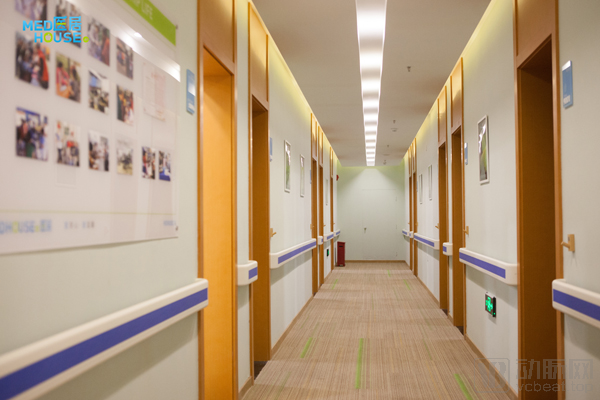
Yiju Apartments (Photo provided by the company)
Based on its standardized services, Yiju Technology has also established partnerships with branded hotel chains to provide medical assistance services to hospitalized patients. To date, the company has deployed over 5,000 Yiju guest rooms in urban Beijing, covering more than 10 core Grade IIIA hospitals in the city.
In addition to ensuring patients’ living environments, it is also essential to establish a closed-loop service system spanning pre-diagnosis, during-diagnosis, and post-diagnosis stages, thereby creating a dual-channel model of “medical care + housing.” Zhou Ruoyu revealed that Yiju Technology currently employs medical consultants with nearly 50 years of industry experience, along with more than ten professional service staff. By integrating online medical consultations with offline operational services, the company provides comprehensive medical support for patients seeking treatment away from their home regions.
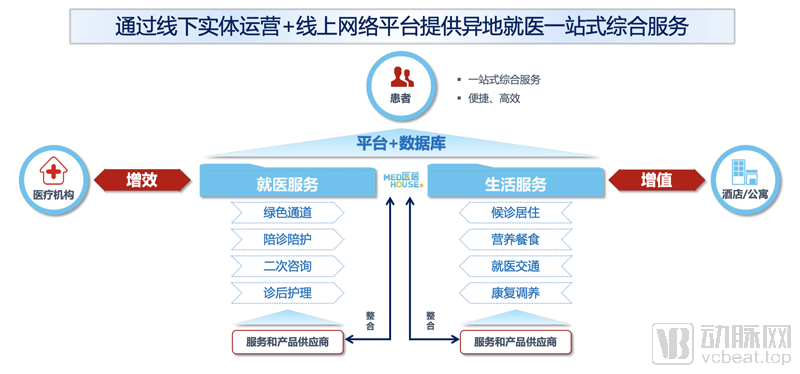
Yiju Tech’s Operational Model
Prior to the consultation, Yiju Technology provides remote medical advisory services to patients in different locations through disease course review, guidance on the medical visit process, expert information consultation, and video consultations, thereby achieving pre-hospital triage and patient navigation.
During consultations, Yiju Technology focuses on patient care assistance services, including medical escort and appointment scheduling for medical services.
Post-consultation, Yiju Technology enables services such as off-site second opinions, post-diagnosis follow-ups, and health and wellness care. Additionally, it offers value-added services, including transportation shuttles and nutritional meals, for users to choose from.
In an interview with VCBeat, Zhou Ruoyu stated that since October 2019, nearly 1,000 patients have consulted Yiju Technology, most of whom are from provinces and cities surrounding Beijing below the second-tier level. Although few users purchase the full suite of services in a single transaction, many engage in additional purchases and repeat buying during the service process.
“In fact, this involves issues related to the current education market and customer guidance,” said Zhou Ruoyu. “Various forms of out-of-hospital services have always existed, but for a long time, these services have been present in the market in loose or even informal ways, making it difficult for users to develop a willingness to pay for standardized services. Of course, this also requires our efforts in service and brand building, guiding customers to accept services through productization and standardization.”
While also leveraging the internet as a platform to provide medical consultation support, Zhou Ruoyu believes that Yiju Technology differentiates itself from other online healthcare service providers through its offline operations. This approach enables close customer engagement, fostering a deeper understanding of patients’ genuine needs and thereby facilitating differentiated services. She stated, “We can see, touch, and grasp those needs that are not apparent in the online environment; we then deepen our understanding and integrate additional medical support services onto our platform.”
Regarding future plans, Zhou Ruoyu stated that Yiju will be guided by the principles of scaling, branding, service orientation, and intelligentization. The company aims to build a systematic brand framework, further develop its proprietary platform, and explore potential collaborations with multiple Grade 3A hospitals on aspects such as medical consultation processes and patient navigation services.
“China is now vigorously promoting the concept of tiered diagnosis and treatment, but this cannot be achieved overnight. Resolving the contradiction between the public’s desire for high-quality medical resources and the scarcity of such resources will inevitably take time, and we hope to contribute our share to this effort,” said Zhou Ruoyu.
“In the future, patients will not need to travel to Beijing for many aspects of their medical care; we can handle much of the preliminary work on their behalf. This approach also serves as a measure to curb the blind rush to first-tier cities for medical treatment, thereby alleviating, to some extent, the increasingly strained doctor-patient relationship caused by the scarcity of medical resources.”