

Genomics Pioneer Jin Ge and Rendong Medicine: The 'One' in Urological Oncology Set to Dominate the Next Niche
Gloriousmed
Provider of Comprehensive Genetic Testing Solutions
The capital winter that began in the second half of 2018 has impacted the development of many industries, with oncology genetic testing being one of the most severely affected. Although several leading companies secured substantial financing and two companies filed for initial public offerings in 2019, the downturn has proven particularly challenging for mid-tier and smaller players in the industry.
However, during this challenging period, Gloriousmed bucked the trend. Not only did it secure RMB 75 million in Series A financing in the second half of 2018, but it also rapidly expanded its coverage of companion diagnostics in the field of urological oncology, emerging as a leading enterprise in this niche sector.
Gloriousmed has not rested on its laurels. At the VCBeat “2019 Future Healthcare 100” Biotechnology Forum, Gloriousmed founder Jin Ge delivered a speech titled “Entrepreneurs in Tumor Genetic Testing: Dilemmas and Breakthroughs,” in which he stated, “Gloriousmed is not content with being known solely for its expertise in urology. We have the capacity to leverage more resources and contribute more to the industry.”
Building on this presentation, we engaged in an in-depth dialogue with Jin Ge to uncover the secrets behind Gloriousmed’s success in defying market trends.
Gloriousmed was not an early entrant into the companion diagnostics industry; by the time Gloriousmed was established, leading companies in this sector had already launched their products on the market. With resources for mainstream cancer types largely monopolized, Gloriousmed carved out a unique path by entering the niche market of specialized cancer types, becoming a key connector in this segmented field and evolving into the platform-based company it is today.
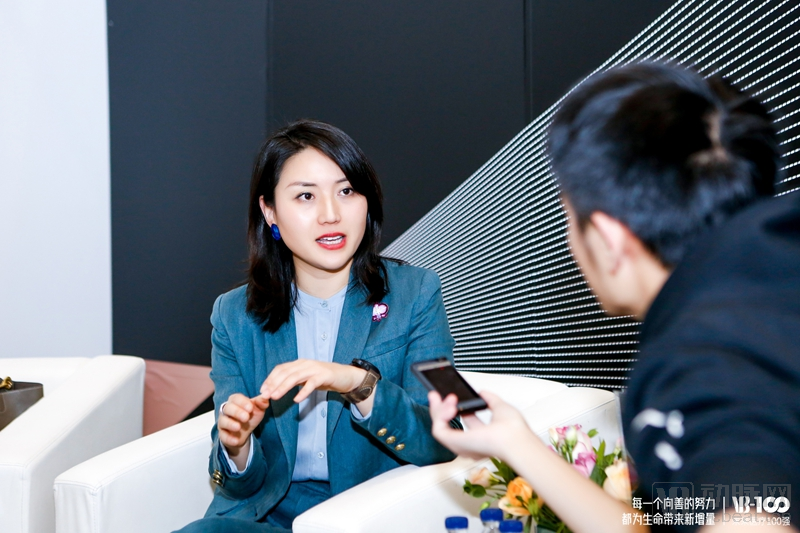
Gloriousmed Founder Jin Ge
In selecting its area of deep specialization, Jin Ge identified a blue ocean within the red ocean through independent strategic thinking: “China’s enormous population base means that there are no truly ‘small’ cancer types in China. Among these relatively less prevalent cancer types, competition is less intense, allowing us to rapidly emerge as a leader in the field and thereby consolidate high-quality resources across the industry. The primary reason we chose to focus on urological tumors, particularly prostate cancer, is that we observed global innovative drug R&D beginning to target this area, with domestic players already following suit. These drugs will require corresponding companion diagnostic products, which presents our opportunity.”
Therefore, Gloriousmed initially entered the industry by focusing on head and neck cancers, then shifted its focus to prostate cancer for in-depth development, and rapidly expanded to cover the entire spectrum of urologic oncology. Today, Gloriousmed has become a leading enterprise in companion diagnostics for urologic tumors in China.
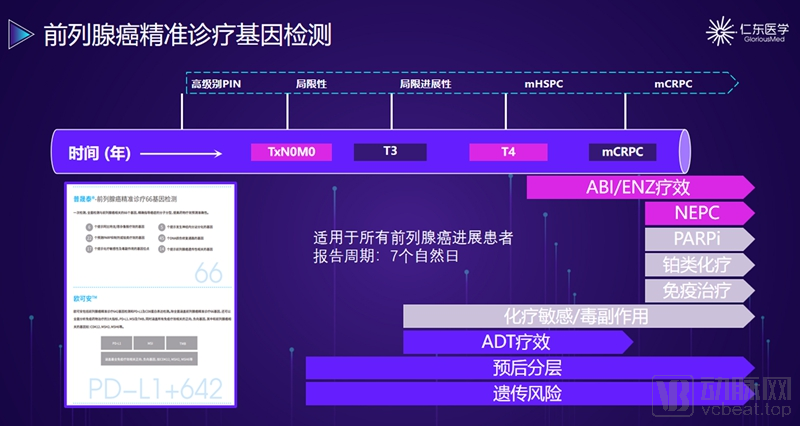
Gloriousmed’s Prostate Cancer Product — Pushengtai®
Over the past few years, Gloriousmed has demonstrated its achievements in the field of urologic oncology with a robust product. For prostate cancer, particularly castration-resistant prostate cancer (CRPC), there has been a persistent lack of effective guidelines for clinical pharmacotherapy. In collaboration with Shanghai Renji Hospital, Gloriousmed developed Pusentai®, a prostate cancer diagnostic product designed to assist clinicians in making informed treatment decisions. Since its launch, this product has been featured at prestigious domestic and international academic forums, including the Chinese Society of Clinical Oncology (CSCO) and the European Association of Urology (EAU), garnering consistent recognition from expert communities both in China and abroad.
Leveraging its accumulated resources and expertise in prostate cancer, Gloriousmed successfully expanded its business scope to include urothelial carcinoma and renal cell carcinoma, establishing a comprehensive suite of personalized diagnostic and therapeutic assistance products covering urinary system tumors.
During the two years when tumor NGS development slowed to its lowest ebb, Gloriousmed has been accelerating its growth. Jin Ge remains remarkably composed about the success achieved thus far: “In the past, some investors favored companies with strong technical capabilities, while others preferred those with robust sales prowess. Now, it has become clear that for a company to establish itself in the field of companion diagnostics, it must possess strong technical expertise on one hand and effectively manage channels and operations on the other.”
Gloriousmed has carved out a distinctive path by adopting a unique methodology known as the “DRTU” product R&D management model. The four letters stand for Demand (mining clinical needs), Research (collaborative scientific research), Translation (product validation and translation), and Upgrade (big data-driven iterative updates). Within this framework, Gloriousmed’s core objective is to serve physicians by gaining insights into clinical needs through their input, thereby fostering closer ties with them by addressing those needs.
“Founders of other companies are more likely to come from scientific backgrounds, with a stronger focus on product and technology R&D. In contrast, I start by defining who our customers are. I believe that within China’s healthcare ecosystem, our primary customers should be clinicians. Although clinicians are neither the payers nor the funding sources, they are the key decision-makers. All of Gloriousmed’s decisions revolve around clinicians’ practical needs, which distinguishes us from other enterprises in terms of mindset and methodology.” Jin Ge, formerly a faculty member at Peking University Health Science Center, demonstrates a way of thinking markedly different from that of other entrepreneurs.
Based on cooperation and mutual assistance, Gloriousmed has established close ties with physicians across the entire healthcare industry. These connections go beyond superficial personal rapport; they are rooted in mutual trust—a commodity of immense value in the medical sector.
Therefore, the success Gloriousmed has achieved to date is essentially a methodological success. By leveraging next-generation sequencing (NGS) as its entry point, Gloriousmed used the comprehensive NGS model to train its team and generate initial revenue. After establishing this foundational business model, the company developed a methodology for practical business implementation, thereby accelerating team growth. Building on this foundation, Gloriousmed’s close collaboration with physicians enabled it to consolidate all resources within a specialized niche, allowing it to identify future revenue streams across multiple segments and thus improve its team’s personnel efficiency ratio.
“The three leading global institutions in urological oncology research—Mayo Clinic, Johns Hopkins University, and Memorial Sloan Kettering Cancer Center—are all collaborating with us. They recognize the vast market potential in China, and we are the domestic leader in this field. Therefore, we position ourselves as an international company; each of our products is developed in partnership with the world’s top institutions, enterprises, and experts. All of this is built upon the resource network we have established in this sector,” said Jin Ge.
Following its success in urologic oncology, Gloriousmed began to extrapolate its proven methodology across both vertical and horizontal dimensions.
Vertically, Gloriousmed remains committed to deepening its expertise in urological oncology. On one hand, leveraging its accumulated resources and big data in urological cancers, Gloriousmed is beginning to connect with pharmaceutical companies to empower end-to-end drug lifecycle management. On the other hand, Gloriousmed needs an IVD product to penetrate lower-tier markets.
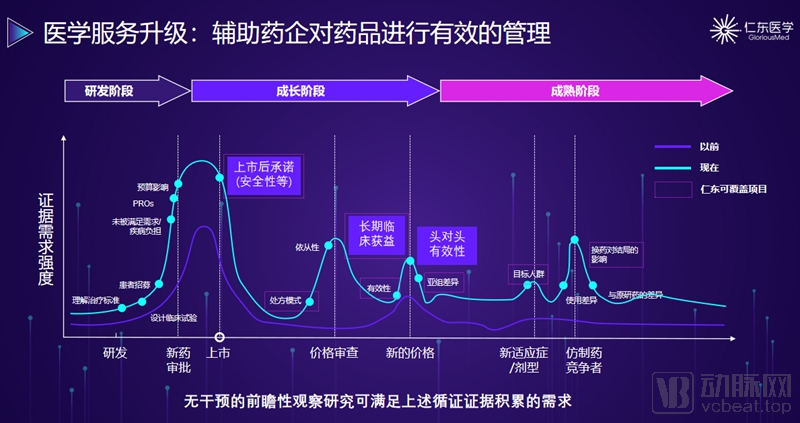
Gloriousmed's Collaboration Pathway with Pharmaceutical Companies
Compared with domestic and international pharmaceutical companies, Gloriousmed maintains closer relationships with physicians, gaining a deeper understanding of the needs and pain points of clinical experts. In terms of collaboration with pharmaceutical companies, Gloriousmed is already capable of undertaking a large volume of post-marketing prospective cohort studies for drugs, such as post-marketing re-evaluation, prescription pattern analysis, and target population research. During the preclinical R&D phase, Gloriousmed has also begun collaborating with well-known domestic pharmaceutical companies like Hengrui Medicine and Yuheng Pharmaceutical to explore opportunities for engagement in preclinical research and development.
For continuously updated and iterated products such as tumor companion diagnostics, the Laboratory Developed Tests (LDT) model is clearly the optimal product strategy. However, in the broader primary healthcare market, clinical acceptance of LDTs remains generally low, resulting in significant sales challenges and low market penetration. Gloriousmed requires an In Vitro Diagnostic (IVD) product to enhance its penetration in the primary healthcare market.
“We leveraged our best products to rapidly collaborate with China’s top experts, establishing the most extensive exchange platform. We then partnered with leading enterprises in specialized fields and introduced the world’s most advanced technologies. However, these efforts were primarily concentrated in China’s leading medical institutions. We needed a product to penetrate the broader primary-care market, not only to expand our market reach but also to provide greater support to primary-care physicians,” said Jin Ge.
In its horizontal expansion, Gloriousmed has entered the field of colorectal cancer, focusing on the critical pain point of colorectal cancer liver metastasis and developing related companion diagnostic products. Leveraging its successful methodology, Gloriousmed has rapidly accumulated approximately 1,000 cases in this niche segment within one year.
“In 2018, the slogan of our annual meeting was ‘Creating Value for Customers.’ I believe we delivered on this promise, as our prostate cancer products received unanimous acclaim from industry experts. In 2019, our slogan was ‘We are the One.’ We aspired to become ‘the one’ in the field of urologic oncology, while also helping more physicians excel as leaders in this specialty. Looking back on 2019, I feel we steadfastly achieved the goals set at the beginning of the year, truly differentiating ourselves and becoming the organization we envisioned,” said Jin Ge. “In 2020, we hope to perform even better by replicating our successful methodology across additional oncology segments, establishing ourselves as a leading enterprise in more specialized tumor types.”