

Haina MedInno Launches in Chengdu to Advance Medical-Engineering Integration and Drive Healthcare Innovation
Recently, the “Haina Medical Innovation” 2020 Symposium on Medical Device Innovation and Integration of Medicine and Engineering was held in Chengdu. The event was jointly organized by the National Engineering Research Center for Biomaterials, West China Hospital of Sichuan University, the Global Alumni Entrepreneurs and Young Entrepreneurs Association of Sichuan University, Sichuan Haina Medical Innovation Incubator Management Co., Ltd., and Deshang Kangyue Fund. The symposium aimed to further promote domestic medical innovation and the integration of medicine and engineering, and to explore collaborative mechanisms among research institutes, enterprises, incubators, and investment funds in the process of transforming scientific and technological achievements into practical applications.
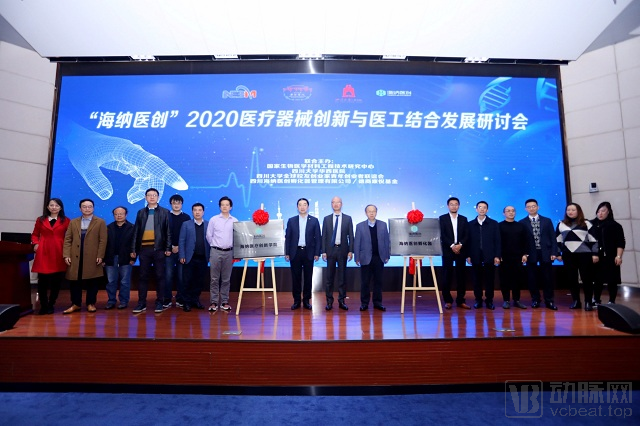
Unveiling Ceremony of Haina Medical Innovation Incubator and Haina Academy of Medical Innovation
The forum aims to establish a robust communication platform among clinical experts, academic and research institutions, and investment and incubation organizations. It invited guests from the fields of clinical practice, engineering, materials and devices, as well as investment and incubation to engage in discussions. The forum outlined an integrated mechanism for collaboration and exchange across industry, academia, research, clinical practice, and investment in the healthcare sector, facilitating the development and promotion of a biopharmaceutical technology transfer system tailored to China’s national conditions, and building a translational chain for medicine-engineering convergence. Additionally, the unveiling ceremonies for the “Haina Medical Innovation Incubator” and the “Haina Medical Innovation Academy” were held during the forum.
In recent years, the national "Made in China 2025" strategy has explicitly identified biopharmaceuticals and high-performance medical devices as one of the ten key sectors for manufacturing development. Relevant planning documents categorize the priorities for medical device development into three areas: key products, critical components, and key generic technologies. These specifically include medical imaging equipment, clinical laboratory equipment, advanced therapeutic devices, as well as health monitoring, telemedicine, and rehabilitation equipment. In these fields, advancements in engineering technology and the iterative upgrading of instruments and equipment continuously promote medical progress. Conversely, medical needs drive demands for engineering solutions, leading to an increasingly tight integration between medicine and engineering (i.e., med-tech convergence).
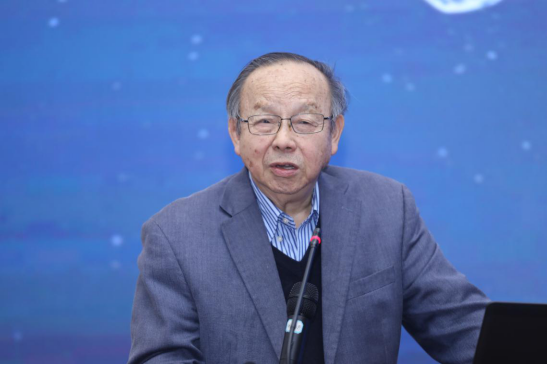
Academician of the Chinese Academy of Engineering, Zhang Xingdong
In fact, global exploration of the integration of medicine and engineering has spanned several decades. Since the 1970s, top-tier research universities worldwide, such as Harvard University, Stanford University, and Princeton University, have invested heavily in interdisciplinary research combining medicine and engineering, establishing interdisciplinary institutes or research centers one after another.
China’s interdisciplinary exploration of medical-engineering integration emerged in the late 1980s. At that time, Chinese universities underwent a new round of institutional reforms, under which engineering departments of comprehensive or science-and-engineering universities merged with independently established medical institutions, fostering strong alliances between non-medical and medical institutions. Many prestigious universities, including Tsinghua University, Peking University, Shanghai Jiao Tong University, Harbin Institute of Technology, Beihang University, and Sichuan University, successively established interdisciplinary research entities characterized by medical-engineering integration, thereby providing platforms for cross-disciplinary research in this field.
Regarding the necessity of integrating medicine and engineering, Zhang Xingdong, an academician of the Chinese Academy of Engineering and Honorary Director of the National Engineering Research Center for Biomaterials, stated in his address that research on medical devices originates from medicine and is applied to medicine. The development of medical devices often brings about technological revolutions in clinical practice, with both fields mutually reinforcing each other. For instance, the medical demand for minimally invasive surgery has spurred the emergence of minimally invasive instruments and accelerated the development of surgical robots.
The development of China’s medical device industry has gradually transitioned from initial imitation and learning to original innovation, with the state increasingly investing in basic scientific research in the medical field. The industry itself is also moving up from the low end to the high end of the value chain. In this process, the integration of medicine and engineering is of paramount importance.
Currently, the Ministry of Science and Technology is formulating development plans for China’s big health industry and medical device industry through 2035. The plan explicitly calls for promoting the integration of medicine and engineering to accelerate the development of the healthcare industry, with a particular emphasis on aligning with advanced international standards.
The development of China’s healthcare industry faces challenges in innovation, which must be addressed through institutional and systemic reforms. To this end, the integration of industry, academia, research, and clinical practice has become a high priority. Only with a complete supporting industrial service chain can there be fertile ground for the implementation of industrial innovations. However, the participation of investment institutions is also essential. The infusion of capital can resolve many issues with ease while simultaneously enhancing efficiency across all segments—a distinctive feature of Haina Medical Innovation.
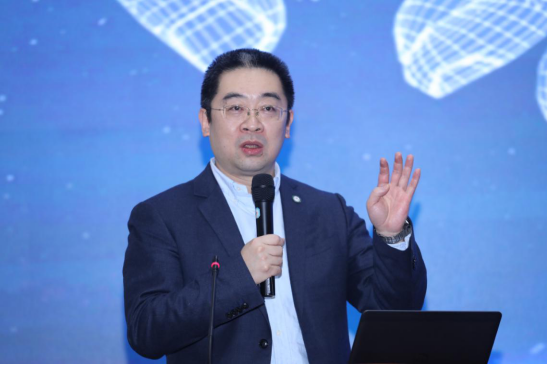
Professor Shen Bin, Deputy Secretary of the Party Committee of West China Hospital, Sichuan University
Professor Shen Bin, Deputy Secretary of the Party Committee at West China Hospital of Sichuan University, believes that medicine and engineering are not merely combined, as they have always been inherently integrated. As an orthopedic surgeon who grew up in a family of medical practitioners, he could perform only one surgery per day when he first entered the field. This was because there was previously only one size of orthopedic implant available, requiring physicians to devise ways to fit this single implant size into patients of varying heights, weights, and body types—a process that was extremely demanding. With advancements in medical products, an increasing number of medical devices and implants in various sizes have emerged. Today, doctors can perform six surgeries in a single day, representing a six-fold increase in efficiency.
The advancement of future medicine will inevitably be accompanied by the development of medical-engineering integration. It is our responsibility and mission to leverage the advantages of engineering and integrate them with top-tier domestic resources through this collaboration, thereby researching and developing high-performance medical device products with independent intellectual property rights. In recent years, West China Hospital has consistently ranked second nationwide in comprehensive strength, while its scientific research capabilities have ranked first for six consecutive years. This achievement is inseparable from the hospital’s substantial investments in human, material, and financial resources. Meanwhile, West China Hospital has formulated the widely acclaimed “Nine West China Measures,” which actively explore reforms in the ownership system of job-related scientific and technological achievements and increase the proportion of benefits derived from their transformation. Specifically, 80%–90% of the net income obtained from the transfer or licensing of original achievements, as well as shares or equity ratios acquired through valuation-based investment, will be allocated to reward physicians. This institutional breakthrough has significantly encouraged physicians’ enthusiasm for translating academic and research outcomes into clinical applications.
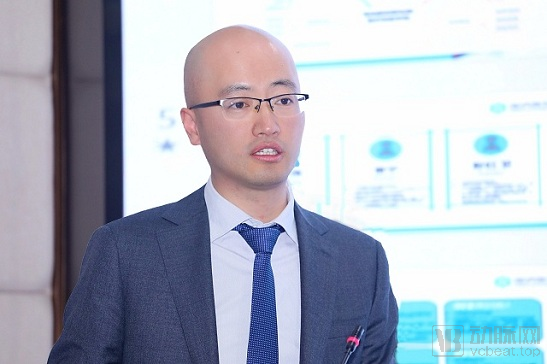
Dr. Lei Ning, Founder of Haina Medical Innovation Incubator
How to Build a Platform That Better Supports the Development of Medical-Engineering Integration in China: Dr. Lei Ning, Founder of Haina Medical Innovation Incubator, Shares His InsightsDr. Lei Ning, founder of Haina Medical Innovation Incubator, offers his perspective on how to establish platforms that can more effectively advance the integration of medicine and engineering in China. He emphasizes that while China is not short of incubators, Haina Medical Innovation aims to address the critical challenge of providing superior services to healthcare entrepreneurs, rather than merely acting as a “sublessor.”
Haina Medical Innovation Incubator is an incubation platform dedicated to the commercialization of pharmaceutical and medical technology achievements. It comprises two business divisions—pharmaceuticals and medical devices—as well as the Haina Medical Innovation Academy, with a commitment to advancing the technological translation and innovation of novel medical devices and original drugs. The core management and operations team boasts an average of over 10 years of industry experience, spanning R&D, manufacturing, marketing, and investment and financing, backed by extensive practical expertise and robust domestic and international industrial resources.
From an organizational perspective, Haina Medical Innovation does not assume the traditional landlord role of an incubator; instead, it has established a platform that facilitates interaction among academia, research, industry, healthcare, and investment sectors. Its focus in the medical device sector spans cardiovascular, gynecology, surgery, dentistry, and biomaterials. The company aims to identify commercialization pathways for clinical experts’ technological achievements and connect corporate technology platforms with clinical resources, providing a one-stop solution for the design and translation, prototype manufacturing, clinical trials, patent filing, investment, and market launch of innovative medical devices.
In the area of new drug development, we focus on identifying and introducing early-stage global novel drug candidates, advancing them through the stages from Preclinical Candidate (PCC) selection and Investigational New Drug (IND) application to Phase I clinical trials. Leveraging an experienced team in clinical development and business operations as the core, we integrate industry partners—including pharmaceutical companies, investment and financing institutions, and Contract Research Organizations (CROs)—to establish a comprehensive system for the translation and incubation of innovative drug projects, primarily adopting the VIC (VC + IP + CRO) model. As key partners of Haina Yichuang, Juyi Medical and Jingze Biotech provide CDMO services for medical devices and pharmaceuticals to innovators.
Additionally, Haina Yichuang is in the process of establishing an early-stage fund worth RMB 200 million to serve entrepreneurs in its incubator.
Specialization Matters. Doctors, engineers, and entrepreneurs across the industry chain each have their areas of expertise. VCBeat Health Innovation aims to serve as a hub connecting all stakeholders, integrating players from academia, research, industry, clinical practice, and investment to drive healthcare innovation.
Subsequently, attending guests—including Associate Professor Zhu Da from the Department of Cardiovascular Surgery at West China Hospital, Mr. Yu Qifeng, Founder of Shanghai Neopulse Medical, Mr. Wang Zhen, Partner at Mingfeng Capital, Mr. Cao Changqing, Founder of Juyi Technology, and Mr. Peng Hongwei, Founder of Jingze Biology—elaborated on strategies for the translation of medical scientific and technological achievements from the perspectives of clinicians, enterprises, and investment institutions, respectively.
Zhu Da stated that innovation in medical science requires a robust translational medicine system. Medicine relies on technologies from numerous related scientific disciplines, with the demand for and sources of innovation originating from the clinical frontline. The innovation process encompasses the entire workflow of the healthcare and industrial systems, necessitating rigorous clinical validation and iterative engineering improvements. Therefore, the integration of medicine and engineering is indispensable.
Cao Changqing stated that the current integration of medicine and engineering in China is not performing well, which is closely related to the country’s specific conditions. Chinese physicians possess abundant clinical resources and experience and have a thorough understanding of clinical needs; however, most lack an engineering background, as well as the awareness, skills, and experience in technology and product research and development. They also tend to distrust collaborations with general enterprises. This trust deficit between physicians and companies severely hinders collaboration in the field of medical-engineering integration.
Yu Qifeng stated that the development of a medical product is a lengthy process. Every step—from concept formation and problem identification to technological emergence, technical analysis and planning, product design and finalization, and ultimately commercial implementation—determines the product’s viability. A failure in any single link can undo all previous efforts; therefore, collaboration among industry, academia, research institutions, healthcare providers, and investors is essential.
Professor Su Baihai and Associate Professor Luo Deyi from West China Hospital also shared their current technology commercialization projects. Professor Su’s team has developed a dual-efficacy, affordable blood adsorbent with independent intellectual property rights in China, breaking foreign monopolies and providing patients with cost-effective products that help extend life expectancy. Associate Professor Luo’s team is improving the quality of life for women with stress urinary incontinence through biomaterial filler injections, thereby avoiding the side effects associated with traditional urethral sling surgeries and benefiting millions of women. Mr. Liu Mulong from Shenzhen Xiantong Capital provided insightful commentary, and conference participants engaged in lively discussions, offering numerous valuable comments and suggestions.
Since the emergence of the medical-engineering integration model in the late 1980s, several common challenges have persisted. On one hand, due to the relatively short time since university mergers, coupled with unclear concepts and inefficient institutional frameworks for medical-engineering collaboration, it has been difficult to define clear objectives, ensure robust mechanisms, and drive effective development. On the other hand, cooperation between hospitals and research institutes in this field has fallen short of expectations. While many physicians possess innovative ideas and aspire to invent or improve medical devices, they often lack partners across the upstream and downstream value chains. Consequently, medical-engineering integration has not yet fully achieved its ideal state.
Dr. Lei Ning stated that the establishment of Haina Medical Innovation aims to gradually change this status quo by building a multi-party collaborative platform for “industry-academia-research-medicine-investment” based on the concept of “finance + industry.” The goal is to explore an innovation translation system for “medical-engineering integration” that aligns with national conditions, attract and cultivate a group of interdisciplinary talents engaged in the translation of scientific and technological achievements, translate these into innovative products that truly meet clinical needs while balancing advancement and cost-effectiveness, and incubate several innovative enterprises.