

Elephant Insurance Files IPO Prospectus: Unveiling Its 'New Service, New Sales, New Scenarios' Ecosystem Strategy After Serving Over 6 Million Users
The insurtech industry is undoubtedly a “super hotspot” that has attracted significant attention in recent years.
Data shows that global insurtech companies raised $4.455 billion in financing in 2018, while the total funding amount in the first half of 2019 had already reached $3.077 billion.
“Amid the broader environment, China’s insurtech sector continues to heat up, showing strong momentum,” commented Tian Liwen, Head of the Big Data Laboratory at Elephant Insurance.
Data from the China Banking and Insurance Regulatory Commission (CBIRC) shows that in 2018, China’s insurance industry generated RMB 3.801662 trillion in gross written premiums, a year-on-year increase of 3.92%. In the long term, the scale and growth rate of China’s insurance industry are considerable. In terms of global premium market rankings in 2017, China ranked second worldwide. The Allianz Economic Research Institute projects that approximately one-third of new premium growth over the next decade will originate in China.
In just one year since its establishment, it achieved over one million registered users; leveraging a robust product architecture covering A-side, B-side, and C-end users, it secured tens of millions of dollars in substantial financing... How did Elephant Insurance rise from obscurity to become an industry leader? Recently, VCBeat conducted an exclusive interview with Tian Liwen, head of the Big Data Laboratory at Elephant Insurance. Through his insights, we provide an in-depth analysis of the pain points in the insurance industry and decode the strategic layout of the industry’s “dark horse,” Elephant Insurance.
Tian Liwen pointed out that China’s insurance market currently accounts for approximately 11% of the global insurance market share, ranking second only to the United States in size and holding significant growth potential. Compared with developed countries, China’s insurance industry still lags behind in terms of insurance density and insurance penetration. In terms of market conditions, the industry’s pain points are specifically manifested in the following aspects:
First, sales misleading. Insurance sales misleading refers to the act of insurance sales personnel providing false or misleading information, which causes significant misunderstandings among the general public. It generally manifests as: false advertising, one-sided introductions, exaggeration of benefits, confusion of products, tampering with customer information, etc. The phenomenon of sales misleading has long persisted in China.
Second, sales are challenging. Traditional insurance relies primarily on offline agents for distribution, while low public awareness of insurance and an incompletely established trust system further exacerbate sales difficulties. Third, the industry suffers from low efficiency and high costs. This pain point stems from a marketing-driven orientation.
4. The user experience of insurance products is suboptimal, with the purchasing process being excessively long and cumbersome. 5. Competition in the insurance sector remains intense. 6. From the perspective of the internet and big data, the technical framework for insurance data is the least robust compared to other industries, with severe data silos.
Data is the “lifeblood” of insurance. Without sufficient data sources, technologies such as big data and artificial intelligence cannot fully realize their application potential. “Only by breaking down the existing information silos can insurtech unlock its tremendous potential,” said Tian Liwen.

(Caption: Tian Liwen, Head of the Big Data Laboratory at Elephant Insurance)
He pointed out that the digital transformation of the entire insurance industry is built on a weak foundation. Essentially, in China’s insurance market, consumers need insurance coverage that is trustworthy, affordable, and convenient to use.
Overall, traditional insurance urgently needs the infusion of technology to explore a set of solutions.
Insurtech is the 2.0 version of traditional insurance. Compared with traditional insurance, insurtech holds a significant advantage. The integration of technology has transformed the traditional insurance model and reshaped the ecological value chain of the insurance industry.
A Comparative Analysis: In terms of service, traditional insurance is characterized by complexity, opaque processes, and lengthy cycles. Insurtech, by contrast, offers an integrated online-offline model with intelligent, advisory-style services. Regarding products, traditional insurance relies on the law of large numbers and manual actuarial methods. Insurtech leverages big data for precise calculations, dynamically meeting customized needs. In marketing, traditional insurance is sales-driven, resulting in asymmetric information between providers and customers. Insurtech is service-driven, offering objective, neutral, efficient, and highly cost-effective solutions.
Elephant Insurance is undoubtedly one of the leading examples in the insurtech sector.
Elephant Insurance, established in 2015, is an open platform for intelligent insurance industry chain services launched by Elephant Insurance (Beijing) Network Technology Co., Ltd. It is committed to improving insurance service processes and optimizing the insurance experience through technology-driven empowerment and big data technologies.
The platform’s services encompass three core segments: insurance enrollment, content services, and smart insurance. Based on user needs, it provides tailored solutions that appropriately combine multiple coverage types, including critical illness insurance, medical insurance, life insurance, and accident insurance. Currently, the platform has integrated more than 2,000 insurance products.
Tian Liwen introduced that over the past four years, with continuous upgrades in practice and understanding, Elephant Insurance has gradually shifted from its initial service philosophy emphasizing product experience and marketing to a development direction prioritizing service, optimizing products, and strengthening both online and offline services.
“In 2019, we undertook a comprehensive strategic upgrade of Elephant Insurance’s online service platform and launched Elephant Plus—an intelligent insurance industry chain service platform. By efficiently integrating new sales channels, new scenarios, and new services, Elephant Plus enhances conversion efficiency and user experience, meets professional and personalized customer service needs, and has created a growth loop characterized by the integration of three major business lines and mutual reinforcement across scenarios. We aim to center on users, ground ourselves in professional services, achieve ecosystem connectivity, and empower the entire industry,” introduced Tian Liwen.
Driven by market insights, "Xiang Baobao," a new sales business module staffed by a team of professional consultants, comprehensively empowers insurance agents to enhance their professional skills and performance. The underwriting process is streamlined and efficient, featuring one-click online ordering and real-time information feedback, enabling agents to monitor insurance product updates at any time and increase sales opportunities. Furthermore, through insurance guides, trending news, and intelligent tools, it helps insurance agents improve their professional expertise and client management capabilities.
“The New Sales model primarily addresses issues such as the efficiency of traditional agencies, service processes, specialization, standardization, as well as individual agent productivity and their motivation to serve clients. Currently, we have established a presence in over 40 institutions across China, with a workforce of thousands of agents,” said Tian Liwen.
“New Scenarios” Business Module SaaS Platform—Xiangya leverages technology as its entry point to help insurance intermediaries reduce costs, improve efficiency, and increase revenue. Xiangya and brokerage/agency firms form a community of shared interests; through operational empowerment, specialized support, and API integration, it helps these institutions mitigate risks, enhance customer experience, and uncover new business opportunities.
“New Services” Business Module—Elephant Insurance: An online internet service platform with over 6 million users, offering APP/H5/mini-program interfaces, intelligent tools, new media operations, community management, and health services, enabling full lifecycle user conversion.
“In fact, we have achieved intelligence in three areas: data intelligence, service intelligence, and product intelligence, truly empowering the entire industrial chain,” introduced Tian Liwen.
In Tian Liwen’s view, insurance is a long-term game that requires sufficient patience and the innovative capacity to continuously mine data.
He explained that internet insurance is still in an exploratory phase and has not yet reached maturity. “At present, many aspects of internet insurance require innovation, including distribution channels, products, service experience, and the design and pricing principles of internet insurance,” said Tian Liwen.
In 2019, Elephant Insurance completed the “last mile” implementation of its insurance services, successfully establishing an innovative internet-integrated service model based on the fusion of online and offline channels. The company partnered with over 80 leading insurance enterprises, offered more than 6,000 insurance products, launched over 1,000 insurance plans, acquired more than 6 million individual customers, and issued over 100 million policies.
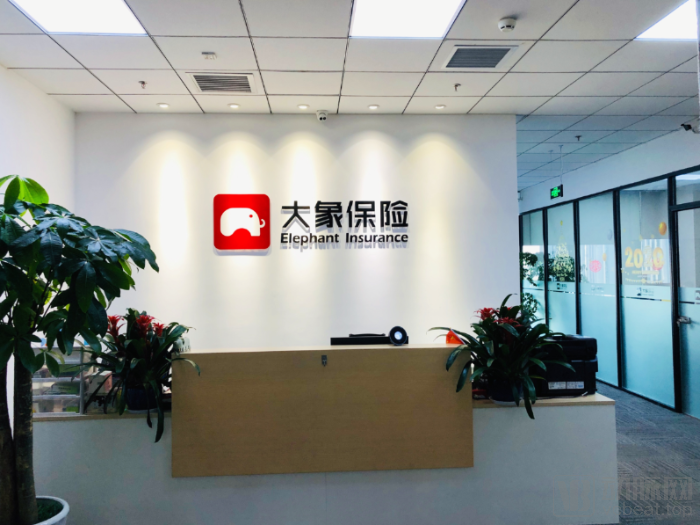
(Figure caption: Elephant Insurance)
“Over the past four years of development, our original aspiration has remained unchanged. Initially, we aimed to create a new form of insurance driven by data and empowered by technology. To date, we continue to strive toward this goal and remain committed to this development path,” said Tian Liwen.
He stated that, based on its new ecosystem strategy, Elephant Insurance will continue to enhance its capabilities in customizing insurance products and leveraging intelligent technologies, thereby achieving deeper integration into the industry chain. The company plans to serve nearly 10,000 insurance institutions and over 20 million individual customers within the next one to two years.
“Taking small, rapid steps on a long-term track. Elephant Insurance will continue to inject new vitality into the industry’s development, striving to become the ‘Beike’ of the insurance sector (a well-known brand in the real estate industry),” said Tian Liwen.