

Gansu Receives 'New Key' for Health Poverty Alleviation from Tianjin: Million-Dollar Mobile Hospitals Bring Care to Rural Communities
2020 was the decisive year in the fight against poverty. Identifying breakthroughs to address the challenge of “poverty caused or exacerbated by illness” and establishing long-term mechanisms to safeguard the health of impoverished populations have been key issues continuously explored by governments at all levels and medical institutions. Guided by the national policy on east-west collaborative poverty alleviation, Tianjin’s targeted assistance to Gansu has pioneered a new model for health-focused poverty alleviation.
On January 9, the donation ceremony for the Tianjin-Gansu WeDoctor Mobile Hospital, a key initiative in Tianjin’s paired assistance to Gansu, was held in Lanzhou. The event was co-hosted by the Tianjin Municipal Government Office of Cooperation and Exchange, the Tianjin Municipal Health Commission, the Gansu Provincial Health Commission, and the Gansu Provincial Poverty Alleviation Office. Leaders from relevant departments of both Tianjin and Gansu attended the ceremony, with Yuan Xinhe, Deputy Secretary-General of the Gansu Provincial People’s Government, announcing the deployment of the mobile hospital units. The new “Internet + Health Poverty Alleviation” model pioneered by the WeDoctor Digital Health Platform has provided a “new key” to advancing Tianjin’s paired assistance efforts in Gansu.
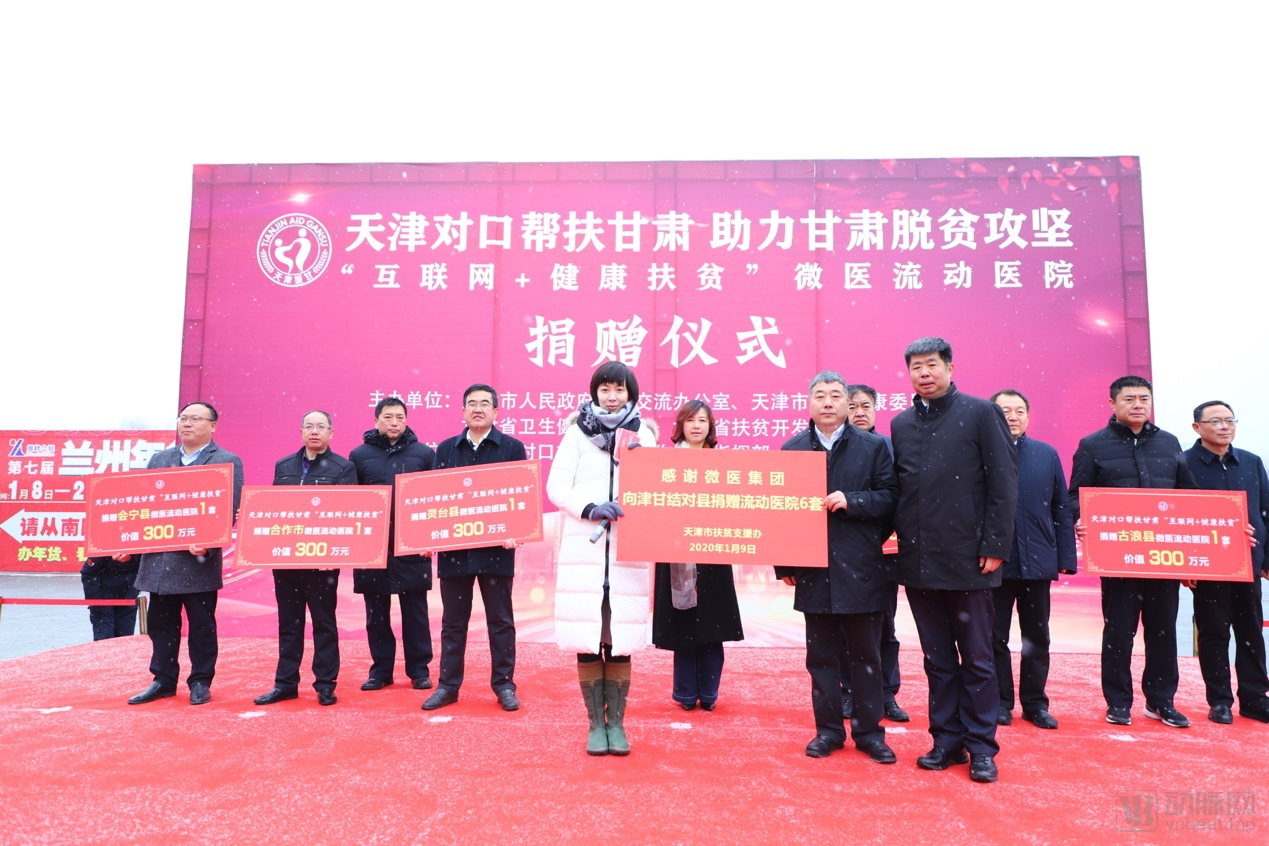
At the donation ceremony, six sets of WeDoctor Mobile Hospitals, with a total value of RMB 18 million, were officially handed over by the Tianjin Municipal Government Office for Cooperation and Exchange and the Tianjin Municipal Health Commission to the Gansu Provincial Health Commission and the Gansu Provincial Poverty Alleviation Office.
Equipped with diagnostic facilities for seven major categories and 53 sub-items—including B-mode ultrasound, electrocardiography (ECG), complete blood count (CBC), urinalysis, biochemistry, and blood pressure monitoring—the WeDoctor Mobile Hospital integrates an intelligent diagnosis and treatment system, a medical collaboration system, a cloud Hospital Information System (HIS) and health maintenance system, and a pharmaceutical and consumable supply system. Departing from Lanzhou, it will travel to six counties and cities in Gansu Province—Huining, Qin’an, Gulang, Lingtai, Hezuo, and Zhenyuan—to deliver medical and health services to nearly 3 million residents in grassroots communities, thereby establishing a robust health protection barrier.
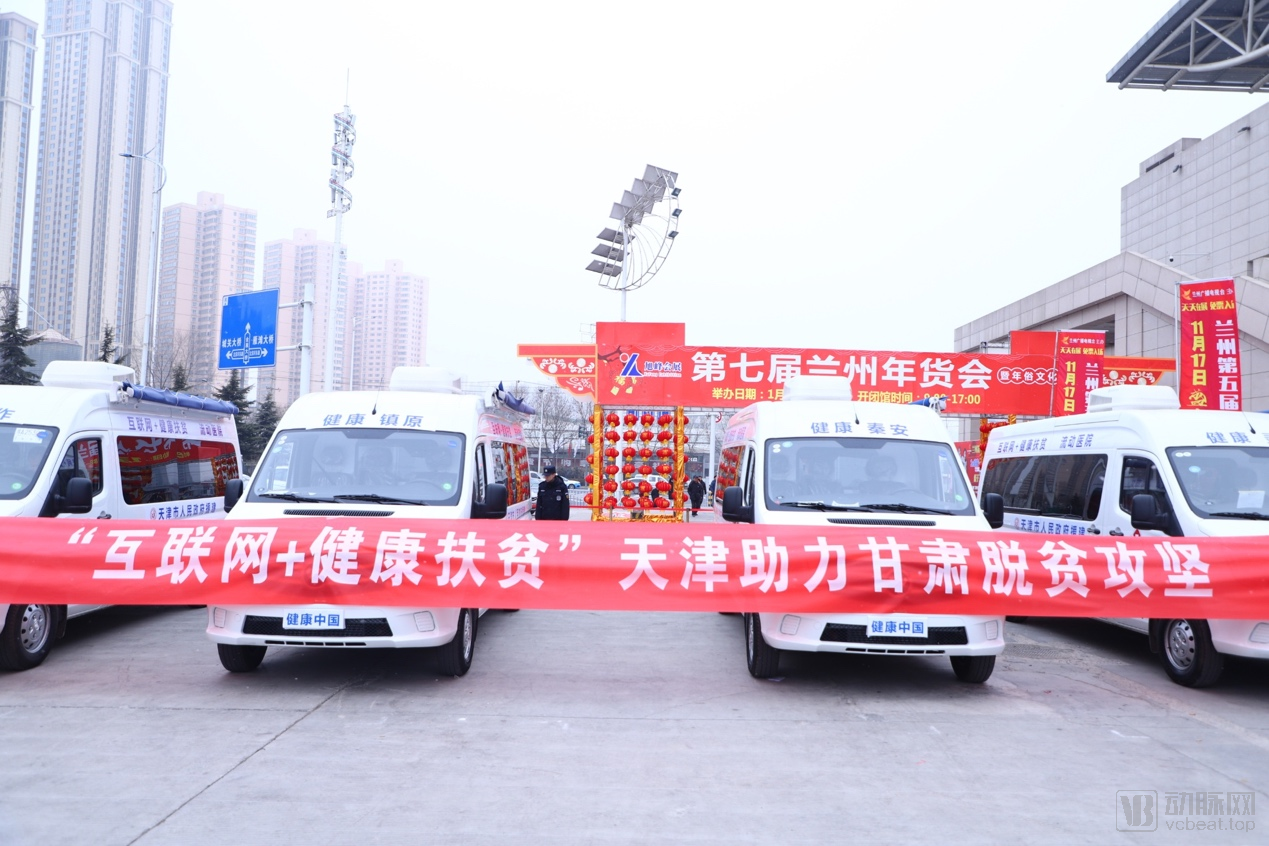
It is reported that the Tianjin Municipal People’s Government and WeDoctor Group recently signed a strategic cooperation agreement. Under this agreement, WeDoctor Group donated ten mobile hospital units to Tianjin Municipality to support its health-focused poverty alleviation efforts in paired assistance regions, including Gansu, Qinghai, Tibet, and Xinjiang, thereby consolidating and enhancing the effectiveness of healthcare security in these areas. This marks the growing adoption of the “Internet + Health Poverty Alleviation” model pioneered by WeDoctor as a key instrument in east-west collaboration and paired assistance initiatives, enabling grassroots residents in impoverished western counties to access high-quality medical resources from developed eastern regions.
At the donation ceremony, Wang Dong, Deputy Director of the Tianjin Municipal Government Office for Cooperation and Exchange, pointed out that health-oriented poverty alleviation is a systematic project. The Tianjin Municipal Government has donated six WeDoctor mobile hospitals to Gansu Province, with the hope that the recipient regions will make full use of these facilities to effectively enhance the service capabilities of primary healthcare personnel and meet the medical and health needs of impoverished populations.
WeDoctor’s Mobile Hospital integrates a three-tier intelligent service network—spanning county, township, and village levels—with both hardware and software components. By leveraging “AI Doctors” to replicate the medical expertise of leading specialists, it delivers standardized diagnosis and treatment protocols for 100 common diseases to grassroots healthcare providers, thereby enhancing the overall level of medical security and operational efficiency within county-level healthcare systems. These initiatives, when combined with health poverty alleviation relief funds established by local authorities, effectively strengthen the safety net for health-focused poverty reduction efforts.
Gao Shubin, Deputy Head of the Tianjin Municipal Committee’s United Front Work Department, and Xu Binyan, Chief Engineer of the Tianjin Municipal Cyberspace Administration, stated that in the future, Tianjin will leverage WeDoctor’s digital health platform to enhance collaboration between medical institutions across the city and those in paired assistance regions. High-quality medical resources from Tianjin and throughout China will be introduced to provide internet-based health consultations, remote diagnosis and treatment, and other services to impoverished households.
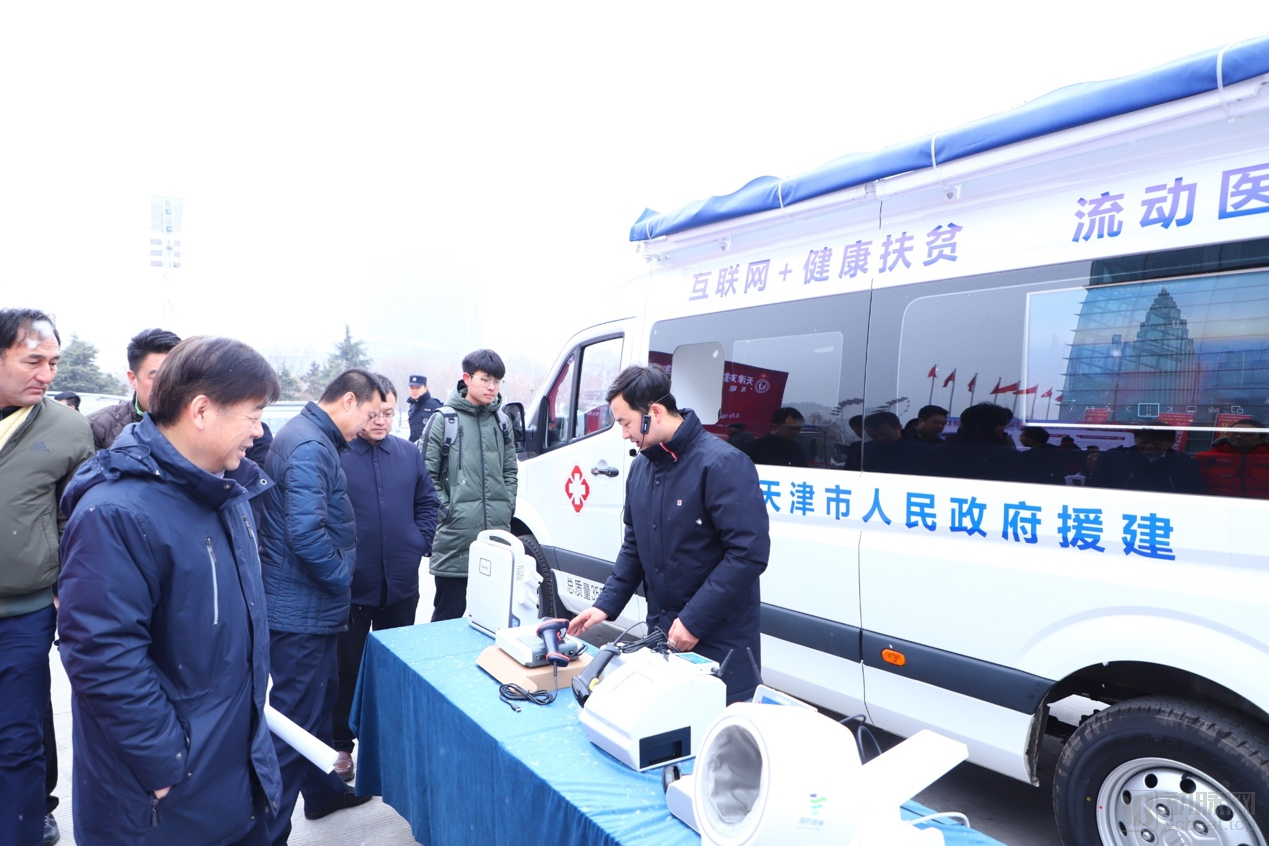
At the donation ceremony, Ren Yanshun, Director of the Gansu Provincial Poverty Alleviation Office, and Yi Ruiyuan, Second-Level Inspector of the Gansu Provincial Health Commission, stated that the application of WeDoctor’s Mobile Hospital has provided new ideas and pathways for advancing health-focused poverty alleviation in Gansu. Moving forward, efforts will be made to promote the adoption of this new model in more impoverished counties across the province, thereby safeguarding the health of residents in poverty-stricken areas.
As a representative of the aided region, Zhang Ying, Deputy County Mayor of Lingtai County in Pingliang City, stated that Lingtai County would rapidly learn from the initiative and deploy Weiyi’s Mobile Hospital at the grassroots level as soon as possible. This aims to alleviate the current shortage of medical resources and allow the county’s 230,000 residents to benefit from the dividends brought by this innovative model.
Cheng Yi, Senior Vice President of WeDoctor Group, stated that through years of experience in grassroots medical services, WeDoctor has pioneered a replicable and sustainable new model of “Internet + Healthcare Poverty Alleviation.” By leveraging hardware and software infrastructure, the model channels high-quality medical resources connected via the WeDoctor platform nationwide into enhancing the capabilities of grassroots medical institutions, thereby increasing the sense of well-being among local communities.
Heads of the United Front Work Department of the Gansu Provincial Committee of the Communist Party of China, the Gansu Provincial Poverty Alleviation Office, and the Gansu Provincial Health Commission; heads of the United Front Work Department of the Tianjin Municipal Committee of the Communist Party of China, the Tianjin Municipal Cyberspace Administration, the Tianjin Municipal Health Commission, and the Tianjin Municipal Cooperation and Exchange Office; as well as officials from the recipient municipal government, poverty alleviation offices, and health bureaus attended the donation ceremony.