

Chongqing's Path to a 100-Billion-Yuan Pharmaceutical Industry: Policy Implementation and Innovation Drive
Chongqing is one of China’s five major traditional pharmaceutical industrial bases, boasting robust production capabilities and technological expertise in chemical drugs, distinctive advantages in traditional Chinese medicine (TCM), and prominent strengths in the independent innovation of medical devices. In recent years, as the national strategic importance of the biopharmaceutical industry has continued to rise, Chongqing Municipality has designated the biopharmaceutical sector as a key pillar industry and introduced multiple supportive policies aimed at building a pharmaceutical industry with an output value exceeding RMB 100 billion.
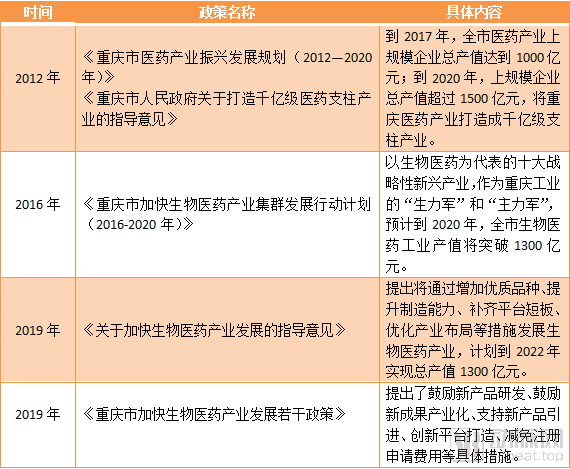
Selected Pharmaceutical Industry Policies in Chongqing Municipality
On January 9, 2020, during the Chongqing Municipal People’s Congress and the Chinese People’s Political Consultative Conference (CPPCC) Chongqing Municipal Committee sessions, the “Suggestions · Mission 2020” Symposium for NPC Deputies and CPPCC Members from Chongqing’s Pharmaceutical Sector was held in Chongqing. The event was jointly hosted by the Chongqing Pharmaceutical Industry Association, the Chongqing Pharmaceutical Society, the Chongqing Medical Biotechnology Association, and China Pharmaceutical Journal, and organized by Yaozhi.com.
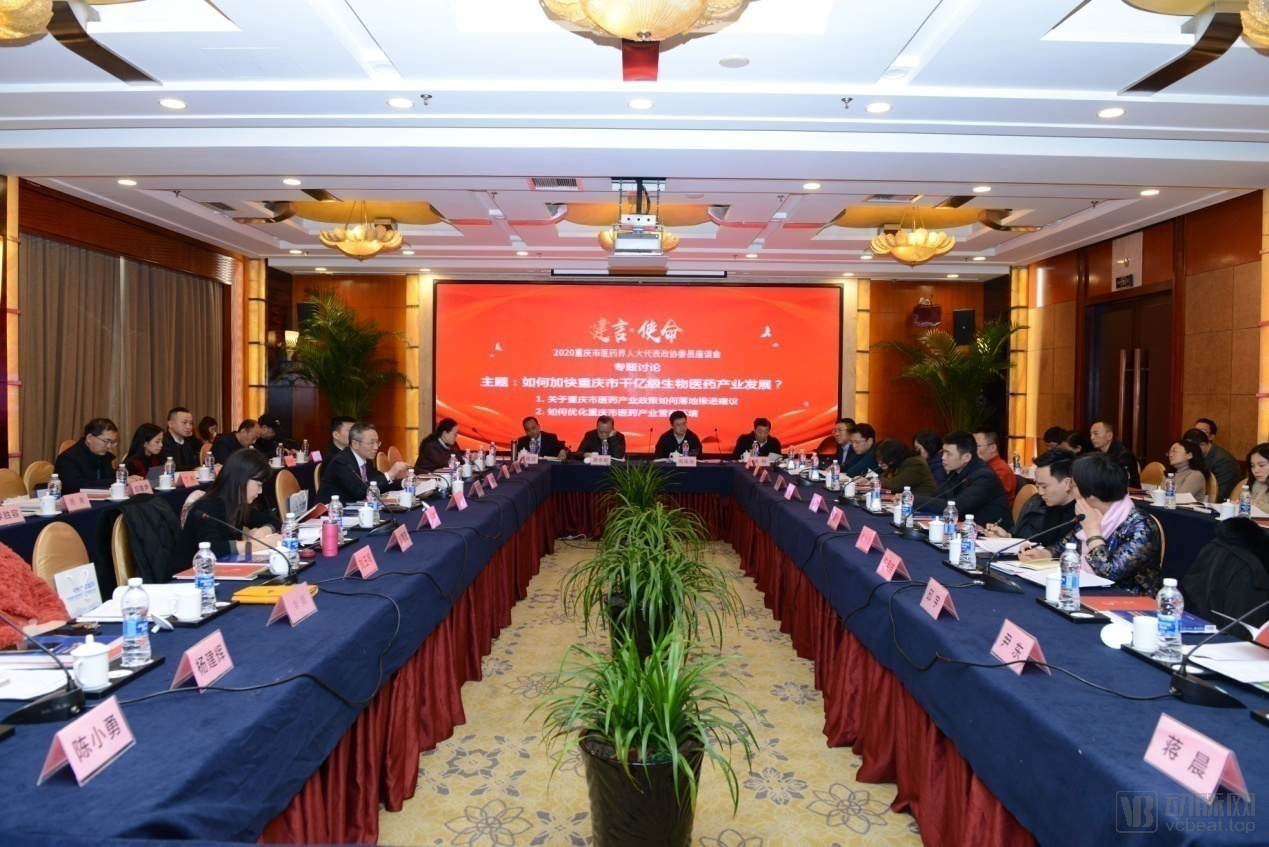
2020 was a pivotal year for the development of Chongqing’s pharmaceutical industry. How should Chongqing’s pharmaceutical industry develop? How can pharmaceutical industry policies be effectively implemented? How can the business environment for Chongqing’s pharmaceutical industry be optimized? How can innovation among pharmaceutical enterprises in Chongqing be promoted?
At the meeting, multiple deputies to the National People’s Congress and members of the Chinese People’s Political Consultative Conference (CPPCC) from the pharmaceutical sector discussed core issues concerning the development of Chongqing’s pharmaceutical industry. Leaders from government departments responsible for regulating the pharmaceutical industry attended the meeting to listen to opinions, including Xia Yongpeng, Director of the Education, Science, Health, and Sports Committee of the Fifth Chongqing Municipal Committee of the CPPCC; Zhou Longhai, Party Secretary and Director of the Chongqing Medical Products Administration; Yao Shu, Full-time Deputy Chairperson of the Chongqing Municipal Committee of the Chinese Peasants and Workers Democratic Party; as well as leaders from the Chongqing Municipal Commission of Economy and Information Technology, the Chongqing Municipal Science and Technology Bureau, the Chongqing Municipal Health Commission, and the Education, Science, Health, and Sports Committee of the Chongqing Municipal CPPCC, along with executives from the organizer, Yaozhi.com.
Key Policy Initiatives, Including the MAH System and the “4+7” Volume-Based Procurement Program, Take Center Stage in Discussions
Continuously improving policies and regulations are essential for the healthy development of the pharmaceutical industry. In recent years, Chongqing’s pharmaceutical industry has experienced rapid growth. According to data from 36 large and medium-sized pharmaceutical manufacturing enterprises under the Chongqing Pharmaceutical Industry Association, the industrial output value of Chongqing’s pharmaceutical sector reached RMB 30.48 billion in 2017, representing a year-on-year increase of 19.18%.
At the conference, key topics of discussion included Chongqing’s medical insurance reimbursement list, the consistency evaluation of generic drugs, the Marketing Authorization Holder (MAH) system, and the “4+7” volume-based procurement policy.
Chongqing Municipal People’s Congress Deputy Zou Longqiong stated, “In recent years, pharmaceutical policies have been frequently issued, leaving enterprises overwhelmed. The National Reimbursement Drug List has been released, requiring the phased elimination of locally supplemented drug lists within three years. We hope that the Chongqing Medical Security Bureau will gradually phase out these supplemental listings over a three-year period and give priority consideration to local enterprises when formulating relevant policies.”
Chen Yongfang, Chairman of Chongqing Kangkeer Pharmaceutical Co., Ltd., stated, “We hope to clarify the list of drug products that have passed the consistency evaluation, and to specify whether applications for newly added permissions related to active pharmaceutical ingredients, excipients, and packaging materials should be submitted to the National Medical Products Administration or local medical products administrations. We also hope to allow contract manufacturing for raw materials and to establish a raw material filing process that is as clear and standardized as the submission process for finished dosage forms.” Liu Guangxun, a member of the Municipal Committee of the Chinese People’s Political Consultative Conference, remarked, “We hope the government will further improve communication platforms with private enterprises to help ensure effective implementation of policies.”
Yuan Quan, a member of the Municipal Committee of the Chinese People’s Political Consultative Conference, stated, “Regarding payment for products under the ‘4+7’ volume-based procurement program, we hope that relevant policies will be improved as soon as possible to shorten payment cycles and align with advanced regions across China. In some areas, 50% of payment is made upon contract signing, whereas in Chongqing, only 30% is received two months after the contract is signed.”
On August 26, 2019, at the 12th Session of the Standing Committee of the 13th National People's Congress, the newly revised Drug Administration Law was reviewed and approved, coming into effect on December 1, 2019. The newly revised Drug Administration Law explicitly establishes the Marketing Authorization Holder (MAH) system for drug administration in China, under which the marketing authorization holder is legally responsible for the safety, efficacy, and quality controllability of drugs throughout the entire process of research and development, production, distribution, and use.
How Should the MAH System Be Implemented? Chongqing Municipal People’s Congress Representative You Hongtao stated, “Enterprises need to be motivated, which will encourage Marketing Authorization Holders (MAHs) to establish their presence in Chongqing. Although the MAH system may appear isolated, it actually has far-reaching implications, involving the macroeconomic environment; therefore, the government needs to introduce relevant policies.” Zou Guofang, General Manager of Chongqing Shenghuaxi Pharmaceutical Co., Ltd., remarked, “We hope Chongqing can take a faster lead in implementing the MAH system.”
The sound development of pharmaceutical enterprises depends not only on their management capabilities but also, more critically, on the business environment in which they operate. You Hongtao, a deputy to the Municipal People’s Congress, stated, “Optimizing the business environment is crucial. Over the past two years, the municipal party committee and government have attached great importance to the biopharmaceutical industry. However, numerous challenges remain in building a bio-industry worth hundreds of billions of yuan. First, there are issues related to product varieties, as we lack raw material intermediates and key technologies. Second, there are challenges concerning safety, fire protection, and construction compliance; the continuous introduction of new regulations and intensive inspections by multiple departments have imposed an excessive burden on enterprises. Third, excessive management within industrial parks may hinder enterprise development.”
At the conference, many attendees also raised the issue of talent acquisition. Currently, most biomedical professionals are concentrated in China’s eastern regions, resulting in a shortage of talent in Chongqing’s biomedical sector and constraining its development. It was suggested that the government should benchmark against the talent attraction policies of developed coastal cities to create a more favorable business environment. Yin Dong from Chongqing Lingfang Biotechnology Co., Ltd. stated, “We hope to strengthen top-level design in the aggregation and recruitment of biomedical talent, and we call on the government to provide guidance and support to help attract talent into the industry.”
Innovation Is the Only Path for the Development of the Pharmaceutical Industry
Focusing on innovation has become an irreversible trend in China’s pharmaceutical industry, with multiple policy documents issued to promote innovative development. The “Several Policies of Chongqing Municipality for Accelerating the Development of the Biopharmaceutical Industry” explicitly states support for R&D innovation, strengthening product assurance, encouraging the development of new products and the industrialization of new achievements, supporting the introduction of new products and the establishment of innovation platforms, and promoting the application and dissemination of innovative products. At the conference, many attendees emphasized that Chongqing’s pharmaceutical industry urgently needs to enhance its innovation capabilities.
Chongqing Municipal People’s Congress Representative Peng Xueping expressed his hope to introduce new oncology technologies to Chongqing. “Currently, this technology has already established collaborations with hospitals in Sichuan Province. If it can be introduced to Chongqing, it may facilitate the establishment of enterprises valued at hundreds of billions of yuan. In terms of innovative development in pharmaceutical technologies and equipment, Chongqing lags slightly behind the Jiangsu and Zhejiang regions. This is primarily due to three factors: first, the development path for the big health industry is unclear; second, there is a severe shortage of talent; and third, there is a lack of a professional and authoritative evaluation system. It is recommended that the government promote legislation for the big health industry, study the supply-and-demand dynamics within the sector, and prioritize development in talent cultivation, standard-setting, and service enhancement.”
Yao Shu, a member of the Municipal Committee of the Chinese People’s Political Consultative Conference (CPPCC), stated: “Entrepreneurs need to adopt a holistic mindset when it comes to innovation. In the field of new drug development, overseas entities conduct thorough analyses of patents and intellectual property (IP). Chongqing is home to an Intellectual Property Information Center, which can help enterprises reduce upfront costs and ensure greater precision in both innovation initiatives and strategic planning. Furthermore, to address IP counterfeiting and fraud, governments and law enforcement agencies should strengthen coordination to crack down on brand counterfeiting and IP infringement, thereby fostering innovative development.”
Xia Yongpeng, a member of the Municipal Committee of the Chinese People’s Political Consultative Conference (CPPCC), stated, “This symposium will bolster enterprises’ confidence and determination in innovation, encourage the government and relevant departments to refine evaluation frameworks, and help companies address platform-level technical and social challenges, thereby truly advancing the development of innovative drugs.”
“During China’s transition from an export-oriented economy to a domestic demand-driven one, the development of the broader health industry is of paramount importance. People’s basic healthcare needs must be safeguarded by the fundamental medical security system, while certain needs—such as those related to newborn care and adolescent mental health—exceed the coverage capacity of this basic system. We should strive toward a goal where basic healthcare is guaranteed, premium services are available, and assistance is provided for those in need. The broader health industry is undoubtedly a sunrise sector. As China’s pharmaceutical industry shifts from generic drugs to innovative drugs, and as the national economy transitions from export-orientation to domestic demand-driven growth, innovation is the inevitable path forward. Let us continue to work together in 2020, seize every moment, and step into the golden decade of future development for Chongqing’s pharmaceutical industry,” stated Xia Yongpeng, a member of the Chongqing Municipal Committee of the Chinese People’s Political Consultative Conference (CPPCC).