

Ailifeng Medical: Pioneering Minimally Invasive Interventional Therapy with Differentiated MRI Technology

Elephant Medical
Integrated Service Provider for Magnetic Resonance Imaging Systems
3.93 million new cases annually, with over 10,000 diagnoses per day on average, and an annual average increase in mortality rate of 2.5%.
This dataset is derived from the latest national cancer statistics report released by the National Cancer Center in 2019. Influenced by multiple factors, including environmental deterioration and unhealthy lifestyles, cancer has become one of the major public health issues seriously threatening the health of the Chinese population. The report indicates that malignant tumors account for 23.91% of all causes of death among residents, with annual medical expenditures exceeding RMB 220 billion, highlighting a severe situation in prevention and control.
Over the past few decades, traditional cancer treatment primarily relied on surgical resection, radiotherapy, and chemotherapy. Today, with the continuous advancement of medical technology and ongoing innovations in medical imaging, image-guided minimally invasive interventional therapy—based on modalities such as ultrasound, computed tomography (CT), and magnetic resonance imaging (MRI)—has emerged as a major new diagnostic and therapeutic approach.
"Image-Guided Minimally Invasive Interventional Therapy" refers to the precise percutaneous targeting of lesions under the guidance of imaging equipment, without the need for open surgery. This approach offers reduced surgical trauma, proven efficacy, and fewer complications. Furthermore, against the backdrop of the recent transformation in diagnostic and therapeutic paradigms, image-guided minimally invasive interventional therapy has been increasingly widely applied in the treatment of oncology, cardiovascular diseases, and other fields, becoming a new "sharp weapon" in the hands of clinicians.
As an emerging sector, the field of image-guided minimally invasive interventional therapy has not yet witnessed a surge of new entrants; nevertheless, a group of pioneers has already seized first-mover advantages. Among them is Shanghai Ailifeng Medical Technology Co., Ltd. (hereinafter referred to as “Ailifeng”), which was established in 2010. Deeply engaged in the precise diagnosis and treatment of minimally invasive interventions, the company has focused intensively on product development in this field. Over nearly a decade, it has refined several globally leading image-guided minimally invasive interventional therapy systems, firmly establishing itself as a front-runner in the sector.
Looking back on the nearly decade-long development of Ailifeng, founder Jiao Jian was filled with emotion during an interview with VCBeat: “After enduring the long darkness, dawn will eventually arrive.”
Before embarking on his entrepreneurial journey, Jiao Jian served at Shenzhen Anke, renowned as the “Whampoa Military Academy” of China’s medical industry, for nearly 12 years, where he was engaged in work related to magnetic resonance imaging (MRI) products. He later leveraged his expertise as a professional manager to assist multiple MRI startups with corporate management and market expansion, thereby accumulating substantial experience and resources.
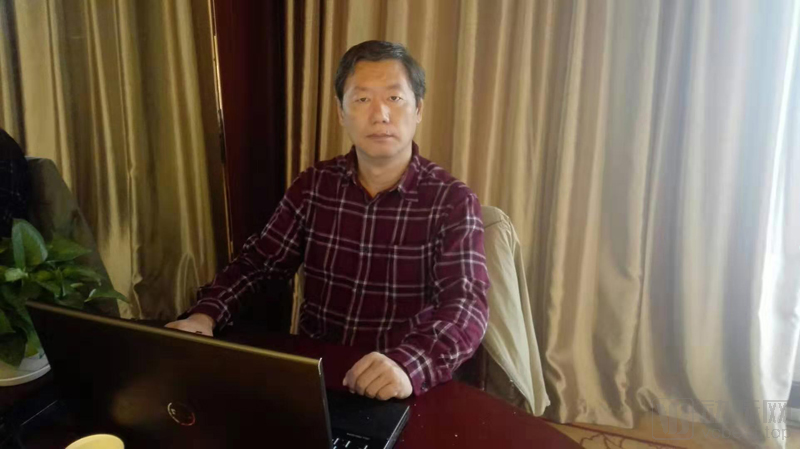
Jiao Jian, Founder of Ailifeng (Photo provided by the interviewee)
Since its introduction in the 1980s, magnetic resonance (MR) technology has advanced by leaps and bounds, with international giants represented by “GPS” (GE, Philips, and Siemens) capturing the majority of the market share in the early stages. However, with the emergence of specialized component manufacturers, the barrier to entry for MR technology development has continuously decreased, leading to the successive appearance of dozens of general-purpose MR companies in China and resulting in particularly fierce market competition. In this context, Jiao Jian targeted the yet-to-be-developed field of minimally invasive interventional procedures, establishing a foothold and achieving growth in the market through technological differentiation.
“If Ailifeng had also pursued general-purpose MRI at that time, I believe it would have held little significance, and achieving substantial breakthroughs in technological development would have been difficult,” said Jiao Jian in an interview. “Therefore, I decided to leverage MRI technology to drive innovative clinical advancements in minimally invasive interventional procedures, providing physicians and patients with an interventional surgical platform free from radiation hazards. By integrating an MRI-guided surgical navigation system, we aimed to create a comprehensive intraoperative MRI system for interventional procedures, thereby enhancing the safety and efficacy of minimally invasive interventions.”
Guided by this philosophy, Jiao Jian assembled a team of technicians with decades of experience in the field of magnetic resonance to conduct in-depth research and development, achieving technological breakthroughs with fully independent intellectual property rights. In 2016, Ailifeng successfully developed the world’s first permanent magnet (0.4 Tesla) 360-degree fully open magnetic resonance imaging system (EMT-4000F) and magnetic resonance surgical navigation system (EMT-100). Building on this foundation, the company developed the world’s only commercially available and industrialized intraoperative interventional MRI system. This system provides precise guidance to transform current diagnostic and therapeutic practices that rely on blind puncture and correction, thereby reducing pathway-related injuries and lowering the risk of cancer cell metastasis.
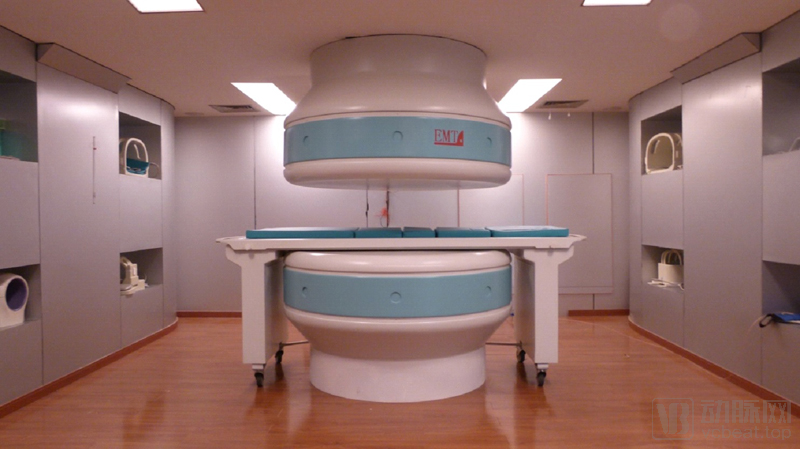
360-Degree Fully Open Magnetic Resonance Imaging System
According to available information, the 360-degree fully open magnetic resonance imaging (MRI) system developed by Ailifeng serves as the primary MRI system for intraoperative interventions. Its patient table enables 360-degree free rotation, anterior-posterior extension, and lateral translation, accommodating various patient positions and surgical orientations. The 360-degree open magnet provides clinicians with an optimal surgical field of view. Additionally, the system features rapid imaging at a speed of 5 seconds per slice, along with capabilities for conventional imaging, maximum intensity projection (MIP), multiplanar reconstruction (MPR), volume averaging (VA), and multi-functional image synthesis.
On the other hand, the MRI-guided surgical navigation system serves as the core component of intraoperative MRI. Its primary function is to track surgical instruments and display them on MRI-guided images, providing a basis for surgical guidance. Notably, in addition to being compatible with Ailifeng’s own equipment, this system can also be integrated with MRI systems from other manufacturers that feature DICOM interfaces, thereby enabling precise diagnosis and treatment for MRI-guided minimally invasive interventions.
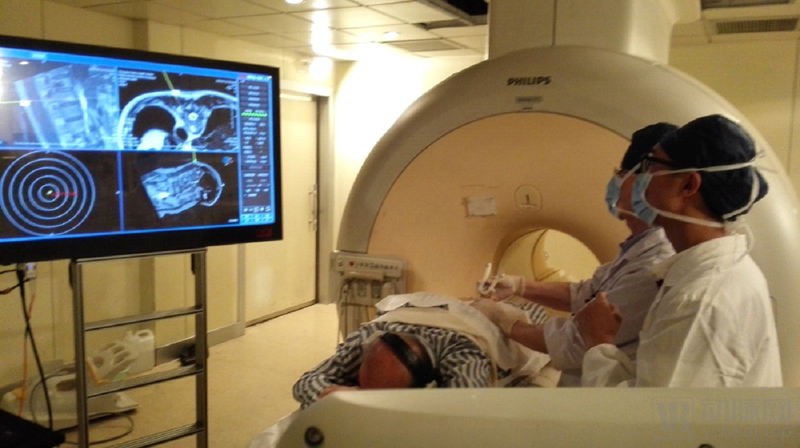
MRI-Guided Surgical Navigation System
After successfully entering the field of minimally invasive, precision interventional diagnosis and treatment through the development of an intraoperative MRI system for interventional procedures, Ailifeng extended its product line to include CT surgical navigation systems in 2018. This system utilizes CT imaging to guide percutaneous interventional puncture procedures, thereby enhancing surgical accuracy, reducing operation time, and minimizing trajectory-related tissue damage and radiation exposure.
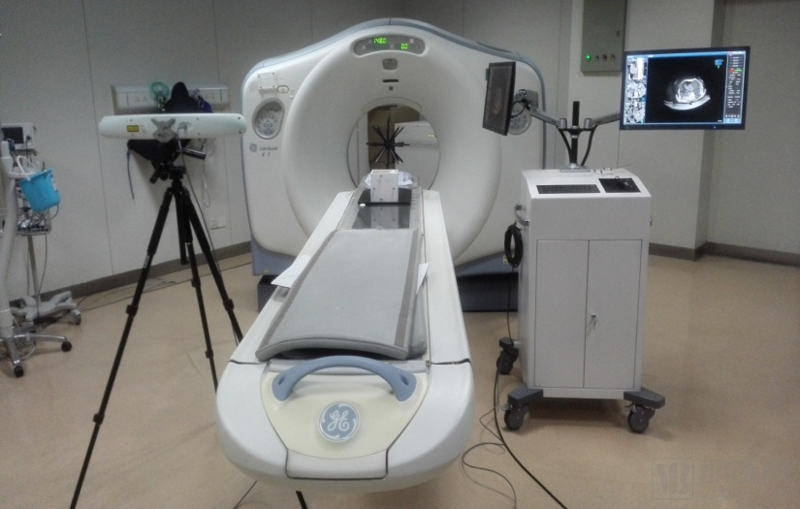
CT Surgical Navigation System
Although the company’s R&D efforts are all focused on minimally invasive, image-guided precision diagnosis and treatment, the clinical applications of individual products still differ. In an interview, Jiao Jian stated that the intraoperative MRI system is primarily used for lesions in the central nervous system and soft tissues, while the CT surgical navigation system is applied clinically to pulmonary and orthopedic lesions.
To date, Shanghai Ailifeng Medical Technology Co., Ltd. has launched a series of independently innovated products that provide healthcare institutions with comprehensive medical solutions covering MRI, CT, and C-arm CT image-guided percutaneous puncture procedures. Currently, the company has established collaborative partnerships with multiple Grade IIIA hospitals, including Shanghai Renji Hospital, Guangzhou Medical University’s Third Affiliated Hospital Liwan Hospital, and the General Hospital of Jinan Military Command, completing thousands of minimally invasive interventional precision diagnosis and treatment procedures.
“Each hospital has a different therapeutic focus; for instance, Shanghai Renji Hospital specializes in oncology treatment, while Guangzhou Medical University Third Affiliated Hospital Liwan Branch focuses on lumbar disc disorders. For us, this specialized layout facilitates the nationwide deployment and promotion of our company’s products,” said Jiao Jian.
Innovative medical device R&D is challenging and time-consuming, creating substantial capital requirements for startups in this field; Ailifeng is no exception. According to available information, Ailifeng completed a RMB 35 million Pre-A equity financing round on December 31, 2017, solely led by Shenzhen Capital Group (SCGC), to advance product development and sustain ongoing operations.
"Now, with the need for business expansion, Jiao Jian revealed in an interview that the company is launching a Series A equity financing round totaling 50 million yuan to develop interventional surgical robots and superconducting 70cm large-bore magnetic resonance imaging systems, as well as establish demonstration hospitals for public minimally invasive interventional precision diagnosis and treatment centers."
It is understood that Ailifeng completed the development of a surgical robot prototype in May 2019. Built upon the company’s independently developed core technologies, this surgical robot leverages programmable Danish UR robotic arms and accumulates technical expertise in surgical navigation. Specifically designed for the implantation of iodine-125 seeds in tumor treatment, it represents a global first-of-its-kind product. Jiao Jian stated that, contingent on successful financing, the company expects to obtain the registration certificate for this product within two and a half years.
In addition to product development, Ailifeng plans to allocate a portion of its funds to establish public precision diagnosis and treatment centers for minimally invasive interventions in prefecture-level cities with populations exceeding 5 million. Leveraging its series of proprietary products, the company aims to expand patient coverage while utilizing the medical consortium model to organize and train physicians at prefectural and county-level hospitals. This initiative seeks to enhance their clinical and research capabilities, thereby cultivating grassroots medical talent and providing support for the national implementation of tiered diagnosis and treatment.
Regarding the company’s future development plans, Jiao Jian stated that in the short term, the focus will be on enhancing the clinical utility and efficacy of existing products, adopting a market expansion strategy centered on establishing public minimally invasive interventional precision diagnosis and treatment centers, supplemented by sporadic sales.
“In the long term, Ailifeng will continue to maintain a strong focus on development in the field of minimally invasive interventional precision diagnosis and treatment, exerting concerted efforts across three key dimensions: precision, intelligence, and remote capabilities,” said Jiao Jian. “We aim to enrich and expand our portfolio of imaging equipment and interventional surgical solutions, systematize our product lines, and ultimately establish Ailifeng as a world-class, domestically leading brand in minimally invasive interventional precision diagnosis and treatment.”