

Guangdong Launches National Healthcare E-Voucher System, Covering Over 10,000 Hospitals and Pharmacies, Reducing Patient Wait Time by 43.6 Minutes
One day in January 2020, Ms. Pan, a resident of Guangzhou, visited the Guangdong Provincial Hospital of Traditional Chinese Medicine for medical treatment.
Ms. Pan scanned the QR code on the widely available “Electronic Medical Insurance Certificate” displays within the hospital using WeChat to complete her registration. She monitored the real-time queue status for the consultation room via her mobile phone. After the diagnosis, she completed the payment through WeChat’s in-clinic payment feature and reviewed her laboratory and imaging reports. Finally, Ms. Pan presented her Electronic Medical Insurance Certificate code to collect her medication.
The QR code mentioned above is the electronic medical insurance voucher, first piloted by Guangdong Provincial Hospital of Traditional Chinese Medicine. Patients can complete real-name authentication via facial recognition, enabling them to go through the entire medical consultation process without carrying a physical medical insurance card, thereby significantly reducing waiting time.
On January 11, the Guangdong Provincial Healthcare Security Administration, together with Tencent and Digital Guangdong Network Construction Co., Ltd. (hereinafter referred to as “Digital Guangdong”), held the launch ceremony for the activation of the electronic healthcare security certificate in Guangdong Province.

Guangdong Province’s Electronic Medical Insurance Certificate Officially Launched
As one of the first pilot provinces for the electronic medical insurance certificate, Guangdong Province launched pilots in eight cities across the province, including Guangzhou, Shenzhen, and Dongguan, starting November 24. To date, more than 10,000 designated medical institutions have been onboarded, covering 107 million insured residents throughout the province.
With the electronic medical insurance certificate, patients can enjoy a convenient “one-code” experience and a cardless end-to-end medical care process, making healthcare services more efficient. Guangdong Province is taking the lead with “Guangdong Speed” in entering a new era of smart medical insurance featuring “code-based” payments, providing replicable, scalable, and promotable experience for the rest of China.
One Person, One Code: Covering Over 10,000 Hospitals, Community Health Centers, and Pharmacies
Comrade Xiao Xue, Party Secretary and Director of the Guangdong Provincial Healthcare Security Administration, stated that Guangdong Province has demonstrated four major characteristics in the promotion and application of the electronic healthcare security voucher: substantial pilot implementation efforts, comprehensive coverage, diverse application scenarios, and a large number of enrolled designated medical institutions and designated retail pharmacies.
As of January 2020, the electronic medical insurance certificate in Guangdong Province supported online activation for 107 million insured individuals across the province. It was launched and available in eight pilot cities—Guangzhou, Shenzhen, Dongguan, Meizhou, Jiangmen, Chaozhou, Zhuhai, and Maoming—covering more than 10,000 designated institutions, including over 8,000 designated pharmacies and more than 2,000 designated hospitals and primary healthcare facilities. The system enabled functionalities such as QR code-based medical insurance payments, point-of-care payments, and online inquiries.
Among them, Guangzhou has supported over 2,000 designated pharmacies and more than 400 designated medical institutions; Shenzhen has supported nearly 2,000 designated pharmacies and over 700 designated medical institutions; Dongguan has supported more than 800 designated pharmacies and over 500 designated medical institutions; Meizhou has supported more than 1,000 designated pharmacies; Jiangmen has supported over 400 designated pharmacies and 8 designated medical institutions; Chaozhou has supported more than 100 designated pharmacies and 5 designated medical institutions; Zhuhai has supported nearly 100 designated pharmacies and 10 designated medical institutions; Maoming has supported nearly 100 designated pharmacies.
According to statistics, after the adoption of the electronic medical insurance certificate, the number of repeated queueing instances for outpatient payment per visit can be reduced from four to zero, saving an average of 43.6 minutes in waiting time. This has brought great convenience to insured patients and effectively improved the quality of medical security services.

Over 10,000 designated medical institutions across Guangdong Province support e-voucher-based payment for medical insurance
WeChat Activates One-Code Pass: Experience the Full Process of Card-Free Medical Care
The launch of the electronic medical insurance certificate has provided insured individuals on the medical security information platform with a unique identity identifier, serving as the key to unlocking online medical insurance services. Compared with physical cards, the electronic medical insurance certificate offers prominent advantages such as convenience and speed, diverse application scenarios, nationwide usability, and enhanced security.
Insured individuals in Guangdong Province can activate and use their electronic medical insurance certificates through multiple WeChat channels, including the “Guangdong Medical Security” and “My Medical Insurance” official WeChat accounts, the “Yue Sheng Shi” mini-program, WeChat City Services, as well as official accounts of local municipal medical security bureaus and hospitals. This enables a seamless, card-free healthcare experience with single-code access across hospitals, community health centers, and pharmacies, facilitating convenient online and offline medical insurance applications with broad coverage across various scenarios. These applications include identity verification and authorization, personal account balance inquiries, scan-to-pay for pharmacy purchases using personal account funds, and online payment for clinical consultations at medical institutions.
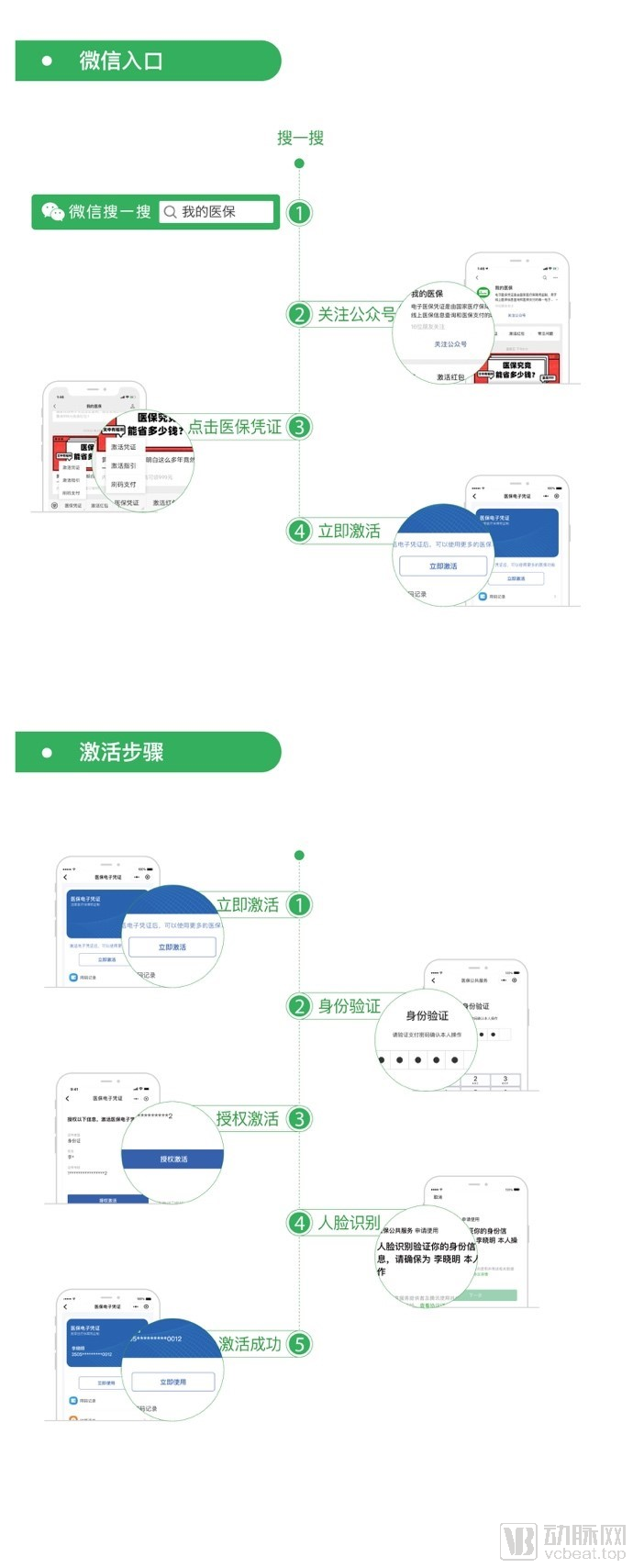
Search “My Medical Insurance” on WeChat Search to activate your electronic medical insurance certificate
At hospitals and community health centers, insured individuals can access medical care without a physical card by using their electronic medical insurance credentials. By scanning a QR code via the hospital’s WeChat official account, they can complete various steps of the medical visit, including record creation, appointment registration, payment, and medication pickup, thereby reducing queue times at service counters and eliminating the need for repeated trips. At pharmacies, users can open the Medical Insurance Code in their WeChat Card Package and scan the code to purchase medications covered by medical insurance, avoiding the need for cash change or card swiping. Meanwhile, details of each medical insurance transaction can be easily queried on WeChat, providing clear visibility and enhanced security. As functionalities continue to improve, more medical insurance services—such as enrollment registration and reimbursement payments—can all be handled through a single electronic credential, making it easy to manage these tasks directly within WeChat.
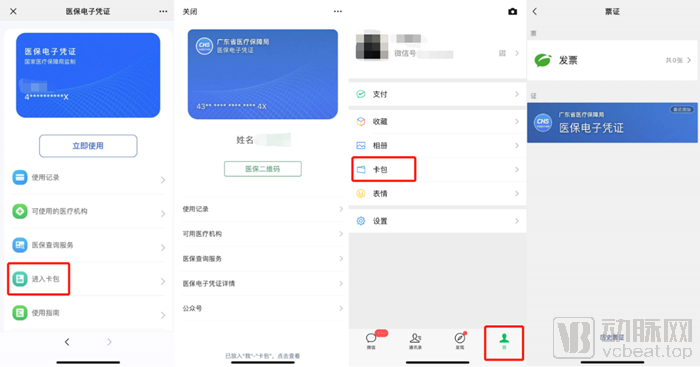
Add the Electronic Medical Insurance Certificate to your WeChat Card Package for easy access anytime.
Wu Wenda, Vice President of Tencent Healthcare, stated, “In promoting the widespread adoption of electronic medical insurance certificates, Tencent will leverage the WeChat ecosystem and its mobile payment capabilities to integrate deeply into healthcare processes, optimize patient care workflows, and continuously expand the reach of smart medical insurance services. Through technology, we aim to make healthcare services smarter, more convenient, and more compassionate.”
Fully Implemented in June, Covering the Entire Medical Service Process
The advancement of smart health insurance construction in Guangdong Province has further promoted the intelligent upgrading of medical services. The electronic health insurance certificate has gradually covered the entire process of medical services, creating a worry-free model for smart health insurance and effectively alleviating problems such as "difficulty and frustration in seeking medical care" for patients.
Comrade Xiao Xue stated that, as the representative and advocate for the interests of the vast number of insured individuals, the provincial medical security departments will further leverage the electronic medical insurance certificate to expand the scope of online medical insurance services. These services include inquiries into payment records and detailed consumption statements, as well as various administrative procedures such as enrollment registration, filing for out-of-area medical treatment, and premium payments. With the advancement of medical security informatization and the implementation of business application systems, the overarching goal is to gradually enable the handling of all medical insurance services across the province and nationwide using a single electronic medical insurance certificate. This initiative aims to achieve service outcomes characterized by “facial recognition processing,” “one-code access,” and “zero visits required.”
Currently, over 2.5 million insured individuals in Guangdong Province have activated and used the electronic medical insurance certificate, with cumulative transactions exceeding 100,000. The electronic medical insurance certificate has played a remarkable role in simplifying healthcare processes and saving time for patients. It is expected that by around June 2020, the entire province will fully implement QR code scanning and mobile payment applications for the electronic medical insurance certificate.