

YuceBio Advances Precision Immuno-Oncology with High-Quality Neoantigen Prediction Platform Driven by 'Genomics + Immunology'
In the recently concluded second decade of the 21st century, ancient tumor immunotherapy gradually formed three mainstream directions in clinical practice and achieved significant breakthroughs: immune checkpoint inhibitors represented by PD-1/PD-L1 were successively launched on the market, CAR-T cell therapy technology achieved remarkable clinical efficacy in hematologic malignancies, and personalized tumor vaccines targeting solid tumors began to show application prospects.
According to Dr. Gao Zhibo, Founder and CEO of Yuce Bio, as tumor immunotherapy enters its current stage, attention should be focused on enhancing the efficacy of existing immunotherapies to benefit more cancer patients. He believes that the first step is to accurately identify patients most suitable for immunotherapy through multidimensional testing, “This patient subgroup accounts for approximately 20%."Meanwhile, combination therapy with multiple drug classes can enable patients who respond poorly to immunotherapy monotherapy to also benefit from immune-based treatments, increasing the proportion of the overall benefiting population to 50%. Furthermore, neoantigen-based immunotherapies, including a range of technologies such as vaccines for solid tumors and cell therapies, will become an important direction for future development."Maximize the number of patients who ultimately benefit from immunotherapy through personalized treatment regimens.“Dr. Gao Zhibo pointed out.
Gao Zhibo holds a Ph.D. in Medical Sciences from The Chinese University of Hong Kong. He joined BGI in 2008 and has been engaged in tumor bioinformatics analysis, completing multiple fundamental research projects related to cancer. He is a member of the International Cancer Genome Consortium (ICGC) and the China Cancer Genome Consortium (CCGC) core member. After witnessing the golden decade of tumor genomics development, Dr. Gao Zhibo found that although researchers have resolved many fundamental issues in the field of oncology, there are still obstacles in the translation process of applying scientific research achievements to clinical practice to address practical problems in tumor diagnosis and treatment.
In May 2015, Dr. Gao Zhibo co-founded Shenzhen Yuce Biological Technology Co., Ltd. in Shenzhen with a technical team that also possessed extensive experience in tumor genomics research, focusing on the research and translation of cutting-edge immunodiagnostic and therapeutic technologies for precision oncology.
Since its inception, Yuce Bio has consistently focused on technological R&D, product translation, and external collaborations in the field of precision immuno-oncology diagnostics and therapeutics. Leveraging “genomics” and “immunology” as its dual pillars, the company organically integrates tumor genomics with the immune microenvironment, establishing itself as a pioneer and trailblazer in genetic testing for precision immuno-oncology therapies in China, and as the firstChinese Companies Take the LeadJoin the International Neoantigen Screening Alliance.
Based on a profound understanding of tumor genomics and tumor immunology, Dr. Gao Zhibo believes that neoantigens constitute the foundation of effective anti-tumor immunity and represent the ideal therapeutic targets for cancer immunotherapy that scientists have long sought. Consequently, related clinical studies must be built upon accurate neoantigen detection. Yuce Bio has consistently been committed to leveraging tumor neoantigen detection as its entry point to develop TruNeo, a high-quality neoantigen detection technology.TM, provides technical services to external parties and, in collaboration with West China Hospital, conducted the first clinical study of a novel immunotherapy based on neoantigens.
The journey from technical validation to clinical translation involves complex processes, making it difficult for any single company to succeed alone. Consequently, forging extensive collaborations with clinical institutions and pharmaceutical companies has become the mainstream solution. In March 2017, Shenzhen Yuce Biological Technology Co., Ltd., in partnership with Academician Zhan Qimin, jointly launched a real-world study program on tumor immunotherapy titled the “China Anti-Cancer · Ladder Project.” To date, the “Ladder Project” has selected 83 projects across seven major directions, collecting more than 3,500 tumor samples, including those from non-small cell lung cancer, small cell lung cancer, cholangiocarcinoma, esophageal cancer, melanoma, gastric cancer, and head and neck tumors. The associated research covers efficacy of immunotherapy, combination therapies, severe adverse reactions, neoadjuvant-related biomarker studies, dynamic monitoring of therapeutic efficacy, and personalized vaccines, aligning respectively with the company’s key product development areas.
During the implementation of the “Tian Ti Project,” Yuce Biological Technology established the Shenzhen Tian Ti Project Cancer Research Institute (hereinafter referred to as the “Institute”) to conduct clinical and translational medical research on biomarkers for tumor immunotherapy. By leveraging high-throughput sequencing technology, the Institute performs whole-exome, RNA, ctDNA, and TCR sequencing, along with integrated analysis, on tissue and peripheral blood samples from cancer patients. In combination with clinical treatment and follow-up data, this approach systematically compares and investigates the differences and dynamic changes in patients before and after immunotherapy from three perspectives: the tumor genome, the tumor microenvironment, and the host immune system. This effort has resulted in the creation of China’s first large-scale 3D tumor database, comprising a tumor genomics database, a tumor immunology database, and a clinical treatment database, with data from over ten thousand individuals.
Furthermore, the institute has established a Medical Big Data Center that leverages machine learning and bioinformatics algorithms to conduct in-depth analysis and mining of its 3D tumor database. It has built a “Two Databases and One Standard” framework—comprising a data repository, a knowledge base, and a standards and evaluation system—to advance research, development, and public science education in tumor immunotherapy.
In fact, the lack of unified standards is a bottleneck to the standardized application of tumor immunodiagnostic products. On one hand, variations in reagents, instruments, and methodologies lead to disparate test results, creating data silos among different vendors. On the other hand, there are population-specific differences between the median values of various testing indicators in the Chinese population and those in foreign databases, making it highly risky to directly leverage foreign public databases for product development. Therefore, it is essential to develop and validate tumor immunodiagnostic products tailored to the Chinese population through data accumulation and mining initiatives such as the “Tianti Project.”
According to Dr. Gao Zhibo, leveraging data collected under the “Tian Ti Project,” Yuce Bio validated the hypothesis that tumor mutational burden (TMB) predicts response rates to immunotherapy in Chinese patients with non-small cell lung cancer (NSCLC). The company also found that loss of heterozygosity in human leukocyte antigen genes (HLA LOH) occurs at a high frequency (approximately 40%) in the Chinese population. “HLA LOH is one of the mechanisms by which tumors achieve immune escape; its presence may indicate suboptimal efficacy of immunotherapeutic agents. Therefore, HLA LOH should be incorporated as a key biomarker for identifying potential candidates for immunotherapy.”
“We believe that China should establish its own database for tumor immunotherapy and improve the relevant standards for genetic testing, and Shenzhen Yuce Biological Technology Co., Ltd. hopes to contribute its strength to this effort.”
Leveraging a tumor gene database specific to the Chinese population, Shenzhen Yuce Biological Technology Co., Ltd. has achieved a foundational evolution in its business landscape for precision oncology diagnosis and treatment. Dr. Gao Zhibo pointed out that these data are of significant importance for both improving existing diagnostic products and developing new ones. Furthermore, they help researchers reassess the critical role of many previously overlooked biological markers in tumor immunotherapy and diagnosis.
Currently, Yuce Biological Technology has developed products including YuceOne in its medical testing business segment.® Plus、YuceOne®Core products, including ICIs and bTMB, address the needs of immunodiagnostics across diverse clinical application scenarios.
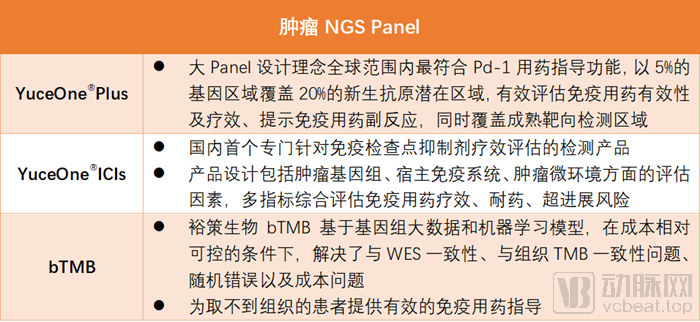
In addition to mainstream and widely studied biomarkers for predicting response to tumor immunotherapy, such as PD-1/PD-L1, tumor mutational burden (TMB), and microsatellite instability (MSI), Shenzhen Yuce Biological Technology Co., Ltd. has pioneered the use of tumor neoantigens for predicting immune response in cancer. Tumor neoantigens can be recognized by the human immune system, leading to the destruction of cancer cells, and form a critical foundation for immune checkpoint inhibitor therapy. Dr. Gao Zhibo pointed out that patients with a higher burden of tumor neoantigens tend to achieve better therapeutic outcomes with immune checkpoint inhibitors. Assessing the status of tumor neoantigens can therefore reflect the likelihood of benefit from immunotherapy.
However, tumor neoantigens are difficult to detect. Although next-generation sequencing combined with bioinformatics and computational algorithms can predict neoantigens, the accuracy remains limited. Furthermore, the use of disparate algorithms across different products hinders the establishment of standardized applications. “At present, the combined use of multiple biomarkers is an effective approach to improving the accuracy of predicting tumor immune responses.”
Tumor gene mutations form the prerequisite basis for the generation of tumor neoantigens. Through a series of processes involving DNA expression and presentation, these neoantigens are ultimately expressed on the cell surface; however, recognition by the immune system also requires matching with human leukocyte antigen (HLA). Therefore, Tumor Mutational Burden (TMB) serves as an indicator reflecting the mutational status of tumors. The TMB detection panel designed by Yuce Bio is developed from the perspective of neoantigen analysis, reasonably reflecting the status of neoantigens while demonstrating rationality, advanced technology, and comprehensiveness. Yuce Bio is actively promoting the standardization of related products.
Dr. Gao Zhibo told VCBeat that after years of exploration, Shenzhen Yuce Biological Technology Co., Ltd. is gradually forming and refining a business model in which its two core segments—medical testing and pharmaceutical services—mutually reinforce each other. In the field of tumor immunodiagnostics, Yuce Bio has secured a clear first-mover advantage due to its early market entry. In the realm of tumor immunotherapy, leveraging years of accumulated research on tumor neoantigens, the company is exploring a pathway from high-quality neoantigen prediction to the synthesis and validation of neoantigens, thereby creating a closed commercial loop. Currently,Shenzhen Yuce Biological Technology Co., Ltd.’s capability in developing novel immunotherapies based on neoantigen detection is already at a leading level within the industry,Dr. Gao Zhibo pointed out that the threshold for identifying tumor neoantigens that meet both clinical and industrialization requirements is extremely high; currently, only Yuce Bio in China possesses the capability to provide industrialized neoantigen testing services.
On one hand, Yuce Bio is collaborating with pharmaceutical companies to develop reliable companion diagnostic methods and reagents for immunotherapy, while identifying biomarkers associated with sensitivity, resistance, hyperprogression, and adverse reactions to assist physicians in making accurate clinical decisions.
On the other hand, by targeting the discovery and validation of upstream neoantigen targets, Shenzhen Yuce Biological Technology Co., Ltd. collaborates with downstream therapeutic institutions to develop novel neoantigen-based cancer immunotherapies, such as personalized neoantigen cancer vaccines, TCR-T therapy, and TILs therapy, thereby providing cancer patients with personalized cancer vaccines and precision adoptive cell therapy solutions. Meanwhile, leveraging a large-scale neoantigen database specific to the Chinese population, it is expected to identify universal neoantigen targets, addressing common challenges inherent in personalized therapies.
Currently, Yuce Bio’s clinical testing services cover more than ten core cities across China, serving over 200 Grade-A tertiary hospitals and specialized oncology hospitals. The company has established scientific research collaborations with leading domestic experts in the fields of lung cancer, gastrointestinal tumors, and hepatobiliary malignancies. In partnership with more than 20 clinical institutions and pharmaceutical companies in China, Yuce Bio is jointly developing neoantigen-based tumor immunotherapies, five of which have already entered clinical trials. As such, Yuce Bio is the earliest and most leading provider of neoantigen testing services in China.
According to Dr. Gao Zhibo, Shenzhen Yuce Biological Technology Co., Ltd. has established a multidimensional biomarker research and translational platform based on next-generation sequencing (NGS), encompassing molecular, cellular, and tissue levels, during its initial phase of exploratory development.Establish a pipeline of clinical diagnostic products that meets the needs of different levels and application scenarios,InIn subsequent business iterations, Yuce Bio aims to leverage neoantigen technology to gradually evolve into China’s most comprehensive platform company for immune diagnostics and therapeutics research and translation. By carving out its own ecological niche within the emerging blue-ocean market of tumor immunodiagnostics—valued at over RMB 20 billion—Yuce Bio seeks to establish a multi-party ecosystem driven by win-win collaboration.