

XinYi International's Guo Xiaohong: Empowering Smart Healthcare Through Cloud Applications
As a professional provider of medical cloud application solutions in China, SENYINT was selected for the “2019 Future Healthcare 100 · China Digital Healthcare Top 100” list at the 2019 Future Healthcare 100 Conference, ranking 9th.
With a valuation of RMB 5 billion, the company’s value has more than doubled since it first appeared on the list in 2016. Guo Xiaohong, Co-founder and Vice President of SENYINT, delivered a keynote speech titled “Beyond the ‘Cloud’: Building Smart Healthcare Value Through Cloud Applications” at the conference. She also granted an exclusive interview to a reporter from VCBeat (WeChat ID: Vcbeat), discussing how SENYINT addresses critical pain points in healthcare and outlining the company’s future vision.
From PACS to the Largest Cloud Platform: How SENYINT Addresses Pain Points in Medical Services
Where lie the pain points of China’s healthcare services? Every practitioner has their own perspective. Guo Xiaohong, from the standpoint of SENYINT, offers her view: the uneven distribution of medical resources.
Uneven Distribution of Medical Resources Is a Pain Point in China’s Healthcare Services
“Compared with the high costs of diagnosis and treatment and long appointment wait times in other countries and regions around the world, the pain points of China’s healthcare services are more reflected in the frustration of seeking medical care.” Guo Xiaohong pointed out the crux of China’s current healthcare services. This “frustration” stems from the inability to quickly identify the appropriate hospitals and specialists for specific conditions, often resulting in the disorderly phenomenon of receiving excessive treatment for minor ailments and the helplessness of receiving inadequate care for serious illnesses. The root cause lies precisely in the uneven distribution of medical resources within China.
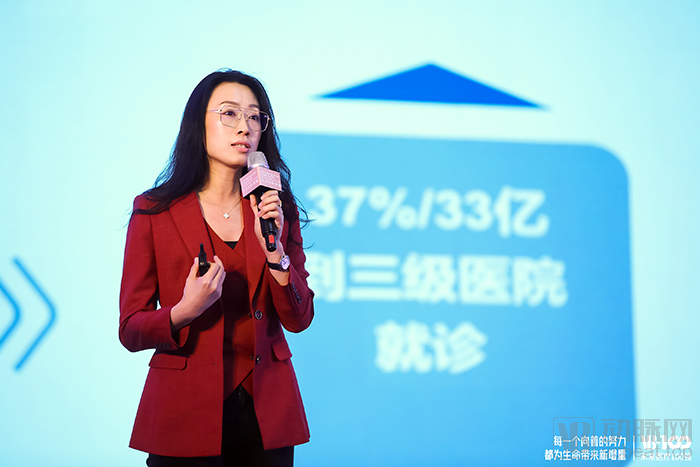
According to statistics, there are approximately 20,000 graded hospitals in China; among them, only about 2,300 are tertiary hospitals, accounting for merely 7% of the total. Another statistic shows that the annual number of emergency and outpatient visits nationwide is approximately 8 billion. A large number of patients, regardless of the severity of their conditions, initially seek care at local Grade A tertiary hospitals, or even travel long distances to such hospitals in medical resource-rich areas like Beijing, Shanghai, and provincial capitals. As a result, these tertiary hospitals, which constitute only 7% of all hospitals, bear 37% (as high as 3.3 billion visits) of the national emergency and outpatient load. It is therefore not surprising that China’s healthcare services face the current situation of “disordered medical-seeking behavior and overwhelming burden.” In fact, a significant proportion of the diseases treated in these settings are basic common or frequently occurring conditions that could be fully managed at primary care institutions.
To address this issue, the state has vigorously promoted new healthcare reform policies in recent years, with “tiered diagnosis and treatment” becoming a key component of these reforms. The 16-character guideline for tiered diagnosis and treatment is: “initial consultation at primary care facilities, two-way referrals, separate management of acute and chronic conditions, and coordination between upper- and lower-level institutions.” Among these, the first priority is to ensure that primary care institutions are capable of handling initial consultations, which entails strengthening primary care by improving its diagnostic and treatment capabilities to better serve patients. In contrast, tertiary Grade A hospitals are positioned to handle major diseases, complex cases, and rare diseases. Large tertiary Grade A hospitals should focus on developing key specialties and play a leading role in their respective disciplines.
Therefore, SENYINT leverages telemedicine as a technical means and medical consortia as the vehicle to build an interoperable bridge between tertiary hospitals and primary care institutions. This fosters closer collaboration between primary care facilities and higher-level medical institutions, allowing each to leverage their respective strengths in jointly serving patients, thereby facilitating the genuine implementation of tiered diagnosis and treatment.
Lightweight medical cloud services may be an effective solution to address pain points in healthcare.
According to Guo Xiaohong, 70% of SENYINT’s management team comes from the healthcare sector, possessing a profound understanding of medical needs. Therefore, the company has been deeply engaged in the healthcare industry, committed to serving clinical applications through advanced IT and internet technologies.
SENYINT began its journey in traditional healthcare informatics. Between 2011 and 2014, over 600 hospitals adopted the SENYINT PACS system, propelling it to a leading position in China’s PACS market. Hospitals of different types (specialized vs. general) and tiers (primary care institutions vs. Grade A tertiary hospitals) have varying imaging needs. By prioritizing hospitals’ personalized requirements and introducing more flexible imaging applications, SENYINT found its initial breakthrough.
With the rise and application of internet technology, grassroots hospitals have seen a rapid increase in demand for telemedicine, particularly for teleradiology. Although some grassroots hospitals possess imaging capabilities, they lack sufficient diagnostic and reporting expertise, creating an urgent need for support from higher-level hospitals. This challenge can be effectively addressed through teleradiology services. Notably, western provinces with vast territories and sparse populations have a natural reliance on and high acceptance of teleradiology.
In late 2010, SENYINT collaborated with Qinghai Province to build a province-wide telemedicine system. At that time, the system primarily focused on remote imaging, achieving process-oriented management and storage of local medical imaging data. By continuously exploring hospital needs, the system underwent constant functional improvements and expansions. Evolving from standalone remote imaging to encompassing remote laboratory testing, remote pathology, remote consultations, dynamic remote ultrasound, multidisciplinary team (MDT) consultations, and surgical guidance, SENYINT gradually completed the development of a comprehensive, full-spectrum telemedicine system.
As the country begins to promote the reform of tiered diagnosis and treatment, demands for two-way referrals, appointment scheduling, post-treatment follow-ups, and rehabilitation among hospitals have gradually emerged and been further integrated into telemedicine systems. Meanwhile, SENYINT’s Telemedicine Cloud Platform has successfully collaborated with telecom operators on 5G application scenarios, enhancing rapid access to medical imaging and launching remote surgical guidance services.
Under the traditional model, hospitals building such complex systems in-house would require substantial capital investment, involve mandatory bidding processes, suffer from low efficiency, and face highly complex operational maintenance. To address this pain point, SENYINT has introduced SaaS-based cloud services. By leveraging SaaS cloud services and an integrated software-hardware approach, primary-care hospitals need only purchase annual service subscriptions. This method significantly reduces costs and enables rapid deployment while accommodating personalized needs. Consequently, the SENYINT Telemedicine Cloud Platform can be efficiently deployed at hospital department terminals, expert desktops, and now on mobile devices.
“I believe that these more lightweight medical cloud services will be the main trend in the future,” Guo Xiaohong pointed out.
From an industry-wide perspective, the adoption of cloud computing has become an unstoppable trend in healthcare informatization. Currently, 21.7% of hospitals at secondary level and above in China have deployed cloud computing applications, while over 35.6% of tertiary hospitals have done so.
In addition to the aforementioned SaaS-based cloud computing services, migrating hospital information systems (HIS) to the cloud—known as Cloud HIS services—is another major trend. Unlike the SaaS-based Cloud HIS adopted by primary care hospitals, developing Cloud HIS for large tertiary hospitals and medical groups presents significant challenges, requiring a very fine granularity in business processes.
Immense Potential: Medical Cloud Is Empowering Healthcare
After years of dedicated efforts, SENYINT is building China’s largest telemedicine and medical cloud application platform. Currently, SENYINT’s medical cloud platform serves over 7,000 hospitals and more than 250 medical consortia across 31 provinces in China, covering 40% of public healthcare institutions and reaching 80% of Grade A tertiary hospitals nationwide. Among these, eight provinces—Guizhou, Shaanxi, Shanxi, Qinghai, Xinjiang, Henan, Jiangxi, and Guangxi—have achieved full provincial-level cloud platform coverage, making it the most extensively covered medical cloud platform in China.
“We are delighted to see that, with the introduction of medical cloud platforms, healthcare services are gradually transitioning from a state of disorder to one characterized by efficiency and convenience.” Guo Xiaohong believes that medical cloud platforms have already demonstrated their potential to address the pain points in China’s healthcare system. As applications deepen, interactions among hospitals are no longer confined to the initial stages—such as physicians conducting consultations in consultation rooms or delivering educational training in training facilities—but are progressively evolving into cross-regional, cross-institutional, and interdisciplinary collaboration.
Consequently, SENYINT’s cloud-based services—including virtual outpatient clinics, remote consultations, multidisciplinary teams (MDT), cloud-specialty departments, and cloud wards—have achieved widespread adoption, delivering medical services through multi-scenario interactive applications. Currently, SENYINT’s offerings have become deeply integrated into core healthcare operations. Leveraging its cloud platform, the company provides hospitals with an integrated solution that combines information technology, operational services, and specialty development. This approach significantly enhances hospitals’ capabilities in collecting core specialty data, expanding specialty services, advancing informatization, and enabling future AI-driven decision support.
The telemedicine cloud platform co-established by SENYINT and Guizhou Province exemplifies the advantages of its “trinity” solution. The platform currently covers 1,543 township health centers, 179 county- and city-level hospitals, and 12 provincial-level hospitals, achieving full coverage of all public medical institutions across the province.
Guizhou Province has also established a telemedicine cloud platform for stroke, creating a three-tier network system comprising the “National Telestroke Center–Provincial Treatment Centers–County-Level Treatment Centers.” This enables 99 county-level hospitals across the province to interact directly with provincial and municipal hospitals. Among the hospitals currently participating in the platform, the door-to-needle time (DNT) for intravenous thrombolysis has been successfully reduced from an average of 90 minutes to under 60 minutes, representing a 15%–20% improvement that fully meets international standards.
Empowered by Three Core Advantages, SENYINT Aims to Become the “Online Marketplace” for Medical Applications
Guo Xiaohong believes that SENYINT has several core advantages, including cloud network coverage, innovative service models, and robust technical architecture support. These advantages are difficult to replicate in a short period of time.
First, the platform boasts extensive network coverage. SENYINT’s cloud platform connects more than 7,000 hospitals across China, making it the medical cloud platform with the largest hospital coverage to date. The platform has established a robust collaborative model among tertiary, secondary, and primary care institutions: patients receive initial diagnosis at primary care facilities, are referred to tertiary hospitals for treatment of serious conditions, return to secondary hospitals for postoperative rehabilitation, and then receive follow-up care from family doctors contracted by primary care institutions.
Service model innovation is SENYINT’s second advantage. By providing an integrated tripartite solution that combines technology, operations, and multidisciplinary integration, SENYINT empowers primary healthcare institutions to enhance their diagnostic and treatment capabilities, assists tertiary Grade A hospitals in strengthening their specialized service capacities, and facilitates the practical implementation of the national five-tier hierarchical diagnosis and treatment system spanning national, provincial, municipal, county, and township levels.
Unlike internet healthcare companies that primarily serve individual consumers (C-end), SENYINT focuses on providing Medical Consortium Management Services to business clients (B-end). Many tertiary hospitals have external liaison departments, also known as Medical Consortium Offices. Through SENYINT’s third-party services for medical consortiums, the volume of collaborative services between tertiary hospitals and lower-tier hospitals can surge in a short period. With over seven years of accumulated experience, SENYINT has established a standardized operational service system and规范化 management processes. This system and these processes are not easily replicable by other service providers in the short term.
Through its operations, SENYINT has also discovered that hospitals exhibit very high interaction frequencies in disciplines such as respiratory medicine, stroke care, cardiology, emergency medicine, dermatology, and obstetrics and gynecology, thereby accumulating substantial specialty-specific data. In the future, SENYINT will continue to deepen its expansion of specialized medical service solutions across these seven key disciplines and explore AI-driven services leveraging big data for specific diseases.
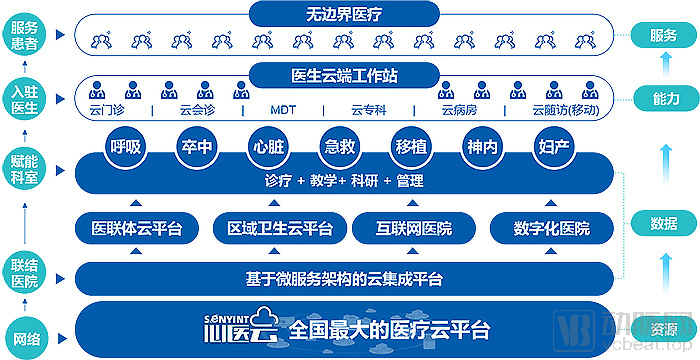
Underpinning all these achievements is a highly competent technical team, which constitutes another significant asset of SENYINT. Currently, SENYINT operates five R&D centers, with an R&D team of over 300 members and an operations team of more than 200 professionals. To date, the company has secured 10 self-developed patents, along with 160 intellectual property rights, including self-developed patents and software copyrights. It delivers services to hospitals through remote SaaS, agile development, microservices architecture, and cloud computing.
Among these, the microservices architecture is particularly noteworthy and represents another application innovation by SENYINT. Currently, this technical architecture has been widely adopted by internet companies, including Taobao and JD.com. Through collaboration with IBM, SENYINT has successfully implemented this advanced architecture in the healthcare sector.
The greatest advantages of microservices architecture lie in its high availability and strong scalability. It can decompose complex healthcare operations into smaller applications, simplifying operations and maintenance, enabling finer granularity, and allowing for greater breakthroughs in maximum concurrency. Currently, SENYINT’s medical cloud service platform can break down functions such as appointment scheduling, personnel management, access control, application processing, diagnostic reporting, voice, and video services into discrete service modules. This enables different applications to invoke these modules on demand and combine them freely and flexibly, while reducing the workload required for user-service coordination, thereby ensuring that application innovation aligns more closely with the specialized requirements of the healthcare industry.
Meanwhile, SENYINT has implemented an XaaS (Everything-as-a-Service) open ecosystem on top of its existing SaaS offerings. Its API development tools not only support applications developed internally by SENYINT but also enable third-party enterprises to leverage these tools, thereby facilitating enhanced collaboration and service delivery on this cloud platform.
This new microservices platform architecture reduces the workload associated with interfaces across different applications, while unified development tools and service governance significantly enhance collaboration efficiency.
In SENYINT’s design, these microservices can be provided either by SENYINT itself or by specialized third-party providers. Users simply select the desired product and can directly invoke the service on the platform, making the process as simple as shopping on an e-commerce website.
“SENYINT aims to build an online marketplace for medical applications,” said Guo Xiaohong when discussing the company’s future goals.
Currently, SENYINT’s business segments primarily include healthcare informatization services, cloud services, and Senyi Health, which targets consumer-facing (C-end) services. These businesses are developing in parallel, creating an innovative B-to-B-to-C closed-loop business model. Through SENYINT’s scenario-based healthcare services, the company exports its cloud platform capabilities to industries such as supply chain, pharmaceuticals, and elderly care, thereby building a comprehensive health industry ecosystem.
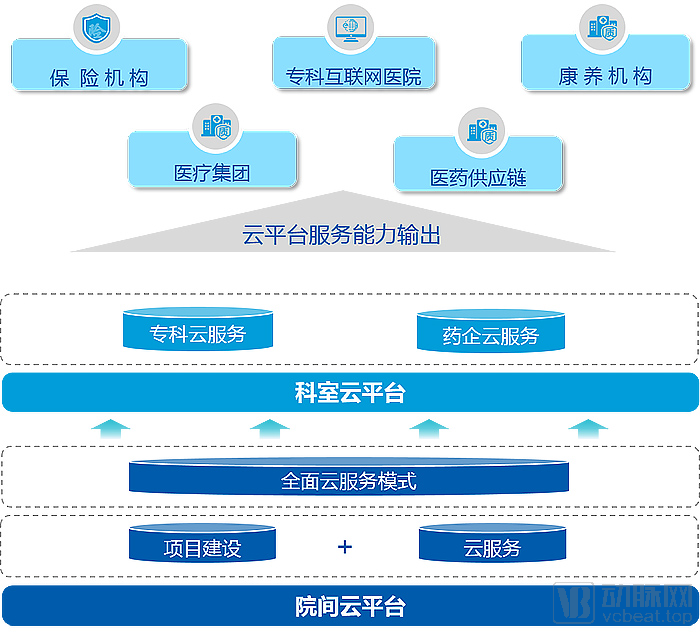
Meanwhile, SENYINT has established partnerships with telecommunications operators, banks and financial institutions, and insurance companies. By delivering medical services, education, and promotion through its platform, and by leveraging precise, intelligent matching of this information with target user data, the platform enables patients and physicians to access the most needed and up-to-date medications and payment options. Undoubtedly, this model represents an excellent approach to achieving win-win outcomes for partners on the platform, including pharmaceutical manufacturers, drug distributors, banks and financial institutions, and insurance companies.
“This is just like browsing Taobao or Tmall, where the platform intelligently recommends services or products that users are most likely to prefer,” said Guo Xiaohong, using a straightforward analogy to describe SENYINT’s business model. “This also represents our innovative, practical approach in internet healthcare, enabling full-value-chain intelligent sharing with partners such as pharmaceutical companies and drug distributors.”
In line with SENYINT’s previous strategic plan, following the completion of its middle-layer infrastructure, the company has continued to expand its business into the broader health sector, including medical insurance, value-added services, green-channel services for high-end hospitals, and healthcare real estate. Currently, SENYINT has partnered with others to launch the “SENYINT Special Oncology Drug Insurance,” available for purchase on major e-commerce platforms. Offline, SENYINT has also engaged in fruitful exploration and collaboration with companies such as Poly and Vanke in the realm of healthcare real estate services.
In the future, SENYINT will continue its transition from traditional IT systems to cloud services, with cloud services expected to account for over 70% of its total revenue within five years.
“Our business model is entirely industry-specific, but not in the traditional sense; instead, it provides in-depth services to physical medical institutions. These institutions achieve intelligent upgrades through high-quality services, and patients will also benefit from this transformation. Therefore, we serve patients by serving healthcare institutions,” Guo Xiaohong further elaborated on the business model logic of SENYINT.
Final Thoughts
In recent years, SENYINT has expanded into an innovative business model by collaborating with telemedicine cloud application platforms, major pharmaceutical suppliers (Sinopharm, China Resources), pharmaceutical companies, ecosystem partners, telecommunications operators, banking and financial institutions, and insurance companies to build a comprehensive closed-loop ecosystem for medical services.
Looking ahead, Guo Xiaohong stated that SENYINT aims to connect 10,000 hospitals, empower 100,000 departments, serve one million doctors, and provide care for 100 million patient visits annually over the next decade, thereby realizing its vision of “making no disease difficult to treat.”